

Sept 2027 Entry
4 years
123 (including 3 Work-Integrated Education training credits)
The option of a Secondary Major in AI and Data Analytics is available to students of the BSc (Hons) in Language Science and Technology (BScLST). Admission to the Secondary Major is competitive and subject to different credit requirements for graduation. Please see Secondary Major Details for further information.
What's New
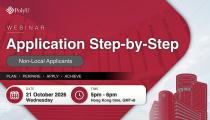
- Undergraduate
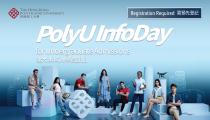
- Undergraduate
Programme Aims
- To train language professionals with essential technology-enhanced problem-solving skills, preparing them to tackle challenges in the AI-driven job market;
- To develop graduates’ competence in utilising technological tools to conduct language science experiments, process and analyse language data, and extract valuable insights from large-scale complex language-based datasets; and
- To equip graduates with a broad understanding of fundamental concepts, alongside profession-specific knowledge and hands-on experience in areas such as language science, psycholinguistics, neuroscience, AI and computational science, technology-enhanced translation and bilingual business communication.
Programme Characteristics
The BSc (Hons) in Language Science and Technology (BScLST) provides students with interdisciplinary training in areas including language science, psycholinguistics, neuroscience, artificial Intelligence and computation science, and technology-enhanced translation and bilingual corporate communication. Using innovative pedagogy, the programme introduces concepts and theories via pre-class activities, which are accompanied by hands-on in-class practice to consolidate the introduced concepts and theories. The emphasis of both theories and practice for educating language professionals equipped with solid linguistic knowledge and technological application readiness for the market in the digital era is the first of its kind in Hong Kong.
Medium of Instruction
- English*
* supplemented by Chinese examples in certain subjects when necessary
All admitted students embark on a Common Year One curriculum. Towards the end of year one, students can decide whether to continue with their initial choice or switch to another choice within the Faculty. Those who wish to change to another choice need to join a competitive process through a ranking assessment, which considers a combination of entrance qualification score, Year One GPA, and interview performance.
Career Prospects
Graduates are expected to find employment opportunities in various sectors of society by analysing social sentiment, utilising Chinese-English bilingual translation skills, identifying emerging trends, and providing valuable predictions and insights for business and administrative decision-making. Over the years, the department has cultivated numerous successful graduates who are making significant contributions across a wide range of professional fields, including the following:
- Academic research
- Administration and human resources
- AI and language technology
- AI-empowered translation and interpreting
- Civil service and public administration
- Corporate communication
- Creative copywriting and storytelling
- Digital and social media content creation
- E-commerce and brand management
- Editing and publishing
- Education and training
- Global communication and localisation
- Journalism and media communication
- Growth marketing and business development
- Public relations
- Social service and cultural work
Academic Pathways
a) Single Discipline Major; or
b) Major and Minor; or
c) Major + AIDA Pathway
Curriculum Structure
The overall credit requirements for the programmes are as follows:
| General University Requirements (GUR) | 27 credits* |
| Major | 84 credits* + 3 training credits |
| Free Electives | 12 credits |
| Minimum credit requirement for graduation | 123 credits, including 3 training credits / 129 credits, including 3 training credits for Major and Minor / 135 credits, including 3 training credits for Major + AIDA |
*Including double-fulfillment
Subject requirements for the three BScLST riders
To help students develop more focused study paths according to their interests, BScLST offers three riders within the programme: 1) AI and Language Technology, 2) Psycholinguistics and Neuroscience, and 3) Technology-Enhanced Bilingual Business Communication and Translation. All elective subjects are grouped into the three different riders. Students who successfully complete any six elective subjects of a rider receive a certificate from the Department upon graduation that acknowledges their completion of the relevant rider.
The rider system is independent of the major programme award requirement. Therefore, students are NOT required to complete any rider to graduate from BScLST.
Compulsory Subjects
Science and Civilisation in Pre-modern China; Introduction to Language; Language and Humanities Professionals in Society ; Introduction to Databases for Language Sciences; Text Mining for Linguistic Applications; Psycholinguistics; Introduction to Neuroscience; Corporate Communication: Theory and Practice; Translation Theory and Methodology in the Age of AI; English for Advanced Academic Writing; Work Integrated Education (WIE); Capstone Project in Language Science and Technology
Elective Subjects (excluding subjects in the Japanese and Korean Minors within LST)
AI and Language Technology
Programming and Data Analysis for Language Studies; Advanced Topics in Quantitative Language Studies; Statistics for Language Studies; Fundamentals of Computational Linguistics; Corpus and Language Technology for Language Studies; Introduction to Coding for Linguistic Data Analysis; Natural Language Processing for Linguistics and Translation Sciences; Ethical Practices in AI and Digital Humanities; Computational Psycholinguistics; Language Modelling and Generative AI; AI Applications in Social Sentiment Analysis
Psycholinguistics and Neuroscience
Introduction to Speech Therapy; Introduction to Modern Chinese; Anatomy and Physiology: Speech and Hearing Sciences I; Language, Cognition and Brain; Language Acquisition; Comparative and Contrastive Studies of Chinese and English Grammar; Analysis of Language Samples: Clinical Implications; Techniques in Language Sciences; Reading Development and Reading Disorders; Processing of Language Meanings; Processing of Language in Contexts; Speech Perception and Production ; Neuroscience of Language
Technology-Enhanced Bilingual Business Communication and Translation
Introduction to Translation; Translation for Corporate Communication; Intercultural Communication in Corporate Context; Technology-Enhanced Cross-Cultural Brand Strategy and Consumer Communication; AI-Supported Interpreting in Business Context; Digital Marketing and Multilingual Content Management in Global Markets; Digital Crisis Communication Management in Cross-Cultural Business Contexts; Translation for the Media in the Digital Age; Emerging Media in Multicultural Corporate Engagement; Machine and Computer-assisted Translation and Language Technologies
Others
Major Trends in Chinese History; Modern and Contemporary Chinese Literature; Introduction to English-Speaking Culture; Communication Skills at Work; English for Professional Communication
(The above subject list is subject to revision.)
The option of a Secondary Major in AI and Data Analytics is available to students of the BSc (Hons) in Language Science and Technology (BScLST).
Students on this pathway complete 84 academic credits + 3 training credits for the Major (BScLST) and 36 credits for the Secondary Major (AIDA). 12 credits can be double-counted for the Major and Secondary Major. The list of compulsory and elective subjects for the Major (BScLST) is almost the same as that for the existing BScLST programme. The only difference is in the Capstone Project, as students complete an integrated project (involving both BScLST and AIDA) instead of the regular BScLST route. The minimum credit requirement of BScLST + AIDA is 135 credits.
Remarks
There is no professional accreditation for BScLST + AIDA.
123 (including 3 Work-Integrated Education training credits)
Dr. WU Wing Li
PhD, MPhil, MA, BA
Please click here to view the entrance requirements for international applicants.
Applicants are invited to attend an interview, accompanied by a possible written test, to evaluate their potential/suitability for admission to the programme, and to examine their communication skills and interest in the field of study.
For further programme information, please contact:
the General Office (tel.: 2766 7454; email: lst.ug@polyu.edu.hk).





Required
To evaluate the potential/suitability of applicants for admission to the programme, and to examine their verbal proficiency and communication skills of applicants.
About 15-30 minutes for interview
Only shortlisted applicants will be invited to interviews
Required
To evaluate the potential/suitability of applicants for admission to the programme, and to examine their communication skills and interest in the field of study
About 15 to 30 minutes
Only shortlisted applicants will be invited for interviews