

- Home
- All Recent Focus
Harnessing Innovation to Bridge the Gap Between Classroom and Practice

Reshaping Allied Health Education: Harnessing Innovation to Bridge the Gap Between Classroom and Practice

The way future allied health professionals are educated is undergoing a fundamental shift. As clinical knowledge expands and healthcare challenges grow increasingly sophisticated, curricula have become denser than ever — yet traditional lecture-based delivery, while efficient for conveying large volumes of content, can leave students disengaged and underprepared for the fast-paced realities of clinical placement. At the same time, educators must find ways to accommodate diverse learning needs while keeping pace with evolving educational technologies. These converging pressures make innovation not merely desirable, but essential for bridging the gap between classroom learning and clinical readiness.
At The Hong Kong Polytechnic University (PolyU), a concerted effort is underway to do exactly that. PolyU is strategically integrating artificial intelligence, immersive technologies, and personalised learning to transform allied health education. Championing these initiatives are dedicated faculty staff members, including Prof. Shirley Ngai, recipient of the 2025 University Grants Committee (UGC) Teaching Award for her pioneering work in technology-enhanced allied healthcare training.
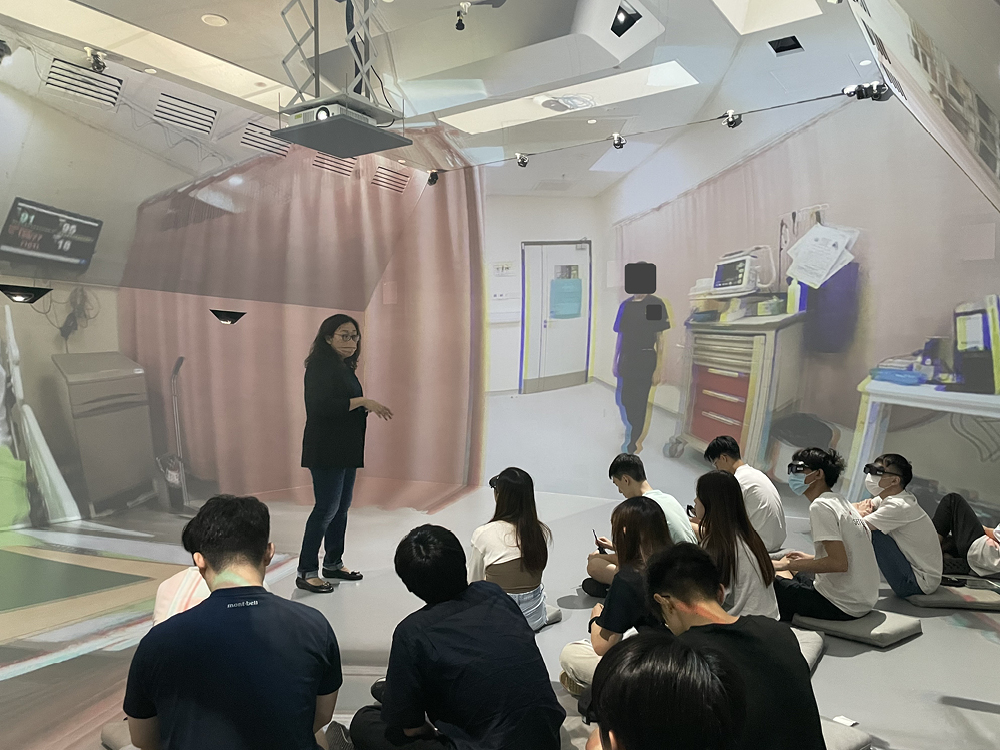
Immersive Technologies: From Observation to Experience
One of the most impressive applications at PolyU is the use of augmented and virtual reality to create safe, immersive clinical environments where students can practise repeatedly without affecting actual patients. Central to this effort is the Hybrid Immersive Virtual Environment, known as HiVE — the world's first large-scale virtual hybrid classroom. Within HiVE, students can be transported into realistic hospital settings, working through clinical scenarios that give them an authentic sense of what practice looks and feels like before they ever set foot on a ward.
For students at a more advanced level, high-fidelity simulation laboratories offer more intensive training, in which students work with sophisticated mannequins whose vital signs can be adjusted in real time by instructors. These sessions demand clinical reasoning and on-the-spot decision-making under realistic pressure, while also allowing students to practise complex procedures and responses in a safe environment without risking impact to real patients. Crucially, each simulation is followed by a structured debriefing, providing students with personalised feedback that supports continuous improvement. The combination of technological tools and instructor guidance creates a training experience that is both immersive and pedagogically rigorous, ultimately contributing to improved patient care outcomes.
AI-Powered Personalised Learning

Beyond immersive environments, artificial intelligence is enabling a more individualised approach to education. In collaboration with a team at the Hong Kong University of Science and Technology, PolyU has developed an AI-powered tutoring system focused on areas such as anatomy and cardiopulmonary disease management. The system provides real-time interactive feedback through quizzes and conversational learning, allowing students to ask questions and receive instant, tailored responses. A backend analytics engine tracks engagement patterns and learning progress, enabling the platform to adapt the content it delivers to each student's needs.
 This kind of personalised learning carries significant benefits. Students can identify areas of weakness early in the semester rather than discovering gaps only at the point of assessment. Progress tracking and goal setting foster self-regulated learning and greater autonomy, building both competence and confidence ahead of clinical placements. Mobile learning applications further extend this flexibility, allowing students to access interactive educational resources at any time and from any location.
Empowering Educators
For teaching staff, AI offers practical support in content development, learning analytics, assessment drafting, and course planning — all of which can meaningfully reduce workload while improving educational quality. However, the integration of these tools is not without challenges. AI-generated clinical scenarios, for instance, require expert review to ensure accuracy and relevance, and staff must be supported with adequate training to develop technological proficiency. Innovation, in other words, must be accompanied by investment in the people who deploy it.
Redefining What It Means to Teach, and to Learn
The collective impact of these innovations at PolyU points to measurable gains in student engagement, clinical competence, confidence, and preparedness — all of which have direct implications for patient safety. Yet perhaps the most significant transformation is a philosophical one. The role of the educator in allied health is shifting from that of a content deliverer to that of a facilitator and mentor, guiding students through personalised learning experiences and leveraging technology to enhance their effectiveness. This evolution, supported by thoughtful implementation of AI and immersive tools, is helping to shape future-ready healthcare professionals equipped to meet the demands of an increasingly complex clinical landscape.
This article is part of PolyU’s Education 4.0 (E4.0) series, which showcases how the University is responding to rapid AI advancements and a changing educational landscape. Through E4.0, PolyU is transforming learning and teaching by integrating AI and smart technologies into a student-centred approach that fosters innovation, expands the use of educational technologies, and prepares students for the future.
