

PolyU x BOCHK “Building the Future: Robotics for the International Lunar Research Station” Lunar Robot Design Competition concludes successfully, sparking secondary school students’ interest in aerospace technology


The Hong Kong Polytechnic University (PolyU) has long been an active participant in the Nation’s space missions and continues to promote STEM education through space-themed programmes, encouraging young people to join the field of innovation and technology and cultivating professional talent. This academic year, PolyU has co-organised the space-themed programme PolyU x BOCHK “Building the Future: Robotics for the International Lunar Research Station” with the Education Bureau (EDB) of the Hong Kong Special Administrative Region Government of the People’s Republic of China. The initiative aims to inspire secondary school students’ interest in space science and engineering, enabling them to put STEM knowledge in practice and nurturing future technology talent.
The programme was sponsored by the Bank of China (Hong Kong) (BOCHK) and supported by the Chinese Society of Astronautics and the Hong Kong Society of Astronautics. As one of the programme’s highlights, the Lunar Robot Design Competition received a total of 65 design proposals from students of 52 secondary schools and international schools in the Greater Bay Area (GBA). An award ceremony was held today at the Chiang Chen Studio Theatre on the PolyU campus, attended by nearly 200 experts, students, teachers and parents.
Dr CHOI Yuk-lin, Secretary for Education, stated, “We are deeply inspired by the successful launch of manned Shenzhou-23 spacecraft, and that it is the first time for a payload expert from the HKSAR to participate in it. The EDB will seize the momentum to further promote aerospace education in schools and keep optimising science, mathematics, and technology education. The introduction of Primary Science and the newly updated Junior Secondary Science Curriculum have strengthened students’ scientific literacy. These initiatives equip students with creative problem-solving skills, while enhancing their exposure to innovation and technology, including elements of space technology. These curriculum developments aim to encourage students to not only learn scientific knowledge and skills, but also apply them creatively, just as what our participants have done in today’s competition.”
Prof. Jin-Guang TENG, President of PolyU, said, “PolyU is dedicated to fostering innovation, research excellence and technological advancement. Leveraging the University’s cutting-edge engineering and research capabilities, our interdisciplinary teams have actively participated in critical National space missions, including the Chang’e lunar exploration missions and the Tianwen-1 Mars mission, contributing to our Nation’s historic space exploration endeavours. Later this year, we will also launch the PolyU Aerospace Research Academy (PARA), further strengthening our world-class excellence in deep space exploration as well as aviation. This competition clearly demonstrates the talent and potential of secondary school students in Hong Kong and the wider Greater Bay Area. The skills they have shown in this competition are exactly what the scientific community needs in the future.”
Mr CHAN Man, Deputy Chief Executive of BOCHK, said, “The first astronaut from Hong Kong entering the Tiangong space station to conduct scientific experiments not only demonstrates Hong Kong’s contribution to supporting the nation’s ambition of becoming a space power, but also stands as a fine example of Hong Kong integrating more deeply into and serving the country’s overall development. This aligns with the National 15th Five-Year Plan’s clear direction to accelerate the development of aviation and aerospace as a strategic emerging industry. As a leading commercial and regional bank with over a century of deep roots in Hong Kong, BOCHK has long been a steadfast supporter of Hong Kong’s space development journey, with a special focus on inspiring and empowering our youth by supporting a wide range of youth development projects related to technological innovation and cutting-edges fields such as artificial intelligence. Whether through direct programme funding or strategic collaboration with academic institutions like PolyU, we are committed to providing the platform, the resources and the encouragement needed to nurture future talent for the development of national space exploration.”
In his video address, Mr JIANG Jun, Deputy Secretary-General, Chinese Society of Astronautics, said that that the competition focused on the theme of lunar robot design, promoted learning through competition and empowered innovation. It provided a professional practical platform for youth in Hong Kong, Macau, and the Greater Bay Area to connect with deep space exploration and delve into robotics technology. The winning projects fully demonstrated the scientific literacy, innovative thinking, and sense of national responsibility of the young students. He encouraged the students to maintain their passion for aerospace technology and their pursuit of robotic innovation, to explore bravely, dare to break through, and integrate their personal aspirations into the grand national endeavour of space development.
The judging panel highly praised the remarkable creativity and scientific thinking demonstrated by the participating students, noting that the teams’ innovative designs reflected their outstanding potential in the fields of space science and engineering. The panel encouraged the students to continue their studies in STEM fields and further refine their projects, thereby laying a solid foundation for their future research careers and allowing them to seize the vast opportunities arising from the rapid development of the Nation’s space industry.
The Lunar Robot Design Competition focused on four themes: Exploration and Surveying Robots, Construction and Infrastructure Robots, Astronaut Support and Logistics Robots, and Multi-Robot Cooperative Systems. Students were required to design scientifically grounded robotic solutions for exploration of the lunar south pole. Following an evaluation by a judging panel comprising PolyU aerospace experts and members of the Hong Kong Society of Astronautics, teams from Pui Kiu College, Good Hope School and Malvern College Hong Kong were named the champion, first runner-up and second runner-up respectively. All finalist teams were also awarded grants to recognise their outstanding performance and to encourage them to continue promoting STEM education in their schools.
The champion team from Pui Kiu College designed a bionic hexapod robot. Utilising a hexapod bionic chassis to navigate the moon’s complex terrain with agility, the robot is designed to aid in resource transport, material handling and assembly. It also features autonomous excavation and processing of lunar surface materials for 3D printing, providing robust support for lunar infrastructure projects.
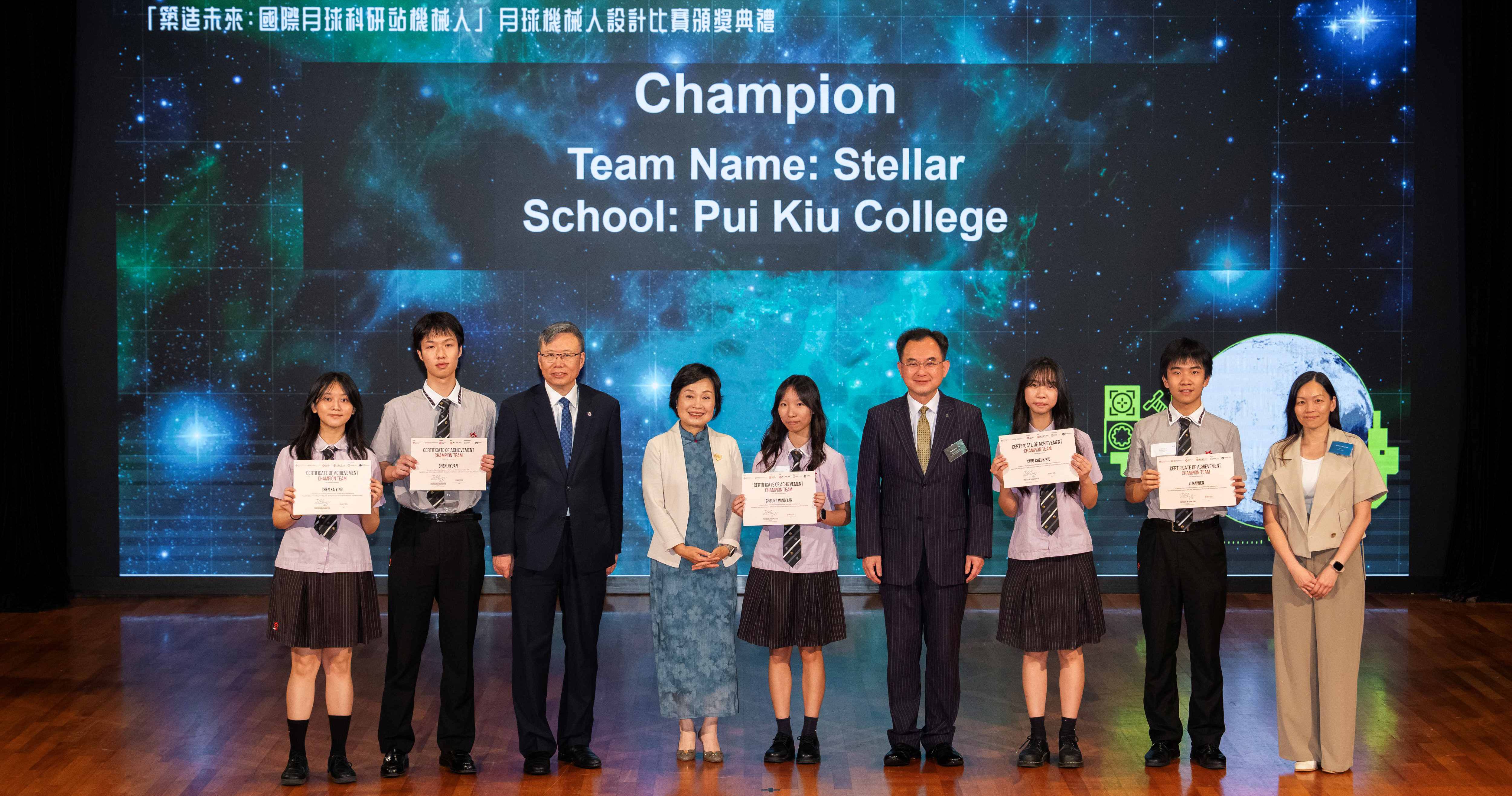
Dr Choi Yuk-lin (4th from left); Prof. Jin-Guang Teng (3rd from left); and Mr Stephen Chan (4th from right) presented the award to the champion team from Pui Kiu College.
The first runner-up team from Good Hope School proposed a multi-robot cooperative system designed for lunar south pole exploration, consisting of a base, a transporter and two hopper explorers. By dividing the labour between stationary processing, heavy transport and agile scouting, the system overcomes the limitations of single robots, showcasing the potential of multi-robot systems in deep space exploration missions.
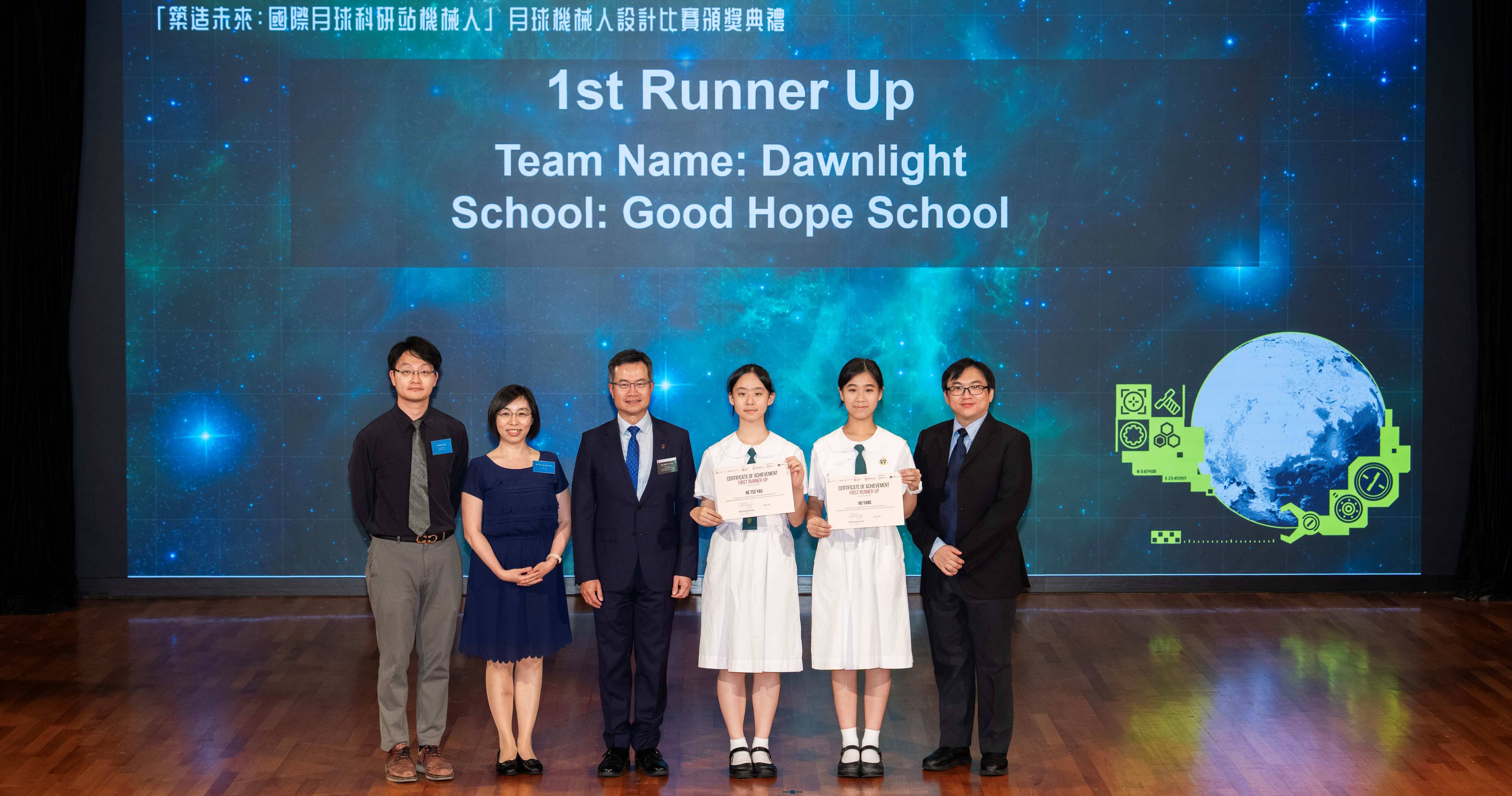
Mr Cheung Leong (3rd from left) presented the award to the first runner-up team from Good Hope School.
The second runner-up team from Malvern College Hong Kong proposed a design for an exploration robot powered by radioisotope thermoelectric generators. Equipped with dexterous robotic arms and a LiDAR system, the robot is capable of autonomous terrain mapping and resource exploration, making it suitable for long-term exploration and surveying missions in the permanently shadowed regions of the lunar south pole.
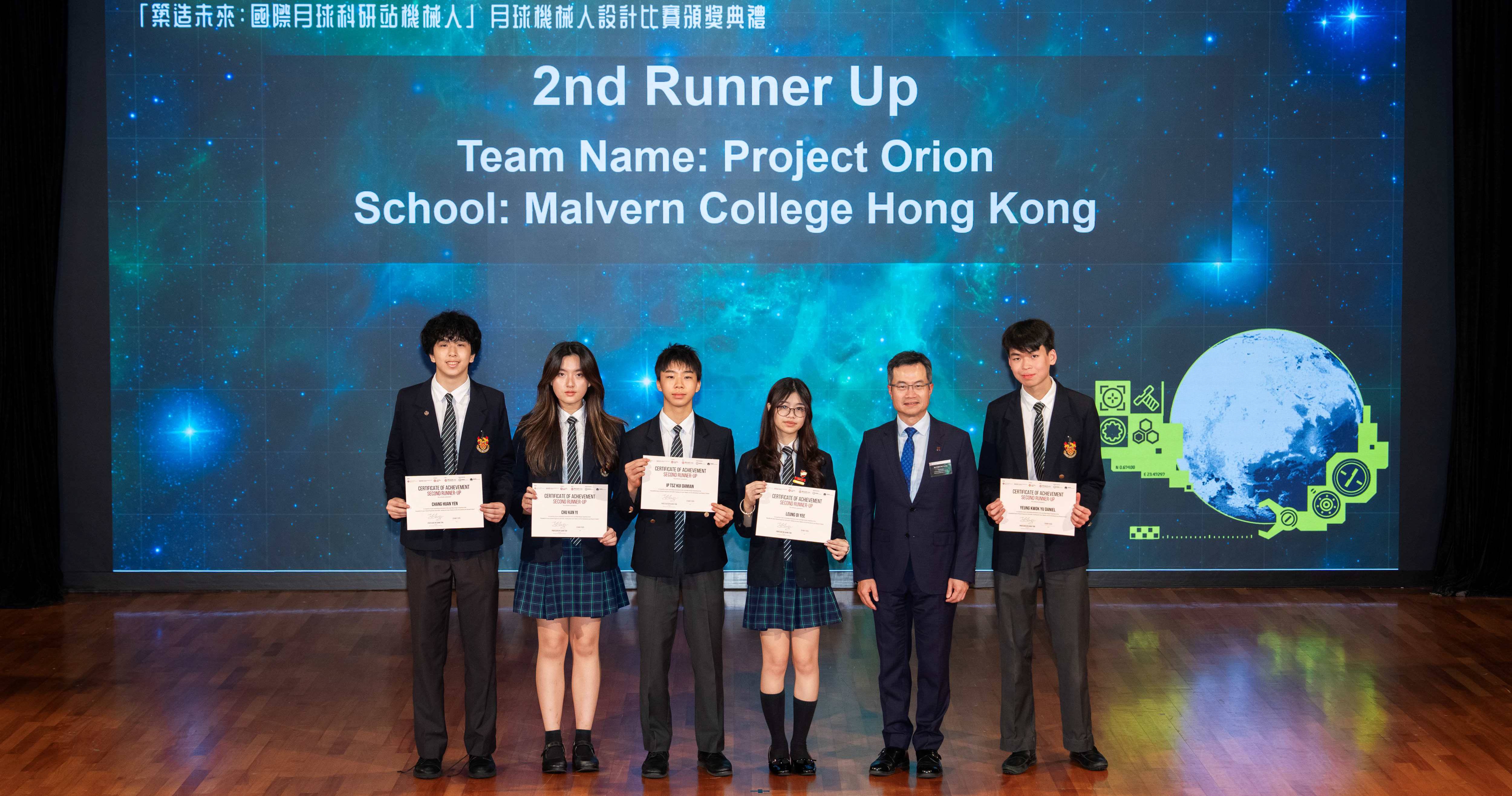
Mr Cheung Leong (2nd from right) presented the award to the second runner-up team from Malvern College Hong Kong.
The space-themed programme PolyU x BOCHK “Pioneering the Moon: Building the Future: Robotics for the International Lunar Research Station” earlier hosted a public space-themed lecture and a student tour of the PolyU Research Centre for Deep Space Explorations, allowing participants to gain a more profound understanding of aerospace science and foster a greater interest in and awareness of the Nation’s aerospace achievements.
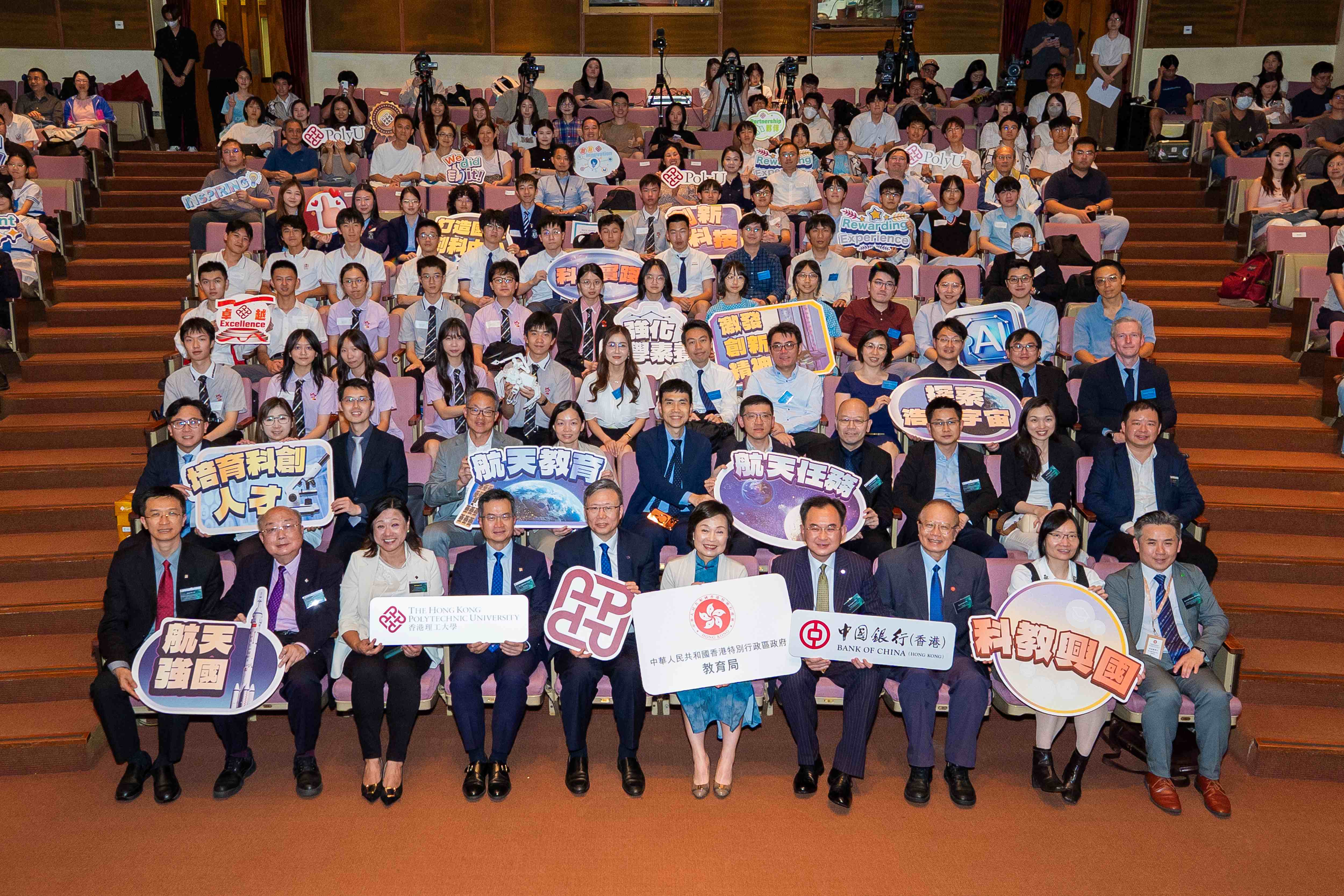
The award ceremony was held today at the Chiang Chen Studio Theatre on the PolyU campus, attended by nearly 200 experts, students, teachers and parents.
***END***
