

Qiangnao and PolyU launch “People-Oriented Technology Programme” to deploy cutting-edge intelligent bionic limbs for Hong Kong amputees


The kick-off ceremony of the “People-Oriented Technology Programme by Qiangnao Technology and The Hong Kong Polytechnic University” (the Programme) was successfully held today at the Central Government Offices of the Hong Kong Special Administrative Region (HKSAR). Jointly organised by Qiangnao Technology (Qiangnao) and The Hong Kong Polytechnic University (PolyU), with the Innovation, Technology and Industry Bureau (ITIB) of the HKSAR Government of the People’s Republic of China serving as the advisory body, the initiative marks a proactive response to the “Support People-Oriented Scientific Research” policy outlined in the 2025 Policy Address.
The Programme introduces Qiangnao’s advanced intelligent bionic hands and bionic knee joints for local configuration and use. Funded and supported by the Innovation and Technology Fund (ITF), the trial programme allows eligible amputees in Hong Kong to apply for configuration and use of these high-tech prostheses free of charge, facilitating the practical transformation of cutting-edge medical technology to tangible benefits for those in need.
The kick-off ceremony was officiated by Prof. SUN Dong, Secretary for Innovation, Technology and Industry of the HKSAR Government of the People’s Republic of China; Mr Kelvin CHOI, Permanent Secretary for Innovation, Technology and Industry; and Mr Ivan LEE, Commissioner for Innovation and Technology, alongside Mr Bicheng HAN, Founder and CEO of Qiangnao; Ms Sienna XU, Representative of Qiangnao; Prof. Jin-Guang TENG, President of PolyU; Prof. Christopher CHAO, Senior Vice President (Research and Innovation) of PolyU; and Prof. Yongping ZHENG, Henry G. Leong Professor in Biomedical Engineering and Chair Professor of Biomedical Engineering of PolyU. The event was also attended by participants from the first phase of trial who have already been fitted with the intelligent prostheses, medical rehabilitation experts and representatives from social welfare organisations. The event aims to raise awareness of the Programme within Hong Kong's disability community so that more individuals in need can benefit. Applications are now officially open to eligible individuals.
Prof. Sun Dong stated, “Today’s I&T initiatives respond to the National 15th Five-Year Plan, which calls for the full implementation of the ‘AI+’ action plan to empower public well-being through AI. Hong Kong possesses strong research capabilities, with five universities ranked among the world’s top 100 and two medical schools in the global top 40. It has a solid foundation in life and health technology, AI, and robotics, and is well positioned to put into practice the principle of technology for the benefit of people. The launch of the programme also embodies the original intent of using technology for good and being people-oriented, bringing cutting-edge technologies into real-world applications, to the lives of citizens in need.”
Mr Bicheng Han stated, “Over the next two years, with the support of the HKSAR Government, Qiangnao will work with PolyU and partners from all sectors of society to diligently implement the project and provide service support, so that more eligible amputees in Hong Kong can receive high-tech prostheses free of charge. We will also continue to enhance product experience and rehabilitation support services.”
Prof. Jin-Guang Teng said, “Scientific research must ultimately benefit society. The vision for developing people-oriented technology, as outlined in the Chief Executive’s Policy Address, aligns perfectly with PolyU’s motto, ‘To learn and to apply, for the benefit of mankind’. This Programme holds immense significance: Qiangnao brings world-leading core technologies in intelligent bionic prostheses, while PolyU provides local implementation, promotion, and scientific research support. The team will evaluate the effectiveness of the technology based on clinical application scenarios, collect user feedback for timely adjustments and optimisations, and continuously improve the overall user experience. With the support of the Innovation and Technology Fund, this initiative ensures that cutting-edge technology truly serves public livelihood and benefits society.”
The initial phase of the Programme aims to fit 60 Hong Kong amputees with intelligent bionic hands and bionic knee joints, managed by the PolyU team. The intelligent bionic hands help upper-limb amputees restore grip strength and fine-motor capabilities. The intelligent bionic knee joints are equipped with multi-sensor and a smart hydraulic system, and can detect walking intentions in real time. They support climbing stairs and switching between fast and slow walking speeds, and feature emergency-stop and fall-prevention protections. It is anticipated that users will experience a significant boost in self-care abilities and confidence in returning to the workplace after fitting.
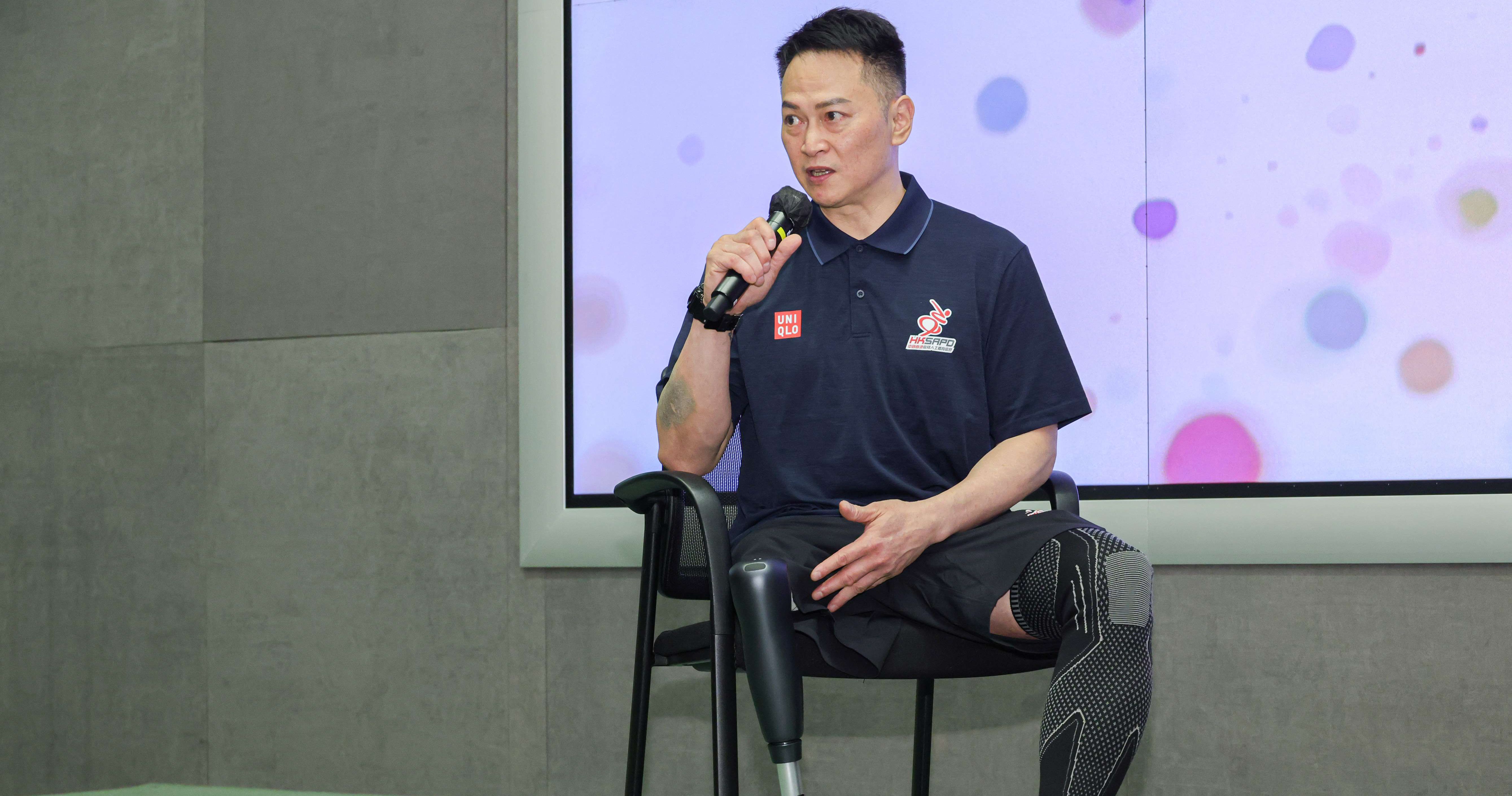
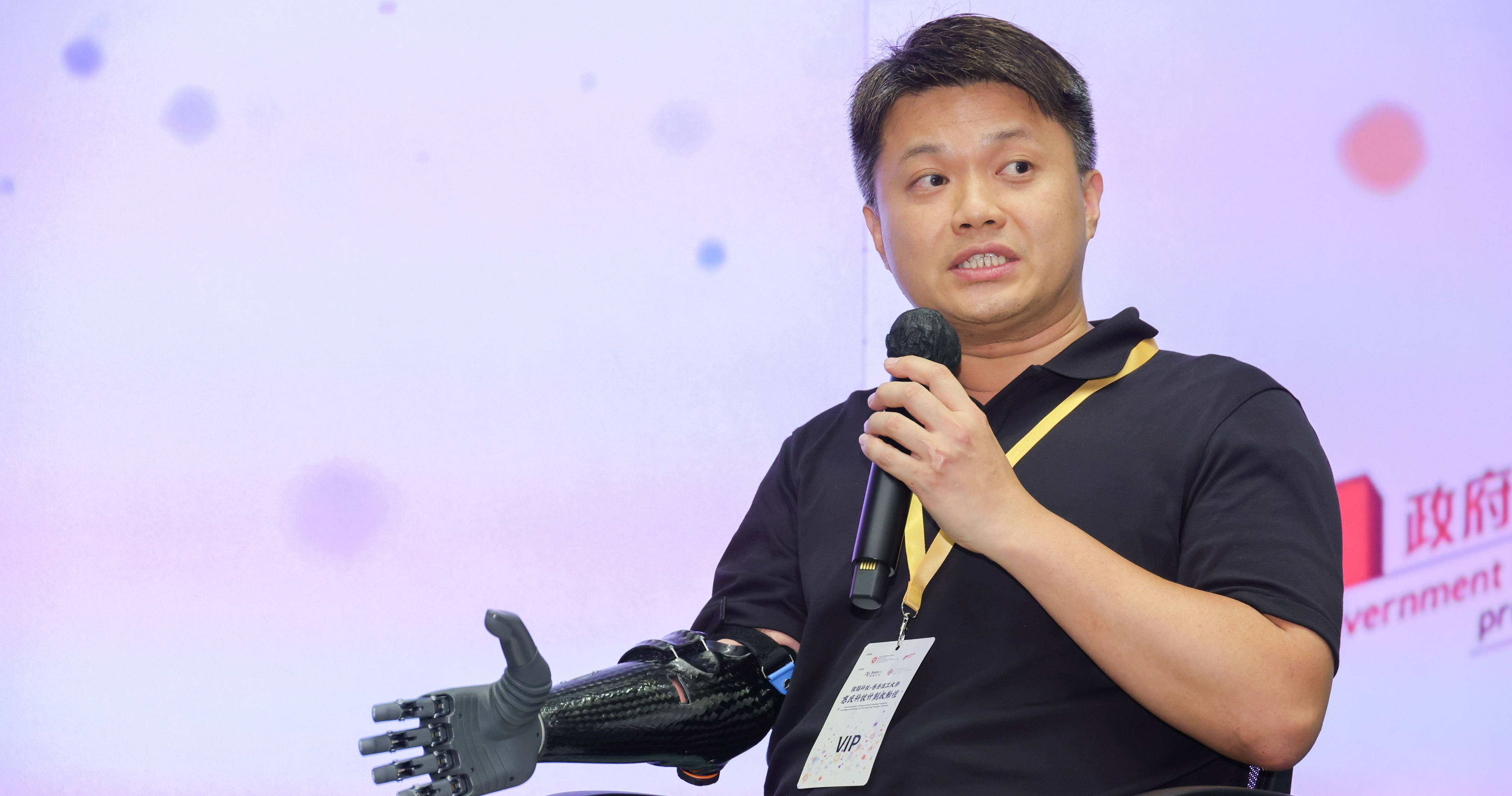
During the kick-off ceremony, amputees who had been successfully fitted with the high-tech prostheses under the Programme shared their experience and stories. The intelligent bionic hand contains sensors that detect myoelectric and neural signals from upper-limb muscles without any internal implantation, thereby controlling the hand’s movements. After training, wearers can perform delicate daily tasks such as writing and playing musical instruments. Users of intelligent bionic knee joints can walk on flat ground, climb stairs and participate in sports activities.
Building upon existing roadmap, Qiangnao and PolyU will engage in deep cooperation, combining PolyU’s academic excellence, talent, and research and development capabilities with Qiangnao’s expertise in product commercialsation and advanced technology to co-establish the “Joint Research Centre for Brain-Computer Interfaces”. The centre plans to explore areas such as custom prosthetics, rehabilitation training systems, and interdisciplinary interaction design. This will drive the integration of scientific research and clinical application, bringing solutions tailored to the needs of the local disability community.
Against the backdrop of the HKSAR Government’s sustained investment in innovation and technology, emerging fields like Brain-Computer Interfaces (BCI) are gradually being included in urban development policy. As cross-disciplinary collaboration and technical evolution accelerate, BCI is moving toward broader application scenarios. While helping people transcend physical and mental boundaries, it is also becoming a vital force in driving social inclusion and technological transformation.
For over a decade, Qiangnao has focused on the research and development and implementation of non-invasive BCI core technologies. From intelligent bionic hands and knee joints to autism intervention and sleep assistance products, the company adheres to the philosophy of “Tech for Good”, ensuring innovation serves society. Looking ahead, Mr Bicheng Han expressed his hopes for deeper future collaboration with Hong Kong in medical rehabilitation and other sectors, leveraging technology to drive urban development and allowing frontier technology to truly serve the public.
PolyU has spent years cultivating expertise in medical and rehabilitation technology, housing Hong Kong’s only internationally recognised education and training pathway for prosthetics and orthotics. Utilising its unique advantages in “medicine-engineering integration” and clinical translation, PolyU is helping top-tier intelligent prosthetic technologies successfully land, expand, and continuously optimise in Hong Kong. The PolyU team will leverage real-world clinical settings to validate technical efficacy and collect user feedback for adjustments, fully enhancing and optimising the application experience for users.
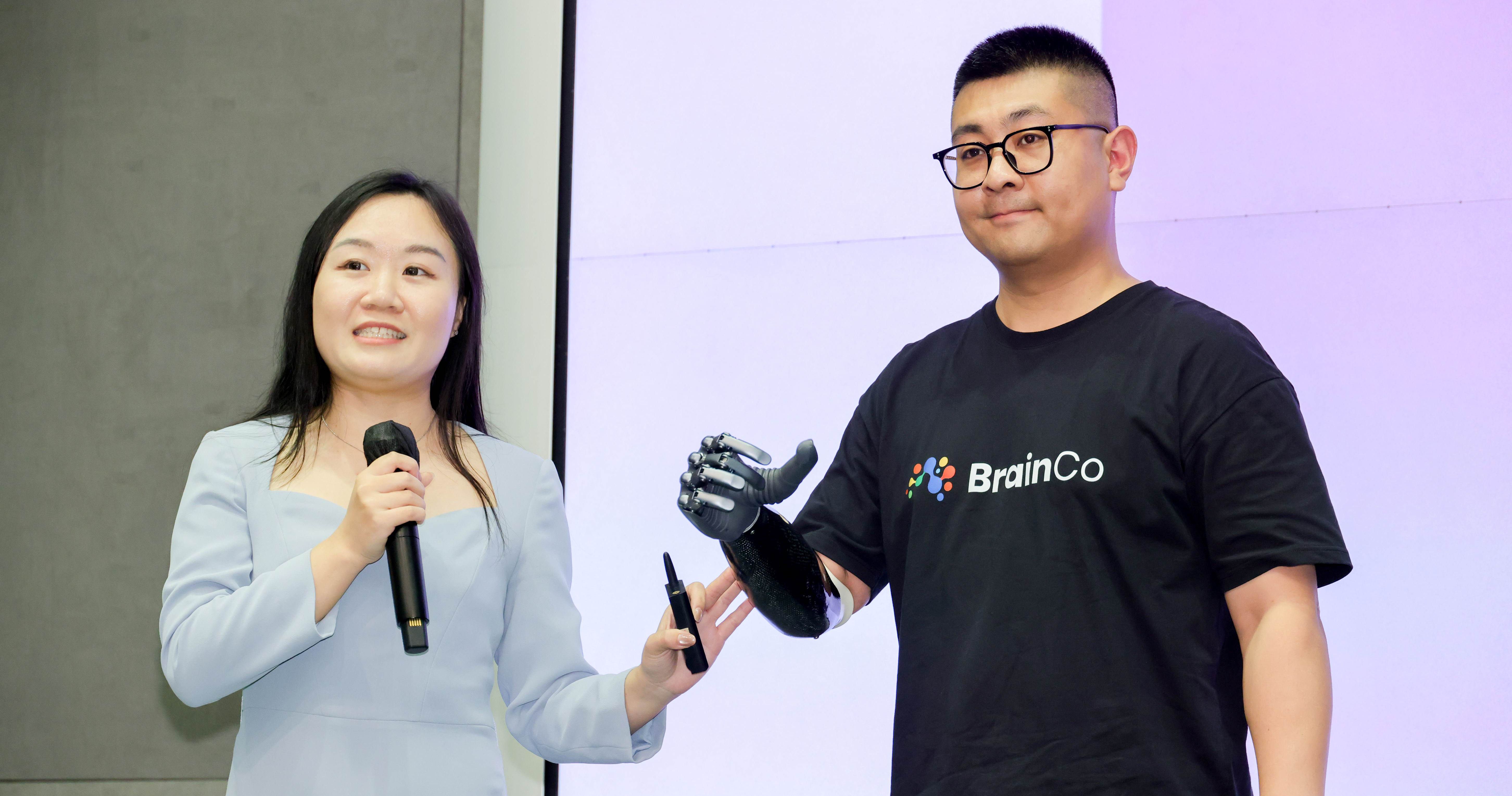
Ms Sienna Xu introduced Qiangnao’s advanced intelligent bionic hands and bionic knee joints.
|
|
|
|
During the kick-off ceremony, amputees who had successfully been fitted with the high-tech prostheses under the Programme shared their experience and stories. |
|
*** END ***
