- Home
- Research
- Research Centres and Laboratories
- JC STEM Lab of Innovative Light Therapy for Eye Diseases
- About Light and the Eye
- For Patients
- How Light Affects Your Eyes and Health
How Light Affects Your Eyes and Health
What is Light?
Light is all around us—it’s what allows us to see and experience the world. But did you know that light is also crucial for our health? It’s not just the light we see; it’s part of a bigger spectrum that includes types of radiation we can’t see, like infrared and ultraviolet.
Visible light, the type we see with our eyes, is a kind of energy known as electromagnetic radiation. This energy moves in waves, just like the ripples in water. Light has different colors, and each color is made up of light waves with different lengths. Some types of light, like blue light, have shorter waves and higher energy, while others, like red light, have longer waves and less energy1.
Figure 1 shows all types of light, including the ones we can see and the ones we can’t, like infrared and ultraviolet. This would help explain where visible light fits in.
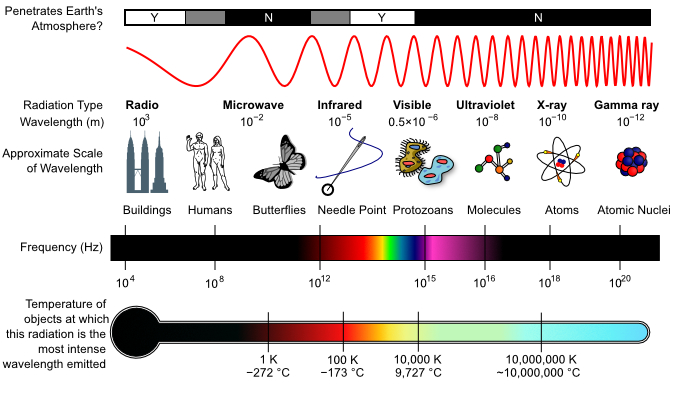
Fig 1. Electromagnetic spectrum of light. (WikiPedia-Electromagnetic spectrum. By Inductiveload, NASA - self-made, information by NASABased off of File:EM Spectrum3-new.jpg by NASAThe butterfly icon is from the P icon set, File:P biology.svgThe humans are from the Pioneer plaque, File:Human.svgThe buildings are the Petronas towers and the Empire State Buildings, both from File:Skyscrapercompare.svg, CC BY-SA 3.0, https://commons.wikimedia.org/w/index.php?curid=2974242)
How Light Affects Our Eyes and Health
Light does much more than help us see—it also plays a big role in how we feel and function every day. Our body has a natural “clock” called the circadian rhythm that helps us know when to sleep, eat, and stay awake. Light, especially blue light, helps control this rhythm2. When we get enough light during the day, it helps us feel more awake and improves our mood.
But light can also impact our health in other ways:
- Circadian Rhythm and Sleep: Exposure to blue light, which is found in sunlight, helps us stay alert during the day. This is because it helps control hormones like cortisol, which keep us awake. At night, when there’s less blue light, our body makes a hormone called melatonin, which helps us fall asleep.
- Mood and Mental Health: Getting enough sunlight can improve our mood. Sunlight triggers the release of chemicals in our brain that make us feel good. On the other hand, not getting enough sunlight, especially in winter, can lead to a condition called Seasonal Affective Disorder (SAD), where people feel down or depressed.
- Vitamin D and Bone Health: When sunlight hits our skin, it helps our body make Vitamin D, which is important for bone health. If we don’t get enough sunlight, we may not produce enough Vitamin D, which can lead to bone problems.
The Risks of Too Much Artificial Light
We also need to be careful with artificial light, especially at night. If we spend too much time under bright lights, especially blue light from screens like phones, tablets, and computers, it can interfere with our sleep. Our body may not make enough melatonin, making it harder to fall asleep at night.
Artificial light at night has also been linked to other health problems, including increased risk for obesity and even some types of cancer. So it’s important to manage our exposure to light, especially when it’s dark outside.
What is Light Therapy?
Light therapy, or phototherapy, is a treatment that uses specific types of light to help with certain health conditions. For example, it’s commonly used to treat depression, sleep problems, and skin conditions3. Light therapy usually involves sitting in front of a special light box that emits bright light, mimicking natural sunlight.
When using light therapy, it’s important to make sure the light is safe for your eyes. Most modern light therapy devices are designed to be safe, but it’s still a good idea to follow the instructions to avoid side effects like headaches or eye strain.
Figure 2 shows how light enters and interacts with our eyes.
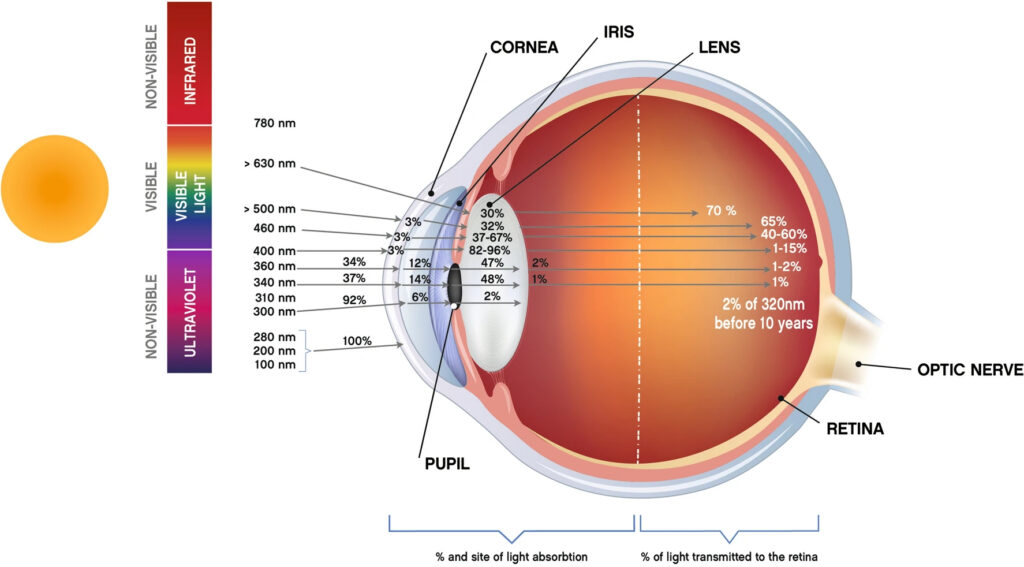
Fig 2. Light and the eye (Cougnard-Gregoire, A., Merle, B.M.J., Aslam, T. et al. Blue Light Exposure: Ocular Hazards and Prevention—A Narrative Review. Ophthalmol Ther12, 755–788 (2023). https://doi.org/10.1007/s40123-023-00675-3)
Safety Tips for Light Exposure
While light is good for our health, we need to be careful with how much and what kind of light we’re exposed to. Here are some tips to keep your eyes safe:
- Avoid staring at bright lights for long periods, especially at night. This includes things like the sun or bright artificial lights.
- If using a light therapy box, make sure it’s designed for this purpose and follow safety guidelines.
- Protect your eyes from harmful light by using sunglasses or other protective equipment if needed.
By being mindful of the light we’re exposed to, we can enjoy its benefits while also keeping our eyes safe.
References:
1. Tosini G, Ferguson I, Tsubota K. Effects of blue light on the circadian system and eye physiology. Mol Vis. 2016 Jan 24;22:61-72. PMID: 26900325; PMCID: PMC4734149.
3. Brouwer A, Nguyen HT, Snoek FJ, van Raalte DH, Beekman ATF, Moll AC, Bremmer MA. Light therapy: is it safe for the eyes? Acta Psychiatr Scand. 2017 Dec;136(6):534-548. doi: 10.1111/acps.12785. Epub 2017 Sep 10. PMID: 28891192.