PolyU Education 4.0: Reimagining Healthcare Education through Innovation and Technology
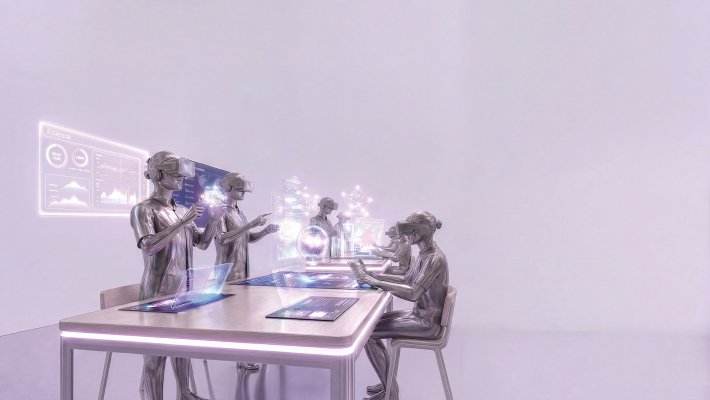
Healthcare education stands at a critical turning point. The challenges facing global health systems are growing more complex, the shortage of medical professionals is deepening, and conventional teaching methods are failing to fully bridge the gap between theory and clinical reality. More effective approaches are no longer optional—they are essential.
A new era for healthcare pedagogy
Yet this moment of challenge coincides with a moment of extraordinary opportunity. Advances in technology and artificial intelligence (AI) are opening new pathways for training healthcare professionals who are not only technically competent but also empathetic, adaptable, and prepared for the unpredictability and fast pace of real-world practice.
The Hong Kong Polytechnic University (PolyU), through its Education 4.0 initiative—which integrates AI and smart technologies into a student-centred approach—has been at the forefront of this transformation. From immersive environments that place students inside lifelike clinical scenarios to AI systems that personalise every learner’s journey, PolyU is demonstrating what the next generation of healthcare education can look like.
Immersive learning for real-world readiness
Central to PolyU’s healthcare education approach is the Hybrid Immersive Virtual Environment (HiVE), the world’s first large-scale mixed-reality hybrid classroom, located at the University’s Industrial Centre (IC).
HiVE is a fully reconfigurable immersive space that can foster not only technical skills but also cultivate the humanistic qualities—empathy, composure, communication—that define excellent healthcare. PolyU professors have leveraged the innovative facility to teach in several powerful ways.
HEROCARE: Reducing fear and sedation in paediatric radiotherapy
Radiotherapy can be an intimidating experience for young children. Large machines, loud noises, and the requirement to remain perfectly still often necessitate sedation or general anaesthesia.
Led by Professor Shara Lee, Associate Professor of the Department of Health Technology and Informatics (HTI), in collaboration with the IC engineering team, HEROCARE addresses this real and difficult clinical challenge by using HiVE to simulate the treatment environment with a customised workflow for each child.
Children are gently introduced to calming experiences—such as stargazing—before gradually transitioning into a simulated treatment setting. By rehearsing the process in this safe, immersive setting, they become more prepared, calmer, and more cooperative during actual treatments. The programme also enhances the empathy and patientcentred competencies of future radiographers, providing them with hands-on experience that conventional classroom teaching cannot replicate.
The outcomes have been transformative. Among 81 paediatric patients, the programme achieved an 84.1% reduction in anaesthesia or sedation use, alongside measurable reductions in parental anxiety. The average treatment time per fraction decreased by over 83.3%, resulting in total estimated savings exceeding HKD 20.93 million for both hospitals and families.
HEROCARE was awarded the Silver Medal in the Nurturing Values and Ethics category at the QS Reimagine Education Awards 2024, and the Global Excellence Award and the Impact Catalyst Award at the Hong Kong Arts and Sustainable Design Association International Sustainable Design Awards 2025—recognising its dual impact on education and real-world healthcare delivery.
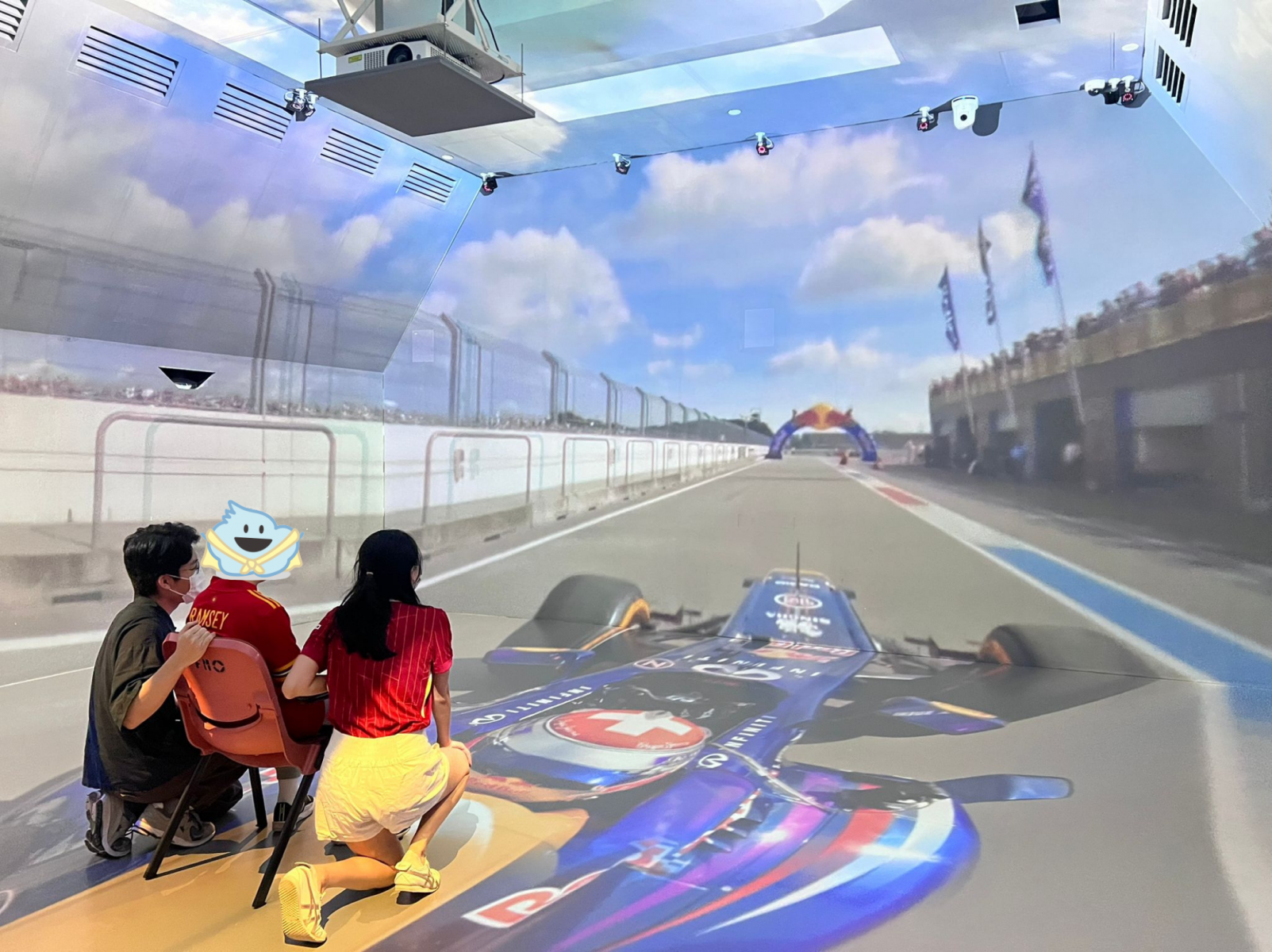
HEROCARE utilises HiVE to enhance the physical and emotional well-being of paediatric cancer patients.
HiVE CPR Drill: Redefining large-cohort emergency skills training
Traditional cardiopulmonary resuscitation (CPR) training suffers from two fundamental limitations: it cannot replicate the chaos and psychological pressure of a genuine emergency, and classroom constraints mean only a handful of students can practise meaningfully in a session. The HiVE CPR Drill tackles both problems head-on.
Students enter not a classroom but a highly realistic simulation of Nathan Road depicting a mass casualty road traffic accident—complete with ambient street noise, realistic smells, visual chaos, and up to eight wireless manikins, each with individually configurable physiological conditions.
An entire cohort of 120 students can complete meaningful, hands-on CPR practice within a single 2-hour session—a scale of delivery that conventional training simply cannot match. Students must triage victims, perform CPR, manage bystanders, and sustain efforts under time pressure that mirrors an actual emergency response window. The system captures real-time performance data and provides each student with individual feedback on compression depth, rate, and interruptions.
Most significantly, these training sessions produced a statistically significant increase in willingness to perform chest compressions on a stranger. This shift in mindset is life-changing; in the critical minutes before paramedics arrive, it is often a bystander’s readiness that saves a life.
Future enhancements will include an AI chatbot integrated with virtual characters, allowing students to practise verbal commands and leadership skills during the scenario.
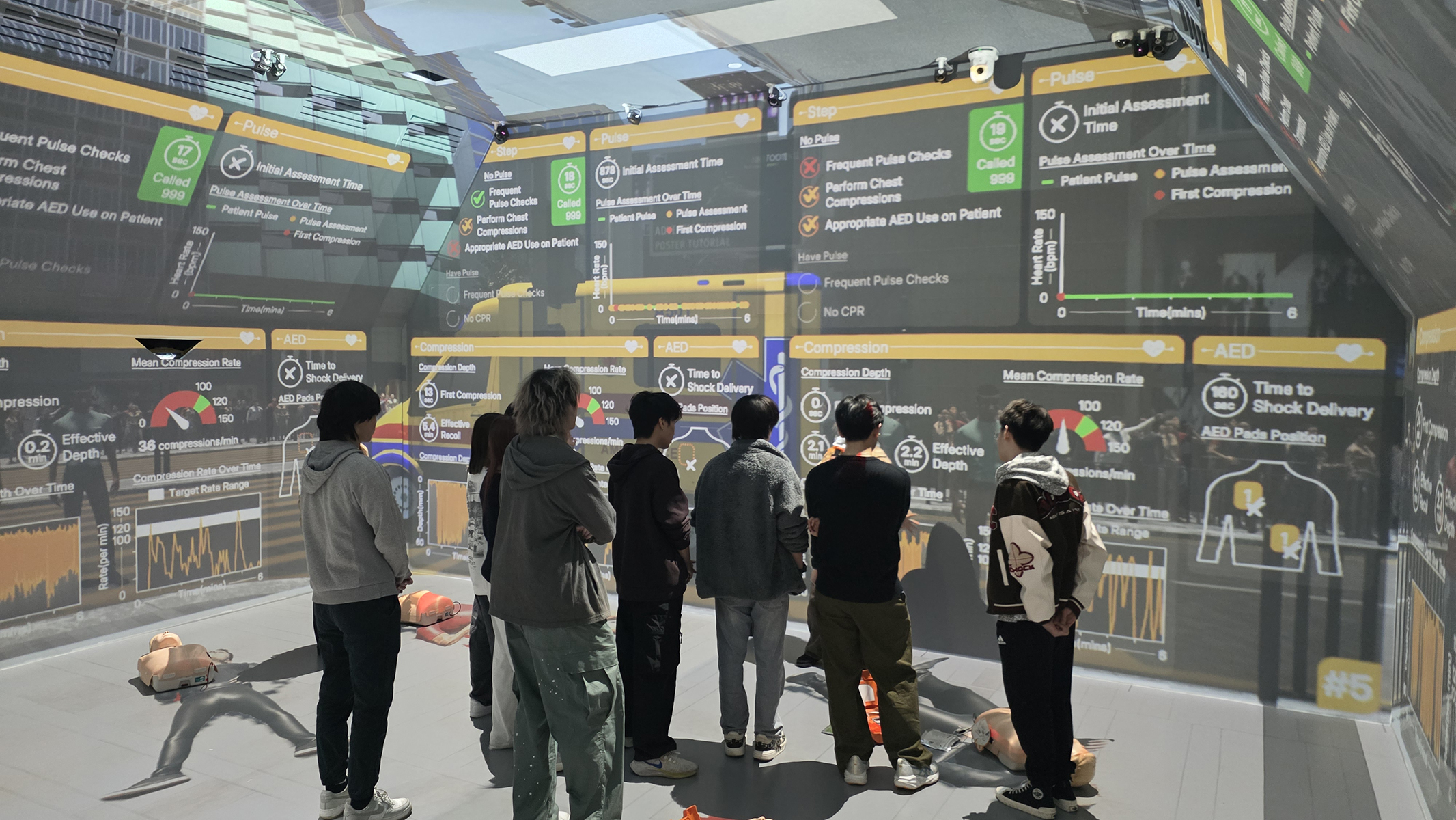
Students are presented with a realistic emergency situation with real-time performance data under the HiVE CPR Drill.
High-fidelity simulation for advanced clinical training
Professor Shirley Ngai, Associate Head and Associate Professor of the Department of Rehabilitation Sciences (RS), whose pioneering contributions to allied healthcare education were recognised with the 2025 University Grants Committee Teaching Award and the PolyU President’s Award for Outstanding Achievement 2025, has also been employing HiVE and VR/AR technologies to transport students into realistic hospital settings, working through clinical scenarios that give them an authentic sense of what practice looks and feels like before they ever set foot on a ward, bridging the gap between theory and the real-world.
For students at a more advanced level, Professor Ngai has promoted high-fidelity simulation laboratories that offer more intensive training, where students work with sophisticated manikins whose vital signs can be adjusted in real time by instructors. These sessions demand clinical reasoning and on-the-spot decision-making under realistic pressure, while also allowing students to practise complex procedures and responses in a safe environment without risking harm to real patients.
Crucially, each simulation is followed by a structured debriefing, providing students with personalised feedback that supports continuous improvement. The combination of technological tools and staff guidance creates a training experience that is both immersive and pedagogically rigorous, ultimately contributing to improved patient care outcomes.
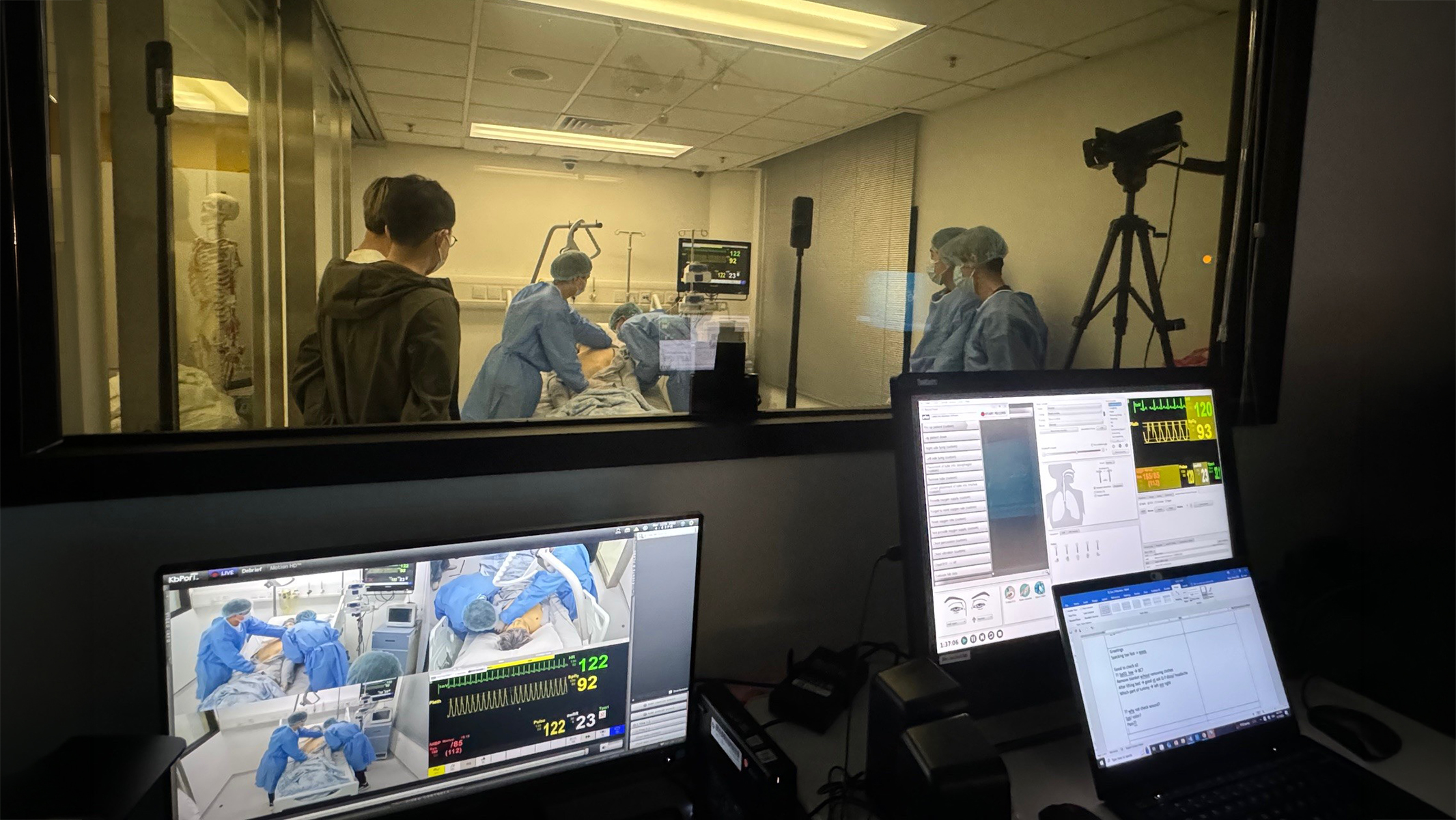
Physiotherapy students receiving intensive training in a high-fidelity simulation ward
Immersive anatomy in the metaverse
The “Metaverse Gallery for Brain Imaging Anatomy”, developed under the leadership of Professor Helen Law, Associate Head and Associate Professor of HTI, is another powerful demonstration of immersive pedagogy.
Traditional online learning often presents content through flat screens, limiting engagement and collaboration. This “gallery” reimagines education by harnessing the metaverse to transform passive study into an active, three-dimensional adventure. Students can explore a dynamic digital space, moving beyond static diagrams to interact with educational content.
This space provides specialised hubs for complex subjects. For instance, students can walk through the medical imaging anatomy module, visualising the human body layer by layer in a way impossible in a textbook.
Interaction is further enhanced through an integrated AI chatbot, acting as a 24/7 guide to answer questions and provide instant feedback.
To reinforce concepts through play, the gallery also embeds interactive minigames that turn assessment into an engaging challenge. By combining exploration, conversation, and gamification within a persistent virtual world, this project demonstrates how the metaverse can drive deeper understanding and foster a genuine sense of presence and community in next-level online learning.
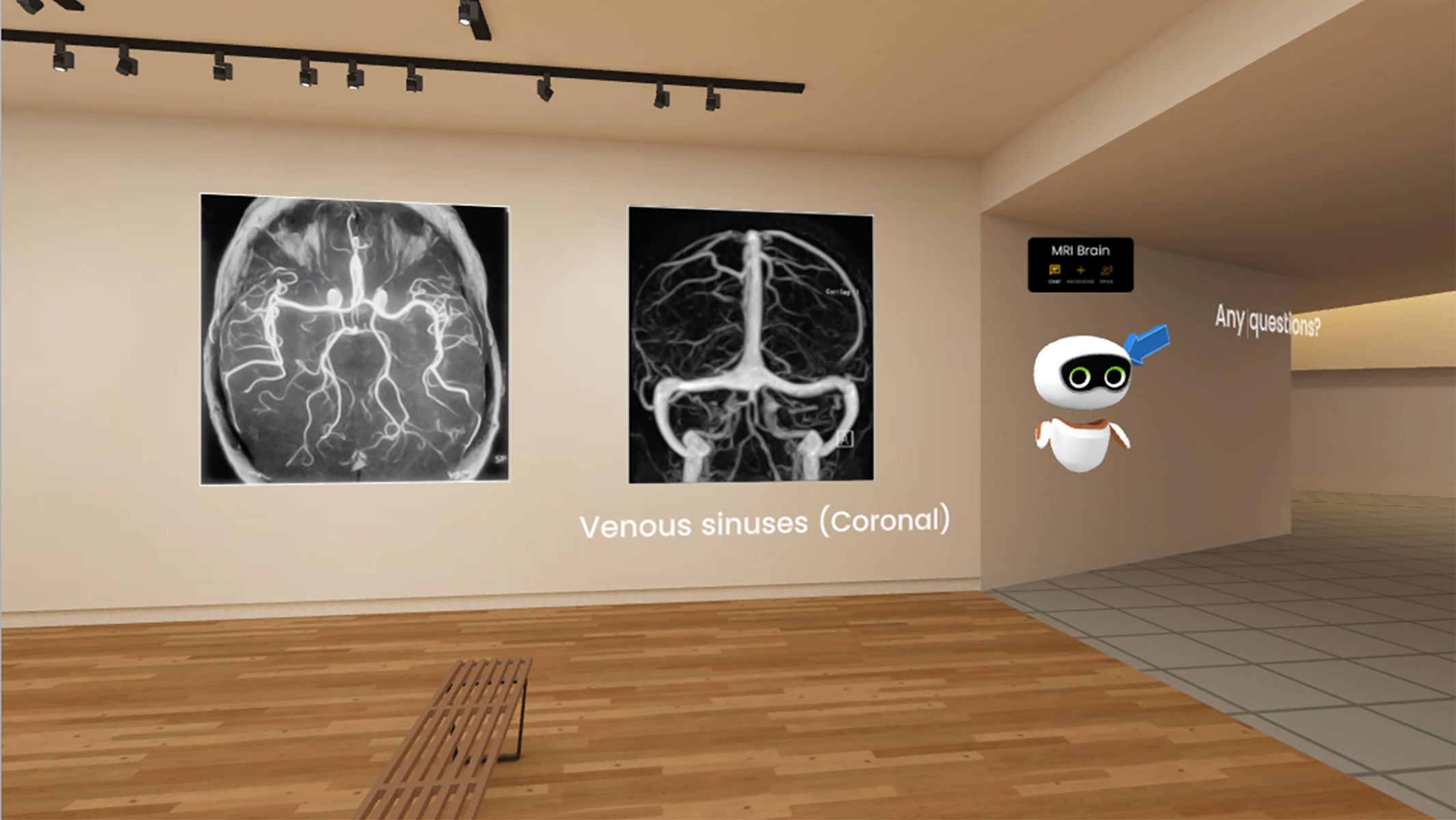
An area in the immersive “Metaverse Gallery for Brain Imaging Anatomy” about Magnetic Resonance Imaging
The AI advantage: personalised and adaptive pathways
Alongside immersive technologies, PolyU is advancing AI-driven learning systems that personalise education and support students more effectively. In healthcare education, where learners must master large amounts of complex information, AI can help students progress at their own pace while receiving timely feedback and targeted support.
Professor Ngai, in collaboration with a team at the Hong Kong University of Science and Technology, has developed an AI-powered tutoring system focused on areas such as anatomy and cardiopulmonary disease management.
The system provides real-time interactive feedback through quizzes and conversational learning, allowing students to ask questions and receive instant, tailored responses. A backend analytics engine tracks engagement patterns and learning progress, enabling the platform to adapt the content it delivers to each student’s needs. Mobile learning applications further extend this flexibility, allowing students to access interactive educational resources at any time and from any location.
Another initiative is the Learning Activity Management System (LAMS) with generative AI, led by Professor Wong Chi-ming, Associate Professor of HTI, which has been utilised by medical laboratory students.
Rather than delivering identical content to every student, LAMS constructs personalised, syllabusaligned learning pathways while preserving staff oversight. Staff define learning outcomes and approve materials, and the system recommends targeted resources, provides real-time progress dashboards, and enables students to study independently, collaborate with peers, or receive AI-guided tutoring—all under teacher supervision.
Post-survey evaluations show that over 84% of students rate LAMS’s effectiveness positively, with real-time progress tracking emerging as the most valued feature. In one course, Cells in Health and Diseases, students who used LAMS achieved significantly higher average final scores than those who did not, further underscoring the platform’s effectiveness.
By integrating knowledge across different healthcare domains and academic years, LAMS also addresses a critical need: ensuring students can recap and synthesise interdisciplinary insights essential for informed clinical decision-making.

AI-powered platforms enhance students’ understanding of healthcare.
Shaping the healthcare leaders of tomorrow
The initiatives outlined here represent more than incremental improvements—they signal a fundamental shift in how healthcare professionals are trained. By combining immersive simulation with AI-driven personalisation, PolyU is producing graduates who are not only clinically skilled but emotionally resilient, ethically grounded, and ready to lead in complex, high-pressure environments.
As healthcare systems worldwide contend with mounting demands, the lessons emerging from these innovations carry relevance far beyond any single institution. They point towards a future in which technology does not replace the human heart of healthcare education but amplifies it—ensuring that every student is better prepared, every patient is better served, and the gap between the classroom and the clinic continues to close.