Researchers Plan Next-generation AI Co-pilot to Tackle Eye Doctor Shortage
Other Articles
Eye care is facing a growing crisis, with too many patients and too few specialists
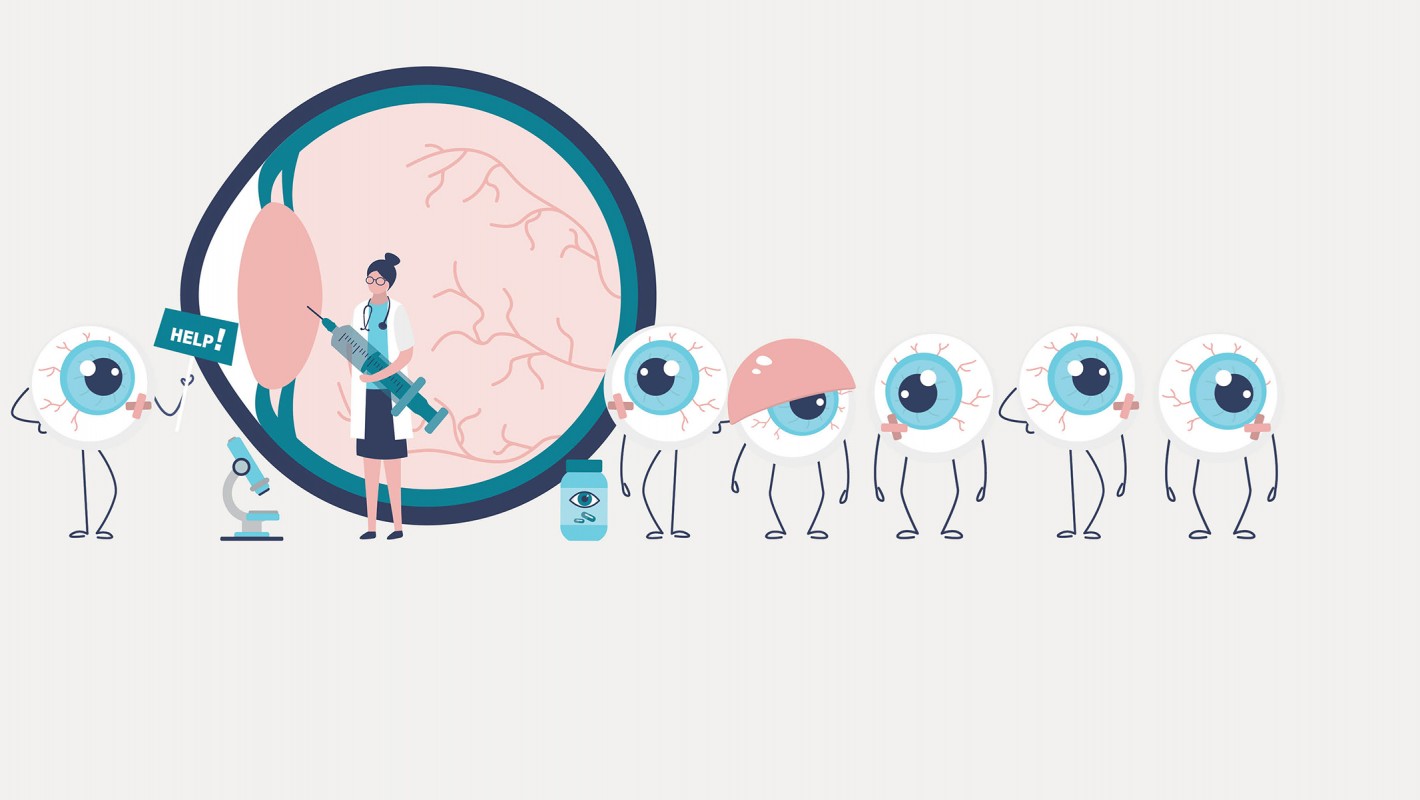
By 2050, over 500 million people worldwide will face moderate to severe vision impairment or complete blindness. That includes Hong Kong, which is seeing growing pressure on ophthalmology services as the population ages. Chronic diseases such as diabetic retinopathy require constant screening and monitoring. But a shortage of specialists is leading to longer waiting times at clinics, and increasing the risk of permanent vision loss.
To address this challenge, PolyU researchers are planning the development of “EyeAgent 2.0”, a next-generation clinical-grade ophthalmic artificial intelligence (AI) co-pilot system. Rather than replacing doctors, the proposed system is designed to support clinicians in diagnosis, treatment planning, follow-up management, and clinical documentation, with the aim of improving efficiency and consistency in eye care.
Building on earlier success
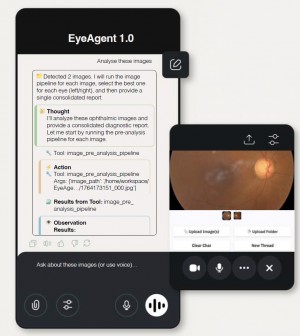
EyeAgent 1.0 is a clinical-grade AI co-pilot system featuring a foundation model, the integration of 50 types of multimodal medical data, and a clinical reasoning simulation framework.
The planned EyeAgent 2.0 project builds on the team’s earlier EyeAgent 1.0, which integrated multiple sources of medical information, including ophthalmic images and clinical text, to support diagnostic reasoning. Pilot feedback from hospitals in Hong Kong and the Chinese Mainland has encouraged the team to further develop the system into a more advanced, clinically oriented AI platform.
Towards a more advanced clinical AI platform
EyeAgent 2.0 is envisioned as a more advanced system, trained and validated using large-scale real-world longitudinal, multimodal clinical data from leading ophthalmic centres across different regions. These datasets are expected to include not only diverse imaging modalities—such as fundus photography, optical coherence tomography, angiography, and visual field testing—but also time-series clinical records that capture disease progression and treatment responses over time.
The goal is to move beyond single time-point analysis and develop an AI co-pilot capable of supporting longitudinal clinical reasoning across the entire patient journey—from initial assessment and diagnosis to treatment planning, disease monitoring, progression prediction, and adaptive follow-up decision-making.
Collaboration, not replacement
The development of EyeAgent is grounded in a philosophy of human-AI collaboration, where AI is designed to augment—rather than replace—clinical expertise. Professor He Mingguang, Chair Professor of Experimental Ophthalmology and Henry G. Leong Professor in Elderly Vision Health at the School of Optometry, and Director of the Research Centre for SHARP Vision, emphasises that clinicians will remain central to all stages of decision-making.
When successfully developed and validated, EyeAgent 2.0 is expected to support clinicians by streamlining routine processes, such as patient data integration and clinical documentation, while also enhancing clinical consistency and decision-making efficiency. This will enable doctors to focus more on complex case management, patient interaction, and higher-level clinical judgment.
Our goal is to develop EyeAgent 2.0 into a clinical-grade AI co-pilot that can eventually meet SaMD (Software as a Medical Device) regulatory requirements. We aim to incorporate diverse clinical data for training and validation, and to test the system in real-world clinical settings.
~ Professor He Mingguang
Path to real-world impact
The team is seeking government funding to support the full development and validation of EyeAgent 2.0. The proposal includes system development, clinical validation, local piloting, and the eventual expansion to the Guangdong–Hong Kong–Macao Greater Bay Area, as well as other regions in the Chinese Mainland and overseas markets.
EyeAgent 2.0 represents PolyU’s ambition to advance interdisciplinary innovation in healthcare. When successfully developed, the system will demonstrate how human expertise and AI can work together to deliver more efficient, accessible, and sustainable eye care.
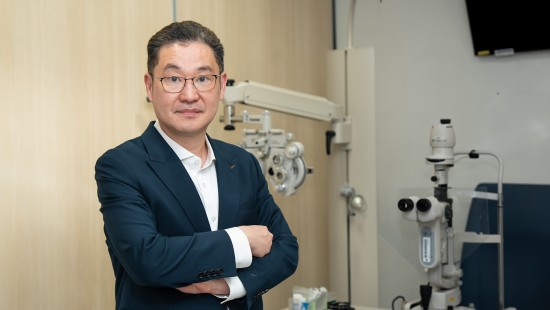
Professor He Mingguang
- Chair Professor of Experimental Ophthalmology
- Henry G. Leong Professor in Elderly Vision Health
- Director of the Research Centre for SHARP Vision