Innovation in Our DNA, Impact Everywhere

Thousands of votes cast for PolyU research stories underscored the community’s strong resonance with our innovative spirit.
At PolyU, innovation is not an aspiration but a way of being. It is sustained by a deep‑rooted research culture that values intellectual discipline, curiosity and purpose, and by a shared commitment to turning knowledge into outcomes that matter to society.
The inaugural “PolyU Top 10 Research & Innovation Stories of the Year” campaign was held in March 2026 to highlight the most significant advances in 2025 that embody the University’s motto, “To learn and apply, for the benefit of mankind”. More than 7,700 members of the public and the PolyU community took part in the voting exercise. Together with the assessments of a professional judging panel, ten outstanding projects were selected as awardees.
“Each achievement reflects our researchers’ rigorous, truth seeking spirit and courage to break new ground,” said Professor Christopher Chao, Senior Vice President (Research and Innovation). “By bridging original discoveries with real-world applications, these projects improve lives, enable industrial upgrading, and contribute to the global innovation landscape.”
Winning projects span five strategic research areas
The inaugural selection of winning projects was drawn from a short list of 20 remarkable research and technology translation stories announced in 2025. They spanned five strategic research areas, including artificial intelligence (AI) and data science, life sciences and healthcare, environment and sustainability, materials science, and smart cities.

1. Taking aim at dangerous ice
Materials science
Ice can be a serious safety hazard, but eliminating it usually involves hard manual labour and expensive machinery. Taking their cue from nature, a PolyU research team led by Professor Wang Zuankai, Associate Vice President (Research), Kuok Group Professor in Nature-Inspired Engineering and Chair Professor of Nature-Inspired Engineering, and Professor Yao Haimin, Associate Professor of the Department of Mechanical Engineering, developed a solution that imitates the mechanism that fungi use to shoot out spores during reproduction. The result is a special elastic surface dotted with tiny spring-like pillars, which capture energy from a water droplet as it freezes and expands, then catapults the slippery ice away before it has a chance to accumulate. What’s more, no external power source is required!
This ingenious approach promises to improve the lives of billions of people living in, or travelling to, countries where temperatures fall below zero. Potential applications include everything from roads and roofs, to aircraft, wind turbine blades, and overhead cables that carry vital power to communities in the world’s coldest communities.
The team’s research paper titled “Freezing droplet ejection by springlike elastic pillars” was featured in Nature Chemical Engineering.

2. Exploring how melting ice and rising sea levels could inundate coastal cities
Environment and sustainability
If Greenland’s three-kilometre-thick ice sheet melted completely, sea levels could increase by up to seven metres and inundate coastal regions where approximately 40% of the world’s population lives.
In collaboration with an international research team, Professor Chen Jianli from the Department of Land Surveying and Geospatial Science and Research Institute of Land and Space has made important progress in exploring how ice movement affects global sea levels.
The team pioneered the use of the Greenland GPS Network (GNET), coupled with satellite gravity measurements from NASA’s Gravity Recovery and Climate Experiment, to gain vital insights. The findings reveal that current models, derived from regional climate projections, may have significantly overestimated water retention and underestimated snowmelt runoff.
“Our research will contribute to achieving accurate model performance for warmer years, aiding in the projection of ice-sheet behaviour and its impact on sea-level in the coming decades,” said Professor Chen.
The research has been published in the peer-reviewed scientific journal Nature.

3. Weight management could be key to preserving brain health
Life sciences and healthcare
The ageing global population is seeing increasing levels of neurodegenerative diseases. While these conditions currently lack a cure, research by Professor Qiu Anqi of the Department of Health Technology and Informatics could prevent them as long as possible.
Based on analysis of over 500,000 UK Biobank participants, the research reveals a link between persistent and increasing obesity and greater impairment in brain structure and cognitive function. The good news is that long-term weight management could be one of the keys to preserving brain health.
“There has been a notable rise in neurodegenerative diseases, such as Alzheimer’s disease, Parkinson’s disease, and others. This research proposes that maintaining long-term weight control can contribute to improved brain health,” said Professor Qiu.
The team plans to adopt a “multiomics” approach to explore the biological pathways that influence both brain and body health. The research entitled “Long-term obesity impacts brain morphology, functional connectivity and cognition in adults” was published in Nature Mental Health.

4. Advanced Therapy Product Lab offers hope for spinal cord injury patients
Life sciences and healthcare
More than 15 million people around the world live with spinal cord injuries. PolyU’s recently launched Advanced Therapy Product Laboratory is offering patients new hope, through clinical research into immunotherapy, cell therapy, gene therapy and regenerative medicine.
The University is planning to manufacture cell therapy products. These will be complemented by post-surgery support leveraging the expertise of the Department of Rehabilitation Sciences, making PolyU the only local university to offer a one-stop solution from treatment to rehabilitation.
Professor Larry Chow Ming-cheung, Head of the Department of Applied Biology and Chemical Technology, sees significant potential for the production of advanced therapy products in Hong Kong, and the city’s development into an international health and medical innovation hub.
“Through collaboration with industry partners, we aim to achieve breakthroughs in cell therapy and immunotherapy, translating the research outcomes of the University by facilitating cuttingedge medical research and clinical trials, thereby advancing Hong Kong’s medical technology development,” he said.

5. Setting a new milestone in solar energy performance
Materials science
Two-terminal perovskite/silicon tandem solar cells outperform single-junction designs in power-conversion efficiency (PCE), but interface limitations hinder wider use. PolyU researchers developed a bilayer passivation strategy, achieving a record 33.89% PCE.
Professor Yin Jun, Assistant Professor of the Department of Applied Physics, and his research team combined advanced material design and a device optimisation strategy to overcome longstanding efficiency barriers. In addition to record-breaking efficiency, the cells also deliver significantly improved longterm stability.
“Our research is driven by the vision of breaking traditional efficiency barriers in solar cells. By integrating advanced materials like perovskites with established silicon technologies, we harness the best of both worlds to redefine solar cell performance,” said Professor Yin.
The multidisciplinary approach not only showcases the tremendous potential of photovoltaic technology, but also lays a solid foundation for the development of renewable energy.
Conducted in partnership with LONGI Green Energy Technology Co. Ltd and Soochow University, the groundbreaking findings have been published in the international journal Nature.

6. Accelerating generative AI-assisted video analysis
AI and data science
AI technology is evolving rapidly. But AI models still struggle with a task that comes naturally to any moviegoer—making sense of videos longer than about 15 minutes.
Now Professor Chen Changwen, Interim Dean of the Faculty of Computer and Mathematical Sciences and Chair Professor of Visual Computing, is changing the rules. His novel video-language agent called VideoMind enables AI models to analyse and answer questions about long video content by emulating the way people think.
According to Professor Chen, the human brain uses approximately 25 watts of power when watching and understanding videos, which is about a million times less than a supercomputer with equivalent computing power. VideoMind overcomes the performance limitations of AI models in video processing, and also serves as a modular, scalable, and interpretable multimodal reasoning framework.
“We envision that VideoMind will expand the application of generative AI to various areas, such as intelligent surveillance, sports and entertainment video analysis, video search engines and more,” he said.

7. Chinese medicine extract promises new treatments for Alzheimer’s and other diseases
Life sciences and healthcare
Found in traditional Chinese medicines (TCM), the compound tetrandrine is known for its potent antiviral, anti-inflammatory and anti-cancer properties. However, the precise mechanism of action remains unclear.
Using a photoaffinity probe and other advanced tools, PolyU researchers have discovered that tetrandrine actually works by blocking the transport of sphingosine and inhibiting calcium channels. The research opens new avenues for drug discovery and treating diseases caused by calcium imbalance, including neurodegenerative disorders like Alzheimer’s and Parkinson’s, as well as certain metastatic cancers.
Professor Ben Ko Chi-bun, Associate Professor of the Department of Applied Biology and Chemical Technology and his team have also developed a technology platform to facilitate studies of natural product biology, and enable researchers to identify the molecular targets of other natural compounds, particularly those derived from TCM.
The findings have been published in Nature Communications, in a paper titled “Tetrandrine regulates NAADP-mediated calcium signalling through a LIMP-2-dependent and sphingosine-mediated mechanism.”

8. PolyU is reshaping AI training and integration
AI and data science
In less than a year, the new PolyU Academy for Artificial Intelligence (PAAI) has already achieved milestones in Generative AI (GenAI) research.
Under the leadership of Professor Yang Hongxia, Executive Director of PAAI, Associate Dean (Global Engagement) of the Faculty of Computing and Mathematical Sciences, and Chair Professor of Generative Artificial Intelligence of the Department of Computing, PAAI is pushing the boundaries of training with a novel collaborative GenAI paradigm known as Co-GenAI, which significantly lowers resource requirements. Removing resource barriers like graphics processing units monopolies will pave the way for a more inclusive environment that enables global institutions to participate in AI research.
“Ultra-low-resource foundation model training, combined with efficient model fusion, enables academic researchers worldwide to advance GenAI research through collaborative innovation,” Professor Yang said.
PAAI has also demonstrated the potential of its training pipelines in applications across specific domains, including state-of-the-art medical foundation and cancer AI models that achieve best-in-class performance.
9. Commercialising ultra-effificient solar cells
Materials science
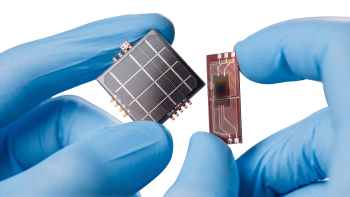
PolyU researchers investigating the latest perovskite/silicon tandem solar cells (TSCs) believe that their energy conversion efficiency could be significantly increased from the current maximum of approximately 34% to around 40%. They hope to accelerate the commercialisation of the technology through industry-academia-research collaboration, in line with the Nation’s strategic plan of carbon peaking and neutrality.
The team made up of distinguished scholars, including Professor Li Gang, Sir Sze-yuen Chung Endowed Professor in Renewable Energy and Chair Professor of Energy Conversion Technology, and Professor Yang Guang, Assistant Professor, both with the Department of Electrical and Electronic Engineering, has already published a review article entitled “Towards efficient, scalable and stable perovskite/silicon tandem solar cells” in the international journal Nature Photonics.
“While lab-scale devices have shown impressive efficiency advancement, further efforts are needed to improve their reliability, including minimising efficiency losses from small-area devices to large-area modules,” said Professor Li.
“By providing a stable supply of high-efficiency renewable energy, we aim to deliver green and reliable power support for high-energy-consuming industries,” added Professor Yang.

10. Hong Kong’s first chip-based quantum network
Materials science
Quantum technology is reshaping the global landscape, with profound implications for computing and cryptography. As quantum computing threatens existing encryption and data security, governments worldwide are advancing new solutions to address the emerging cybersecurity challenges of the quantum era.
PolyU has achieved a breakthrough by successfully conducting a cybersecurity test on the world’s longest optical fibre quantum network, built utilising a quantum chip platform.
“Our quantum communication encryption is grounded in the principles of quantum mechanics: since quantum states cannot be cloned, it is theoretically almost impossible to crack,” said Professor Liu Ai-Qun, Director of the Research Institute for Quantum Technology and Chair Professor of Quantum Engineering and Science of the Department of Electrical and Electronic Engineering.
“This small yet mighty quantum chip has the potential to safeguard Hong Kong’s digital financial system and its reputation as an international financial hub, making it a critical asset for our Nation’s economic development,” he said.

A popular project just missed the top ten
Among the nominated stories, three projects proved overwhelmingly popular, winning the highest number of votes from members of the public. The only one that missed the top ten is the research by a team at the School of Fashion and Textiles that is pioneering smart and sustainable personal cooling technologies to combat extreme heat, which causes nearly half a million deaths a year.
The latest developments include:
iActive™ intelligent sportswear uses low voltage-driven artificial “sweat glands” to keep the skin dry and remove sweat up to three times faster than peak human sweating.
Omni-Cool-Dry™ is a breathable fabric that reflects solar and ground radiation and emits mid-infrared body heat, lowering skin temperature by about 5°C compared to conventional fabrics.
Thermo-adaptive Soft Robotic Clothing keeps the inner surface 10°C cooler than conventional insulating garments even when the exterior temperature reaches 120°C.
SweatMD is an all textile, non-invasive wearable that uses skin-friendly sensing yarns to send health insights, like fatigue indicators and dehydration alerts, to a smartphone.
“Collectively, these innovations form an AI ready ecosystem: sensors quantify physiology, models predict cooling demand, and intelligent clothing actuates targeted responses. Integrating textile sensors, fibre-based coolers, and on-body energy harvesters has the potential to enable self-sustained cooling,” said team leader Professor Shou Dahua, Limin Endowed Young Scholar in Advanced Textiles Technologies and Associate Professor, School of Fashion and Textiles.
The research was published in a peer-reviewed paper in the journal, Science, entitled “Sustainable personal cooling in a warming world”.
Increasing community-wide understanding
The campaign has deepened community-wide understanding of PolyU’s research excellence and innovation capabilities, and brought well-deserved recognition to the University’s dedicated researchers. Professor Chao is confident that the campaign will continue to shine a spotlight on the latest achievements, and progress in fostering a dynamic research ecosystem that transforms bold ideas into impactful solutions. “In doing so, we will support Hong Kong’s development as an international innovation and technology hub and help shape a better future for the world,” said Professor Chao.