Reimagine Education: PolyU’s Vision for Education 4.0 in the AI Era
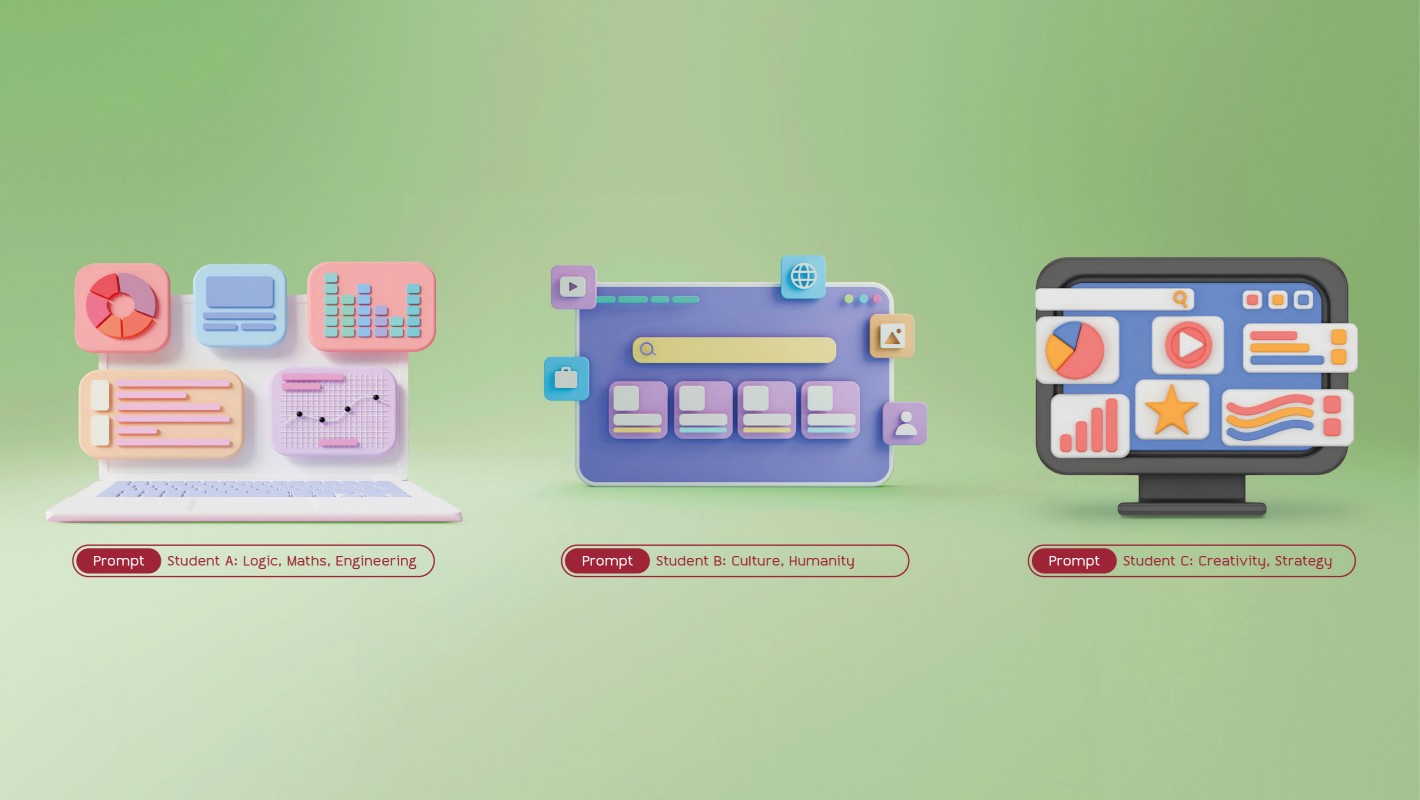
As the world enters a new era shaped by artificial intelligence, The Hong Kong Polytechnic University (PolyU) is taking a step to transform learning and teaching. Under the leadership of Professor Cao Jiannong, newly appointed Vice President (Education) in September 2025, PolyU is advancing towards Education 4.0—an AI-empowered, student-centred model that underscores the University’s pedagogical attempt and reinforces its standing as a world-class innovative institution.
From traditional classrooms to AI-powered personalised learning
For decades, education has largely followed a uniform approach—teachers decide what and how students learn. PolyU's vision for Education 4.0 represents a shift towards empowering students to take ownership of their learning.
Every student is different. Their levels, backgrounds, and learning preferences vary significantly. The future of education lies in personalised and self-directed learning.
~ Professor Cao Jiannong
In this new model, students will design their own learning pathways, supported by AI and new pedagogy. The idea is to develop and leverage on PolyU’s AI and digital platforms to gather data to understand students’ progress, guide and match resources to their individual needs. With AI-backed support, the University aims to foster independent, self-motivated learners who are future-ready—equipped with creativity, adaptability, problem-solving, and collaboration skills to face a rapidly changing world.
Building the foundations for digital and AI transformation
The transformation relies on a strong digital backbone. PolyU has set its sight on establishing a Digital Education Data Hub to unify teaching processes and consolidate data across departments, enabling intelligent and timely decision-making. This builds on earlier experience from Professor Cao’s time as Dean of the Graduate School, where he developed a one-stop, data-driven admission system with AI evaluation to improve efficiency and transparency.
At the institutional level, this digital foundation will support the establishment of an integrated, data-informed educational ecosystem. The ultimate goal is data-driven management and teaching that ensures quality assurance and continuous improvement across all aspects of education.
Introducing PolyU’s Education 4.0 initiative
In parallel with Industry 4.0's smart tech-driven demands, Education 4.0 transforms education to cultivate a new set of talents. It marks the next stage of learning and teaching. Where previous eras—from printed materials to electronic communication to internet-enabled multimedia—remains largely teacher-centred, Education 4.0 puts the student at the core. An AI-empowered learning environment aims to provide a personalised, interactive, and flexible education. Students engage in active learning through discussion, exploration, and application, while teachers evolve into advisors and facilitators who mentor students, guide them through resources, and inspire critical thinking.
Fostering educational innovation through IHERD
PolyU’s Institute for Higher Education Research and Development (IHERD), established two years ago, anchors the University’s transformation as a hub for innovation, research, and collaboration. It comprises various units. The Digital Transformation Unit takes on initiatives that strive to advance campus-wide digital adoption and unified data systems for academic and administrative support. The Educational Research Centre leads studies on emerging teaching technologies and AI in education, spanning AI teaching assistants, curriculum reforms, policy, and ethics. The Education Development Centre focuses on teacher training and pedagogy innovation, enabling disciplinary experts to leverage AI to enhance teaching.
To accelerate education research, PolyU also established an Education Innovation Committee to support large-scale, theme-based projects. The University will invest in AI-powered learning tools, teaching methodology reform, teacher development and empowerment, student-centred curriculum design, and student wellbeing. Education research at PolyU targets to bring together AI, smart technology, education psychology, and pedagogy to drive meaningful impact.
A bold start: AI as a tool for learning
Among the University’s most innovative projects is a comprehensive reform of language education. Starting in 2026/27, PolyU will launch a compulsory, 3-credit course for all first-year-first-degree students—AI as a Tool for Language Learning—that shifts the focus from placement to empowerment. The course teaches all students to use AI strategically to enhance proficiency in English and Chinese and to manage workplace communication confidently and responsibly.
This foundation course marks a change in learning: instead of relying solely on instruction, they will use AI tools to drive their own progress. After completing it, students can select from a suite of elective language modules, gaining greater flexibility and autonomy. To support this approach, PolyU is developing an “AI-powered competency assessment system”. Students will be able to take AI-assisted tests multiple times, receive feedback, and be guidedtheir growth. The model rewards progress and mastery rather than merely achievement, and results will be reflected on transcripts.
This pilot may pave the way to similar AI-empowered learning across disciplines—from AI as a tool for marketing to AI as a tool for engineering and science—broadening the University’s reach in AI-enabled pedagogy.
Enriching student skills through AI-driven applications
Beyond course design, PolyU is building practical AI applications that strengthen students’ professional and interpersonal capabilities, for example, an AI debate platform that helps students enhance communication and critical thinking through interactive, AI-generated debates. A job interview simulation tool can use AI to provide tailored feedback, boosting students’ confidence and readiness for real-world employment. These tools in the pipeline aim to make learning more interactive and reflective, enabling students to learn by doing and receive immediate, actionable insights.
Engaging partners for global educational transformation
To accelerate progress and foster knowledge exchange, PolyU is establishing an Education Transformation Consortium that brings together leading universities from China and around the world. Invitations have been extended to institutions such as Xi’an Jiaotong University, Zhejiang University, Fudan University, and Tongji University in the Chinese Mainland, as well as internationally recognised universities including those in Finland, renowned for educational innovation. The Consortium will serve as a platform to co-create best practices, share research, and drive forward AI-enhanced education globally. This will also help reinforce Hong Kong’s status as a hub for innovation and technology.
Empowering future-ready graduates
Ultimately, PolyU aims to redefine higher education through AI and digital transformation, nurturing graduates who are not just knowledgeable but adaptable, innovative, and capable of lifelong learning. Through Education 4.0, IHERD, and AI-enabled learning tools, the University is building an ecosystem that empowers both students and teachers to grow, innovate, and lead in an AI-driven future.
Education must evolve with the times. By embracing AI and digital transformation, we are not replacing the human element of teaching—we are enhancing it. We are giving both teachers and students new power to learn, to create, and to thrive.
~ Professor Cao Jiannong
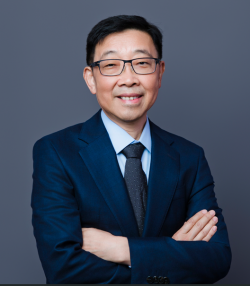
Professor Cao Jiannong
• Vice President (Education)
• Otto Poon Charitable Foundation Professor in Data Science
• Chair Professor of Distributed and Mobile Computing, Department of Computing
• Director of the Institute for Higher Education Research and Development