New Hope for Parkinson’s and Alzheimer’s Sufferers
The Innovative LifeChip platform is mixing Chinese medicine and cutting-edge technology to accelerate the search for natural ways to treat debilitating neurodegenerative diseases
One worrying aspect of an ageing global population is the increase in deadly neurodegenerative diseases, such as Alzheimer’s and Parkinson’s, as well as neurological disorders like insomnia, depression, and anxiety. However, hope is on the horizon. Professor Simon Lee Ming-yuen, Chair Professor of Biomedical Sciences at the Department of Food Science and Nutrition, has won funding from the Research, Academic, and Industry Sectors One-plus (RAISe+) Scheme to develop new drugs and nutraceuticals derived from foods and other natural sources, to treat these debilitating conditions.
His research includes LifeChip – a cutting-edge technology platform that combines traditional Chinese medicine with next-generation DNA sequencing, AI-driven compound discovery, advanced chemical separation, high-throughput in vivo screening, and synthetic biology. This highly integrated strategy offers tremendous potential for both disease prevention and treatment.
Multidisciplinary approach pinpoints powerful therapeutics
Professor Lee’s research interests are diverse, covering everything from brain disorders and neurodegenerative diseases to oncology, environmental health, and toxicology. He is fascinated by drug discovery, using natural products and medicinal plants found in his ancestral home of Southern China. This broad outlook laid the groundwork for the multidisciplinary LifeChip platform, which condenses the entire drug discovery process onto a chip the size of a few coins.
Usually in the laboratory, a researcher may screen only a few drug candidates, but LifeChip can automate hundreds. Through this technology, we can find some of the natural ingredients we are looking for faster and more accurately. We have also improved the chip, placing cells or organisms inside to test the toxicity and efficacy of a drug.
~ Professor Simon Lee Ming-yuen
Neurodegenerative conditions like Parkinson's pose a formidable challenge in neurology. Despite extensive investigations, understanding its pathophysiology remains elusive. Professor Lee believes that nutraceuticals could hold the key to preventing diseases and promoting health by supporting important bodily structures and functions. The trick is finding them.
“By integrating several advanced technologies, LifeChip creates a unified development pipeline. This fusion enables the rapid identification and validation of bioactive compounds from natural sources, especially those rooted in Chinese medicine,” he said.
Promising neuroprotective potential
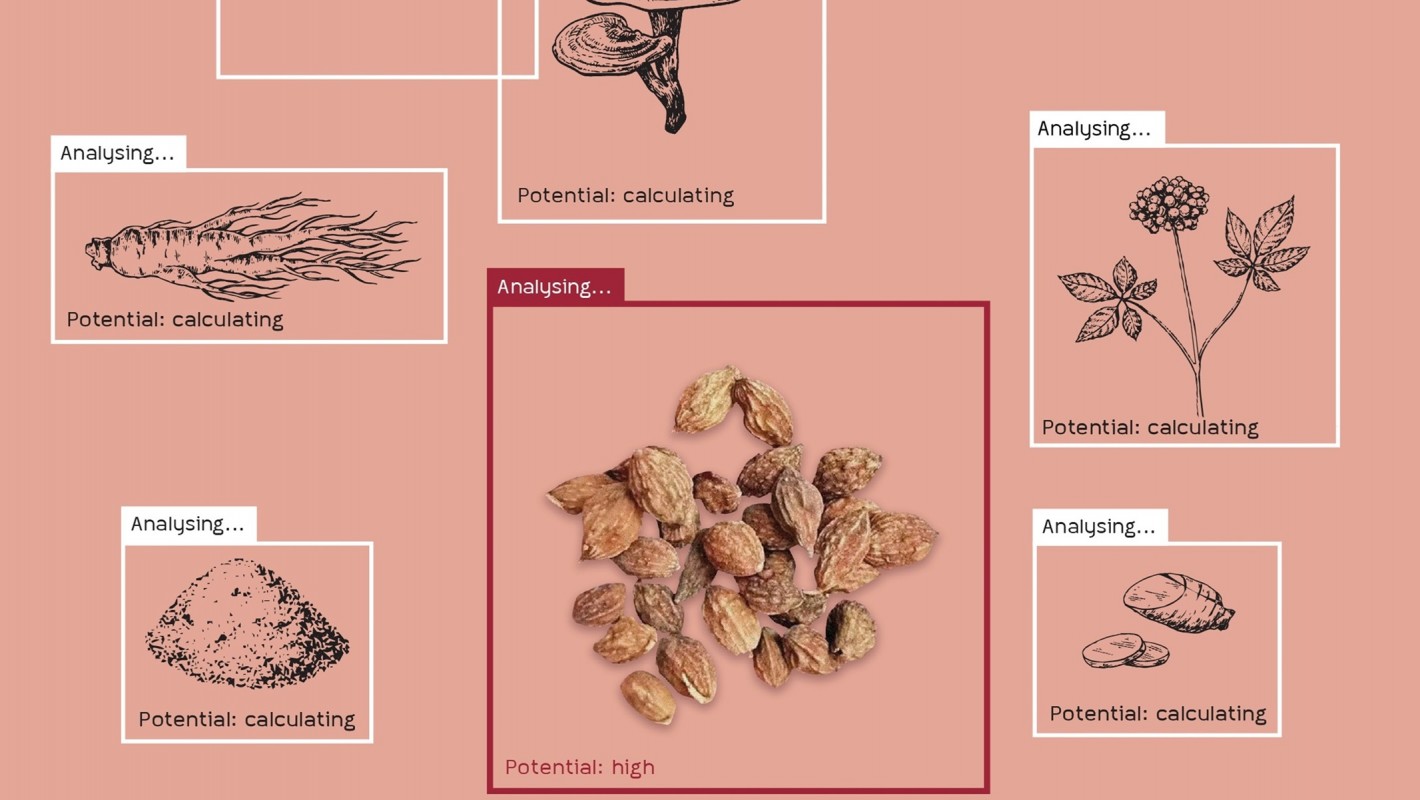
LifeChip has already identified a development candidate called Oxyphylla A (OPA), which is a natural compound extracted from the seeds of the Alpinia Oxyphylla plant. Known as Yi Zhi Ren in traditional Chinese medicine, the plant is believed to nourish the brain and kidneys, helping to enhance memory, halt male reproductive decline, resist ageing and reduce oxidative stress.
OPA has shown potential in experimental models of various neurodegenerative disorders, notably through novel mechanisms like the degradation of α-synuclein—a key protein implicated in Parkinson’s. The compound has exhibited encouraging neuroprotective activity against Parkinson’s by addressing mitochondrial dysfunction, suggesting its potential as a multi-targeted therapeutic.
A unique "first-in-class" drug, OPA is currently undergoing clinical trials. It represents a true advancement in neurological health, which may eventually provide patients with a viable, disease-modifying therapy. Professor Lee’s team has already produced strong Proof-of-Principle evidence of its protective and rescue effect on neurodegenerations and associated symptoms in animal studies.
“Experimental data shows neuroprotective effects of OPA on neurons in the brain, and improved behavioural and cognitive impairments in multiple Parkinson’s disease mouse models. Pharmacokinetic and toxicity results have proved that OPA has high bioavailability, crosses the blood-brain barrier, is absorbed quickly, and offers high levels of safety,” said Professor Lee.
The neuroprotective performance suggests OPA has potential as a multi-targeted therapeutic for Parkinson’s disease. A total of six global patents, including the US, EU, Spain, China, and Japan, covering OPA’s treatment claims, synthesis method, therapeutic use and application, have been granted so far.
In addition to addressing Parkinson’s disease, natural products and their constituents present possibilities for treating other neurodegenerative diseases. For example, OPA appears to ameliorate cognitive deficits and alleviate neuropathology in Alzheimer's disease, which is now one of the most common causes of dementia and amnesia. Experimental results show that OPA reduces the expression levels of amyloid precursor protein (APP) and amyloid beta (Aβ) proteins, and attenuates cognitive decline in mice.
Taken together, our results suggest a new horizon for the discovery of therapeutic agents for Alzheimer’s disease.
~ Professor Simon Lee Ming-yuen

Professor Simon Lee Ming-yuen
• Cally Kwong Mei Wan Professor in Biomedical Sciences and Chinese Medicine Innovation
• Chair Professor of Biomedical Sciences, Department of Food Science and Nutrition
• Director of the PolyU-BGI Joint Research Centre for Genomics and Synthetic Biology in Global Ocean Resources
Further readings: