Floating into a More Spacious and Sustainable Future
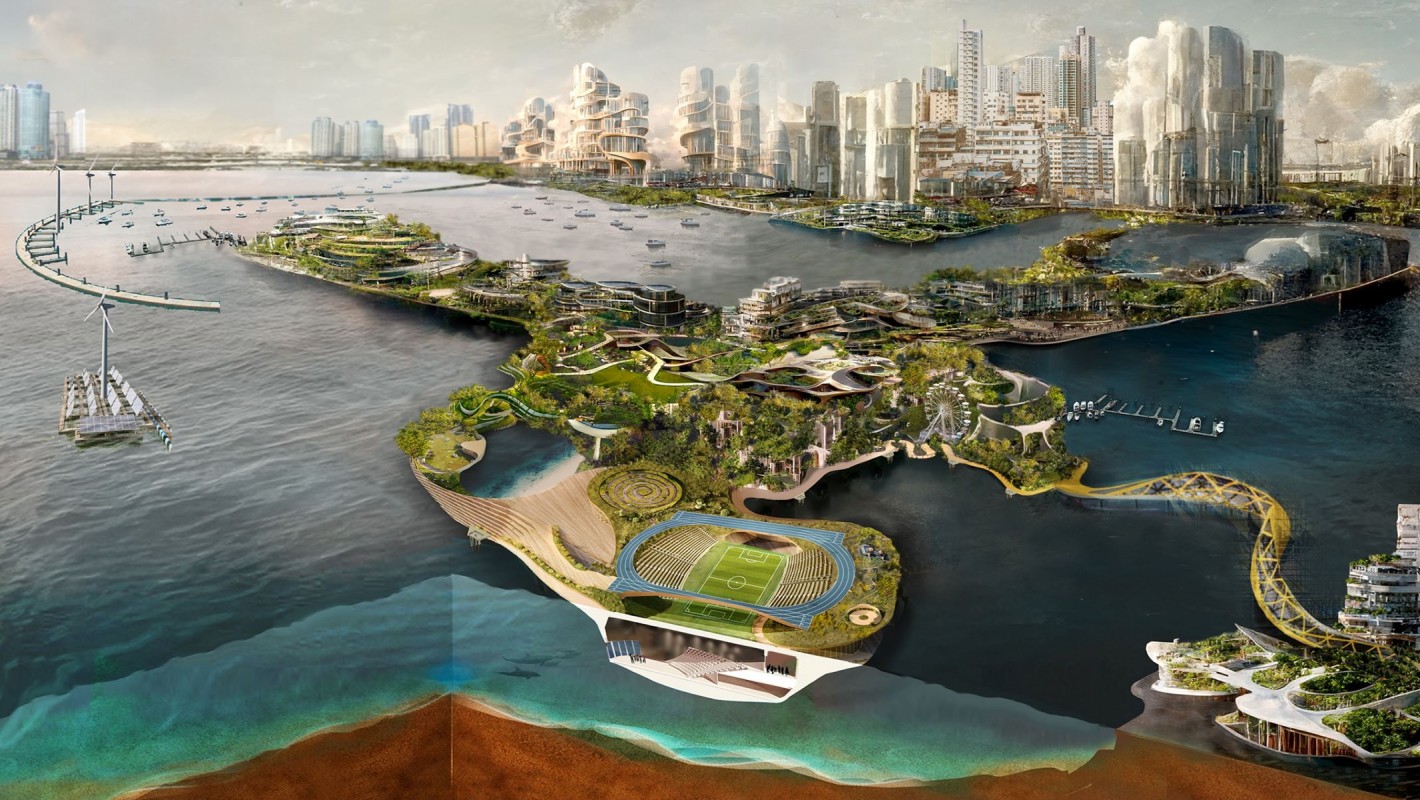
Visionary S²FS² concept combines conventional reclamation with advanced floating structures to create resilient and sustainable urban spaces
Limited land has made Hong Kong property prices among the highest in the world. However, space is running out. The HKSAR Government’s “Hong Kong 2030+” development strategy projects a land shortfall of approximately 3,000 hectares in the 30-year period between 2019 and 2048.
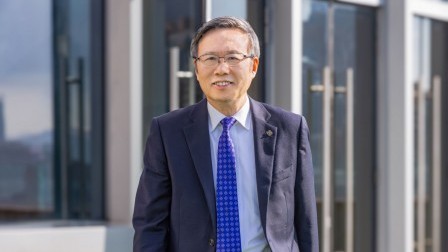
New land is usually created by sea reclamation, which is expensive and hard on the environment. Professor Zhao Xiaolin, Chair Professor of Civil Infrastructure of the Department of Civil and Environmental Engineering, also Associate Director of Research Institute for Land and Space, believes Hong Kong should shift from battling the sea to building on it. He is leading research into Sustainable and Smart Floating Structure Solutions (S²FS²), which offers a promising path towards environmentally-conscious urban development for Hong Kong and other coastal cities.
The long-term goal is to make S²FS² a widely accepted option for creating land space, and a powerful policy tool for relieving the land shortage problem through the active involvement of the international community on floating structures.
~ Professor Zhao Xiaolin
Relieving pressure on limited land resources
Unveiled at the Third World Conference on Floating Solutions (WCFS 2023), S²FS² envisages large-scale floating platforms, constructed from durable, lightweight, and eco-friendly materials, supporting a variety of superstructures for recreation, community facilities, and even housing.
Combining floating structures with land reclamation, S²FS² aims to reduce environmental impact, with minimal disruption to water quality or impact on undersea life. Construction time is also significantly shorter. The mooring system, floating modules and superstructure can be built simultaneously in different locations. With no delay from a lengthy soil consolidation period, floating infrastructure can go on-line almost immediately.
Professor Zhao developed the S²FS² concept in collaboration with Professor C.M. Wang and Dr B. Wang at The University of Queensland in Australia, and Dr R. de Graaf-van Dinther, the founder of Blue21 in the Netherlands.
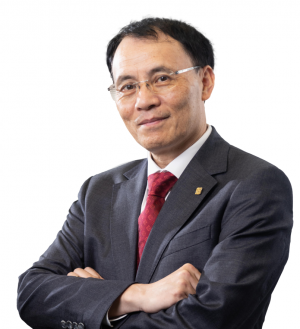
Professor Zhao Xiaolin is a Fellow of the Australian Academy of Technological Sciences and Engineering and a recipient of the Humboldt Research Award and the International Institute of Welding Thomas Medal.
The S²FS² hybrid approach is particularly well-suited to Hong Kong’s unique geographical and demographic circumstances. Spaces within floating pontoons can be repurposed for parking, storage, or industrial activities, maximising the usability of every square metre. Floating facilities can also be reconfigured or relocated relatively easily.
S²FS² also shows strong economic promise. A preliminary cost analysis for an artificial island project suggests that a hybrid approach—combining 75% land reclamation with 25% floating structure—could yield cost savings of up to 16.5%, amounting to HK$27 billion for a 1,000-hectare development.
Tackling challenges and unlocking sustainability
Implementing S²FS² requires strong, watertight, and corrosion-resistant construction materials, as well as innovative connector systems that can withstand dynamic loads from waves, wind, and typhoons. Professor Zhao and his team are developing solutions using recyclable, low-carbon, and durable materials such as fibre-reinforced polymers, ultra high-performance concrete, and corrosion-resistant steel.
Construction adds another layer of complexity. The large floating modules need to be fabricated, transported, and precisely assembled despite the sea conditions. It is necessary to explore automated construction, sophisticated drone imagery, and Building Information Modelling for accuracy and efficiency. Sensors and embedded IoT can monitor the health of floating structures in real-time and predict maintenance needs.
The ecological impact of large floating developments requires careful observation and mitigation. However, floating structures open up many new opportunities, such as green aquaculture, renewable energy integration, and climate-resilient urban development.
Approximately 90% of the world’s megacities are vulnerable to rising sea levels due to climate change. The development of S²FS² hybrid solutions will enable Hong Kong to be one of the early adopters of climate resilient buoyant urbanism and amphibious architecture through the development and use of floating structures.
~ Professor Zhao Xiaolin
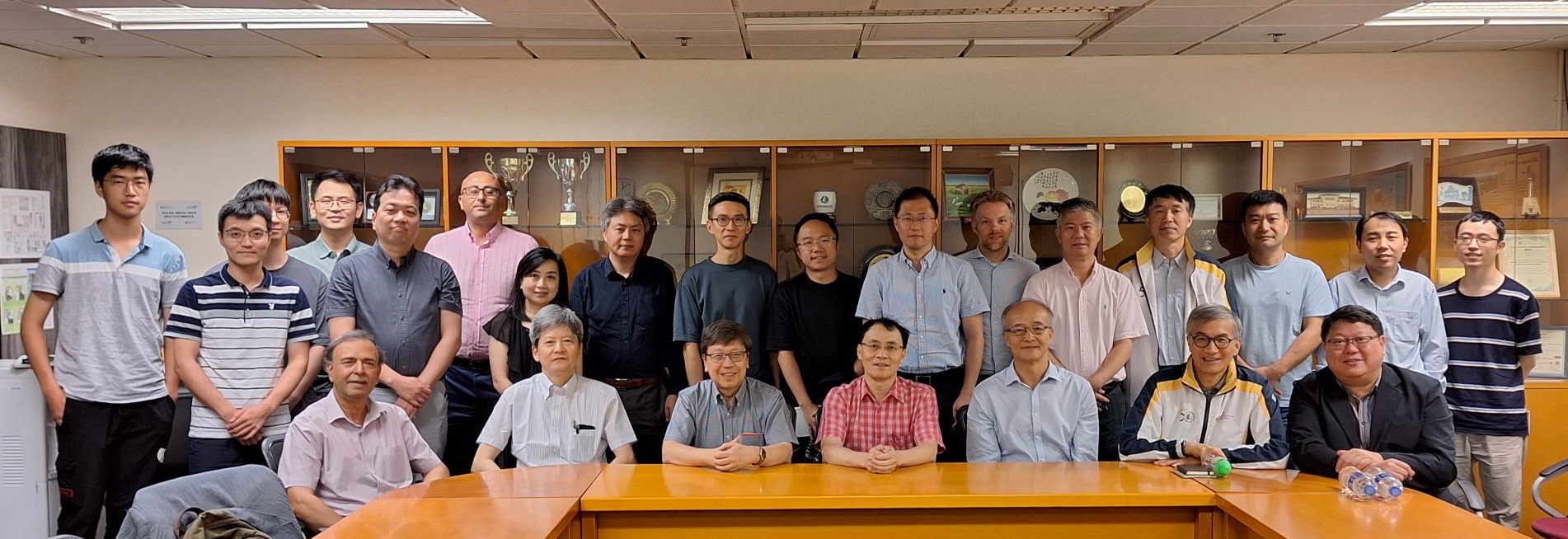
Professor Zhao (front, centre) discussing S²FS² with his team
Further readings:
Let the City Float: A Sustainable and Smart Floating Structure Solution for Hong Kong’s Scarce Lands