Brain Declines with Sustained Obesity

Excess weight not only takes a toll on physical well-being, but also impacts brain health
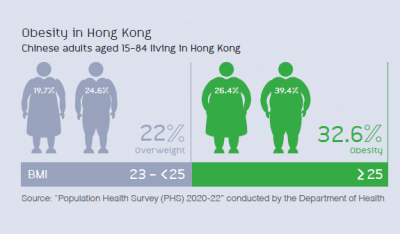
Imagine that the choices we make at the dining table today could shape our brain health for years to come. In a bustling city like Hong Kong, where obesity rates are climbing, our eating habits matter more than we realise. While we often associate excess weight with heart disease and diabetes, new research suggests a surprising connection between our waistlines and cognitive health. Could those extra pounds stealthily contributing to memory loss or cognitive decline as we age?
Unlocking new insights into the hidden connections between obesity and neurological function, Professor Qiu Anqi of the Department of Health Technology and Informatics, also Director of the Mental Health Research Centre at PolyU, is conducting groundbreaking research into how various obesity trajectories shape brain ageing and cognitive decline—an area that still holds many secrets waiting to be discovered.
Large-scale study on obesity’s impact on brain over time
In contrast with conventional studies that rely on cross-sectional data, Professor Qiu has initiated a comprehensive longitudinal study to examine the effect of obesity patterns—weight gain or loss over time—on brain and cognitive health in adults, harnessing data from the UK Biobank. This biobank collects health information which includes obesity measures, brain images, and cognitive assessments from over 500,000 participants aged 40 and older, representing a diverse array of ethnic backgrounds.
The pivotal study identifies five distinct obesity trajectories: lowstable, moderate-stable, highstable, increasing, and decreasing. By examining how these lines of development influence brain structure, function, and cognition in middle-aged and older adults, the research sheds light on the long-term neurological effects of obesity.
Key insights on obesity duration and brain ageing
This detailed classification of obesity trajectories emphasises sustained patterns rather than just current weight. Understanding these trajectories is important for assessing their impact on brain health, offering valuable insights into how obesity duration affects brain ageing.
Interestingly, the research indicates that individuals who successfully lose some weight exhibit minimal negative effects on their brain structure and cognitive abilities, especially compared to those with consistently low obesity levels, whereas those who maintain a high level of obesity or see their weight increase face more cognitive challenges.
The findings underscore the ongoing connection between obesity and brain health. They reveal a clear pattern of brain decline associated with obesity, suggesting that prolonged obesity may accelerate brain ageing.
The study concludes that the impact of obesity on brain health varies depending on weight fluctuations, and lasting obesity could be a useful indicator for evaluating brain ageing. It highlights the need for long-term monitoring and management of obesity, and suggests that reducing both the intensity and duration of obesity may be vital for protecting brain health.
As the ageing population grows, there has been a notable rise in neurodegenerative diseases, such as Alzheimer’s disease, Parkinson’s disease, and others, that currently lack a cure. This research proposes that maintaining long-term weight control can contribute to improved brain health.
~ Professor Qiu Anqi

Elected the Chair of the Organization for Human Brain Mapping and recognised as one of the “Top 50 Asia Women Tech Leaders 2025” for advancing mental health and brain research, Professor Qiu Anqi emphasises that minimising obesity’s severity and duration is crucial for brain health.
The research titled “Long-term obesity impacts brain morphology, functional connectivity, and cognition in adults” was published in Nature Mental Health.
Professor Qiu, a Global STEM Scholar at PolyU under the HKSAR Government’s Global STEM Professorship Scheme, started to focus her neuroscience research on maternal mental health and early brain development in her past research role in Singapore. The research provided new evidence that improved maternal positive emotion during pregnancy has the potential to promote the hippocampal development of children. She incorporated brain imaging into the study, which is a pioneering neonatal imaging work ahead of its time.
Professor Qiu aims to integrate diverse neuroimaging expertise to make a significant impact on brain health. Looking ahead, her research team plans to incorporate comprehensive biological analyses to explore pathways influencing brain and body health, aligning with her commitment to interdisciplinary collaboration and promising new strategies for improving cognitive health and overall well-being.