Bridging the Digital Divide
PolyU students empower rural children with tech skills
While urban students often enjoy advanced technology, reliable internet, and a wealth of educational resources, their rural counterparts frequently encounter obstacles such as limited device availability, poor connectivity, and insufficient training. These challenges can hinder the development of essential digital literacy, perpetuating educational and economic disparities. Addressing this digital divide is crucial to ensuring that all students can thrive in today’s digital world and seize opportunities for academic, professional, and social growth.
In a remarkable effort to narrow this gap, students from PolyU’s Department of Land Surveying and Geo-Informatics (LSGI) have been continuously engaged in Service-Learning projects in rural areas internationally—including Cambodia, as well as several cities in the Chinese Mainland such as Xianning, Wenchuan, and Laixi. Their mission is to empower local children by enhancing access to modern technology and digital education resources.
Advancing educational equity with Service-Learning initiatives
In May 2025, the LSGI students launched the Empowering Rural Development with Spatial Technologies programme in Wolongzhen, a rural town in Wenchuan County, Sichuan Province, with the support of the Wolongzhen Center Elementary School—a school that was severely affected by the 2008 Sichuan earthquake.
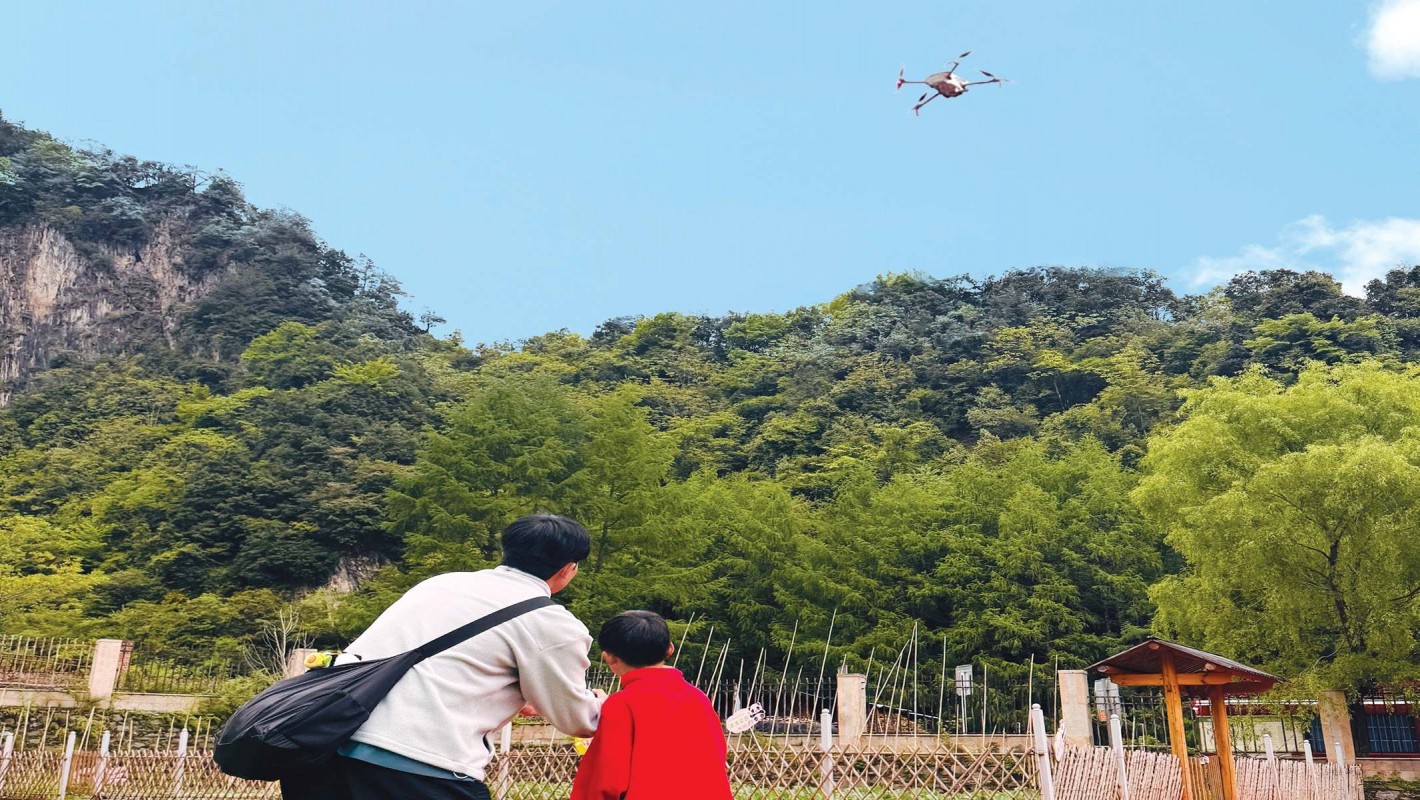
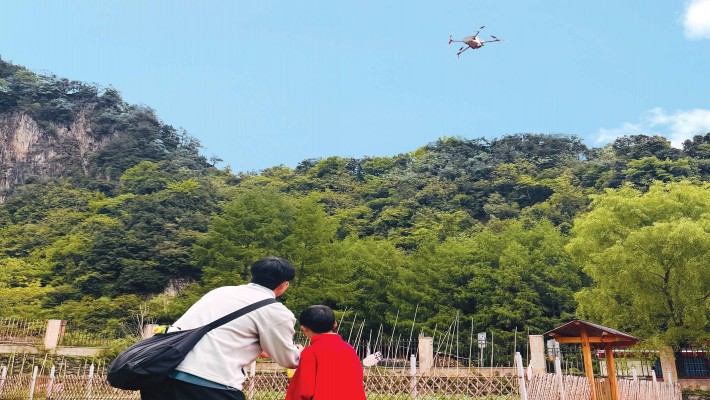
The PolyU team guided local students to use drones to capture oblique images for three-dimensional geological modelling to monitor the risk of landslides and employ spatial data to optimise village layouts and town planning. Apart from demonstrating these technical innovations, the PolyU students delivered STEAM courses focusing on spatial thinking and disaster prevention to more than 130 Wenchuan school children.
The opportunity to control drones, experience virtual reality and explore land-use maps created with spatial technology is rare, if not unique, to the Wolongzhen children. These hands-on experiences sparked excitement and curiosity in them, making digital learning both accessible and enjoyable.
I used to think that surveying and mapping were out of reach, but now I’ve learned them like playing a game.
~ One fifth-grade student
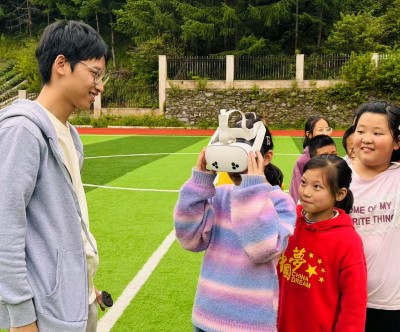
Wolongzhen school children lining up for a virtual reality experience.
Inspiring rural students with hands-on digital experiences
A month later, another LSGI team visited Laixi, a county-level city in Shandong Province, to launch the Surveying and Mapping Technologies Young Talent Cultivation Programme at Dongdazhai Primary School. Over 200 primary students participated, immersing themselves in land surveying with virtual reality goggles and learning to apply mapping and Geographic Information System (GIS) technologies to create maps of their hometowns under themes such as Smart Agriculture Map and Rural Tourism Navigation.
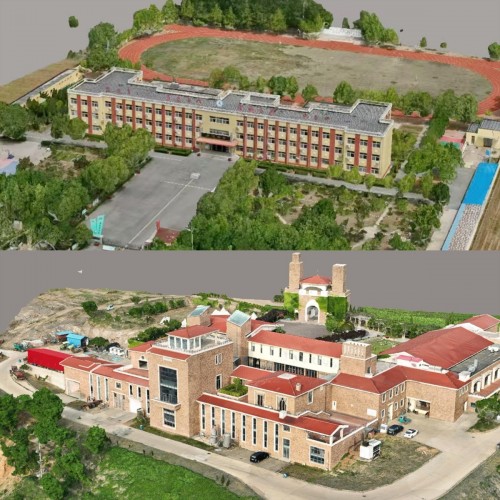
3D model of theDongdazhai Primary School campus built upon drone images.
The LSGI team not only imparts technology, but also brings a rigorous academic spirit. The seeds of technology planted in children's hearts may rewrite their trajectory of life.
~ Mr Tang Zhen, Principal of Dongdazhai Primary School
A model for collaborative impact
These projects had a profound and positive impact on the rural children, many of whom had rarely encountered digital devices or online resources. The workshops didn’t just teach practical digital skills—they unlocked new worlds of learning and possibility. These initiatives also ignited a genuine excitement for technology, inspiring some students to dream bigger and consider futures in science and technology. Teachers and local leaders observed a surge in digital literacy, curiosity, and creative thinking among the students. The PolyU students thus made a lasting difference, inspiring hope and opening doors for rural youth to participate fully in the digital age.
The dedication of PolyU students is a testament to the game-changing power of university-led service-learning. By bridging the digital divide, these projects champion educational equity and drive social progress, proving just how impactful collaboration between universities and local communities can be.
LSGI plans to extend the programme to more rural primary schools to help rural revitalisation with technology education.