The 4th Bauhinia Forum on the Development of Computer Science was successfully held on 16 May 2026 at Hotel ICON, jointly organised by The Hong Kong Polytechnic University (PolyU), Tsinghua University, and The Hong Kong University of Science and Technology (HKUST). The Forum was hosted by PolyU’s Department of Computing (COMP).
The event brought together around 40 presidents, deans, department heads, and distinguished professors from leading universities across Mainland China, Hong Kong, and Macau. Participants engaged in in-depth discussions on key issues concerning the development of computer science, exploring future directions and fostering cross-institutional collaboration.
In response to the rapid advancement of artificial intelligence (AI) and the evolving global higher education landscape, this year’s Forum centred around three major themes — “AI4Education,” “Interdisciplinary Integration,” and “International Collaboration.” The programme featured a series of keynote and thematic presentations, as well as roundtable discussions, focusing on critical topics in the current development of computer science. Presentations covered innovative models for talent cultivation, international cooperation, applications of AI in education, quantum computing, the convergence of high-performance computing and artificial intelligence, and practical experiences in discipline development and talent training. With rich content and diverse perspectives, the discussions inspired new insights and promoted active exchanges among participants.
The opening ceremony was moderated by Prof. LI Qing, Head of the Department of Computing at PolyU. Prof. WU Jianping, Academician of the Chinese Academy of Engineering, Director of Zhongguancun Laboratory and Professor at Tsinghua University, and Prof. CAO Jiannong, Vice President (Education) of PolyU, delivered opening remarks.
Prof. Wu remarked, “Hosting this year’s Forum at PolyU brings together scholars from the Mainland, Hong Kong, and Macau to jointly open a new chapter for the discipline. Through exchanges and discussions among peers, I believe this Forum will reach new consensus on the development of computer science.”
Prof. Cao highlighted the rapid and transformative progress of AI over the past year, noting its growing impact on education and research. He expressed his hope to strengthen collaboration among universities in Mainland China, Hong Kong, and Macau to advance joint research and educational development in AI and computer science.
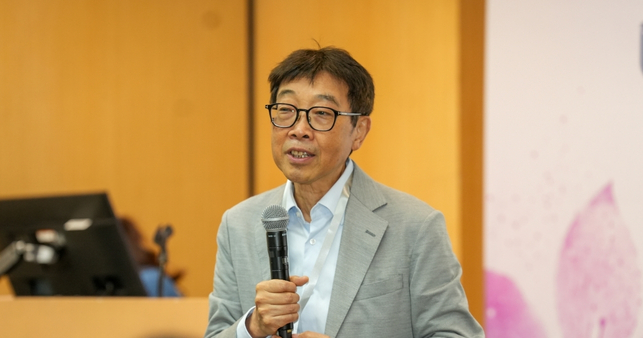
Prof. Cao Jiannong delivers the opening remarks
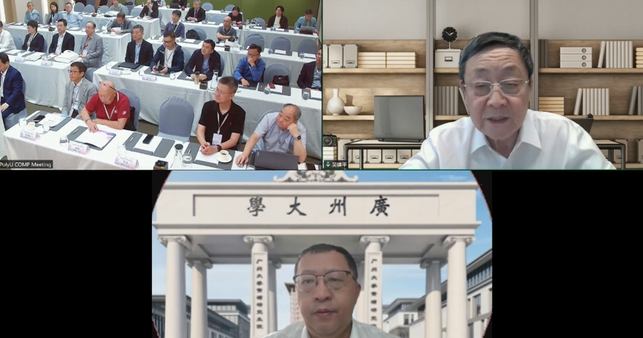
Academician Wu Jianping (top right) and Academician Fang Binxing (bottom)
deliver the opening remarks and keynote speech online, respectively
The keynote sessions featured several distinguished academics. Prof. FANG Binxing, Academician of the Chinese Academy of Engineering and Honorary Dean of the School of Cyberspace Security at Guangzhou University, delivered his presentation online, sharing insights on how AI impacts talent quality and how curriculum design, teaching practices, and assessment mechanisms can be reformed to foster higher-order thinking among students.
Prof. HU Shimin, Academician of the Chinese Academy of Sciences and Professor at Tsinghua University, presented in person, sharing recent developments of China’s computer science societies and their initiatives in promoting international academic exchange. He also discussed leveraging the regional advantages of Hong Kong and Macau to further enhance internationalisation.
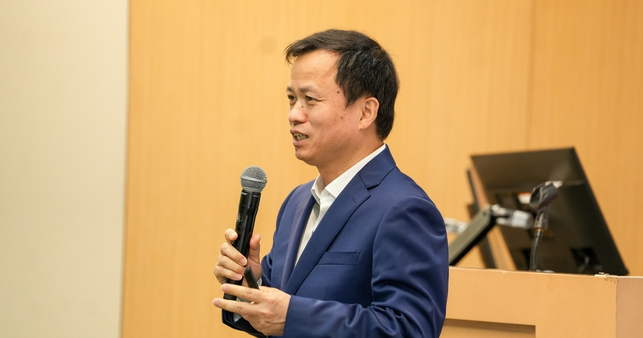
Academician Hu Shimin shares updates on national computer science societies
Prof. HU Xiangen, Director of the Education Research Centre at PolyU, gave a keynote on how education should be re-envisioned in the era of AI, arguing that AI for education should evolve into an independent academic domain.
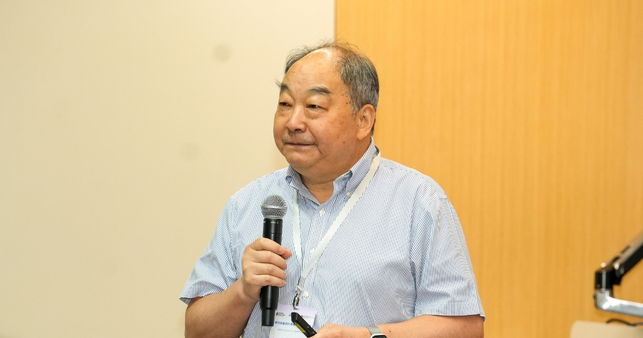
Prof. HU Xiangen discusses the role of artificial intelligence in education
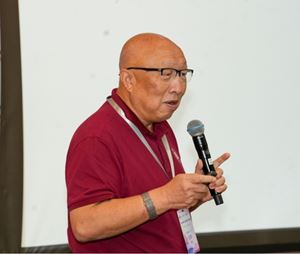
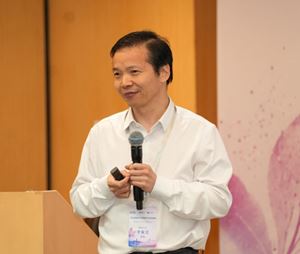
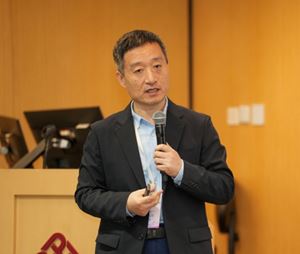
Beyond the keynote speeches, three thematic presentations were delivered by experts from the three regions, highlighting frontier topics in the field.
 |
 |
 |
|
Prof. Zhao Wei, Provost of Shenzhen University of Advanced Technology |
Prof. Li Kenli, Vice President of Hunan University and Director of the National Supercomputing Center in Changsha |
Prof. Cai Zhanchuan, Director of the School of Computer Science and Engineering, Macau University of Science and Technology |
Two roundtable discussions further deepened interdisciplinary and cross-regional exchange. The first roundtable, themed “AI4Education,” focused on how AI empowers teaching and learning. Participants shared challenges faced by their institutions, discussed different AI-driven educational approaches, and examined their implications for curriculum innovation and talent cultivation.
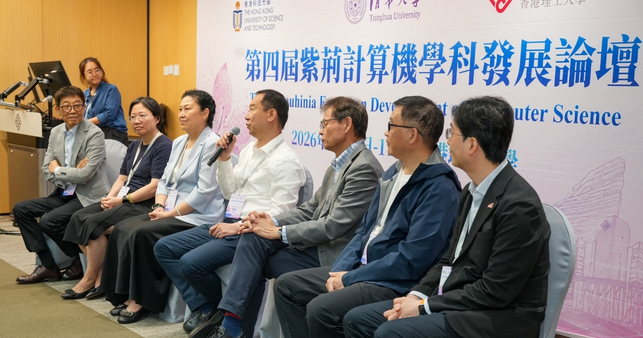
Roundtable discussion themed “AI4Education”
The second roundtable, entitled “Breakthrough and Restructuring: Opportunities and Pathways for Internationalisation Strategies of Computer Science Schools under the New Global Environment,” explored how universities can continue advancing international cooperation, expanding academic networks, and enhancing their global impact in a changing world.
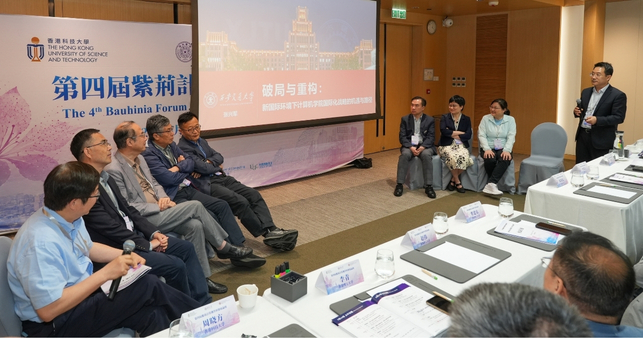
Roundtable discussion themed “Breakthrough and Restructuring: Opportunities and Pathways for
Internationalisation Strategies of Computer Science Schools under the New Global Environment”
Participants generally agreed that, amid the rapid evolution of AI technologies and the deepening trend of interdisciplinary integration, computer science should seize the opportunities of the times, strengthen its disciplinary foundation, and promote overall academic advancement. The Forum not only provided a high-level platform for academic exchange but also helped build consensus in areas such as educational reform, research collaboration, and international development.
The Forum concluded successfully with closing remarks by Prof. ZHOU Xiaofang, Head of the Department of Computer Science and Engineering at HKUST, and Prof. YIN Xia, Head of the Department of Computer Science and Technology at Tsinghua University. They summarised the key achievements of this year’s Forum and expressed their expectations for strengthening future cooperation to advance the field of computer science.