PolyU Develops EyeAgent 2.0: Next-Generation Ophthalmic AI for Clinical-Grade Decision Support
Other Articles

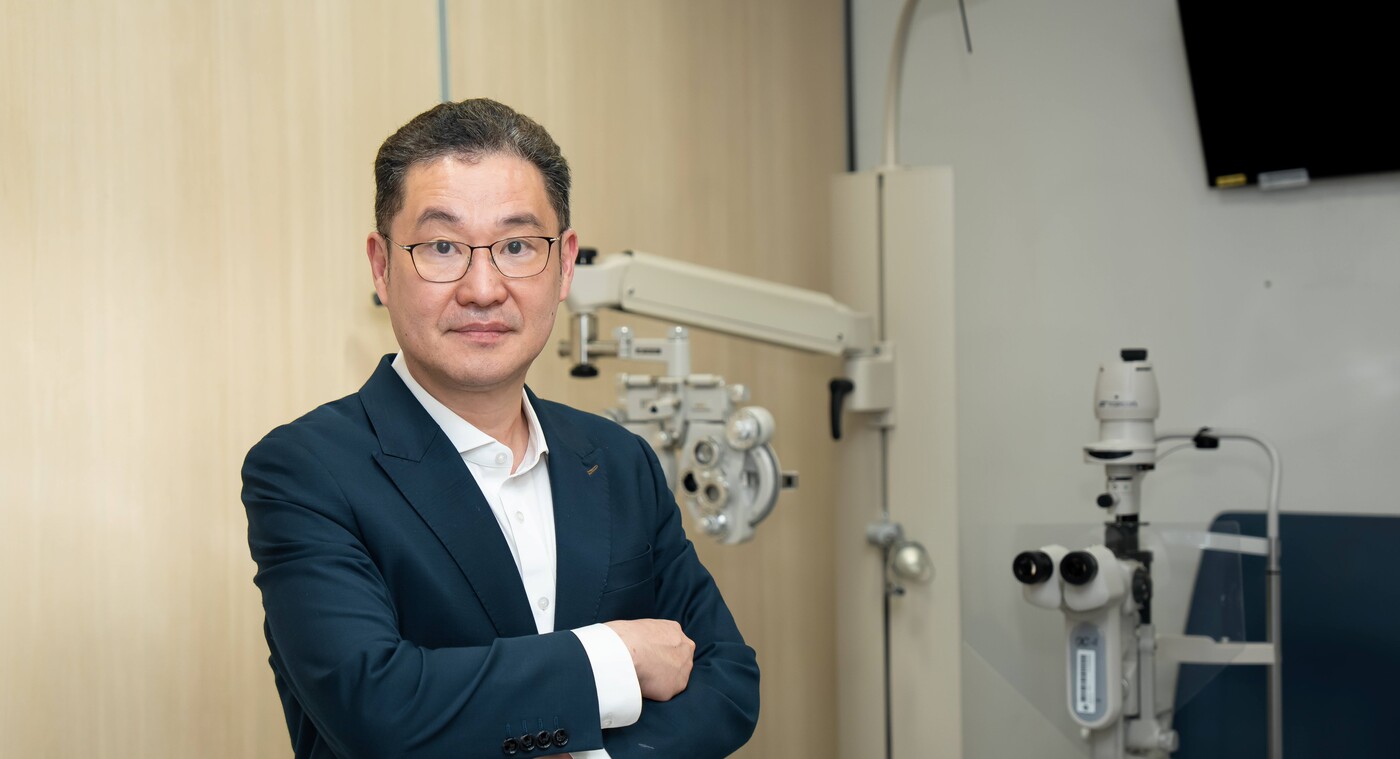
A research team at PolyU led by Prof. HE Minguang, Chair Professor of Experimental Ophthalmology and Henry G. Leong Professor in Elderly Vision Health of the School of Optometry, and Director of Research Centre for SHARP Vision, has launched the development of a next-generation clinical-grade ophthalmic artificial intelligence (AI) co-pilot system "EyeAgent 2.0", aiming to construct an intelligent decision support platform with advanced clinical reasoning capabilities to assist doctors in disease diagnostic analysis, treatment planning and follow-up management, thereby improving the quality and efficiency of clinical judgments.
The PolyU team previously developed the "EyeAgent 1.0" prototype system, capable of integrating multimodal medical data including clinical text and images, to provide diagnostic assistance. Pilot testing in hospitals across Hong Kong and Chinese mainland yielded positive clinical feedback. Leveraging this, the team is now developing “EyeAgent 2.0”.
The new system is being developed around a domain-specific foundation model trained on large-scale, real-world multimodal electronic medical data from leading ophthalmic centres across different regions. It will integrate fundus imaging, optical coherence tomography, angiography and clinical text data. The system will also simulate actual clinical workflows, including data integration, differential diagnosis, treatment planning and disease progression prediction through a multi-agent collaborative framework, realising the goal of upgrading from one-time image analysis towards continuous decision support throughout the course of disease.
Based on current model validation and prototype testing results, the team anticipates that when fully developed the system, will significantly enhance diagnostic consistency and efficiency, while reducing the time doctors spend on case organisation and documentation. This will help alleviate work pressure in high-load clinical environments. The system’s design emphasises human-AI collaboration, with AI serving as an auxiliary tool for enhancing data integration and analytical capabilities while all final clinical decisions remain doctor-led.
The system is intended to adopt a hybrid business model combining annual subscriptions with usage-based charges and will enable flexible deployment tailored to diverse hospital information system architectures. The team aims to foster a trustworthy, standardised and sustainable medical AI ecosystem through continuous technological refinement and clinical collaboration, thereby enhancing regional and global ophthalmic healthcare standards.