PolyU Department of Rehabilitation Sciences Launches "Better Ageing in Community Campaign" with Community Groups, Leveraging AI to Assess Fall Risk in Nearly 900 Elderly in First Phase
Other Articles


PolyU Department of Rehabilitation Sciences has, since January last year, partnered with multiple community groups to launch the "Better Ageing in Community Campaign", using the Department’s artificial intelligence (AI) technology to conduct fall risk screening for the elderly. During the first phase, nearly 900 elderly residents on Hong Kong Island were assessed, with 26% identified as high-risk individuals. By January 2026, over 100 attendants have received 12-week fall prevention training from the University. The PolyU team plans to establish a large-scale elderly health database, benefitting more people with the aid of an enhanced AI model.
A sharing session was held on 24 January 2026, attended by Mr Chris SUN, Secretary for Labour and Welfare of the Government of the Hong Kong Special Administrative Region (HKSAR) of the People’s Republic of China; The Hon. Tommy CHEUNG, Executive Council Member of the Government of the HKSAR; The Hon. SHIU Ka-fai, Member of the HKSAR Legislative Council; Dr Roy CHUNG, Honorary Chairman of the PolyU Court; Prof. Christopher CHAO, Senior Vice President (Research and Innovation) of PolyU; Prof. Marco PANG, Head of the Department of Rehabilitation Sciences of PolyU; and Prof. Amy FU, Associate Head of the Department of PolyU. The session also included various district officers, district councillors, partner organisation representatives, students and elderly participants, to review the first-phase achievements and look ahead to future developments.
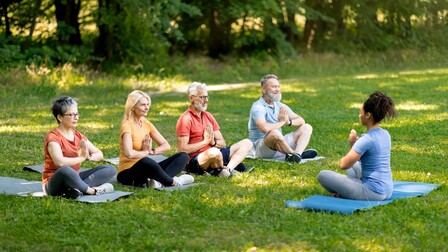
Since January 2025, the faculty of the PolyU Department of Rehabilitation Sciences has led physiotherapy and occupational therapy students to conduct fall risk screening for 891 eligible elderly residents on Hong Kong Island, including the "walking speed test" and the "sit-to-stand test". The team successfully identified 235 elderly individuals with higher fall risk, representing approximately 26% of participants and arranged for them to attend 12-week fall prevention exercise training classes provided by the Department. The elderly participants responded enthusiastically, and generally agreed that appropriate exercise helps strengthen muscles and better enables them to cope with the demands of daily life.
The project team previously conducted telephone interviews with elderly participants of the fall risk screening and found that approximately 20% had fallen in the past year, with half of them requiring medical attention. Analysis also revealed that the "walking speed test" and the "sit-to-stand test" can effectively predict fall risk in elderly men, while fall risk in elderly women is not only related to the walking speed test results but also their weight-to-height ratio.