

Sept 2027 Entry
What's New
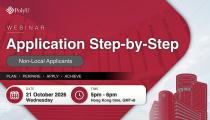
- Undergraduate
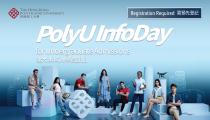
- Undergraduate
The Department of Architecture (ARCH) is a dynamic academic hub dedicated to advancing architectural knowledge through interdisciplinary research, innovative teaching, and a commitment to real-world impact. Our mission is to educate future leaders and architects by merging rigorous academic inquiry with industry standards and global perspectives, fostering innovative solutions to the spatial and societal challenges of our time.
The Research Postgraduate Programme offered by the department focuses on principal research areas to the degree of Master of Philosophy (MPhil) and Doctor of Philosophy (PhD) that include:
I) Architecture Technology & Digital Theory;
II) Architecture History, Theory and Heritage Conservation; and
III) Smart Cities & Urban Development.
These clusters enable us to address fundamental questions from cultural sustainability and material innovation to the creation of resilient, intelligent urbanism, which are critical to the futures of the built environment. By integrating advanced methodologies—from digital fabrication and 3D printing to data-driven urban analytics—our research aims to generate translatable knowledge that shapes both the profession and the broader community, enhancing Hong Kong’s and the region’s global standing in architectural education and innovation.
For more information on the research areas and specific programme details, please visit the Department of Architecture website.
Architecture Technology & Digital Theory
Traditional architectural design and construction processes face critical limitations in addressing complex spatial issues, building environments, and the need for sustainable, accessible design solutions. To transcend conventional modeling paradigms, this research area integrates advanced digital tools with architectural theory to pioneer high-performance, ethically grounded designs.
This research area focuses on generative Artificial Intelligence (AI) workflows, next-generation Building Information Modelling (BIM), and digital fabrication. Key research directions include formulating original digital frameworks to resolve complex architectural challenges under data limitations. By bridging architecture with big-data intelligence and engineering, this research explores the epistemic shift in technology’s role within the creative process. Ultimately, this work aims to advance building designs through integrated advanced technologies and smart materiality, redefining how buildings are conceptualized, simulated, and realized.
| Supervisor | Tel | |
| Prof. Tris KEE | 3400 8124 | tris.kee@polyu.edu.hk |
Architecture History, Theory and Heritage Conservation
Examining the built environment requires a deep critical capacity to understand how historical forces shape contemporary spaces. Traditional historical and conservation methodologies often face challenges when dealing with contested histories, socio-political shifts, and fragmented or biased archives. To address these complexities, this research area develops transformative, ethically grounded theoretical frameworks that redefine the socio-cultural value of the built environment, safeguarding both tangible and intangible heritage while promoting sustainable stewardship.
This research area focuses on architectural historiography, critical theory, and material conservation methodologies. Key research directions include resolving complex conservation dilemmas, navigating fragmented archival records, and deconstructing prevailing historiographical biases. Rather than researching in isolation, this field fosters high-impact collaborations at the intersection of architecture, history, sociology, archaeology, and the humanities, directly engaging with global discourses and local cultural identities. Ultimately, this work aims to cultivate a profound historical consciousness, informing public policy and redefining how cultural legacies are safeguarded for future generations. Research methodology in this domain will also employ latest digital technologies, including AI, 3-D scanning, remote sensing, and heritage BIM.
| Supervisor | Tel | |
| Prof. Puay-peng HO | 3400 2515 | puay-peng.ho@polyu.edu.hk |
Smart Cities & Urban Development
Rapid urbanization, environmental changes, and unforeseen crises—ranging from climate displacement to resource depletion—demand resilient, forward-looking approaches to urban planning and spatial design. Traditional planning paradigms often struggle to resolve complex challenges such as hyper-density, infrastructure decay, and socio-spatial inequality, particularly when dealing with fragmented, unstructured city-scale datasets. To address these limitations, this research area pioneers ethically grounded, data-informed smart city frameworks that align strategic development goals with global sustainability agendas, positioning spatial planning as a primary catalyst for societal benefit.
This research area focuses on advanced spatial analytics, predictive modeling, complex urban simulation algorithms, and integrated IoT or digital-twin frameworks. Key research directions include developing high-profile design solutions that proactively shape urban technology rather than merely reacting to it, while critically addressing the social and ethical implications of technological determinism. By fostering high-impact collaborations across government agencies, tech industries, and disciplines such as sociology, public policy, and big-data intelligence, researchers in this field continuously integrate emerging socio-technical concepts into real-world pilots. Ultimately, this work aims to lead global discourses on urban technology, transforming how future developments are conceptualized, managed, and sustained.
| Supervisor | Tel | |
| Prof. Tris KEE | 3400 8124 | tris.kee@polyu.edu.hk |
Compulsory - Two Academic Referee’s Reports
Compulsory
Optional
Compulsory - A standard form must be used for the submission of research proposal. Please click here to download the form.
Compulsory – Please upload all academic qualifications including Bachelor’s degree and Master’s degree (if any) according to the University’s admission requirements, also refer to the ‘Procedures – Guidelines for Submitting Supporting Documents’ to follow the submission requirements.