
Sea urchins inspire next-generation sensors
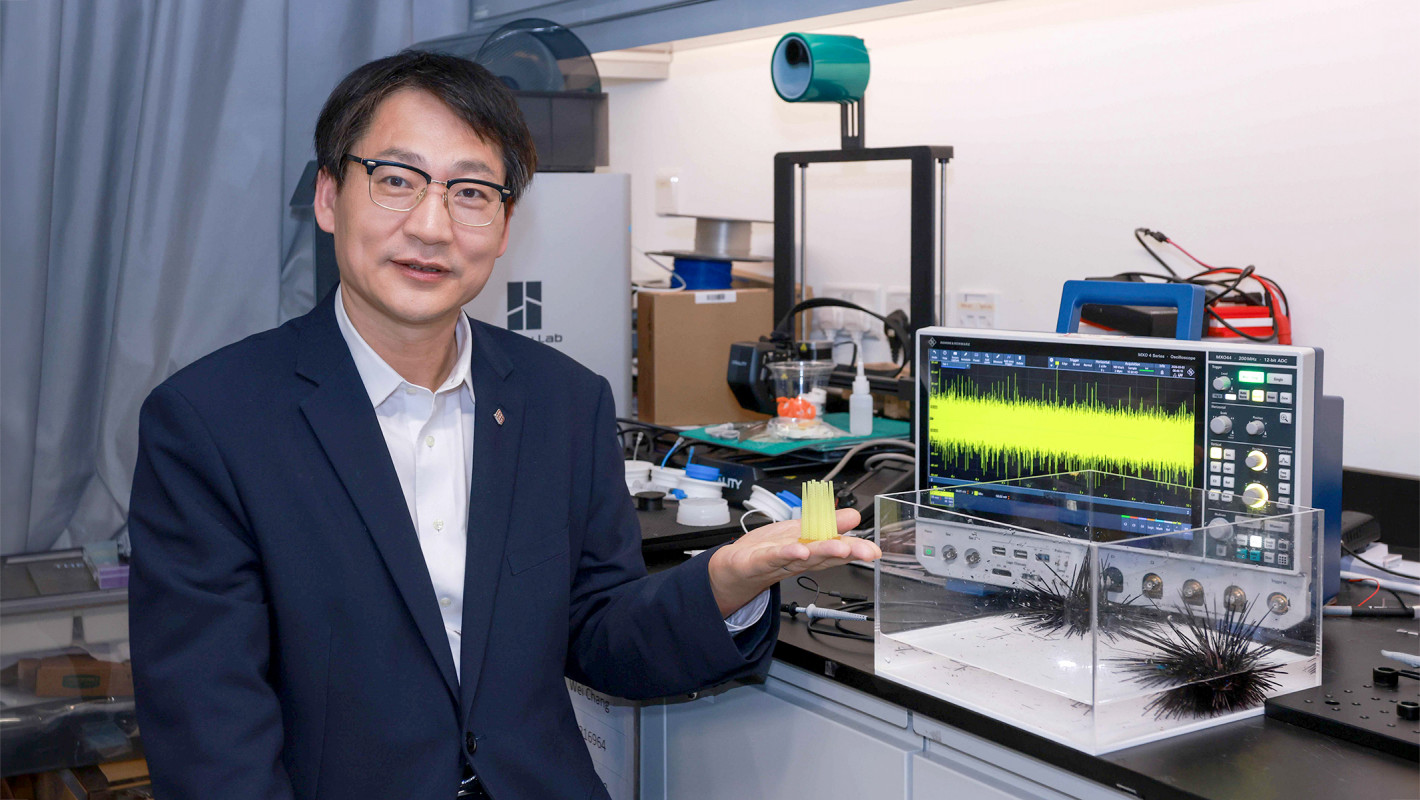
Sea urchins may look like simple, spiky ocean dwellers, but their spines hold an extraordinary secret. Researchers at PolyU have uncovered a unique sensing mechanism in sea urchin spines that could transform the future of intelligent sensors and marine technology.
The research team was led by Professor Wang Zuankai, Associate Vice President (Research and Innovation), Dean of Graduate School, Kuok Group Professor in Nature-Inspired Engineering and Chair Professor of the Department of Mechanical Engineering at PolyU. Together with scholars from City University of Hong Kong and Huazhong University of Science and Technology, the team revealed how the gradient porous structure in the sea urchin spines enables instant detection and response to water flow.
Using vat photopolymerisation 3D printing, the team replicated the gradient porous structure to create a bionic metamaterial sensor. Arranged in a 3×3 array, it generates three times higher voltage output and about eight times greater amplitude than non-gradient versions. It can record electrical signals in real time underwater and precisely locate the position of water flow impact without the need for additional electricity. This groundbreaking innovation not only advances deep-sea technologies for marine monitoring and underwater infrastructure management, but also has the potential to drive progress in brain-computer interfaces and aerospace applications.
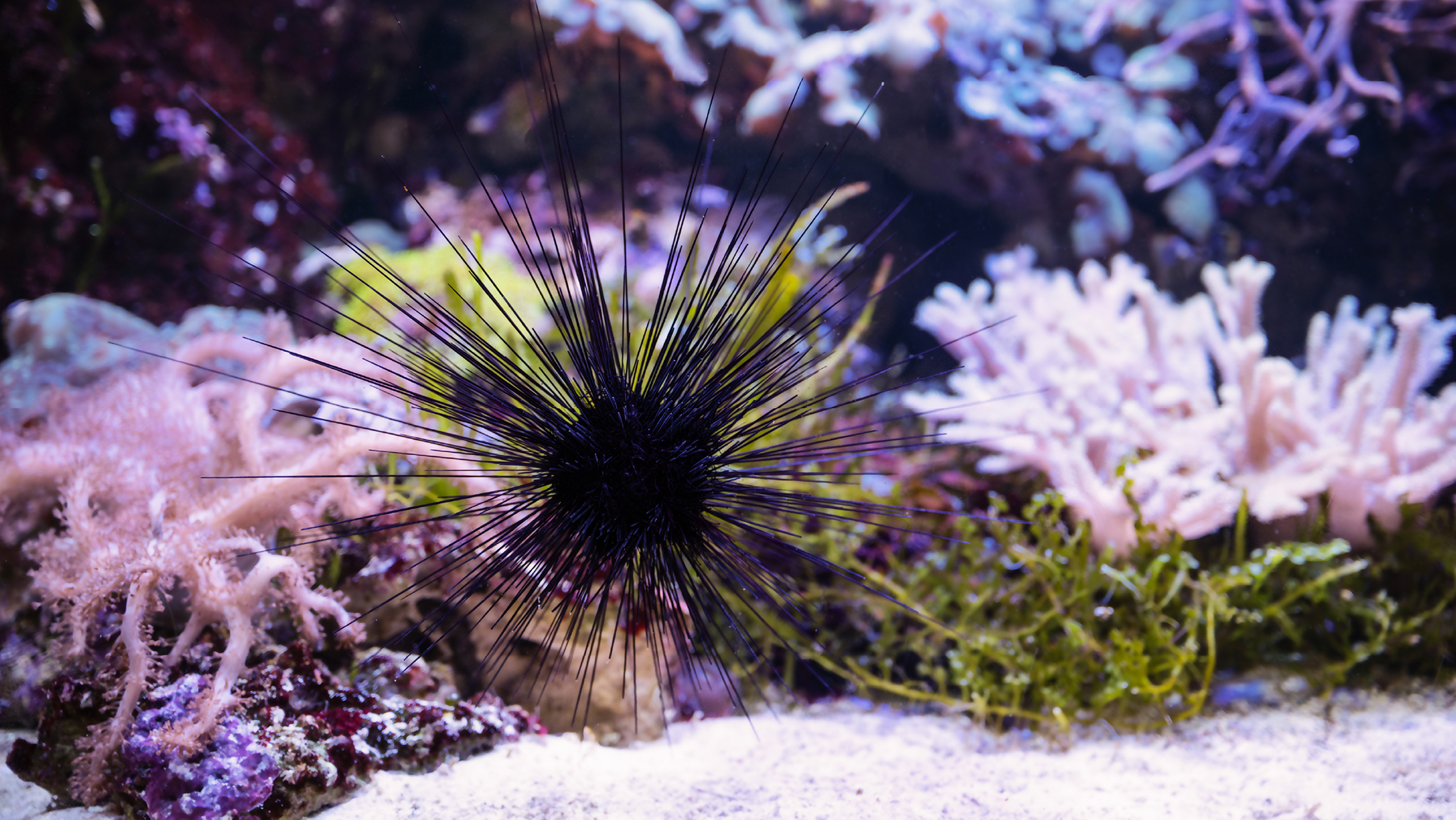
Marvellous architecture of the sea urchin spines
In the long-spined sea urchin Diadema setosum, a droplet striking the spine tip triggers rapid rotation within a second, generating a voltage of about 100 millivolts. The secret lies in the stereom structure. The spine has a porous internal skeleton with pores of varying sizes and distributions, exhibiting a gradual gradient from larger pores at the base to smaller pores at the tip. This boosts solid-liquid interactions as water flows through, resulting in a stronger voltage difference for enhanced sensing capabilities.
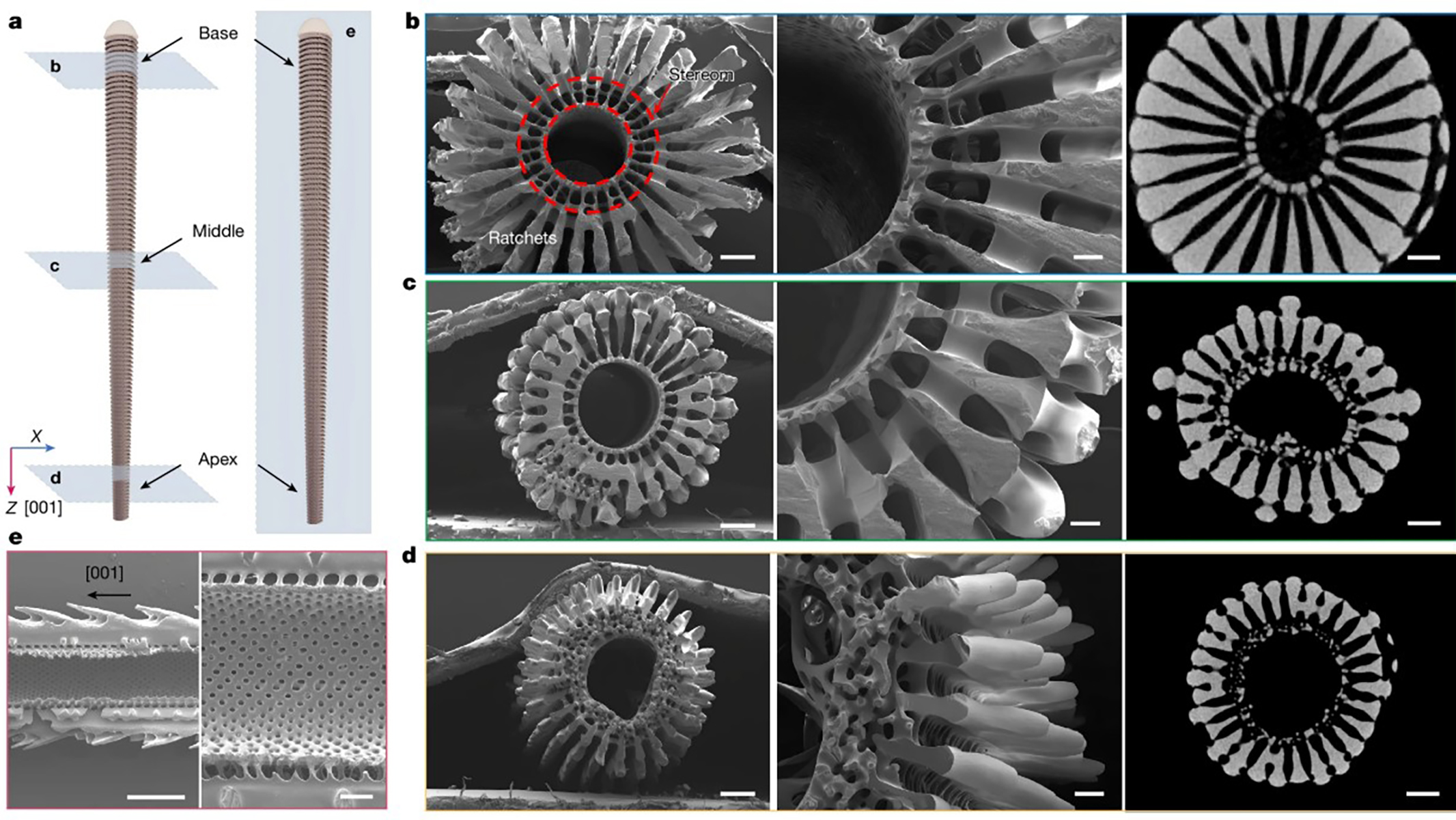
When a seawater droplet strikes the tip of a sea urchin spine, the spine rotates rapidly. Electrical measurements revealed that the droplet simulation produced a voltage of about 100 millivolts inside the spine.
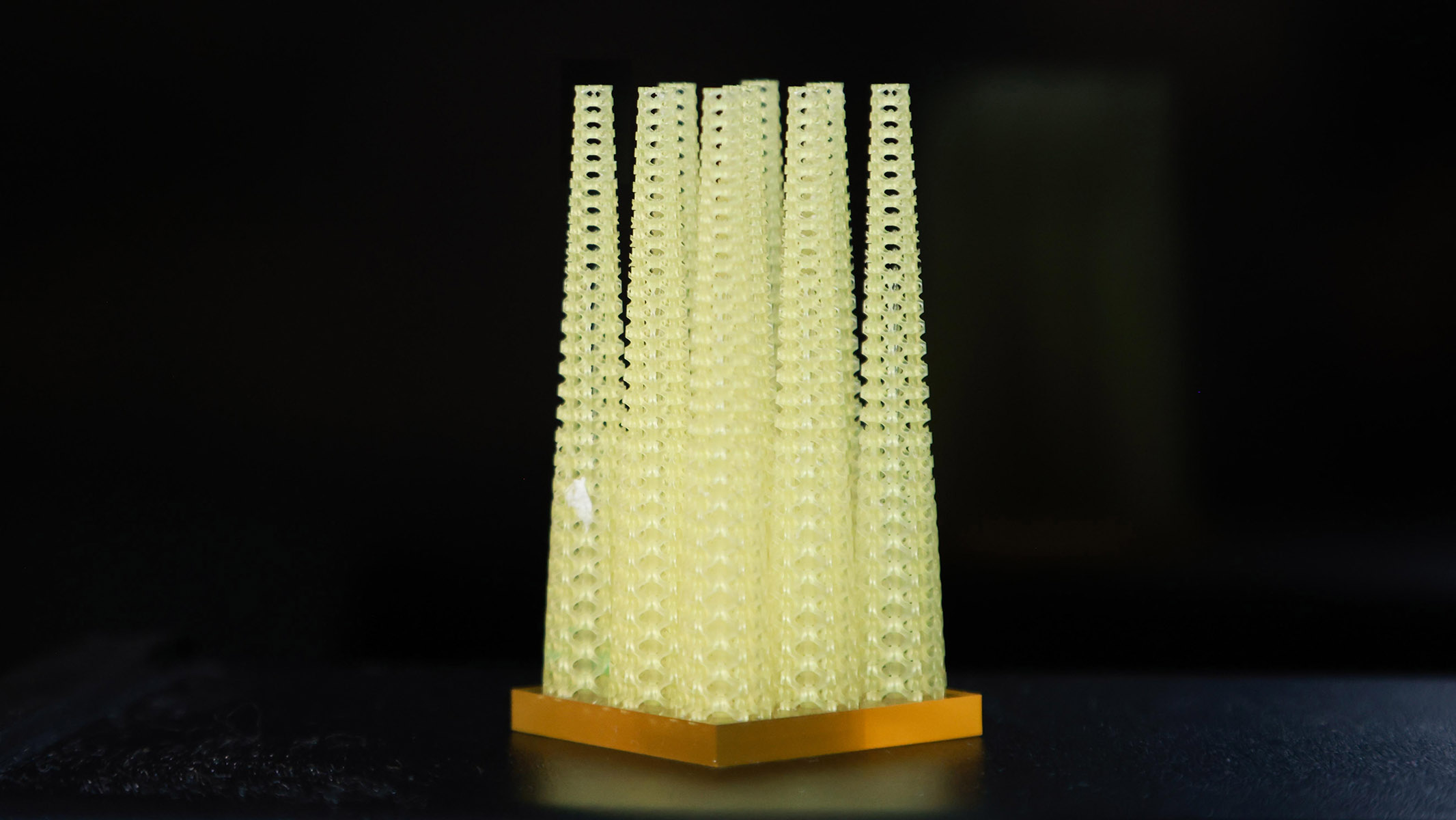
The bionic 3D sensor is designed in a 3×3 array, with each unit made of gradient porous material. It can record voltage signals in real time underwater and precisely locate the position of water flow impact, without additional electricity.
Professor Wang highlighted the breakthrough, “Our design excels in manufacturability, structural design flexibility, material versatility, geometric and performance control, and real-time underwater self-sensing. Leveraging gradients of porous materials and 3D printing technologies, we aspire to produce more nature-inspired metamaterial sensors with a range of materials, pore sizes and surface features that support potential applications in many fields.”
At the forefront of nature-inspired science and engineering research, Professor Wang’s team has drawn insights from nature – such as lotus leaves, araucaria trees, fungi, and now sea urchins – for new inventions. Read the study in Nature for more details of this finding.