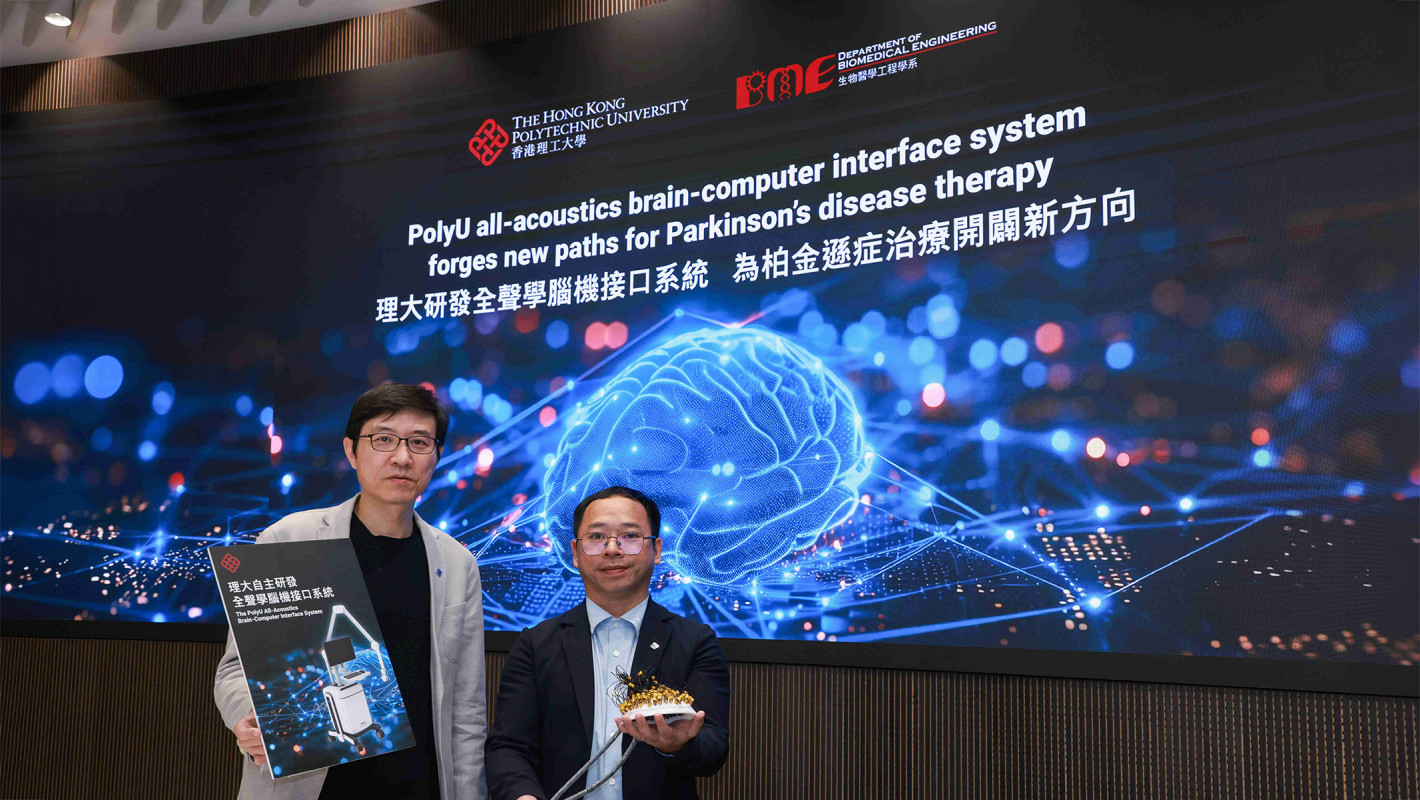

All-acoustics brain-computer interface offers hope for non-invasive Parkinson’s treatment
Parkinson’s disease (PD) is an incurable neurodegenerative disorder affecting millions worldwide. Characterised by motor symptoms such as tremors, rigidity and slow movement, PD decreases patients’ quality of life. Existing treatments, including medications and surgical interventions, have limitations and can lead to side effects, highlighting the need for safer and more effective therapeutic approaches.
Amidst these challenges, researchers at PolyU have developed a groundbreaking technology known as the “All-Acoustics Brain-Computer Interface (BCI) System” (the System). Led by Professor Sun Lei, Director of the Research Centre for Non-invasive Brain Computer Interface and Professor of the Department of Biomedical Engineering at PolyU, together with Professor Qiu Zhihai, a PhD graduate of the same department, the team has created an innovative system that leverages “transcranial ultrasound neuromodulation” to provide a fully non-invasive and high-precision therapeutic approach for PD and other neurological and psychiatric disorders.
The significance of BCI technology is highlighted in the Nation’s 15th Five-Year Plan, which identifies it as a new driver of economic growth. Supporting this strategic direction, PolyU’s development of the System marks a major advance in biomedical engineering. The research team is leveraging the University’s strong network in the Chinese Mainland to collaborate with leading hospitals and translate their technology into clinical applications.
What sets this technology apart from traditional methods is its non-invasive nature combined with high precision. Current approaches, such as invasive surgeries to implant electrodes, carry considerable risks and irreversible consequences. Meanwhile, traditional non-invasive techniques, like electrical stimulation, often struggle to reach deep brain regions or provide sufficient spatial accuracy. In contrast, the System can accurately target deep brain regions using ultrasound, achieving a spatial resolution finer than 4 mm, which is essential for modulating brain functions without surgery.
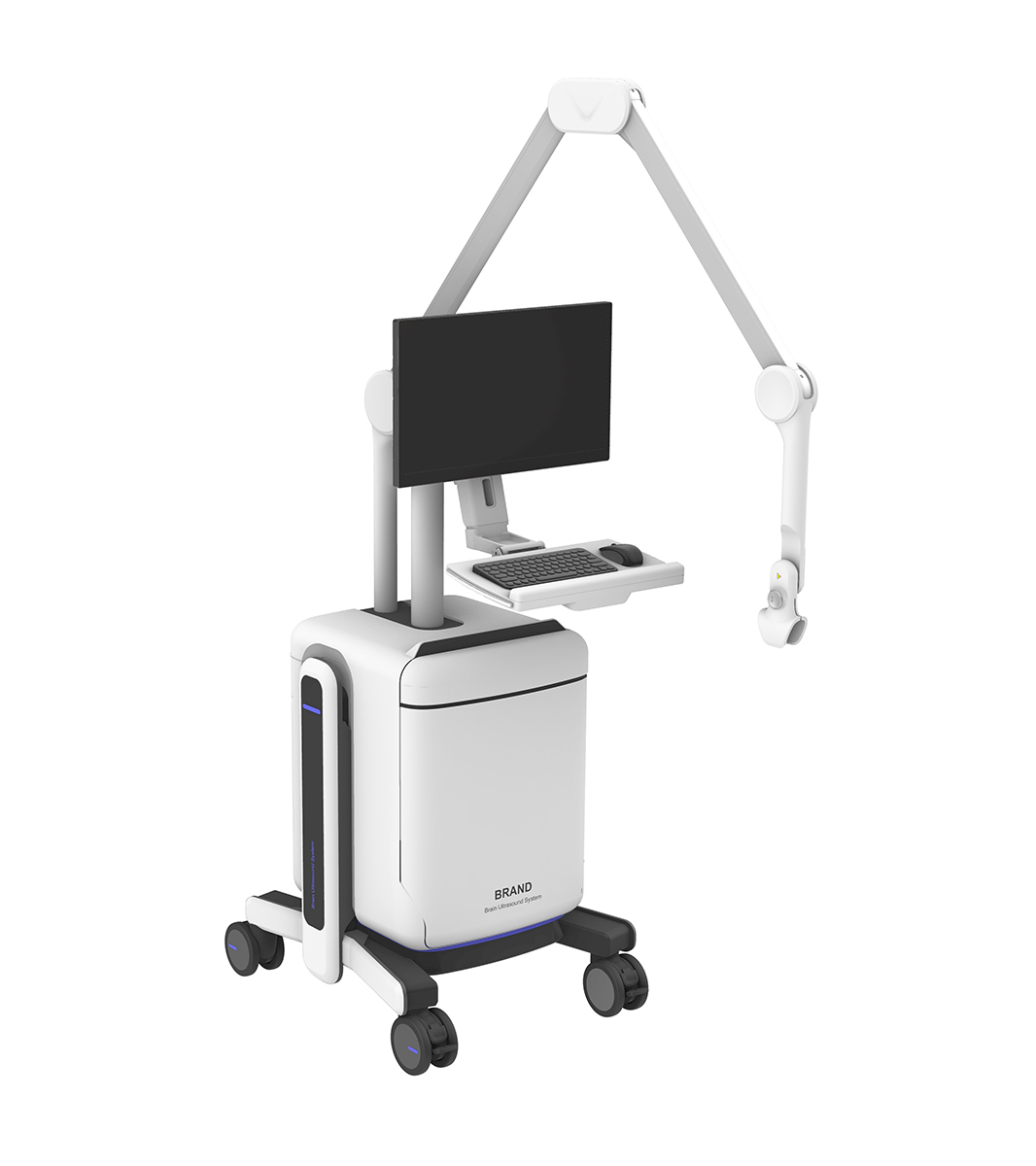
This new All-Acoustics BCI System, developed by the PolyU research team, uses ultrasound waves to pass through the skull and precisely target deep areas of the brain.
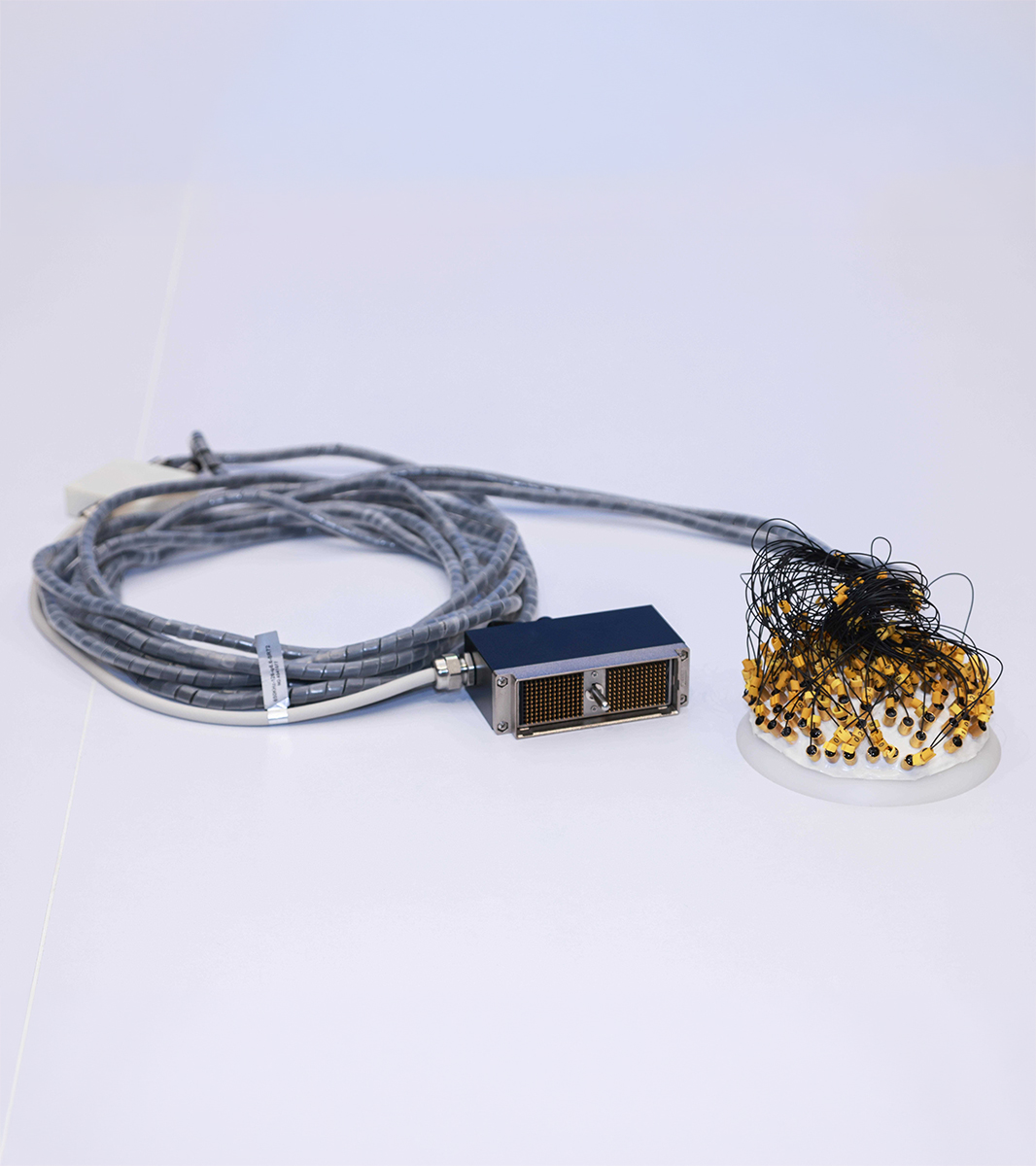
With the helmet-shaped device developed by PolyU, the research team can use ultrasound to influence brain cells, providing a non-invasive way to help relieve Parkinson’s symptoms.
The System features a transcranial sparse ultrasound array comprising over 128 independently controlled transducers. This design allows for dynamic focusing and beam steering, enabling targeted modulation of affected brain regions. According to Professor Sun, the helmet-shaped device developed by the team uses ultrasound to modulate brain cells, providing a non-invasive solution for alleviating Parkinsonian symptoms.
Additionally, the team has made considerable advancements in sonogenetics, enhancing the System’s ability to target specific types of brain cells. Recognised as a Senior Research Fellow in 2025/26 by the Research Grants Council for his work in this area, Professor Sun noted the technology has been validated by multiple independent laboratories, demonstrating its scientific significance.
The effectiveness of the System has been demonstrated through animal studies, where mice with PD showed significant improvements in motor function after receiving ultrasound treatment. The team has begun clinical research in collaboration with Huashan Hospital in Shanghai and Zhujiang Hospital of Southern Medical University. Their next step involves expanding clinical validation with a study of 100 PD patients across five medical centres to further evaluate safety and efficacy.
Looking ahead, the team aims to translate this innovation into real-world applications. Plans include collaboration with Hong Kong hospitals for clinical studies and developing a portable version of the System for home use, enabling patients to receive continuous treatment in a familiar environment. The researchers are also exploring the potential of transcranial ultrasound neuromodulation for treating other conditions, such as depression, weight control, and sleep regulation.
Professor Sun Lei’s team has filed over ten patents related to their technologies and secured over HK$76 million funding from sources including the Innovation and Technology Fund and the National Natural Science Foundation of China. Their research has been published in leading journals, including Proceedings of the National Academy of Sciences, Nature Communications and Cell Reports.