
EyeAgent 2.0 to advance clinical-grade intelligent decision support
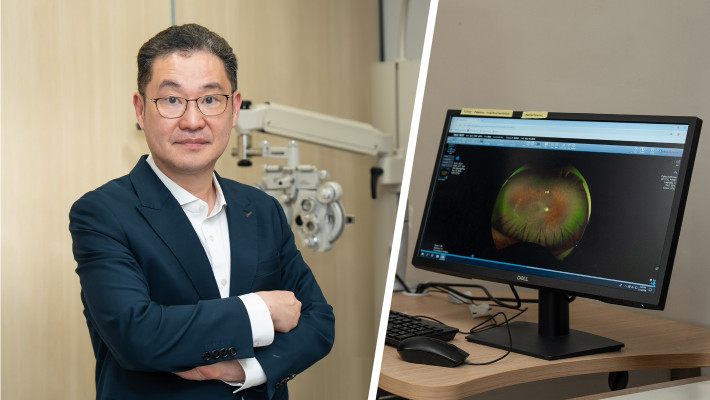
An ageing population and a shortage of specialists are creating growing challenges in eye healthcare. In response, researchers at PolyU have launched EyeAgent 2.0, a next-generation clinical-grade ophthalmic artificial intelligence (AI) co-pilot system. The system aims to redefine how AI supports eye doctors in diagnosis, treatment planning, and follow-up management, ultimately improving the quality and efficiency of clinical decision-making.
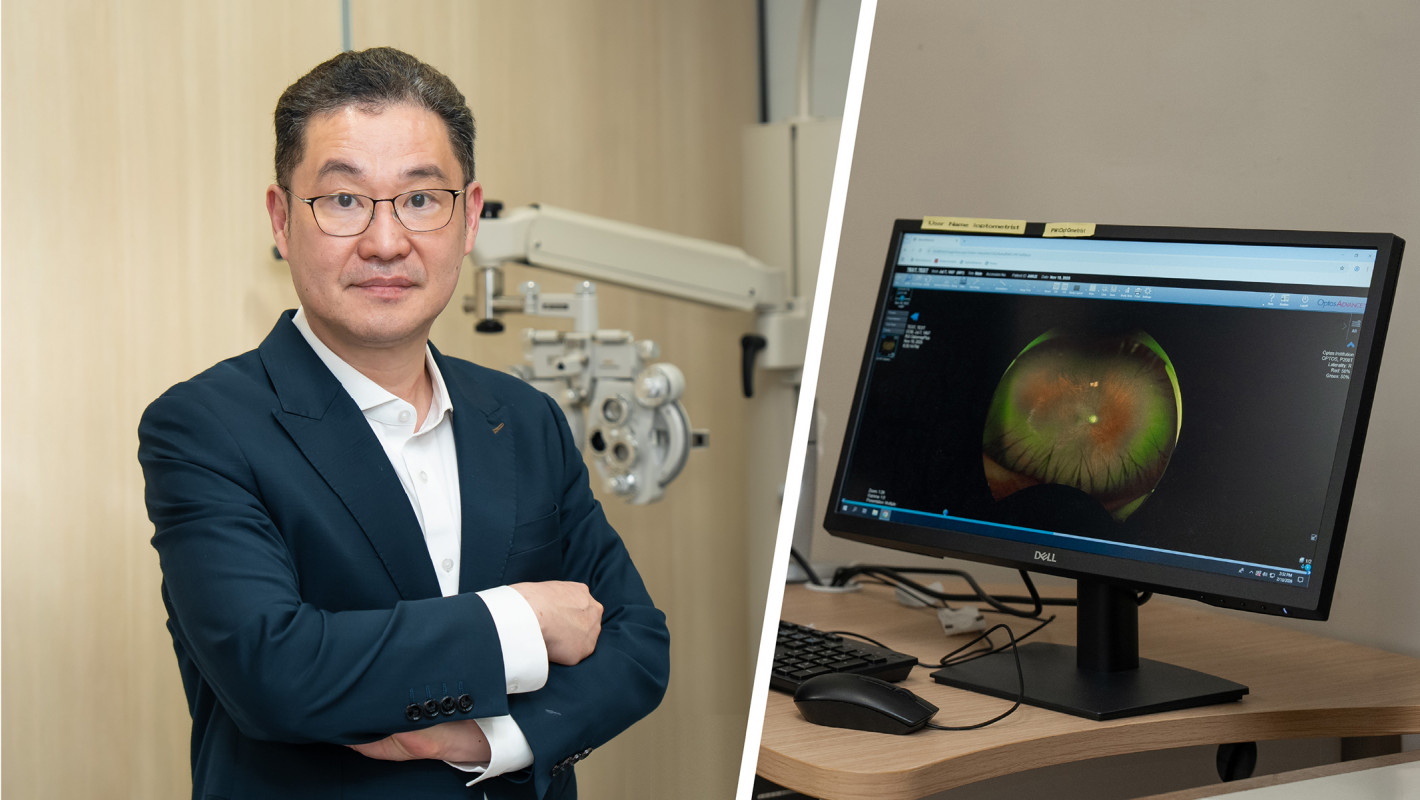
Building on the success of its earlier prototype EyeAgent 1.0, which received strong feedback after pilot testing in hospitals across Hong Kong and the Chinese Mainland, the new system goes a step further by simulating real-world clinical workflows through a multi-agent collaborative framework. By integrating data from fundus imaging, optical coherence tomography, angiography, and clinical text records, EyeAgent 2.0 can perform data integration, differential diagnosis, treatment planning, and disease progression prediction, providing continuous decision support rather than one-off image analysis.
Importantly, EyeAgent 2.0 emphasises human-AI collaboration. The AI will streamline data processing and analytical tasks, reducing the administrative burden on doctors, while they retain full control over clinical decisions.
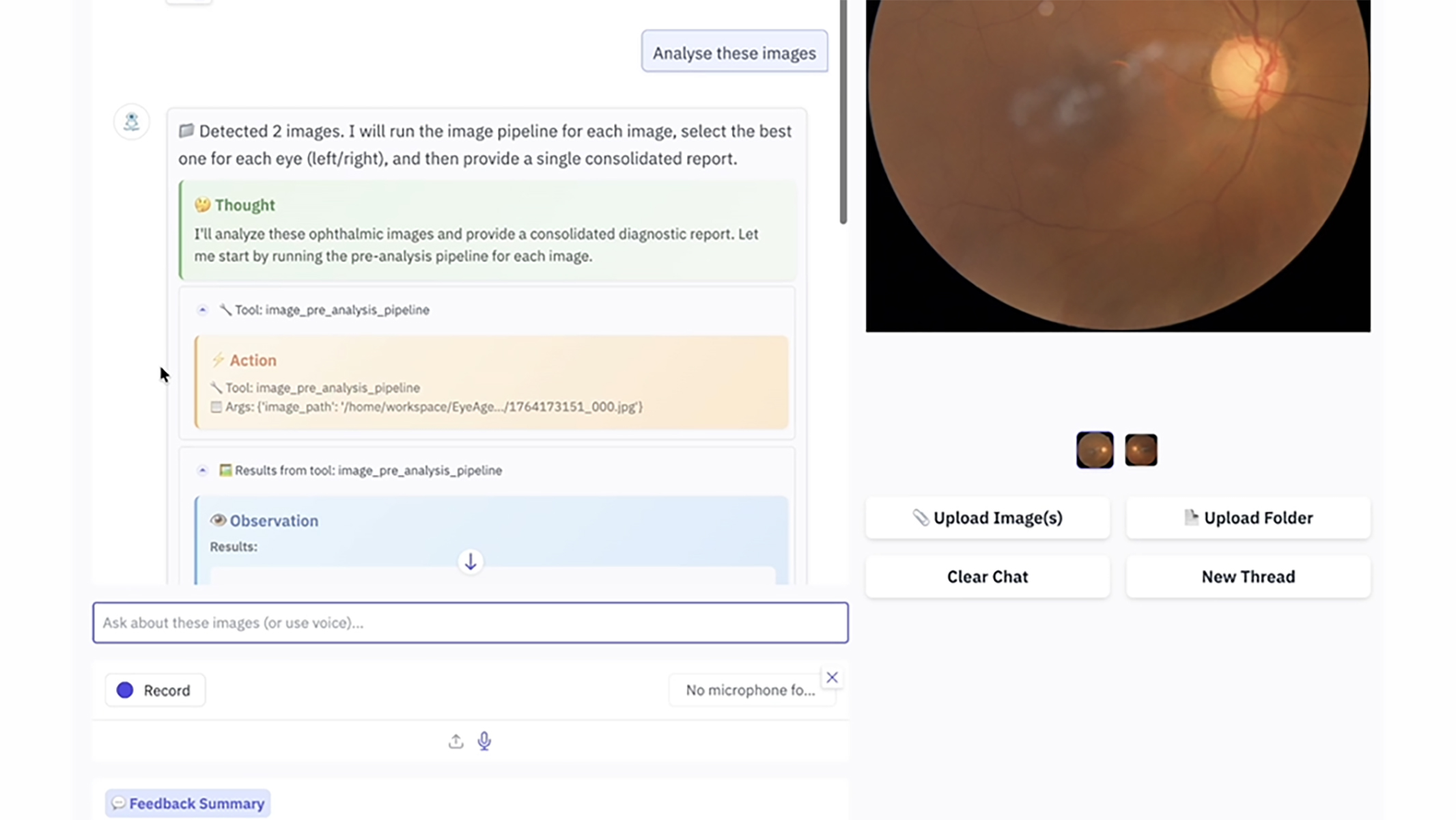
EyeAgent 2.0 is a clinical-grade AI co-pilot system featuring a foundation model, the integration of 50 types of multimodal medical data, and a clinical reasoning simulation framework.
The project is led by Professor He Mingguang, Chair Professor of Experimental Ophthalmology and Henry G. Leong Professor in Elderly Vision Health of the School of Optometry, and Director of the Research Centre for SHARP Vision. Professor He explained that the team continues to expand and refine the system using real-world clinical data: “Our goal is to develop the system into a ‘Software as a Medical Device’ compliant with regulatory standards, with plans to progressively advance registration and deployment efforts following completion of clinical validation.”
Professor He’s team expects to complete development and validation within two years, with initial deployment in Hong Kong before expanding to the Guangdong–Hong Kong–Macao Greater Bay Area, the Chinese Mainland, and overseas markets. Looking ahead, the team aims to foster a trustworthy, standardised, and sustainable medical AI ecosystem through continuous technological refinement and clinical collaboration, helping to enhance ophthalmic healthcare standards regionally and globally.
Professor Christopher Chao, Senior Vice President (Research and Innovation) of PolyU, remarked that EyeAgent 2.0 exemplifies the University’s strength in integrating AI, data science, and clinical expertise, reinforcing Hong Kong’s global competitiveness in medical AI. Guided by societal needs, PolyU will continue deepening the integration of AI and clinical medicine, driving more efficient, higher-quality, and sustainable healthcare solutions through ongoing research and institutional innovation.