
PolyU’s IntraSpect™ pioneering industry-academia-research integration in precision welding technology
The integration of industry-academia-research is at the heart of the leading-edge development IntraSpect™, a third-generation intelligent in-situ laser melt pool monitoring technology from PolyU. This collaborative effort between PolyU and various industry leaders in the Greater Bay Area has ensured that the technology is tailored to address real-world application needs, marking a significant advancement in high-end precision manufacturing.
IntraSpect™ represents a leap forward in welding technology by addressing the longstanding challenge of monitoring the internal conditions of the melt pool in real time. This micro-scale molten zone is crucial to the quality of the weld, yet traditional technologies often rely on surface observation or post-process inspection. Such limitations can lead to product failures, economic losses, and even safety hazards.
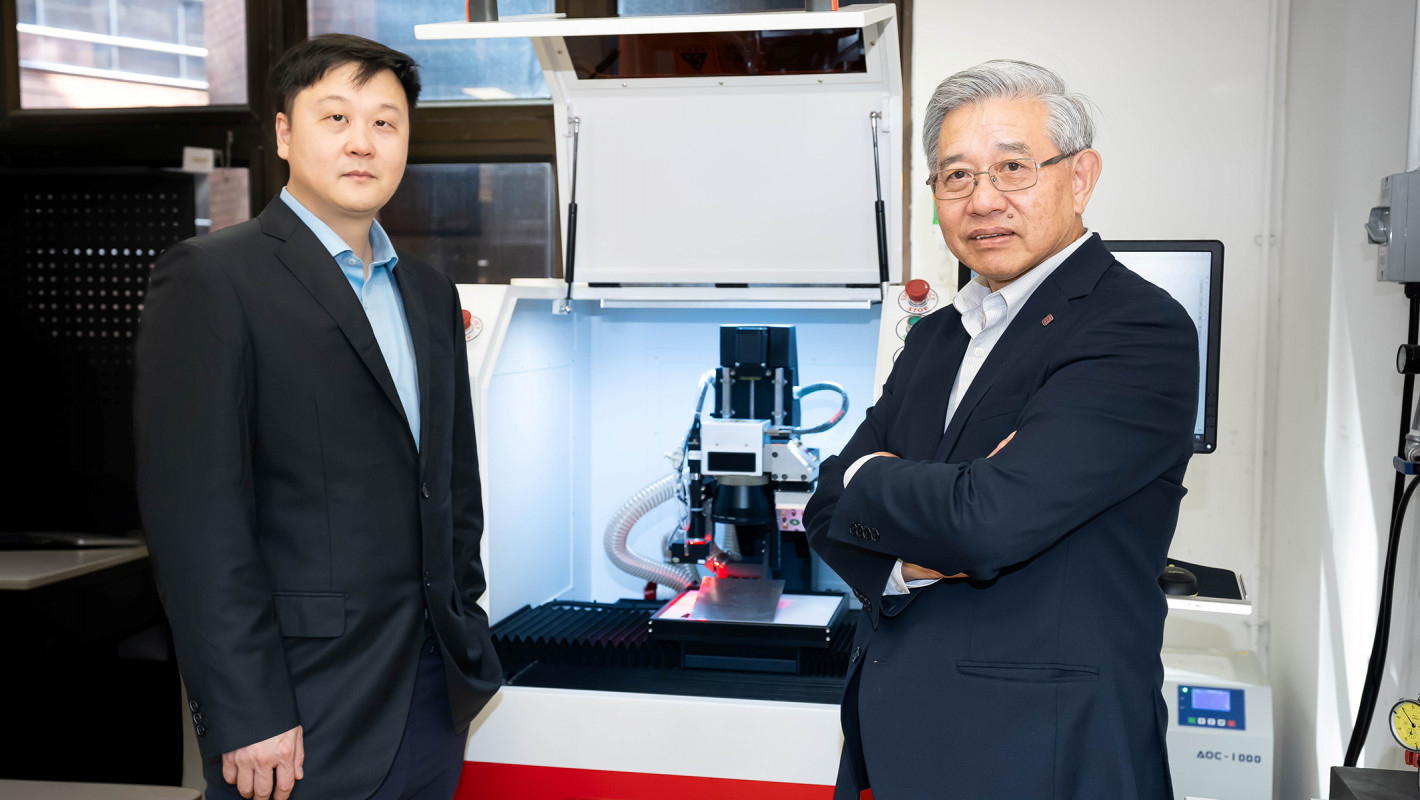
Professor Man Hau-chung, the project lead and Dean of the Faculty of Engineering, Cheng Yick-chi Chair Professor in Manufacturing Engineering and Chair Professor of Materials Engineering, emphasises that “IntraSpect™ intervenes at the source, identifying and correcting defects at an early stage. This transforms reactive post-process inspection into proactive prevention, dramatically reducing scrap rates while significantly enhancing production efficiency and product reliability.”
The innovation behind IntraSpect™ combines Optical Coherence Tomography with a multi-model artificial engine, acting as an “Industrial Eye”. This technology penetrates arc flash, metal vapour, and spatter generated during welding, achieving micron-level precision in real-time monitoring. Professor Wen Xiewen, Assistant Professor of the Department of Industrial and Systems Engineering, also another project lead of this project, explains, “the system can directly measure the three-dimensional depth and morphology inside the melt pool, achieving micron-level, real-time navigation. This enables the machine to self-correct during welding, allowing closed-loop process control.”
Testing has produced promising results, with the detection accuracy of IntraSpect™ deviating by less than 2% from destructive testing outcomes, ensuring competitiveness at international standards. The system costs about half as much as similar imported products, with investment recoverable in under a year. Furthermore, the technology can replace up to 70% of destructive testing processes, significantly saving material and time while providing comprehensive monitoring and quality traceability for every weld.
IntraSpect™ will initially focus on precision welding for new energy vehicle batteries and 3C electronics like smartphones. The team is currently engaging industry partners for pilot testing, exemplifying the value of real-world collaboration in bringing innovative solutions to market.
Professor Christopher Chao, Senior Vice President (Research and Innovation) of PolyU, underscores the significance of this integration, stating, “IntraSpect™ fully demonstrates PolyU’s unique strengths and potential in deep industry-academia-research integration.” He notes that the National 15th Five-Year Plan emphasises the development of new quality productive forces, with intelligent manufacturing at the forefront of industrial upgrading. PolyU aims to align its activities with national strategies while enhancing high-end manufacturing capabilities in Guangdong-Hong Kong-Macao Greater Bay Area.
The aspirations for IntraSpect™ extend well beyond its initial applications. The team envisions its deployment in sectors such as medical devices, aviation, and aerospace, all of which require exceptional welding quality. By combining Hong Kong’s research capabilities with the Greater Bay Area’s industrial landscape, the project aims to create a safer, more efficient, and intelligent manufacturing ecosystem.
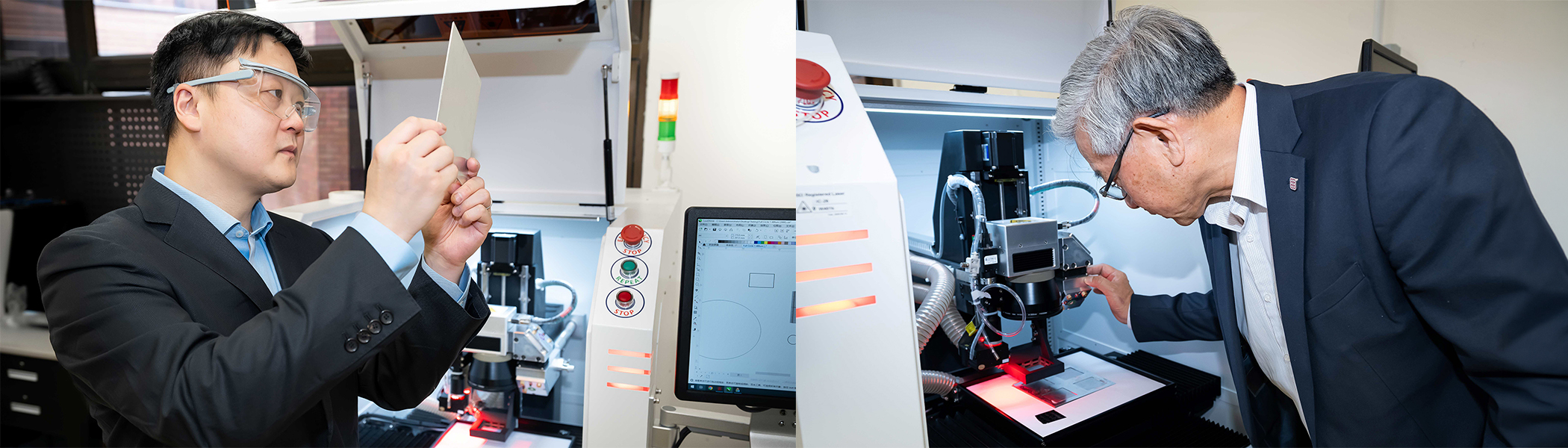
IntraSpect™ penetrates arc flash, metal vapour, and spatter during welding to measure the three-dimensional depth and morphology of the melt pool with micron-level precision. By identifying and correcting defects early, it transforms reactive inspections into proactive prevention, reducing scrap rates while enhancing production efficiency and product reliability.