
PolyU scholar awarded prestigious BOCHK Science and Technology Innovation Prize for pioneering photonics research
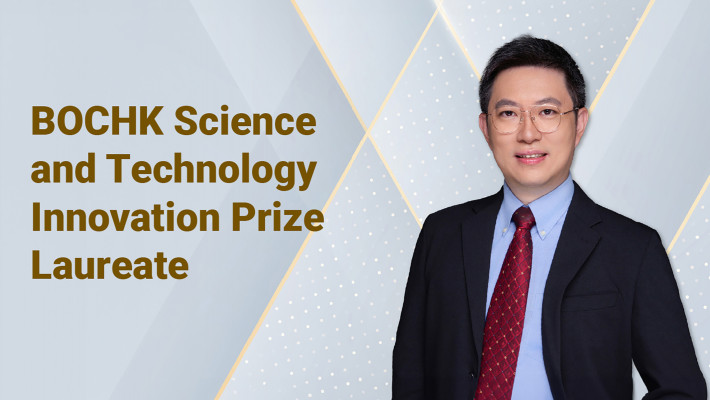
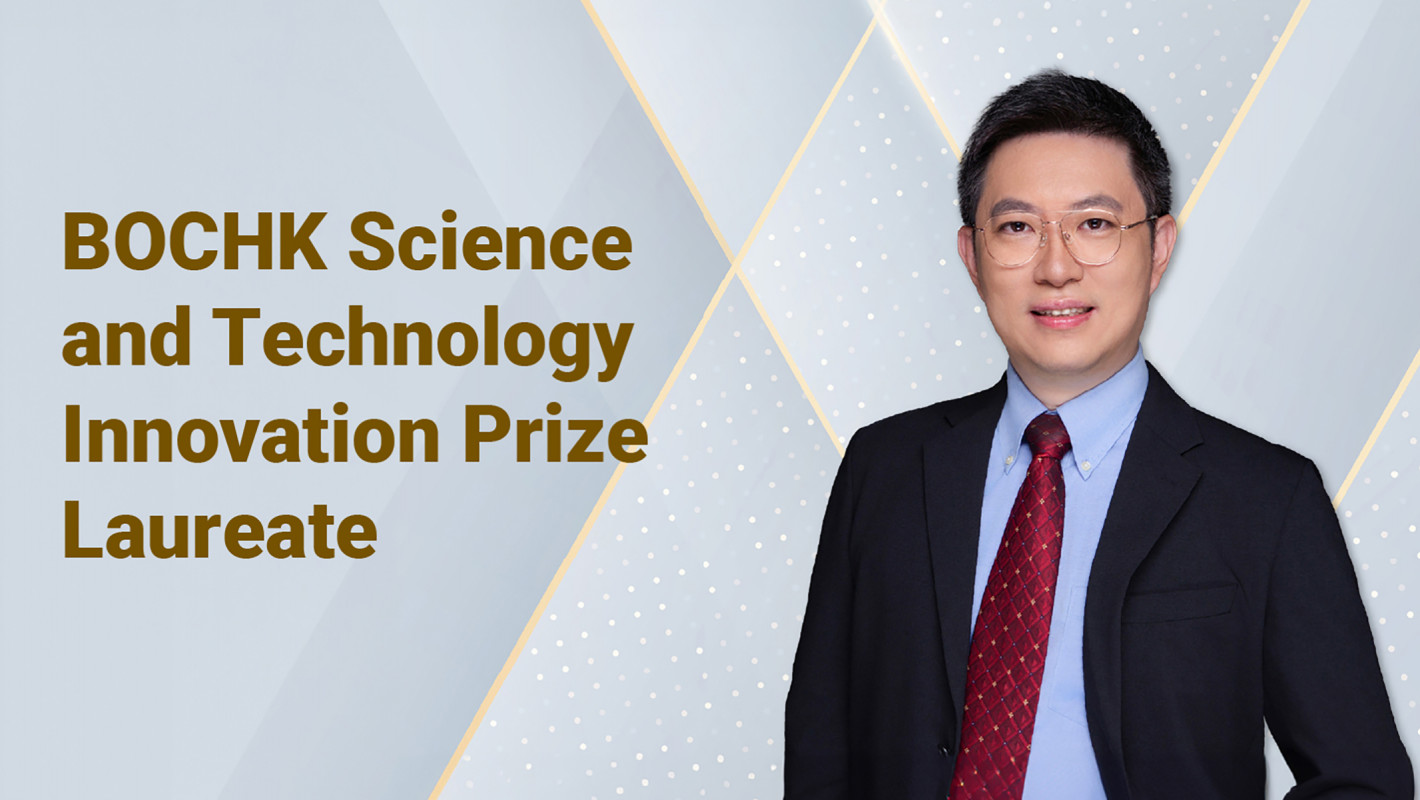
For Professor Yu Changyuan, Chair Professor of Photonic Information System in the Department of Electrical and Electronic Engineering at PolyU, light has been both his subject and his guide. From his early days studying semiconductor physics to his current work pioneering AI-assisted optical systems, he has spent decades pursuing one goal: making light work harder, travel farther, and carry more information than ever before.
That dedication has now earned him the Bank of China (Hong Kong) Science and Technology Innovation Prize (BOCHK STIP) in April 2026. The award recognises his groundbreaking contributions to the research and application of photonic information systems that are quietly transforming industries from telecommunications to healthcare.
A journey through light
Professor Yu pursued his doctorate at the University of Southern California under Professor Alan E. Willner, a leading authority in optical fibre communication. There, he tackled the challenges of high-speed optical systems during a transformative period when the internet’s explosive growth was pushing communication infrastructure to its limits.
“I was fortunate to work at the forefront during this pivotal time,” Professor Yu recalled. “The demand for faster, more reliable data transmission was accelerating, and we were exploring how to extract every possible bit of performance from optical fibres.”
His research focused on coherent optical communication, a technology that had been explored in the 1980s but was being revisited with new urgency. By adapting algorithms from wireless communication and developing novel phase estimation methods, he and his research team helped solve key problems in carrier recovery that had stymied the field.
From laboratory to marketplace
What sets Professor Yu apart is his commitment to seeing research leave the laboratory. Throughout his career at institutions in Singapore and now at PolyU, he has encouraged his students to think beyond publications and patents. Several have established successful companies, transforming academic discoveries into commercial products.
One venture developed AI-assisted health monitoring systems using optical fibre sensors that can detect breathing patterns and heart rates through subtle pressure changes. Another company is manufacturing advanced metalenses, ultra-thin optical components that could transform applications in consumer electronics, security systems, and automotive technology.
“Research means little if it remains confined to journals. The real satisfaction comes from seeing our work address genuine societal needs, whether that is improving internet infrastructure or helping monitor patients’ health remotely,” Professor Yu reflected.
Building on academic excellence
Seven of the University's researchers have received six awards over four consecutive years, including Professor Yu's recognition this year, spanning the fields of “Life and Health”, “Advanced Manufacturing”, “FinTech” and “Artificial Intelligence and Robotics”.
Professor Christopher Chao, PolyU Senior Vice President (Research and Innovation), noted that this consistent recognition reflected the University’s capability in translating cutting-edge technologies into impactful applications that benefit Hong Kong and beyond.
The BOCHK STIP honours both individual excellence and the collective effort that makes discovery possible. Professor Yu has supervised more than 20 postdoctoral researchers and 40 PhD students, led or co-led over 70 research projects, and received 16 Best Paper Awards at international conferences, including a project funded under the Innovation and Technology Commission's RAISe+ Scheme."
“This honour truly belongs to my entire team—the researchers, students, and partners who have contributed their talents and energy,” he said. “I am grateful for the support from PolyU and funding bodies that has enabled us to pursue ambitious ideas.”
As Director of the PolyU-Jinjiang Technology and Innovation Research Institute, Professor Yu continues exploring new frontiers in photonics whilst mentoring the next generation of researchers. His current projects tackle ultra-high-capacity optical transmission systems and energy-efficient data centre technologies, addressing the growing environmental footprint of our digital world. For Professor Yu, each breakthrough simply illuminates the path to the next.