
Six rising stars at PolyU win 2026 Young Innovative Researcher Awards
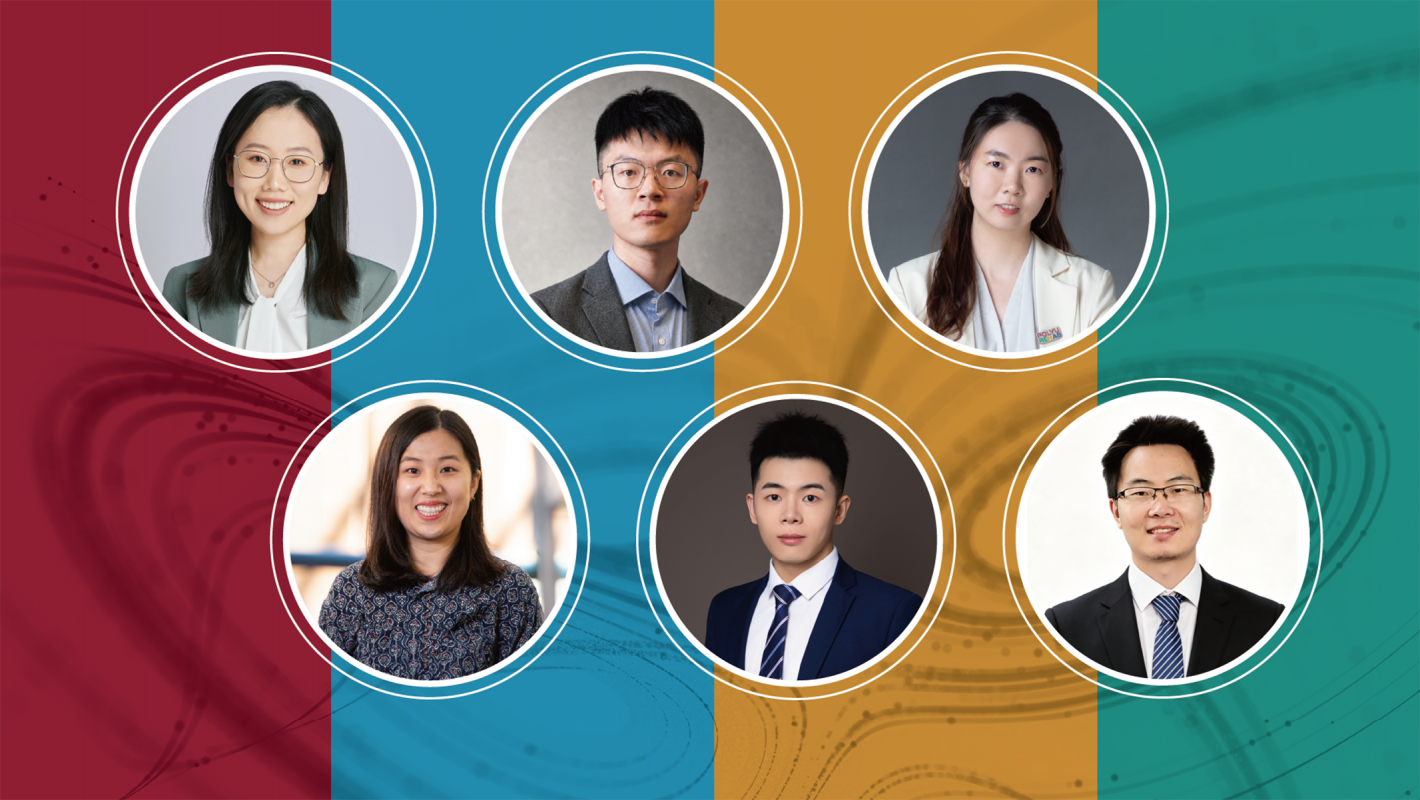
PolyU has officially announced the six recipients of the 2026 Young Innovative Researcher Award (YIRA), recognising a new cohort of rising scholars for their outstanding research excellence. Now in its fifth year, YIRA has become a prestigious milestone for the University, specifically designed to support researchers under the age of 35 who demonstrate exceptional potential.
By providing dedicated funding and personal recognition, YIRA empowers young visionaries to bridge the gap between academic theory and impactful, societal solutions. It serves as a launchpad, enabling these scholars to emerge as future leaders in global research and innovation.
This year’s awardees exemplify the breadth and depth of innovation fostered at PolyU. Their projects include the development of low-cost nanocatalysts for large-scale green hydrogen production, circular wastewater systems for net-zero sustainability, AI-driven dietary coaching tools for chronic disease prevention, and advanced neuroimaging approaches for identifying dyslexia in bilingual children. Other projects explore brain-inspired models for more sustainable AI and intelligent microcatheter systems for precision medical interventions. Each project is driven by a clear aim to turn cutting-edge research into solutions that address real-world challenges.
Beyond individual achievements, the award highlights PolyU’s role as a hub for impactful, interdisciplinary research. YIRA acts as a catalyst, empowering the recipients to pursue high-impact research that transcends traditional academic boundaries. By supporting their development today, the University ensures these researchers have the tools and recognition to become the global leaders of tomorrow, shaping a future driven by innovation and purposeful discovery.
The six 2026 YIRA awardees are (in alphabetical order):
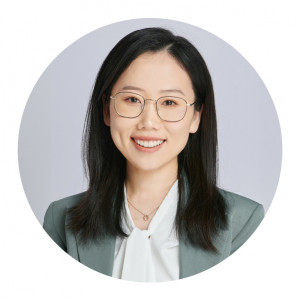
Professor Ge Jingjie
Assistant Professor, Department of Applied Biology and Chemical Technology
Professor Ge’s project, Designing Low-cost, High-efficient Anodic Catalysts for Electrocatalytic Hydrogen Production, focuses on the atomic-precision design of low-cost nanocatalysts for large-scale green hydrogen production through water electrolysis.
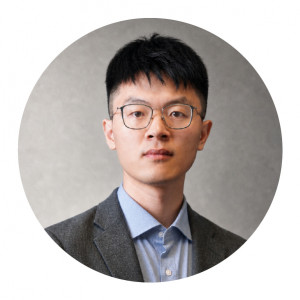
Professor Liu Tao
Assistant Professor, Department of Civil and Environmental Engineering
Professor Liu is spearheading the project Net-Zero Wastewater Management through Circular Resource Utilisation, which focuses on developing circular, net-zero wastewater systems through integrated carbon management, in-situ resource recovery and system-wide technological innovation.
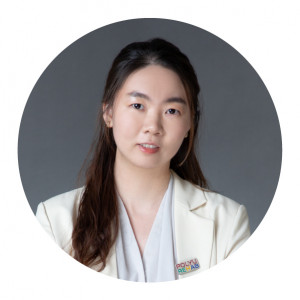
Dr She Rui
Research Assistant Professor, Department of Rehabilitation Sciences
Dr She’s project, An Explainable, Theoretically and Culturally Grounded Artificial Intelligence (AI)-based Chatbot for Personalised Dietary Behaviour Intervention, focuses on developing a culturally calibrated AI chatbot to provide scalable, personalised dietary coaching using image-based food logging and behavioural skill training for chronic disease prevention.

Professor Sun Xin
Assistant Professor, Department of Language Science and Technology
Professor Sun is leading the project Brain Basis of Dyslexia in Chinese-English Bilinguals: Phonological and Morphological Assessments Using Functional Near-Infrared Spectroscopy, which uses functional near infrared spectroscopy to support the identification and evaluation of developmental dyslexia in Chinese-English bilingual children.
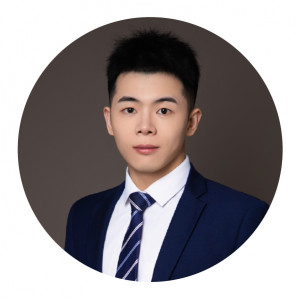
Professor Wu Yujie
Assistant Professor, Department of Computing
Professor Wu’s project, Scaling by Smarter Neurons: A Neural-Inspired Foundation Model Framework for Enhanced Long-sequence Understanding and Energy-Efficient Computation, explores a brain-inspired foundation model framework that combines biologically efficient computational principles with modern deep learning architectures, improving memory capacity and reducing energy costs to support sustainable AI development.
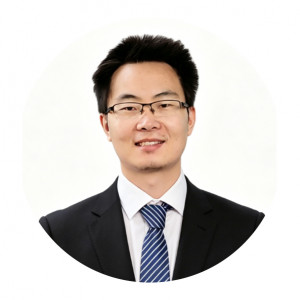
Professor Yang Lidong
Assistant Professor, Department of Industrial and Systems Engineering
Professor Yang’s project, Trustworthy AI-assisted Magnetic Microcatheter (AI-M2) System: An Enabling Paradigm for Intelligent Superselective Endoluminal, aims to develop an intelligent magnetic microcatheter system for superselective endoluminal interventions.