
Breathing risk: Study flags airborne microbes’ links to inflammation and drug resistance
Air pollution is widely recognised as a major public health threat, traditionally linked to visible smog and chemical emissions. However, new research suggests that some of the most serious health risks may come from microscopic biological components in the air that are largely invisible and often overlooked. A research team from PolyU has revealed that airborne microbes’ components, including bacteria, fungi, viruses and cellular debris can have disproportionately strong effects on human health, particularly on the respiratory system.
Their findings show that although these biological particles make up an extremely small fraction of fine particulate matter (PM2.5), they can have disproportionately large effects on the respiratory system. The study found that bacterial endotoxins, which account for less than one-millionth of PM2.5 mass, were found to trigger nearly 20% of inflammatory responses.
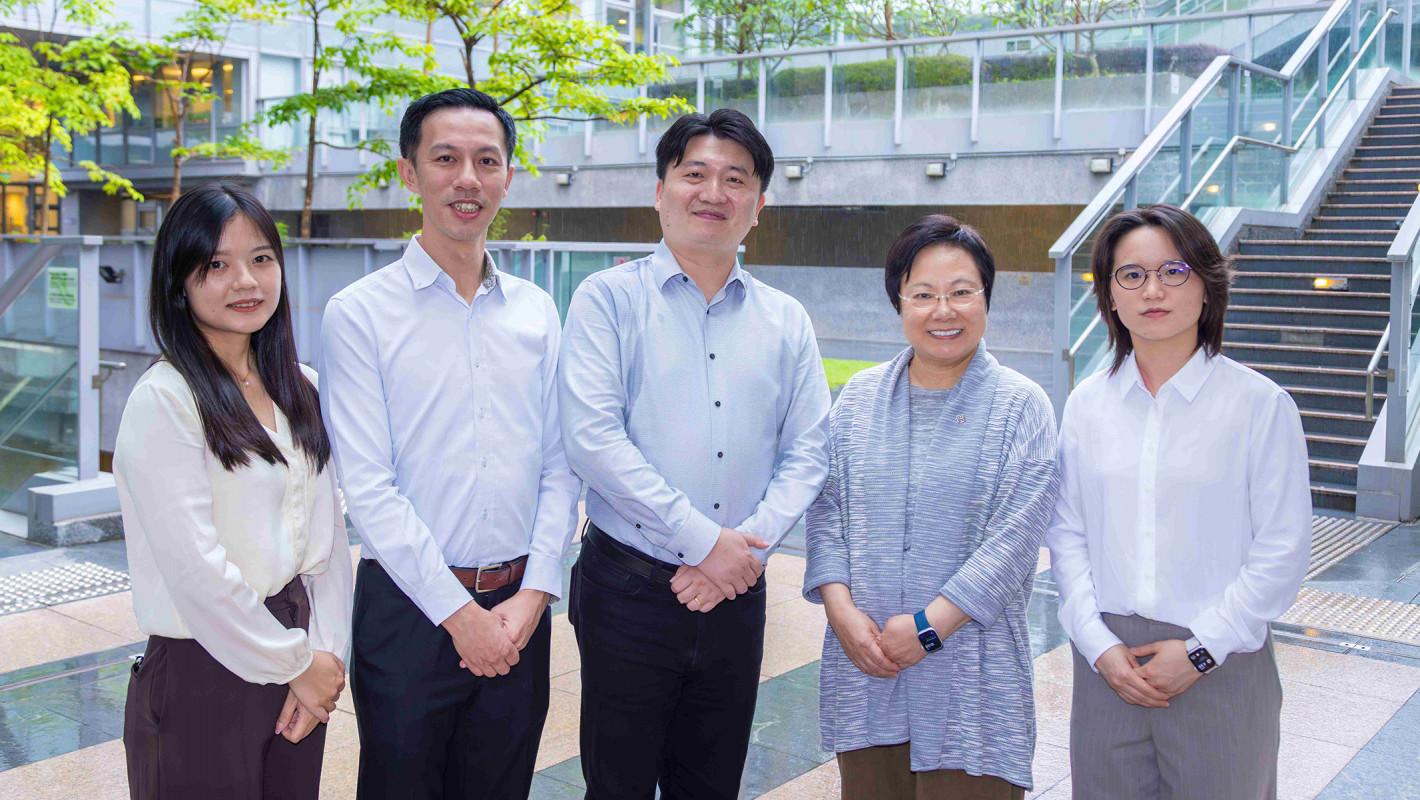
The study was conducted by Professor Jin Ling, Assistant Professor of the Department of Civil and Environmental Engineering and the Department of Health Technology and Informatics (HTI), Professor Polly Leung, Professor of HTI, and their jointly supervised PhD student, Ms Yu Jinyan. Through systematic analysis, the team identified bacteria as the dominant microbial component in PM2.5. Among these, endotoxins—structural elements of bacterial cell walls—were shown to contribute up to 17% of inflammatory responses despite their negligible mass, giving them the highest toxicity-to-mass ratio among known PM2.5 components. The findings, published in Environmental Science & Technology, suggest that reducing overall particulate levels alone may not be sufficient; targeting highly toxic trace components could be key to improving public health outcomes.
Professor Jin noted that as global efforts continue to reduce emissions from traditional sources such as vehicles and industry, microbial pollutants are likely to become a more prominent concern. Understanding their origins and health impacts will be essential for future air quality management.
In a related study published in Environmental Science & Technology Letters, the team also investigated airborne fungi, focusing on Candida species commonly found in PM10. Researchers, including Dr Franklin Chow, Research Assistant Professor of HTI, and their jointly supervised Postdoctoral Fellow Dr Fan Chunlan and PhD student Mr Chen Tian, discovered multidrug-resistant Candida parapsilosis in urban air. Genetic analysis revealed strong similarities between these environmental strains and those found in clinical infections, suggesting potential transmission through everyday exposure.
The study further showed that such fungi are widespread in urban environments, particularly in settings like wastewater treatment facilities, healthcare spaces and residential ventilation systems, and that their prevalence varies by season. Candida parapsilosis demonstrated notable resilience and resistance to treatment, raising concerns about its role as an emerging public health threat.
According to Professor Jin, the growing presence of drug-resistant fungi in both environmental and clinical contexts highlights antifungal resistance as a pressing global issue. Future research will focus on identifying key urban sources, understanding resistance mechanisms, and mapping transmission pathways to support more effective public health strategies.