
PolyU accelerates innovation and its presence in Jinjiang and Qianhai, contributing to national development
PolyU is deepening its commitment to China’s technological advancement through an ambitious network of 12 Mainland Translational Research Institutes (MTRI), one Mainland Translational Research Centre (MTRC) and two Research Institutes across various strategic cities. These establishments are actively fostering collaborations with local governments and other industry bodies and elevating their presence. Two recent developments in Jinjiang, Fujian, and Qianhai, Shenzhen exemplify how PolyU is bridging cutting-edge research with local industrial needs, transforming scientific discoveries into tangible economic and social benefits.
Pioneering presence in Jinjiang
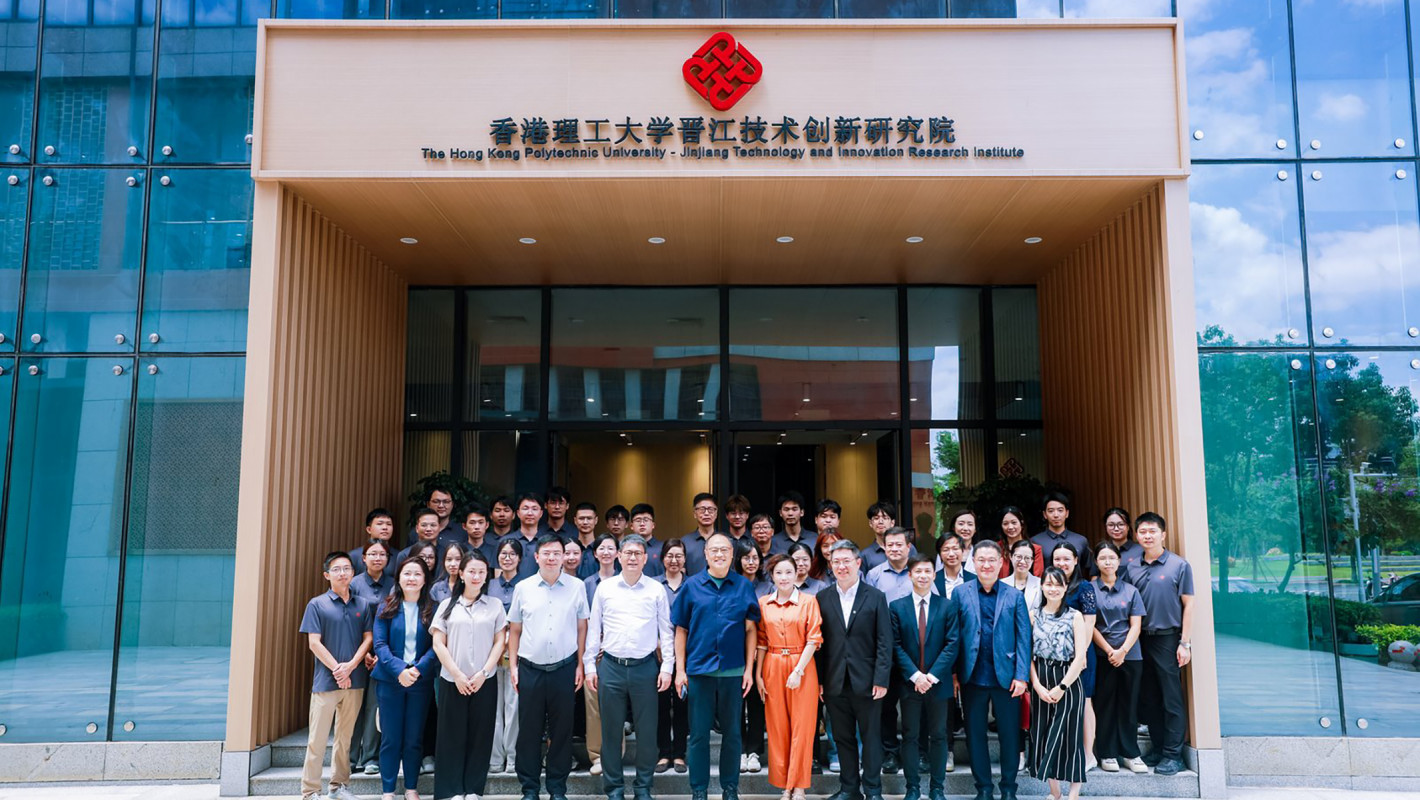
Established in September 2023, the PolyU-Jinjiang Technology and Innovation Research Institute marks a historic milestone as the University’s first MTRI beyond the Greater Bay Area. This pioneering initiative has rapidly evolved into a powerhouse of innovation, building “one base, three centres, and four platforms” in just under three years.
“We chose Jinjiang because it is the most dynamic heartland of China’s private economy,” Professor Yu Changyuan, Director of the Jinjiang Institute explained at the recent Jinjiang entrepreneur-scientist innovation conference. The city’s vibrant entrepreneurial ecosystem, combined with strong government support, has created fertile ground for collaboration.
The MTRI has assembled over 70 senior talents and focuses on sectors critical to Fujian’s industrial development and societal needs, including textile technology, innovative food science, microelectronics, technology policy, healthcare, and cultural tourism. Through deep partnerships with industry leaders such as ANTA, Fynex Textile, and Panpan Foods, the MTRI has successfully transferred more than 70 research outcomes and incubated 17 enterprises thus far.
A distinctive feature of the Jinjiang model is its “entrepreneur plus scientist” dual-mentor mechanism, which cultivates industry-innovation leaders by combining business acumen with scientific expertise. This approach accelerates technology transfer whilst addressing real-world challenges facing local industries.
Advancing exchange and collaboration in Qianhai
Meanwhile, in Qianhai—a major strategic platform for national reform and opening-up—PolyU hosted the “Qianhai Innovation and Culture Week” from 6 to 20 May 2026. Organised by PolyU's Qianhai Disruptive Technology and Innovation Research Centre (QHRC), Policy Research Centre for Innovation and Technology (PReCIT), and Knowledge Transfer and Entrepreneurship Office (KTEO), and co-organised by The Hong Kong Young Scientist Association, Qianhai International Talent Service Center, and Qianhai Shenzhen-Hong Kong Youth Innovation and Entrepreneur Hub, the Week featured activities spanning smart healthcare, artificial intelligence, and innovation policy.
The flagship event, “Technology Connecting Asia-Pacific: APEC Economies' Innovation Policy and International Cooperation Forum”, attracted over 100 participants from government, academia, research institutions, and industry. Professor Christopher Chao, Senior Vice President (Research and Innovation) and Director of PolyU’s PReCIT, emphasised Hong Kong’s unique role as both “super-connector” and “super value-adder” in promoting regional innovation cooperation.
Two significant partnerships emerged from the event. PolyU signed a cooperation agreement with the Qianhai International Talent Service Center, focusing on talent attraction, collaborative cultivation, and technology transformation. Another memorandum of understanding with the Research Institute of Tsinghua, Pearl River Delta was also signed, which will advance joint projects combining innovative design with social value.
Strategic national integration
These initiatives reflect PolyU’s broader strategy of establishing 12 MTRIs in key Chinese Mainland cities, including Daya Bay, Hangzhou, Hefei, Jinjiang, Nanjing, Shaoxing, Wenzhou, Wuhan, Wuxi, Xingguo, Zhongshan and Zibo. By aligning research strengths with local industrial and societal needs, these platforms transform academic excellence into practical solutions that fuel economic growth and technological advancement across the Chinese Mainland.
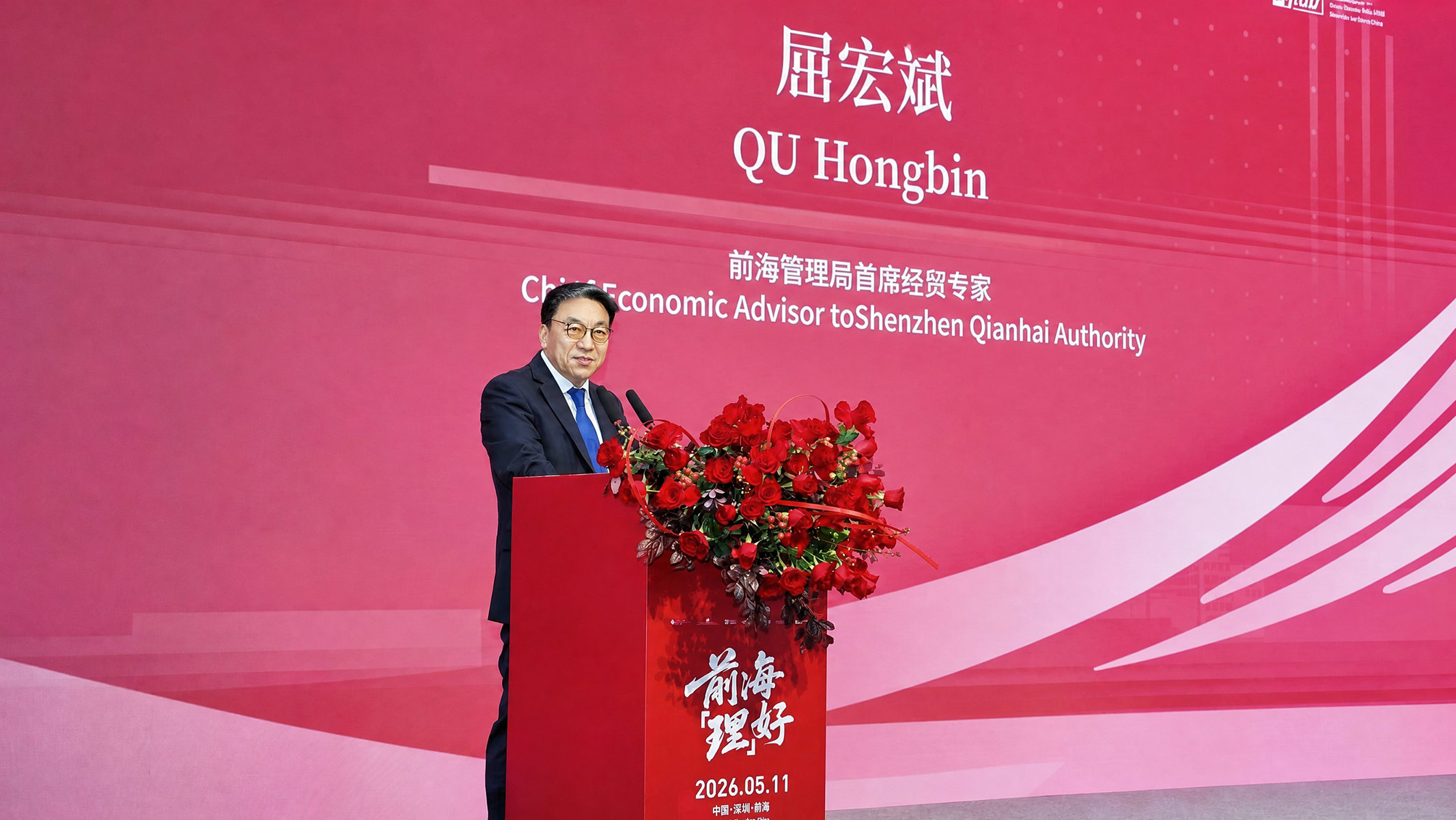
Mr Qu Hongbin, Chief Economic Advisor to the Shenzhen Qianhai Authority, noted at the Forum that Qianhai will continue to deepen its collaboration with PolyU in cross-border technology transfer, startup incubation and think tank development, advancing Qianhai’s development as a major hub for science and technology innovation in the Asia-Pacific region.
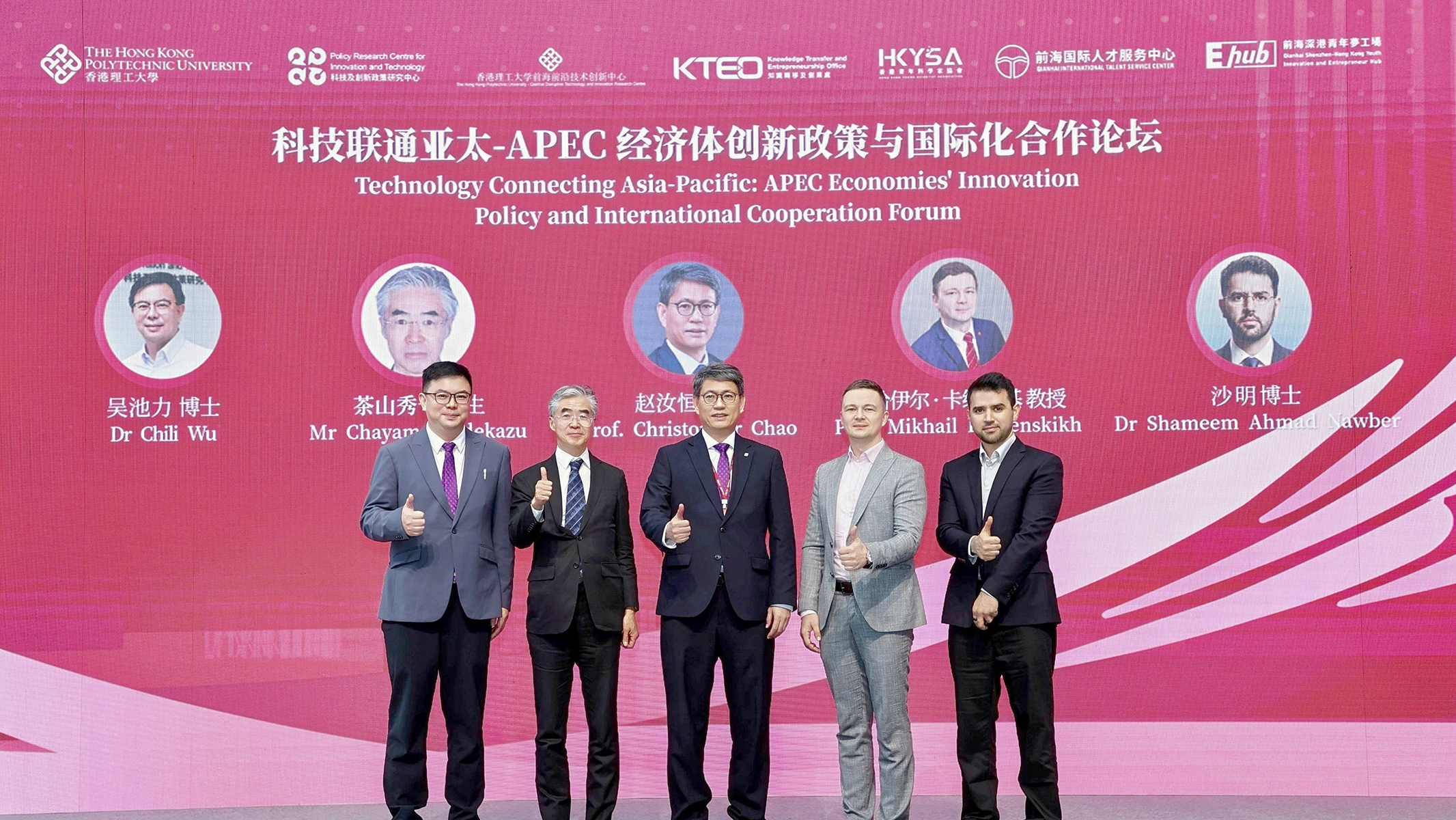
The roundtable discussion was moderated by Dr Chili Wu, Associate Director of PReCIT and Associate Director of the PolyU-Jinjiang Technology and Innovation Research Institute (1st from left), who engaged the keynote speakers in discussions on the distinctive mechanisms and policy frameworks various economies have adopted to promote cross-border talent exchange in science, technology and innovation. From 2nd left: Mr Hidekazu Chayama, Chief Representative of the Beijing Office of the Japan Science and Technology Agency; Prof. Christopher Chao; Prof. Mikhail Kamenskikh, Associate Professor of Perm State University and Senior Research Fellow of the Institute of Humanitarian Studies of Ural Branch of the Russian Academy of Sciences; and Dr Shameem Ahmad Nawber, Deputy Director of Institute for Digital Economy and Artificial Systems BRICS-PartNIR, IDEAS.
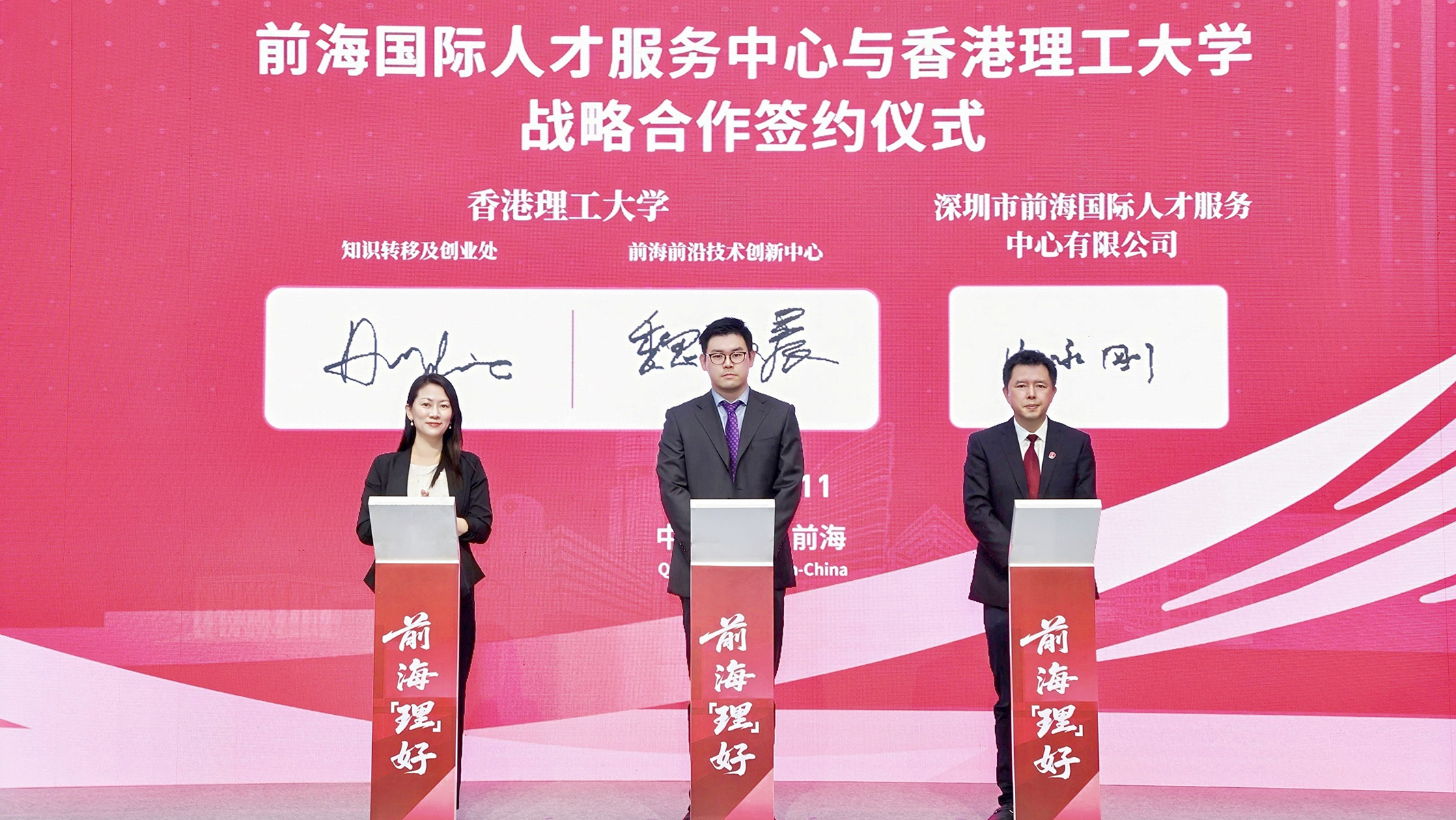
PolyU and the Qianhai International Talent Service Center signed a cooperation agreement to establish a platform for two-way talent flows between Shenzhen and Hong Kong and foster deep integration across industry, academia and research. From left: Ms Amylia Chan, Interim Director of KTEO of PolyU; Prof. Tommy Wei Minchen, Associate Head (Research) of the Department of Building Environment and Energy Engineering and Director of QHRC of PolyU; and Mr Xie Yonggang, Deputy General Manager of the Qianhai Industry Development Group and Executive Director and Legal Representative of the Qianhai International Talent Service Center
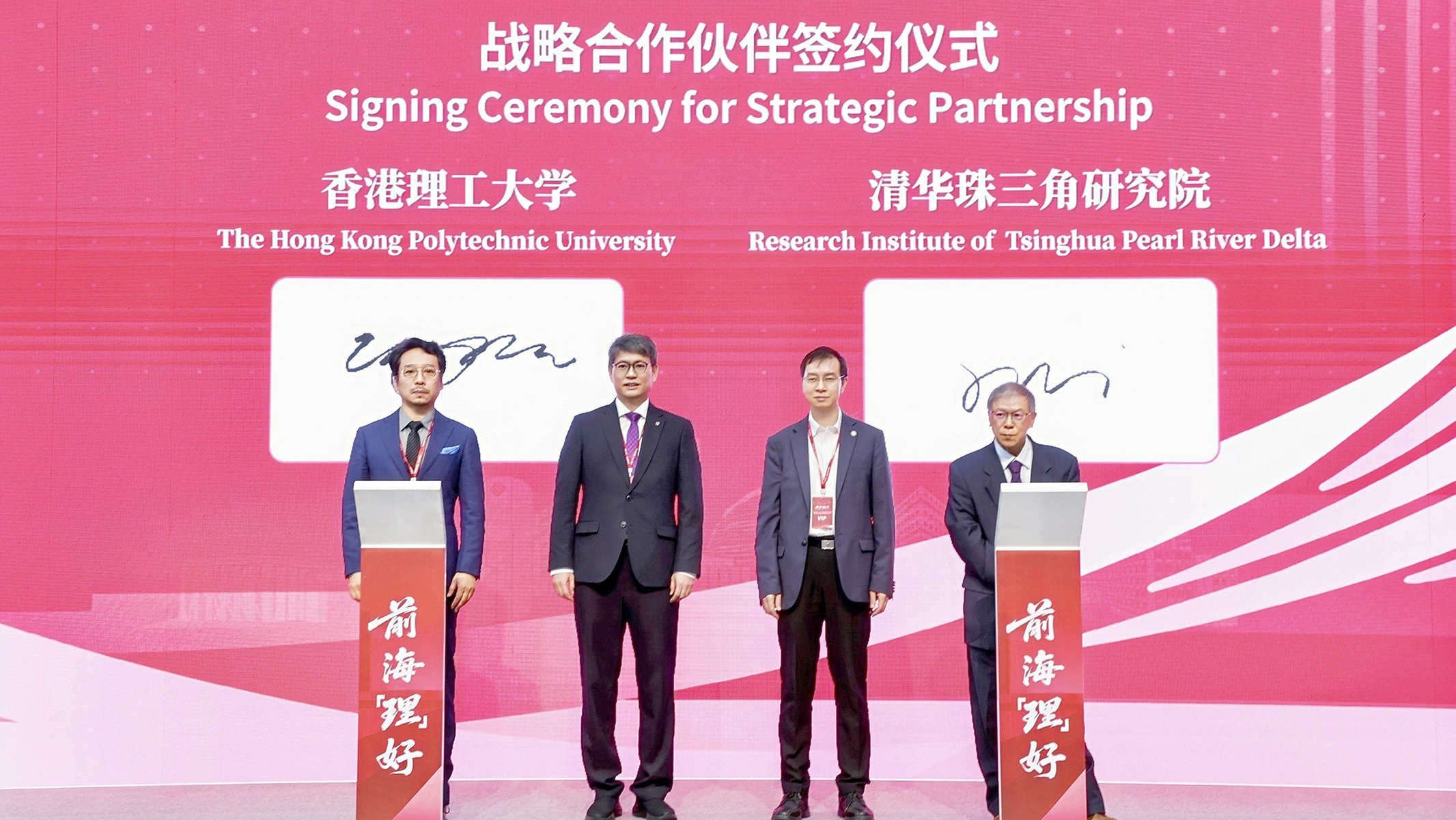
Witnessed by Prof. Christopher Chao (2nd from left) and Prof. Wang Xuewu, Dean of Research Institute of Tsinghua, Pearl River Delta (2nd from right), Prof. Stephen Wang, Professor of the School of Design and Director of the Research Centre for Future (Caring) Mobility of PolyU (1st from left), and Prof. Xu Yingqing, Director of the Design Innovation Centre of the Research Institute of Tsinghua, Pearl River Delta and Director of The Future Laboratory, Tsinghua University (1st from right), signed a memorandum of understanding on behalf of their respective institutions to establish a strategic partnership driven by “innovative design + social value”.