
Designing in an AI-driven era: Inside PolyU’s architectural studies programme
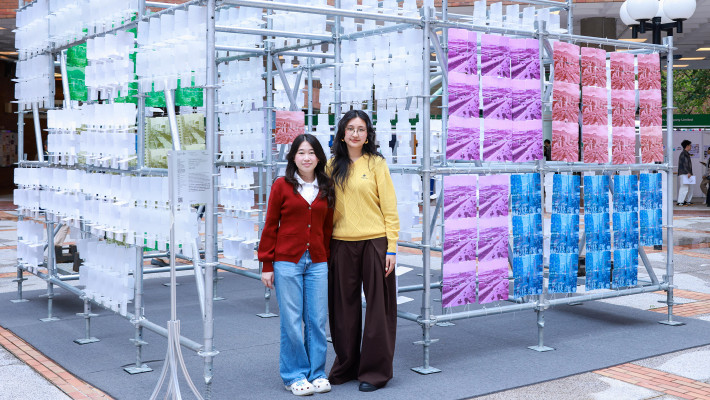
On 26 February, the PolyU Bachelor of Science (Hons) in Architectural Studies hosted its Year 1 Student Installation Exhibition for the Hong Kong Shenzhen Bi-City Biennale of Urbanism/Architecture (UABB), transforming PolyU’s campus into a vibrant laboratory of ideas. The programme’s inaugural cohort presented tech-enabled responses to urban challenges in an AI-driven era. The exhibition formed part of the programme’s wider out-of-classroom learning experiences, extending students’ education beyond the studio. The work showed how these students are not only designing structures, but also beginning to reimagine the future fabric of our cities and communities.
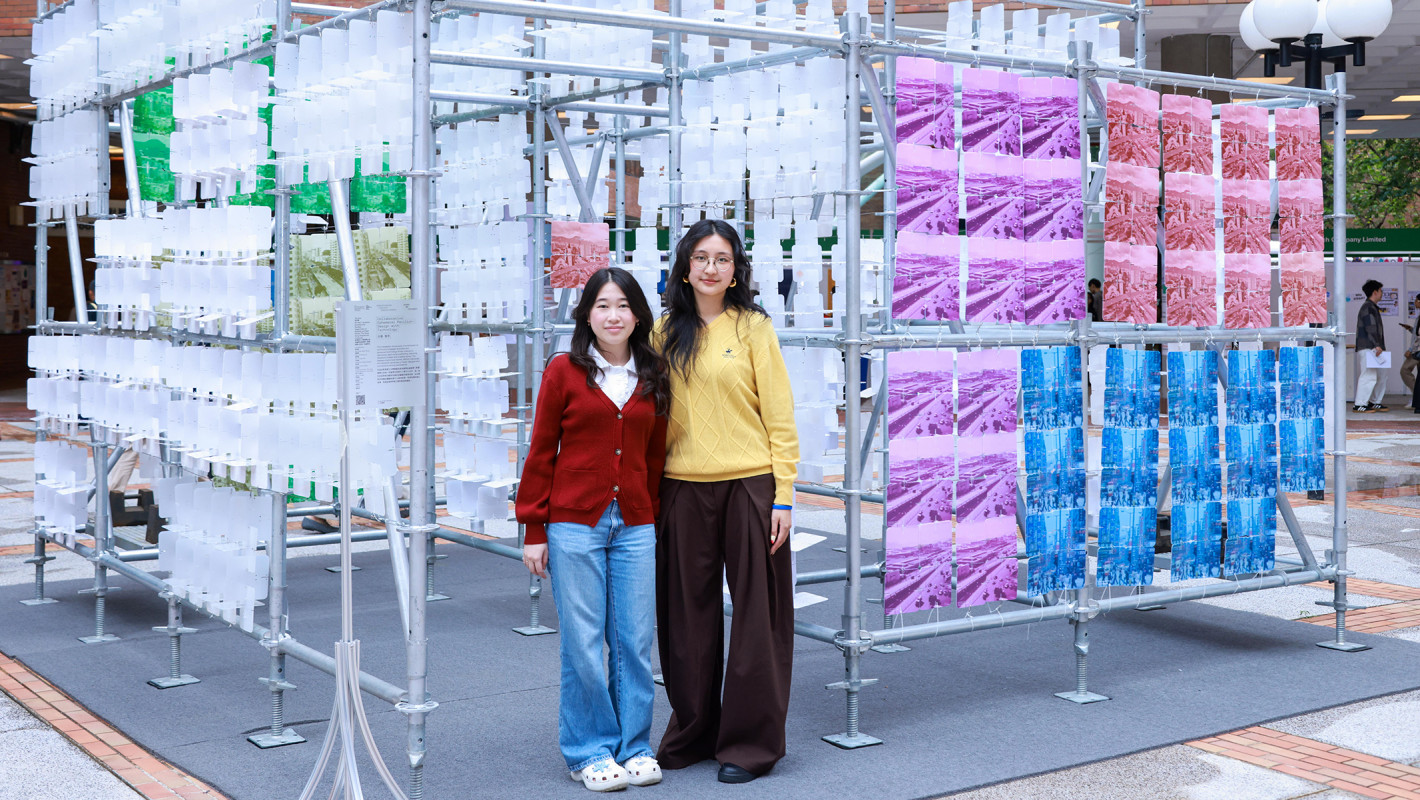
Before moving back to PolyU’s campus, the featured installation – “Collaborative Ephemeral Pavilion – Design with Technology”, had already made its public debut at Hong Kong’s East Kowloon Cultural Centre as part of UABB in December 2025. The work explores the interplay between technology, materials and community participation through more than 1,600 laser-cut plexiglass components, produced in collaboration with PolyU’s Industrial Centre and assembled within a metal scaffold structure. Images displayed on the pavilion surface shared local stories and memories of Hong Kong, fostering dialogue and connections among visitors.
As daylight shifts across its surfaces, the pavilion casts layered patterns of light and shadow, revealing the dynamic relationships between form, materials and public interaction. The installation demonstrates the students’ growing fluency in computational thinking, digital fabrication and collaborative design – skills increasingly essential in contemporary architectural practice.
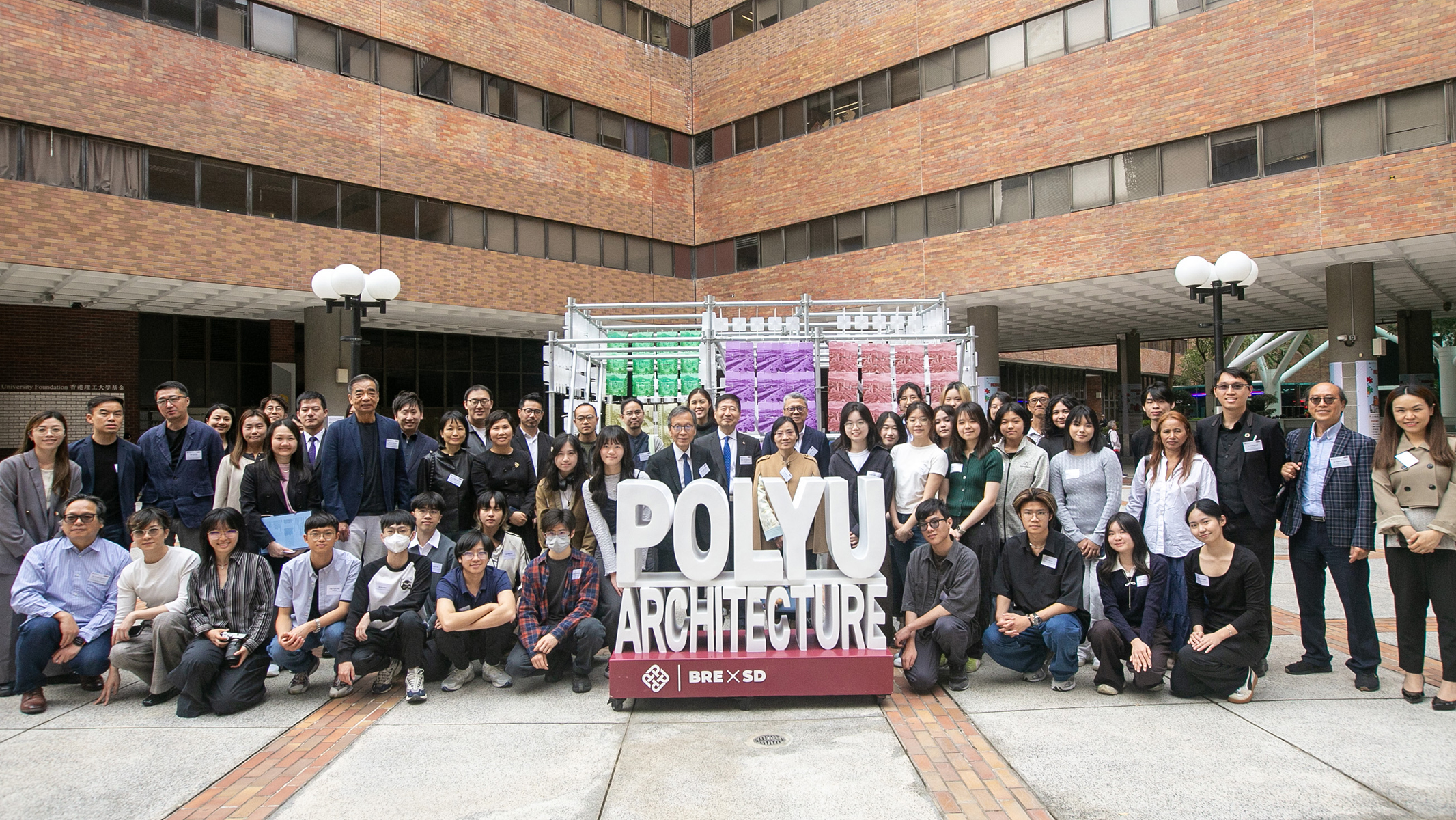
Around 60 guests attended the opening ceremony of the Year 1 Architectural Studies Student Installation Exhibition for UABB at PolyU’s campus, including Mr Liu Sing-cheong, JP, Adjunct Professor and University Fellow of PolyU; Professor Li Xiangdong, Dean of Faculty of Construction and Environment; and Associate Professor Tris Kee, Programme Leader of BSc (Hons) Architectural Studies. Representatives from the Architectural Services Department (ASD) of the Government of the Hong Kong Special Administrative Region, the Hong Kong Institute of Architects and UABB also joined students and industry guests, marking an important milestone ahead of the official launch of PolyU’s new Department of Architecture in July 2026.
Bridging logic and creativity
For first-year international student Annabelle Wibowo from Indonesia, participating in a major regional platform so early in her studies was both surprising and inspiring. “To design and build an installation for UABB, and to have such a good opportunity to interact with professionals in the field, was beyond my expectations,” she said.
Annabelle’s interest in architecture stems from two long-standing passions: mathematics and art. Mathematics appeals to her love of logic, precision and solving complex problems, while art offers space for imagination and experimentation. “Architecture felt like a perfect bridge,” she explained. “It is structural and precise, yet deeply creative.”
She was particularly drawn to PolyU’s interdisciplinary approach, where the programme is jointly hosted by the Department of Building and Real Estate (BRE) and School of Design (SD). “It feels like the perfect match,” she said. “We can learn technical aspects for architecture from BRE and the design and aesthetic aspects through SD.”
Balancing AI and design
For fellow Year 1 local student Yolanda Tam from Hong Kong, architecture began with observation. A keen urban sketcher since secondary school, she developed a fascination with the way buildings shape everyday life and human behaviour. “My biggest takeaway from the UABB experience is learning how to balance AI and the core of architectural design,” she reflected.
Yolanda chose PolyU precisely because of the programme’s visionary focus on emerging technologies. “The programme is very AI-focused and forward-looking. It helps us stay at the frontier of the industry,” she said.
What impresses her most is how seamlessly technology is woven into the curriculum. Tools such as AI, BIM, GIS, data analytics, 3D printing, AR/VR and CAVE environments are integrated into both design studios and technical subjects rather than treated as optional add-ons.
Yet for Yolanda, digital innovation must co-exist with traditional craft. “AI, digital drawings and laser cutting are powerful tools,” she said. “But hand-making models and sketching are equally important. Building with our own hands helps us truly understand structure, balance and stability in ways digital tools alone cannot,” she noted. “AI can speed up the process, but it cannot replace creativity, solution-driven thinking, or our real understanding of space.”
Learning beyond the studio
Beyond the classroom, the programme also encourages students to engage directly with architecture practice. Earlier this year, students travelled to Guangzhou for a two-day study trip that combined site visits, workshops and collaborative design exercises. The itinerary included visits to the contemporary 12 Gates Hotel and the Guangzhou Orchid Garden, where students observed how architecture interacts with landscape, light and public movement.
The trip culminated in a design workshop at a local architecture studio, where students developed pavilion concepts and constructed physical models before presenting their work in a small exhibition.
Reflecting on the Guangzhou trip, Yolanda said it deepened her understanding of architecture’s social responsibility. “It’s not just about realising your own ideas or making something look fancy and creative,” she said. “It’s about making sure your design is functional and responsive to the real world.”
Architects, she added, must consider more than form. Context, materials, landscape and user experience all play a role in shaping meaningful spaces. “A good design must truly benefit the people and the place it’s for.”
For Annabelle, the visit offered both inspiration and valuable insight into the design process. Impressed by the 12 Gates Hotel and Guangzhou Orchid Garden, she applied site analysis, brainstorming and mind mapping to pavilion design. “We started with analysing the site – context, climate, views and circulation – and focused on user experience,” she said.
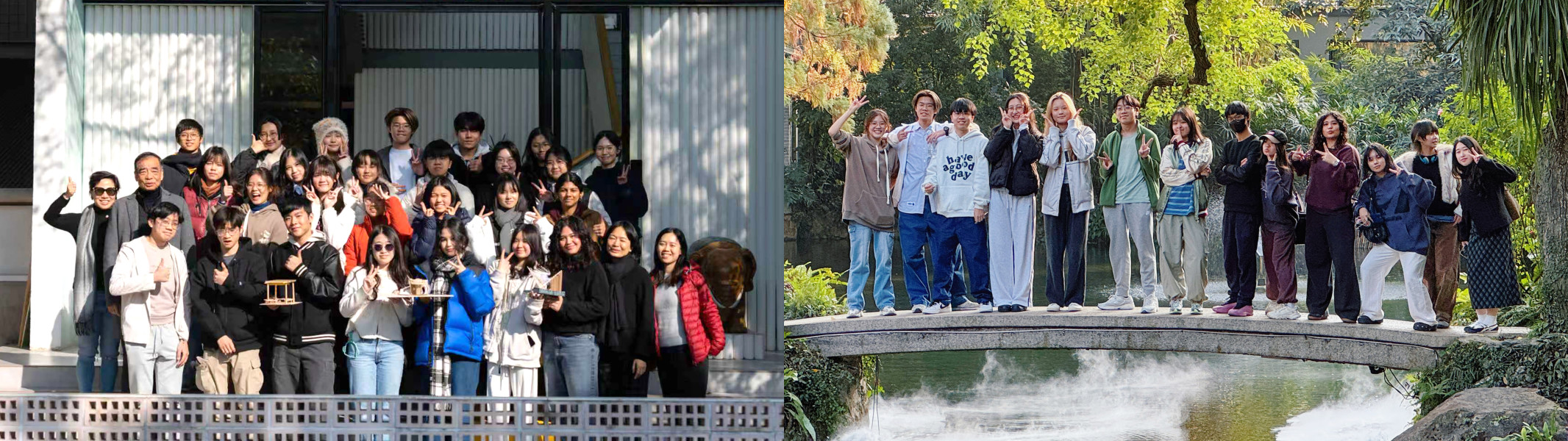
The study trip to Guangzhou immersed students in architectural observation, cultural exploration and model making, deepening their understanding of both contemporary and traditional architectural practices.
Designing for people and place
When asked what kind of architects they hope to become, neither student spoke first about iconic skylines or signature styles. Instead, they talked about people, communities and the responsibility of shaping environments where life unfolds.
Yolanda hopes her future work will honour the character of cities while embracing innovation and sustainability. “I want to create something that preserves the beauty and originality of the city, while respecting the past and caring for the environment,” she said. “Architecture should make people feel at home and connected.” Annabelle shared a similar ambition, hoping to design “more inclusive, sustainable and human-centred spaces that respond to real community needs.”
Both students believe that engaging with industry professionals and exploring emerging technologies during their studies has broadened their horizons. As PolyU prepares to launch its new Department of Architecture in July 2026, their journeys hint at a new generation of architects – technically fluent, socially aware and ready to shape more thoughtful and sustainable cities.
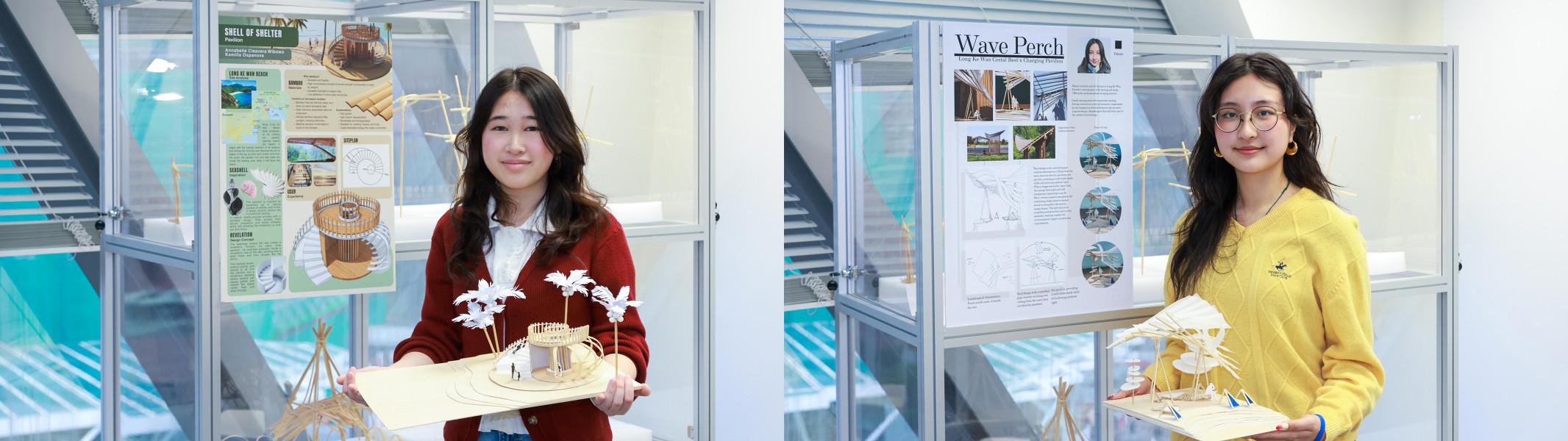
Annabelle and Yolanda presented scaled models of a Green Pavilion developed during the Guangzhou study trip, incorporating traditional wood-making techniques they learned from a master craftsman.