Fencing Injuries Under the Spotlight
Other Articles

Insights from the First Systematic Review and Meta-Analysis of Injury Risks in Fencing
Study conducted by Prof. Arnold Yu-lok WONG  and his research team
Fencing has moved rapidly into the public spotlight in Hong Kong over the past decade, driven by the City's impressive Olympic success in the sport. Historic gold-medal victories and continued international achievements have transformed fencing from a relatively niche activity into one with growing visibility, participation and professional ambition.
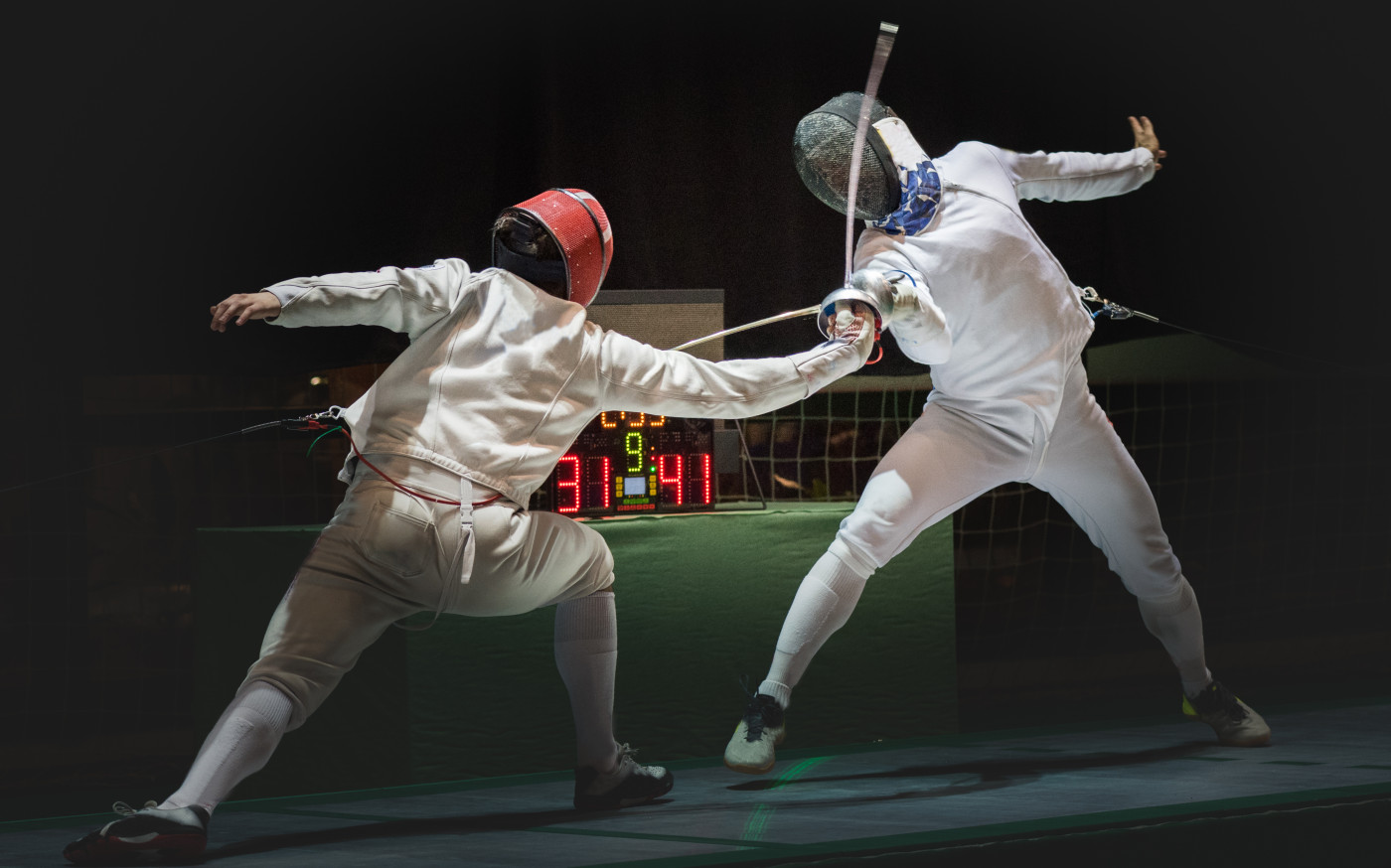
Modern fencing is a fast, technically demanding combat sport with three main weapons: foil, épée and sabre. Each has its own rules, target areas and tactical demands. All three require repeated changes of direction and precise weapon control. In able-bodied fencing, these are supplemented by rapid footwork and explosive lunges.
To address the lack of comprehensive data on fencing injuries, Prof. Arnold Yu-lok WONG, Professor of the Department of Rehabilitation Sciences and Associate Director of the PolyU Research Institute for Smart Ageing, and his research team conducted a systematic review and meta-analysis of existing studies. The review, published in the Clinical Journal of Sport Medicine [1], aimed to summarise the prevalence and incidence of fencing-related injuries and pain, and to identify factors associated with injury risk among able-bodied and wheelchair fencers. By consolidating existing research, the analysis provides a clearer picture of whom is most at risk, which body regions are most affected and what factors should be considered in injury prevention and athlete management.
The review found that fencing injuries were common, with injury prevalence among able-bodied fencers ranging from 51.5% to 92.8%. Professional fencers generally showed higher rates of injury than non-professional fencers. Moderate-quality evidence linked older age and longer fencing experience with higher injury prevalence. Able-bodied fencers were mainly affected by lower-limb injuries, while wheelchair fencers showed a higher proportion of upper-limb injuries.

Evidence gathered from 19 studies
The review followed PRISMA guidelines and was registered with PROSPERO. Seven databases were searched from inception to 30 June 2023. Studies were included if they reported the prevalence and/or incidence of fencing injuries or pain, or investigated associated factors using relevant statistical measures.
A total of 19 studies were selected from 298 identified records, comprising cross-sectional, retrospective and prospective studies published between 1990 and 2022. The data covered 1,151 able-bodied fencers in prevalence studies and 164,485 able-bodied fencers plus 14 wheelchair fencers in incidence studies. Two independent reviewers screened the literature, extracted data and assessed methodological quality. Where appropriate, random-effects meta-analyses were conducted, and the certainty of evidence for each factor was evaluated using the GRADE approach.
The selected studies varied considerably in their definitions of injury, follow-up period, competition level and outcome measures. As a result, not all findings could be pooled statistically. While the review provides valuable direction for injury prevention and future research, not all identified factors carry the same strength of evidence.
Older age, greater exposure
The review highlights that fencing places meaningful physical demands on athletes. Among able-bodied fencers, lower-limb injuries were the most common, accounting for more than half of the reported injuries. This pattern is consistent with the biomechanics of fencing. Lunging, retreating and rapid directional changes repeatedly load the knees, ankles and thighs, especially on the dominant front leg. The front leg must decelerate the body during landing and absorb high eccentric forces, increasing stress on the hamstring, knee joint and ankle structures.
The most robust findings came from moderate-quality evidence. Being at an older age was associated with a higher prevalence of fencing injuries among non-professional able-bodied fencers. Professional fencers in senior divisions also had a higher risk of time-loss injuries than those in junior or cadet divisions. Age itself is not necessarily the direct cause of injury, but it may represent accumulated load, higher competitive intensity and longer sport participation.
Experience as accumulated load
A greater number of years of fencing experience was also linked to higher injury prevalence among non-professional able-bodied fencers. Athletes with five or more years of fencing experience had higher injury prevalence than those with fewer than two years of experience. This may appear counterintuitive, as experienced fencers are often technically better prepared; however, greater experience usually means greater cumulative exposure. More years in the sport may bring more repetitive loading, more bouts and a higher likelihood of having sustained at least one fencing-related injury.
Movement quality matters
Functional Movement Screen (FMS)1 scores below 15 were associated with higher injury prevalence, although the evidence for this factor was very low and should be interpreted with caution. The notion is still clinically relevant: movement quality, dynamic control and compensatory movement patterns may influence injury risk. However, general screening tools may not fully capture the specific demands of fencing, such as in asymmetrical lunging, rapid retreats, blade-arm coordination and sport-specific balance requirements.
Weapon, sex and competition level: plausible, not definitive factors
Several factors that may seem intuitively important were supported only by low- or very low-quality evidence. Weapon type is one example. Many coaches and athletes may assume that foil, épée and sabre have clearly different injury risks because of the different tactics, rules and movement patterns involved in their use. Despite this, the review found that weapon type was not consistently associated with injury prevalence among non-professional able-bodied fencers. However, low-quality evidence suggested that professional sabreurs may have a higher risk of time-loss injuries than épéeists. This possible sabre effect is biomechanically plausible. Sabre fencing is fast-paced and explosive, involving frequent attacking and defensive actions, rapid changes of direction and short bursts of high-intensity movement. These demands may increase neuromuscular fatigue, impair dynamic balance and raise the risk of lower-limb injury. Nevertheless, weapon type should be viewed as a potential contributing factor rather than a confirmed independent predictor.
Sex was another factor supported with mixed evidence. Although some very low-quality evidence suggested that female fencers may be more likely to sustain certain thigh strains, meta-analysis did not show a clear overall difference in time-loss injuries between male and female professional fencers. In fencing, injury risk may be shaped more by training load, weapon type, competition level, biomechanics and experience than by sex alone.
Level of competition deserves careful interpretation. Professional and international-level fencers generally appeared to have higher rates of injury than non-professional or university-level fencers. This likely reflects greater amounts of training, higher match intensity and longer exposure to the risk of injury. However, the evidence linking competitive level to injury prevalence was of very low quality. The practical message is not simply that elite fencing is “more dangerous”, but that higher-performance environments require more systematic monitoring, recovery planning and injury prevention support.
Fitness programmes: a misleading signal
One unexpected finding was the positive association between regular participation in fitness programmes and higher injury prevalence. At first glance, this seems to challenge the value of conditioning. A likely explanation is reverse causality or exposure bias: athletes with higher performance goals, previous injuries or heavier training loads may be more likely to participate in fitness programmes. Indeed, the evidence was of very low quality, with a wide confidence interval, so this should not be interpreted as meaning that fitness training increases injury risk. Instead, it highlights the need for well-designed, fencing-specific conditioning that supports movement control, strength balance, recovery and load management.
Wheelchair fencing and trunk control
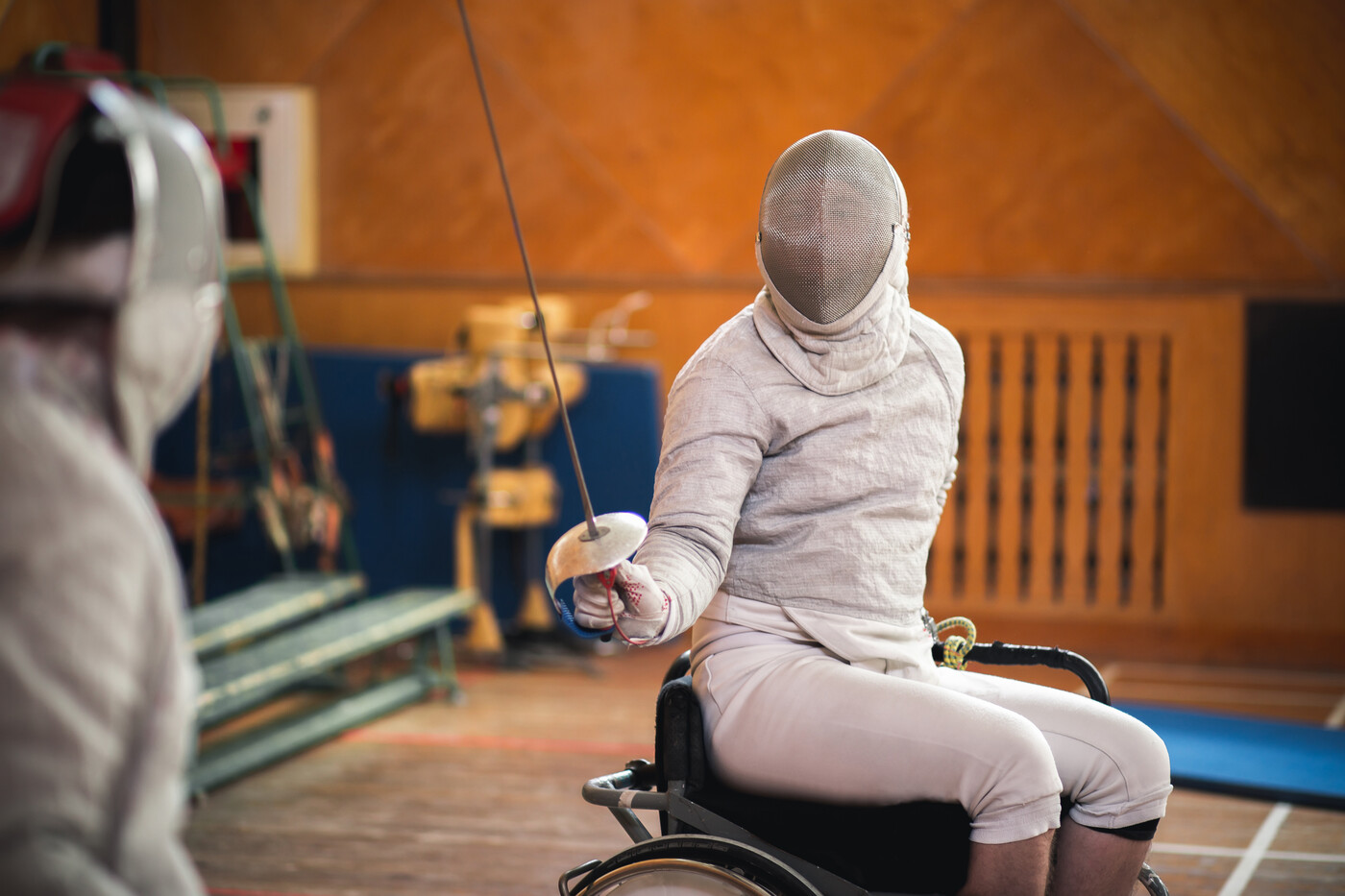
For wheelchair fencers, the injury patterns were different. Upper-limb injuries were the most common, particularly around the shoulder, elbow and forearm. Without lower-limb footwork, wheelchair fencers rely more heavily on trunk movement and repeated weapon-arm actions to generate reach, speed and power. When trunk control is limited, the upper limbs may compensate, increasing the risk of overuse and acute injury.
Poor trunk control emerged as a risk factor for injury. Although the evidence was of very low quality and based on limited data, this finding is highly relevant from a sports science perspective. Trunk stability is central to force transmission, reach control and repeated weapon-arm movement in wheelchair fencing. For practitioners, trunk control should therefore be considered a key performance and injury-management variable in wheelchair fencers.
Tailored protection for a demanding sport
This review provides the first systematic synthesis of research findings focused on injury prevalence and incidence, and associated factors in able-bodied and wheelchair fencing. The findings show that fencing injuries are common, particularly among professional and more experienced athletes. Able-bodied fencers are most vulnerable to lower-limb injuries, while wheelchair fencers face greater upper-limb injury risk. Being an older practitioner and with longer fencing experience are the most consistently supported factors linked with higher injury prevalence. For coaches, clinicians and sports science professionals, the various insights derived from the meta-analysis underscore the importance of targeted injury monitoring, fencing-specific conditioning and tailored support for athletes across different fencing formats.
Prof. Wong has been recognised by Stanford University as one of the top 2% most-cited scientists worldwide (single-year) in the field of orthopaedics for three consecutive years, from 2023 to 2025. He is a renowned leader in spinal pain research. By integrating AI and advanced technologies, his work on low back pain and scoliosis earned him the 2026 International Society for the Study of the Lumbar Spine Prize in the Bioengineering Category. His research also gained him the SOSORT Award from the International Society on Scoliosis Orthopaedic and Rehabilitation Treatment in 2019 and 2025. Prof. Wong actively contributes to the international spinal research community through multiple leadership roles. He serves as Deputy Editor of the European Spine Journal, Treasurer of the International Society on Scoliosis Orthopaedic and Rehabilitation Treatment, Education Committee Member of the International Society for the Study of the Lumbar Spine (ISSLS), Co-Chair of the ISSLS Task Force on Diagnosis and Treatment of Lumbar Spinal Stenosis, and Chair of the Organising Committee of the 20th International Forum for Back and Neck Pain Research in Primary Care.
| Notes |
|---|
Functional Movement Screen (FMS) is a screening tool for evaluating 7 functional patterns in individuals with no current pain complaint or musculoskeletal injury.
| References |
|---|
[1] Grivas, T. B., Wong, S. C. Y., Chan, L. L. Y., Lee, M. S. H., Fong, H. H. K., Wong, A. Y. L., Samartzis, D., Chang, J. R., & Fu, S.-N. (2025). The Prevalence and Incidence of Fencing Injuries and Associated Risk Factors: A Systematic Review and Meta-Analysis. Clinical Journal of Sport Medicine, 35(6), e105-e133. https://doi.org/10.1097/JSM.0000000000001386
 | Prof. Arnold Yu-lok WONG |