Beyond the Shoe: The Overlooked Role of Running Socks in Foot Protection
Other Articles

New Findings Highlight the Cushioning Potential of Advanced Fibres and Five-Toed Designs
Study conducted by Prof. Kit Lun YICK and her research team
For many runners, socks may seem less important than shoes, insoles or training devices. However, as the layer in direct contact with the skin, running socks play an essential role in comfort, impact protection and injury prevention. During running, the foot repeatedly experiences impact forces that may reach two to three times a person’s body weight. Over time, this repeated loading can contribute to discomfort and common foot problems, including blisters, abrasions, calluses and other mechanical skin injuries.
Although running shoes themselves and insoles are often the main focus of performance and injury-prevention research, socks also influence how the foot interacts with footwear. A well-designed sock can help reduce local pressure, absorb impact and improve the distribution of plantar loading. In contrast, regular running socks may offer limited protection if their material and structure are not optimised for high-impact activities.
Specialised running socks have therefore become increasingly popular among recreational and competitive runners. These products often use high-performance fibres, thicker terry structures, padded areas and alternative toe designs such as five-toed construction. However, despite the wide range of commercial products available, their cushioning effectiveness has not been fully understood.
Prof. Kit Lun YICK, Associate Dean and Professor of the School of Fashion and Textiles at The Hong Kong Polytechnic University, and her research team investigated the cushioning performance of commercially available running socks, including regular running socks, specialised traditional running socks and specialised five-toed running socks. The team examined both the mechanical properties of sock fabrics and their effects on plantar pressure distribution during running. The results, published in Materials [1], supported the notion that specialised running socks offer better shock absorption than regular running socks.
The results found that fabric thickness, terry length and fabric mass, which were strongly linked to impact reduction, in specialised running socks showed better cushioning performance than in regular running socks. During running, specialised socks reduced peak pressure and pressure impulse in high-load areas of the forefoot, particularly the big toe and first metatarsal head, while also shortening forefoot ground contact time.
These findings suggest that advanced materials and structural design can help reduce mechanical stress on the foot during running. Notably, the five-toed sock showed comparable pressure-reduction performance to the specialised traditional sock, indicating that the split toe design may offer a promising alternative approach to managing forefoot loading.
The experimental work was conducted in two parts.
First, the team tested the mechanical properties of the fabric of the sole regions of eight commercially available running socks. These included regular running socks made from bio-based and/or synthetic materials, as well as specialised traditional and specialised five-toed running socks made with high-performance bio-composite fibres. The specifications are listed in Table 1 and Table 2. Before testing, all samples were conditioned for 24 hours in a standardised environment.
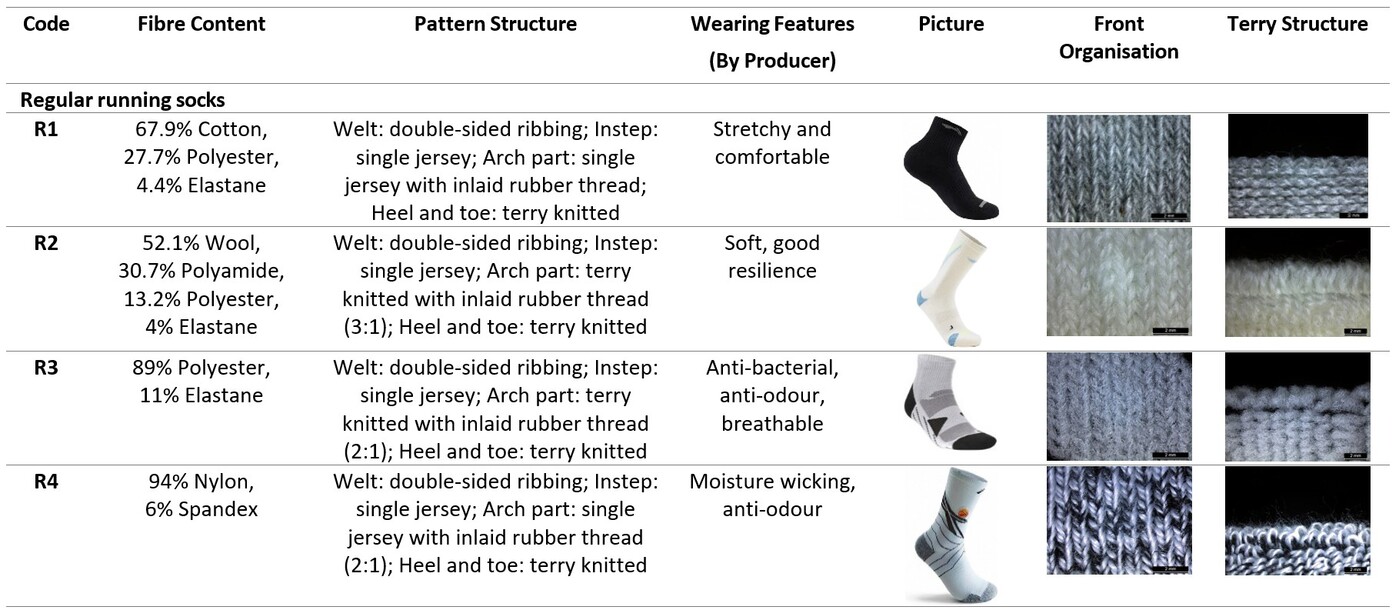
Table 1. Specifications of tested regular running socks
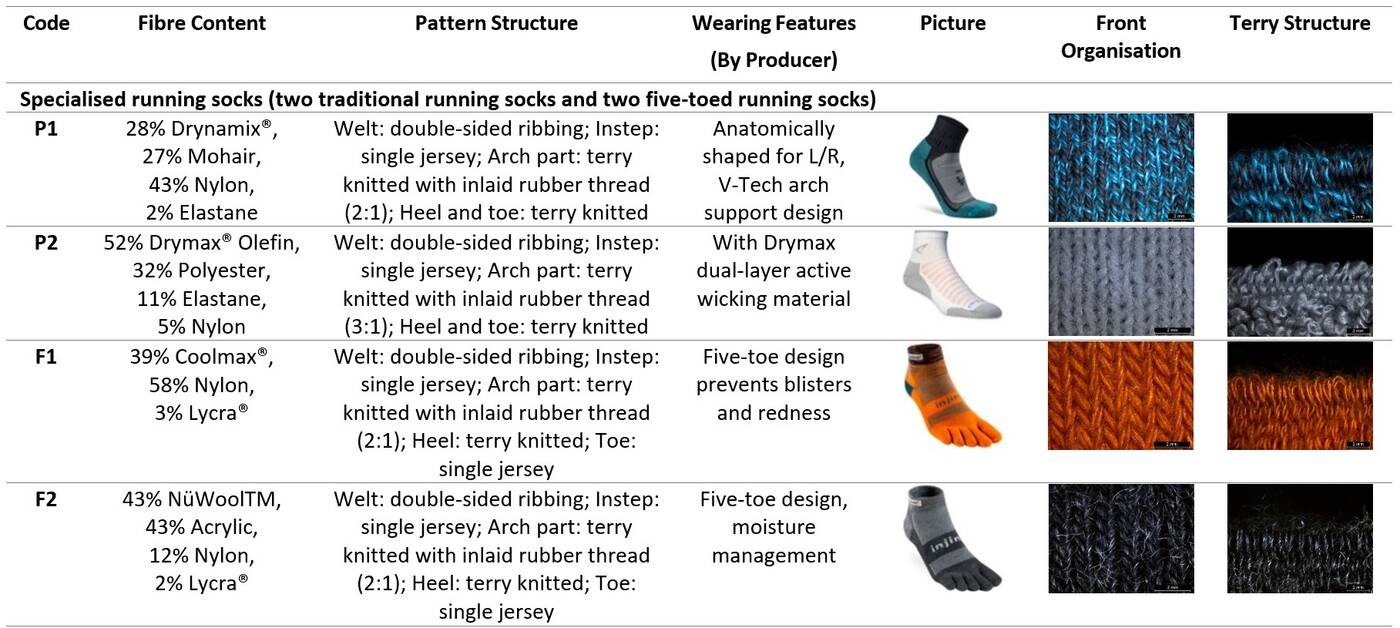
Table 2. Specifications of tested specialised running socks
Compression, tensile and shear properties were measured using standard textile testing equipment. Impact force reduction was assessed using a customised test rig simulating free-fall impact. In this test, a ball bearing was released from a fixed height onto the sock fabric, and the reduction in peak force transmitted through the material was calculated.
The impact test revealed clear differences between regular and specialised running socks (Figure 1). Specialised socks generally showed a higher peak force attenuation ratio, with the best-performing sock reducing peak force by nearly 30%. Notably, wool-based running socks also demonstrated relatively strong cushioning and compression recovery, which may be related to the natural elasticity of wool fibres. In addition, the peak force attenuation ratio was found to be significantly correlated with fabric thickness, terry length and fabric mass/unit (Figure 2).
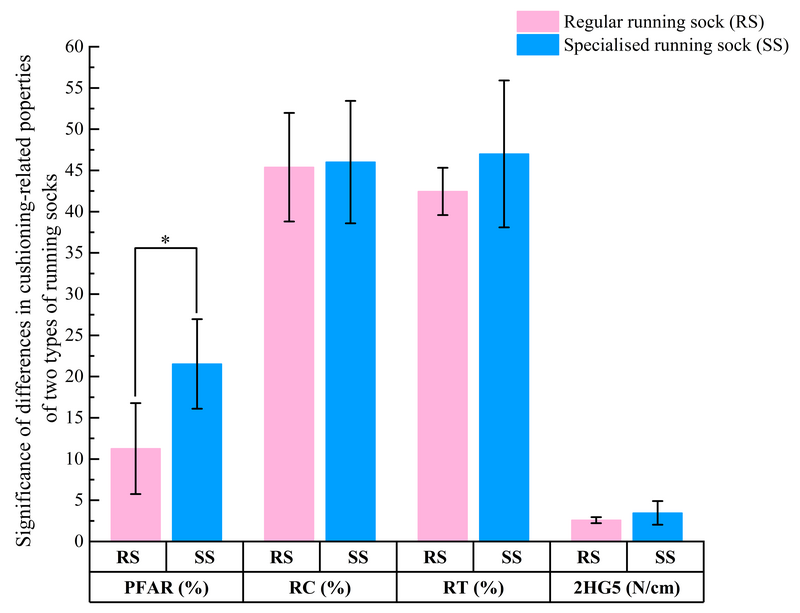
Figure 1. Difference in mechanical properties between regular and specialised running socks
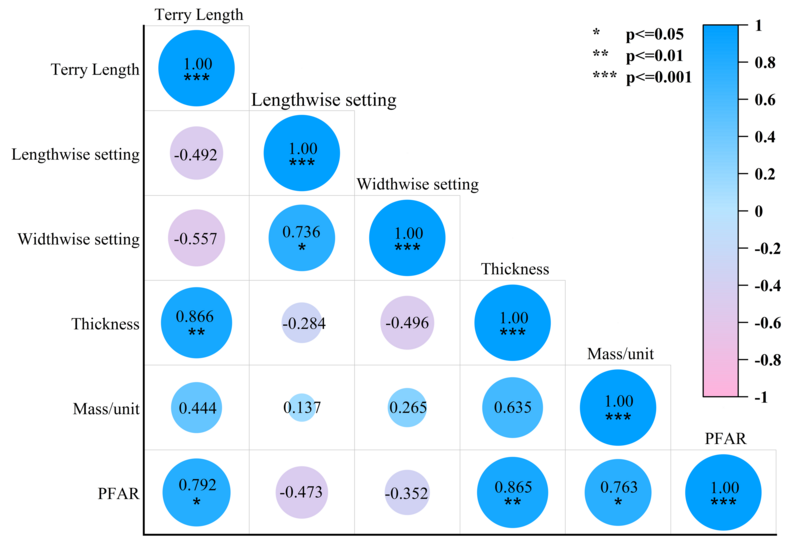
Figure 2. Correlation analysis between basic specification parameters and PFAR
However, cushioning performance was not determined by thickness alone. Fibre composition and sock structure design also appeared to play an important role. Therefore, socks with similar fabric thickness and cushioning performance but different toe designs and fibre compositions were selected for the subsequent wear trial.
The second part of the study involved a treadmill wear trial with ten healthy male amateur runners. All participants were regular runners, right-leg dominant, heel strikers and free from lower-limb injury in the previous six months. Three sock types were selected for the wear test: a regular running sock, a specialised traditional running sock and a specialised five-toed running sock. To minimise external variation, all participants wore the same model of footwear and standardised sportswear.
In-shoe plantar pressure was measured using the Novel Pedar-X system while participants ran on a treadmill. The analysis focussed on maximum peak pressure, contact area, ground contact time and pressure-time integral across nine plantar regions.
Compared with the regular running sock, both specialised sock types significantly reduced maximum peak pressure in the great toe and first metatarsal head regions. They also reduced pressure-time integral in the toe regions, indicating a lower cumulative pressure load during running. Ground contact time in the toes, metatarsal regions and total foot was also shorter when runners wore specialised socks (Figure 3).
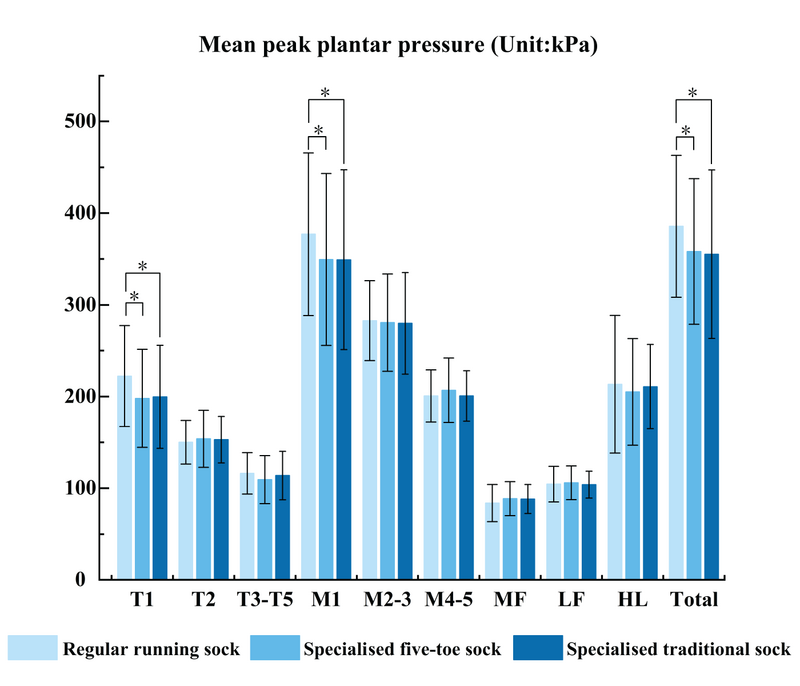
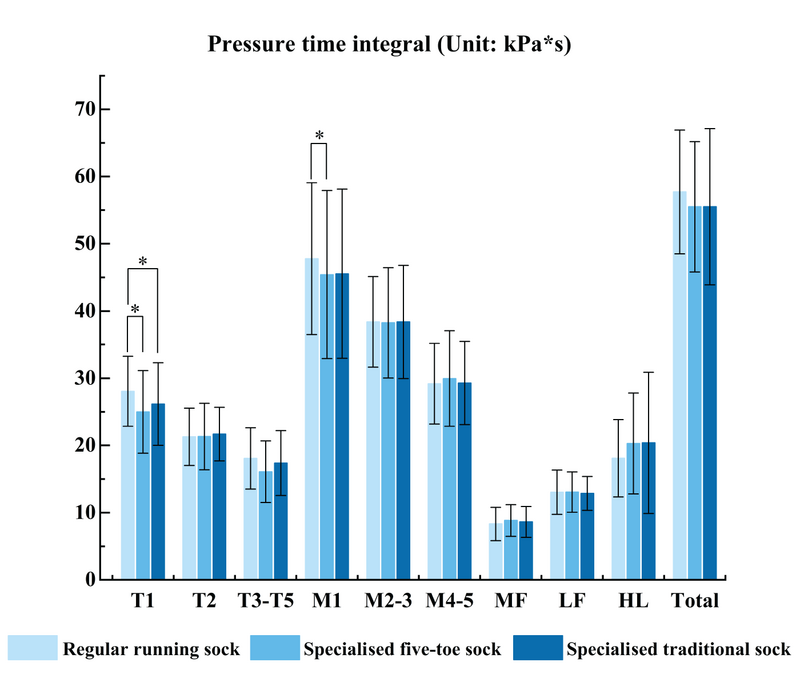
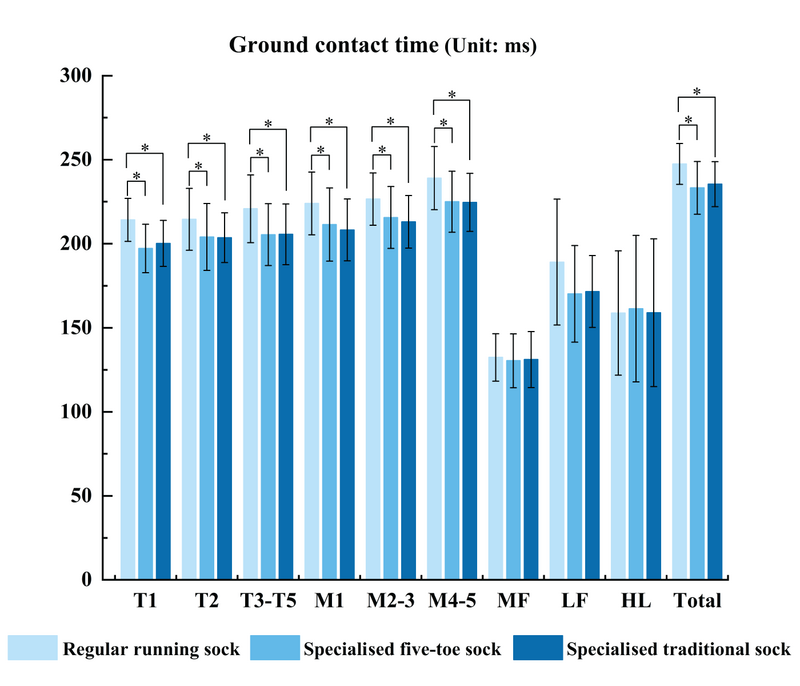
Figure 3. Comparison of plantar loading parameters for running for different socks
A notable finding was the performance of the five-toed running sock. Although its toe region was thinner than that of the traditional running socks because of its split-toe structure, it still reduced forefoot plantar loading effectively. Its pressure distribution was comparable to that of the specialised traditional running sock. This suggests that separating the toes may help optimise load distribution, offering a design strategy that does not rely solely on increasing material thickness.
Overall, this study demonstrates that specialised running socks can provide measurable cushioning benefits under both laboratory and running conditions. Compared with regular running socks, they showed greater impact attenuation and reduced plantar pressure in high-load forefoot areas. These benefits appear to result from a combination of fabric thickness, terry structure, fibre properties and toe design.
The findings highlight the importance of optimising material selection, fabric structure and sock design to enhance shock absorption and foot protection. The study also shows the value of combining textile material tests with biomechanical wear trials when evaluating sports sock performance.
As running continues to grow in popularity, scientifically informed sock design will become an increasingly important part of sportswear innovation. Specialised running socks, including five-toed designs, offer promising potential to improve comfort, reduce plantar loading and support better foot protection for runners.
Prof. Yick is a specialist in fashion production technology and product development. Her innovations have earned her numerous international awards, including Gold Medals and Special Merit Awards from the Scientific Community of Romania at the International Exhibition of Inventions of Geneva in 2015, 2017 and 2023, with Congratulations of the Jury in 2017. In addition to the analysis of running socks presented in this article, her recent research addresses exercise-induced breast motion in female athletes, leading to the development of a patented Soft Manikin System that uses 4D motion analysis to replicate human movement and soft tissue dynamics. This technology has been adopted by industry leaders and used to customise sports bras for elite athletes at the 2024 Paris Olympics.
| References |
|---|
[1] Zhou, X.; Li, P.-L.; Yick, K.-L.; Yu, A. Cushioning Performance of Specialized Running Socks for Enhanced Shock Absorption and Reduced Plantar Pressure. Materials 2025, 18, 2941. https://doi.org/10.3390/ma18132941
 | Prof. Kit Lun YICK Associate Dean and Professor, |