Intelligent at the Edge: AI-Driven HVAC Optimisation for Hong Kong’s Built Environment
Other Articles

Deploying Smart Control for Practical Energy Management
Study conducted by Ir Prof. Shengwei WANG  and his research team
In the heart of Hong Kong's bustling urban landscape, skyscrapers and commercial complexes dominate the skyline, each vying for efficiency and sustainability. As the city continues to grow, so does the demand for smarter, greener buildings—structures that not only provide comfort but also minimise energy consumption and environmental impact. The concept of the "smart building" has thus become a focal point for both researchers and industry professionals, promising a future where advanced technologies seamlessly manage lighting, security and, crucially, climate control. Nowhere is this more pertinent than in Hong Kong, where dense urban development and subtropical weather make energy-efficient building management both a challenge and a necessity.
Heating, Ventilation and Air Conditioning (HVAC) systems are particularly important to smart buildings, maintaining comfortable indoor environments regardless of the sweltering summer heat or the occasional winter chill. In Hong Kong, where commercial buildings account for a significant portion of the City’s energy use, HVAC systems alone can consume up to 40% of a building's total energy. Traditional control methods, such as simple on-off switches or Proportional-Integral-Derivative controllers, often fall short in optimising these complex and dynamic systems. As a result, there is a growing interest in leveraging artificial intelligence (AI) to enhance HVAC performance, reduce energy consumption and support the City's broader sustainability goals.
In a recent study published in Energy [1], Ir Prof. Shengwei WANG, Chair Professor in Building Energy and Automation and Otto Poon Charitable Foundation Professor in Smart Buildings of the Department of Building Environment and Energy Engineering at The Hong Kong Polytechnic University, and his research team addressed a pressing question: How can AI be reliably and practically integrated into building automation systems (BAS) to optimise HVAC operations at the field level, rather than relying on remote servers or cloud-based solutions? Their answer lies in a novel, generic framework that brings AI-driven optimisation directly to the edge, exactly where the action is.
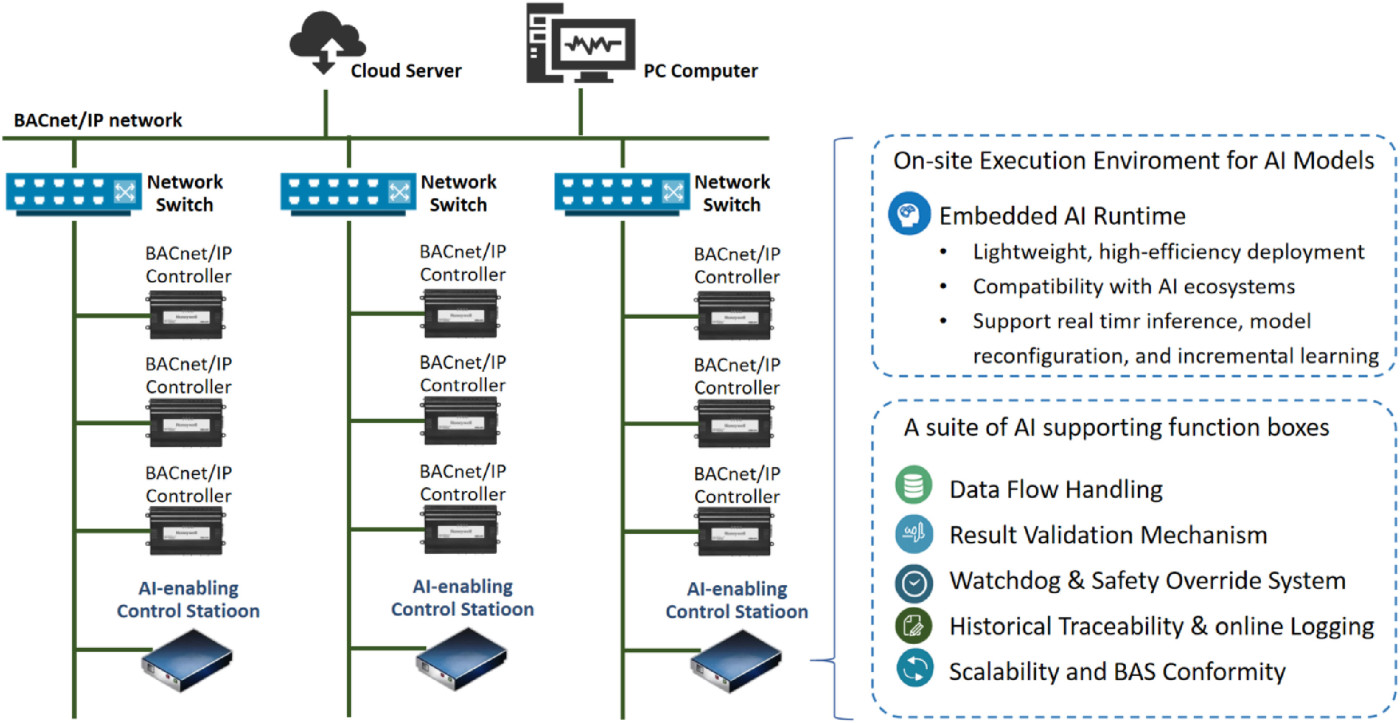
Figure 1. Generic AI field integration architecture and major AI supporting functions
Prof. Wang's study introduced a practical approach for embedding AI into BAS by deploying smart control stations at the field level. These stations are designed to host and execute AI algorithms in real-time, enabling adaptive, data-driven control of HVAC systems without the latency or reliability issues associated with cloud computing. The framework comprises two main components: an AI runtime environment for model inference and learning, and a suite of functional modules for data handling, task management and system robustness (Figure 1). By integrating these smart stations into a testbed and a hardware-in-the-loop simulation of a large-scale cooling system, the research demonstrates not only the feasibility but also the tangible benefits of this approach.
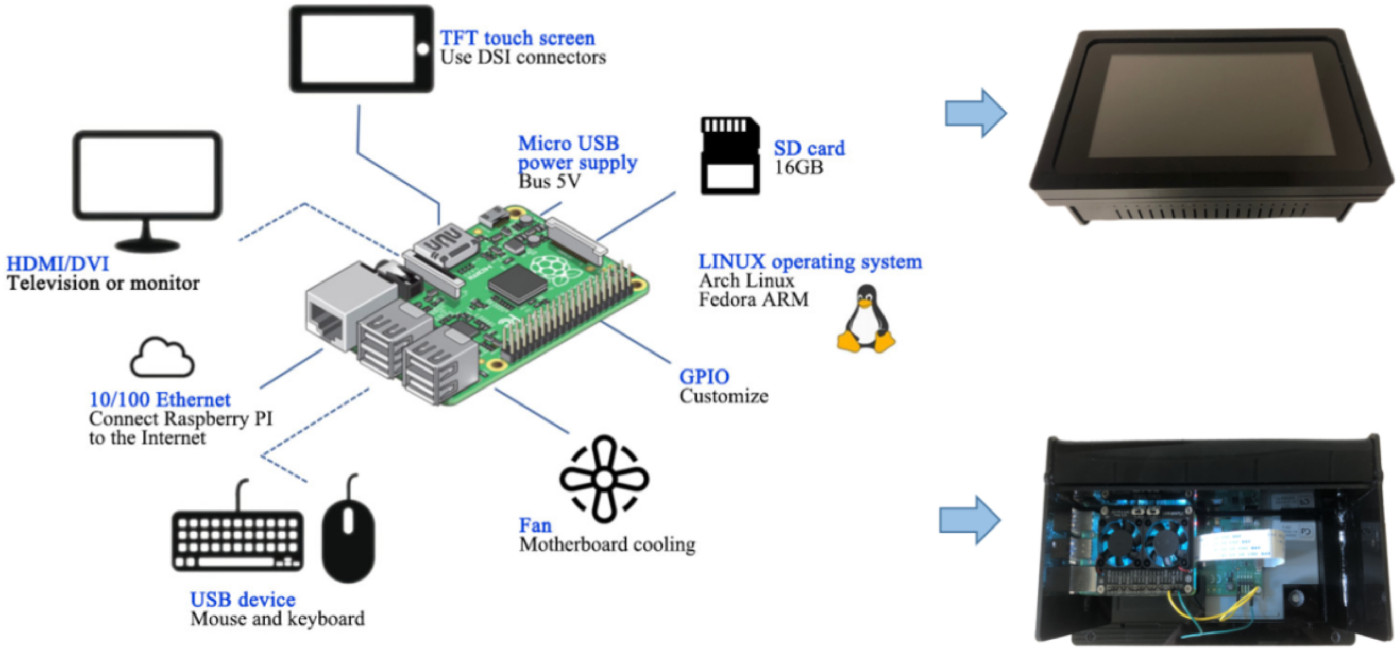
Figure 2. Function composition and appearance of Raspberry Pi-based control station
The experimental setup involved two types of smart control stations: one based on the widely accessible Raspberry Pi platform (Figure 2) and the other leveraging the high-performance NVIDIA Jetson OrinTM edge computing device (Figure 3). The Raspberry Pi station was integrated into a simplified building management system testbed, where it successfully managed communication, control and data acquisition tasks. Over a six-week period, the station reliably transmitted control commands, received real-time sensor data and maintained stable operation without any communication failures or data loss. This confirmed the station’s ability to perform essential BAS functions, including actuator control and local data storage, in a real-world environment.

Figure 3. Appearance of the control station based on the Jetson OrinTM platform. It features a 1024-core NVIDIA Ampere architecture GPU and a 6-core ARM® Cortex®-A78AE CPU, delivering up to 40 TOPS of AI computing power.
The more advanced NVIDIA Jetson OrinTM station was connected to a high-fidelity virtual cooling system modelled after a commercial building in West Kowloon, Hong Kong. This system, comprising 21 chillers and designed for a total cooling load exceeding 55,000 kW, provided a rigorous testbed for evaluating the AI-enhanced optimisation strategy. The smart control station ran an AI-driven Genetic Algorithm in Python, dynamically adjusting key setpoints such as cooling water supply and return temperatures, based on real-time feedback from the simulated system.
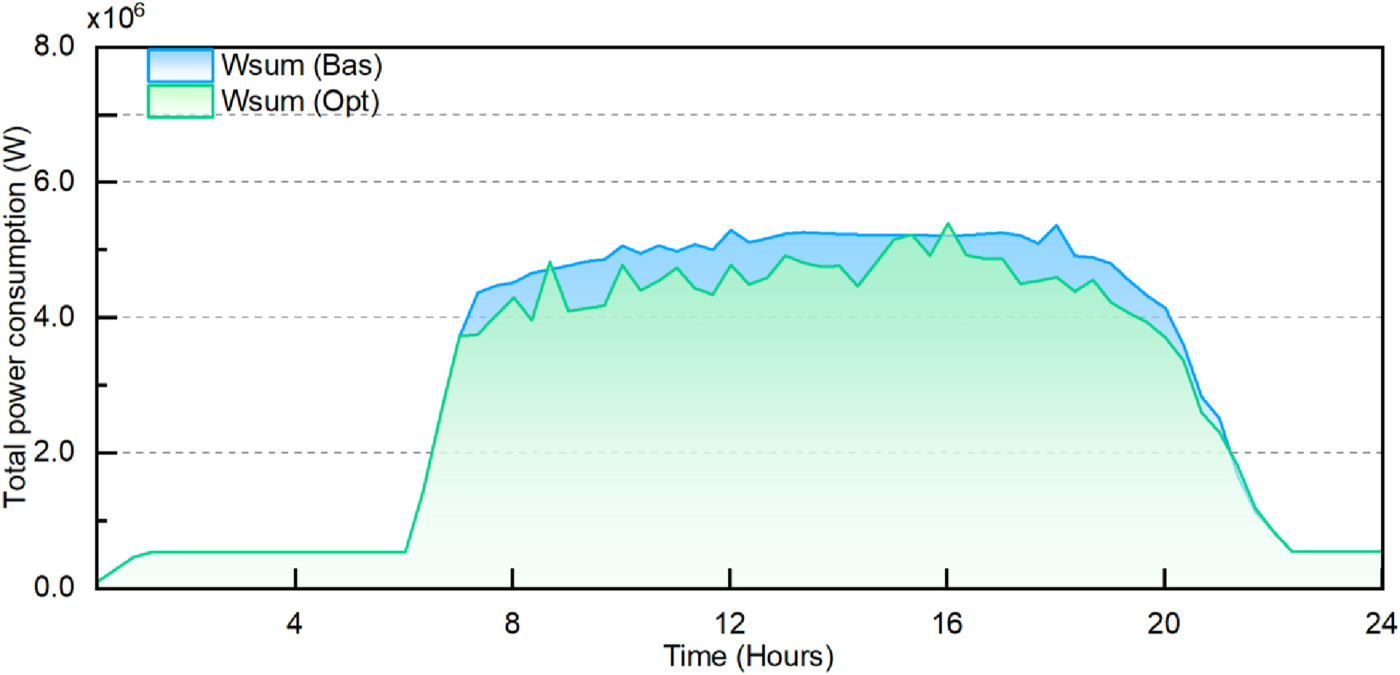
Figure 4. Total power consumption under the AI-enabled optimisation strategy (Opt) and the baseline control strategy (Bas) in a typical day
The results were striking. Compared to a conventional baseline strategy using fixed setpoints, the AI-enabled optimisation achieved a 7.66% reduction in total energy consumption (Figure 4). Specifically, the optimised control strategy resulted in an average increase of 2.30 K in the cooling water return temperature and a decrease of 1.93 K in the supply temperature. These adjustments led to a reduction in cooling water pump energy use, even as seawater pump consumption rose slightly, a trade-off that made sense given the system's characteristics, where cooling water pumps are the primary energy consumers due to long-distance piping. By continuously balancing the energy use of pumps and chillers, the AI-driven approach delivered significant efficiency gains without compromising occupant comfort.
Robustness and reliability are critical for any control system, especially when deploying advanced algorithms in real-world settings. To this end, the framework incorporated two key mechanisms: a watchdog to monitor optimisation latency and trigger fallback protocols in case of delays, and a result validation module to filter out minor or abnormal setpoint fluctuations. These features were rigorously tested under simulated disturbance scenarios, including forced computation stalls and artificially injected outliers.
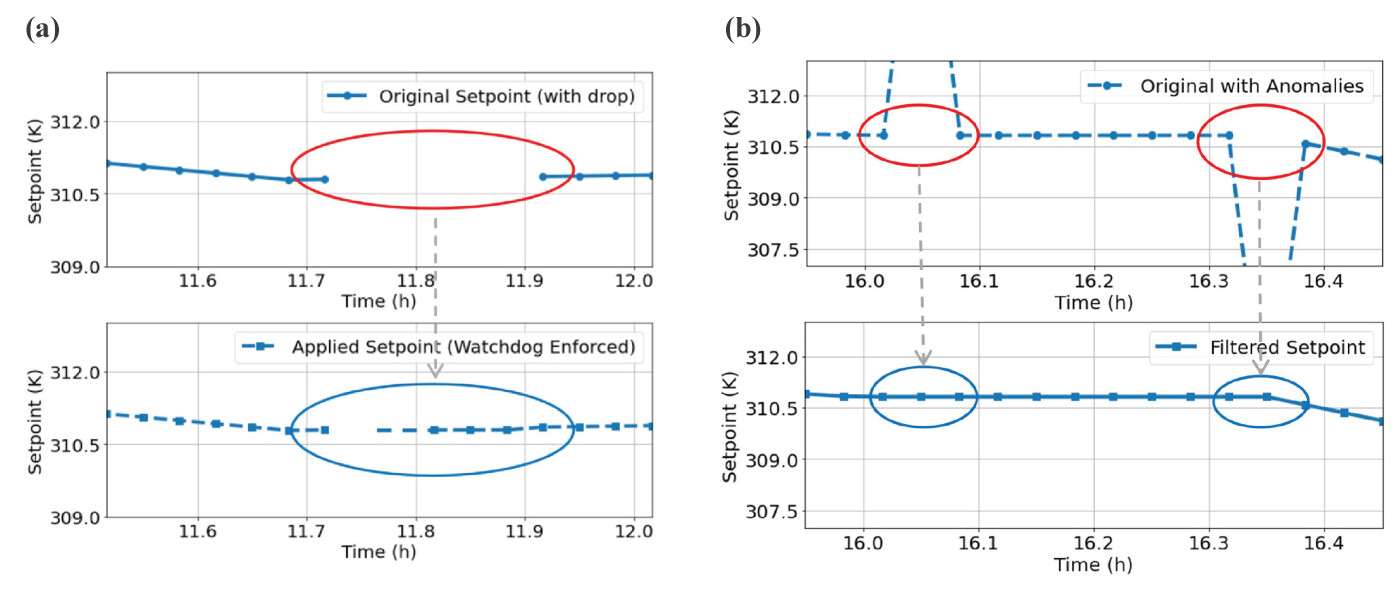
Figure 5. Verification of stability and robustness mechanisms in the framework: (a) Fallback enforcement through watchdog mechanism (b) Anomaly detection and filtering through result validation mechanism
The watchdog mechanism successfully detected and responded to optimisation failures, maintaining uninterrupted operation by reverting to the last valid setpoint (Figure 5a). Meanwhile, the result validation module effectively suppressed unnecessary control updates and rejected extreme values, ensuring stable and reliable system behaviour (Figure 5b).
The significance of these findings extends beyond the laboratory. By demonstrating that AI-driven optimisation can be reliably executed at the field level, using affordable, off-the-shelf hardware and without modifying existing BAS infrastructure, this research provides a scalable and non-intrusive pathway for smart building operators to adopt advanced control strategies. The framework’s compatibility with standard communication protocols (such as BACnet/IP and Modbus TCP) and its support for online learning and distributed multi-agent coordination further enhance its practical value, enabling gradual and flexible integration into diverse building environments.
In conclusion, Prof. Wang's work marks a significant step forward in the practical application of AI for building energy management. By bringing intelligence to the edge, the proposed framework not only delivers measurable energy savings, 7.66% in a demanding Hong Kong context, but also ensures the robustness and stability required for real-world deployment. As cities like Hong Kong continue to pursue smarter and more sustainable buildings, such innovations will be essential in meeting the twin challenges of urban growth and environmental stewardship.
Prof. Wang was recognised by Stanford University as one of the top 2% most-cited scientists worldwide (career-long and single-year) in the field of enabling and strategic technology for seven consecutive years, from 2019 to 2025. He was one of the top 150 highly cited scholars worldwide in "Energy Science and Engineering" based on the Clarivate Analytics in 2016 and was ranked no. 20 in "Building and Construction" in 2021 and no. 192 in "Energy" in 2022 worldwide according to the Stanford reports. He is also the recipient of the ASHERAE Technology Award in the category of “New Commercial Buildings” from The American Society of Heating, Refrigerating and Air-Conditioning Engineers in 2014, and another ASHERAE Hong Kong Chapter Technology Award in the category of "Commercial Buildings (Existing)" in 2025. Prof. Wang is very active and successful in collaborating with the building industry. He has conducted a large number of energy optimisation projects for buildings in Hong Kong, including the International Commerce Centre, hotels, airport buildings, hospitals, industrial buildings, underground stations and buildings on the PolyU campus, with energy savings from 15% to 40% and maximum annual energy saving of over 10M kWh per individual building.
| References |
|---|
[1] Xie, L., Shan, K. & Wang, S. (2025). A generic framework and strategies for integrating AI into building automation systems for field-level optimization of HVAC systems, Energy, Volume 333, 2025, 137405, ISSN 0360-5442, https://doi.org/10.1016/j.energy.2025.137405.
 | Ir Prof. Shengwei WANG Chair Professor in Building Energy and Automation |