AIoT-Powered Fire Safety: Transforming Smart Buildings with Real-Time Digital Twins
Other Articles

Super Real-Time Fire Forecasting Sets a New Benchmark for Urban Resilience
Study conducted by Prof. Asif Sohail USMANI  and his research team
As smart buildings become the backbone of modern cities, their promise of efficiency, comfort and sustainability is matched by new challenges in safety management. The integration of advanced sensors, automated systems and interconnected networks has made these environments more complex than ever before. Yet, when a fire breaks out, even the most sophisticated infrastructure can be rendered vulnerable if critical information is missing or delayed. Fire, especially in skyscrapers, highlights the urgent need for smarter, faster and more reliable firefighting solutions tailored to these high-tech spaces. In smart buildings, where every second counts and the stakes are higher, conventional fire detection and response methods are no longer adequate.
In a recent study published in Advanced Engineering Informatics [1], Prof. Asif Sohail USMANI, Chair Professor in Building Sciences and Fire Safety Engineering of the Department of Building Environment and Energy Engineering at The Hong Kong Polytechnic University, and his research team address these challenges by introducing a novel approach that leverages Artificial Intelligence of Things (AIoT)Note 1 and Digital TwinNote 2 technologies for super real-time fire forecasting and management. The AIoT-integrated Digital Twin system is designed to bridge the gap between fragmented sensor data and comprehensive situational awareness, enabling decision-makers to anticipate fire dynamics and coordinate effective responses in complex building environments.
The AIoT framework at the heart of this solution combines advanced wireless sensing, intelligent data processing and digital modelling to create a responsive fire safety system (Figure 1). Wireless temperature sensors are strategically installed throughout a building, forming a network that continuously collects environmental data. Using low-power, long-range protocols like LoRa, these sensors transmit real-time temperature readings to a central hub. The collected data is then processed by deep learning algorithms, which analyse patterns and reconstruct a detailed digital representation of the building’s temperature field. This integration of Internet of Things (IoT) hardware and AI enables rapid detection of fire hazards, supports automated safety responses and provides the foundation for super real-time forecasting of impending critical events and decision-making within the Digital Twin environment.
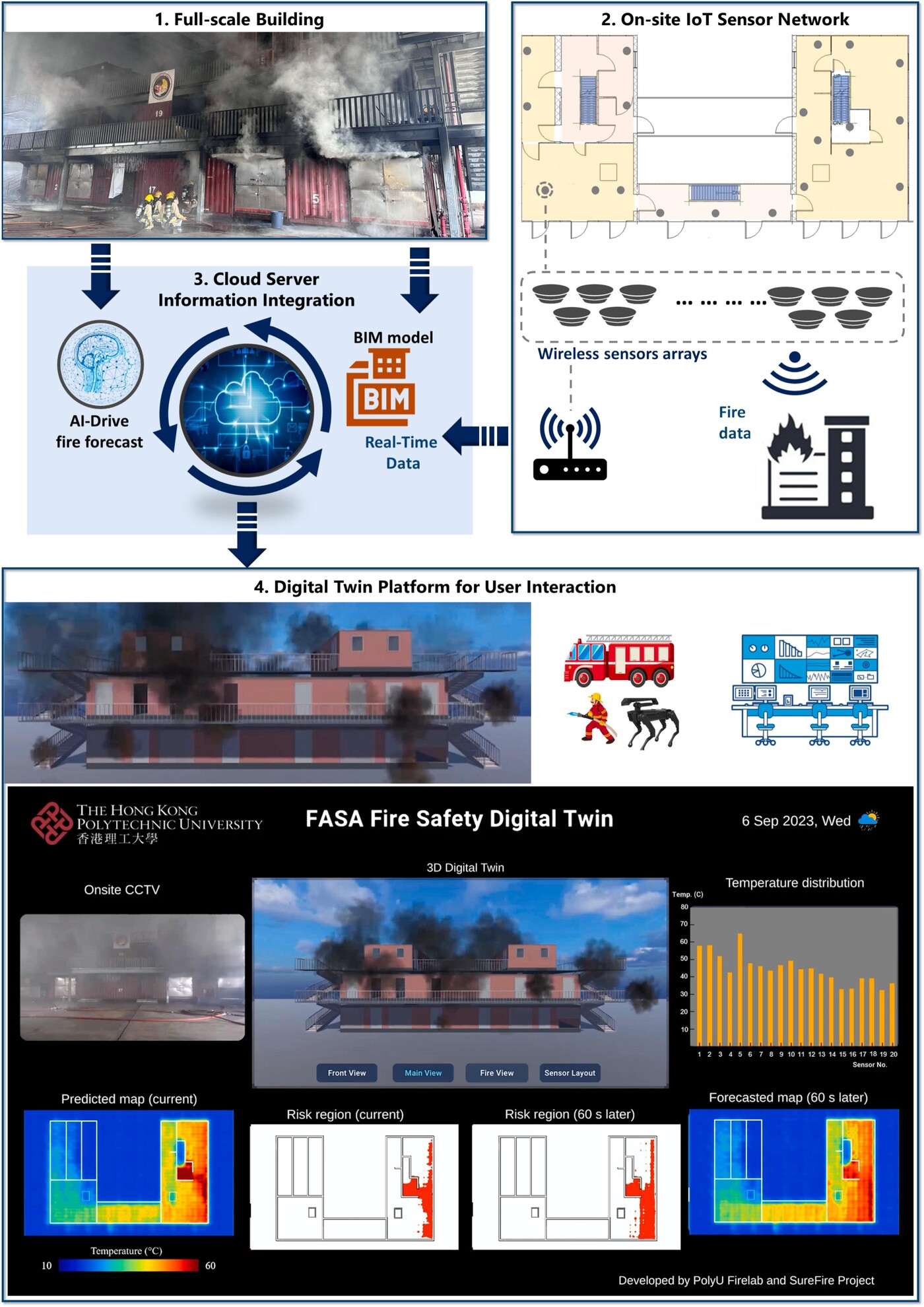
Figure 1. Demonstration of the Digital Twin platform for smart building fire monitoring and forecast
The AutoDecoder Long Short-term Memory Neural Network (ADLSTM-Fire), a hybrid deep learning model the team developed, processes these sensor data to reconstruct high-dimensional temperature fields and forecast future developments up to 60 seconds in advance. By combining AutoDecoder and Long Short-Term Memory (LSTM) neural networks, the model transforms sparse sensor inputs into detailed spatiotemporal maps of fire progression. This predictive capability is essential for smart buildings, where early warnings and dynamic risk assessment can prevent escalation and guide evacuation strategies.
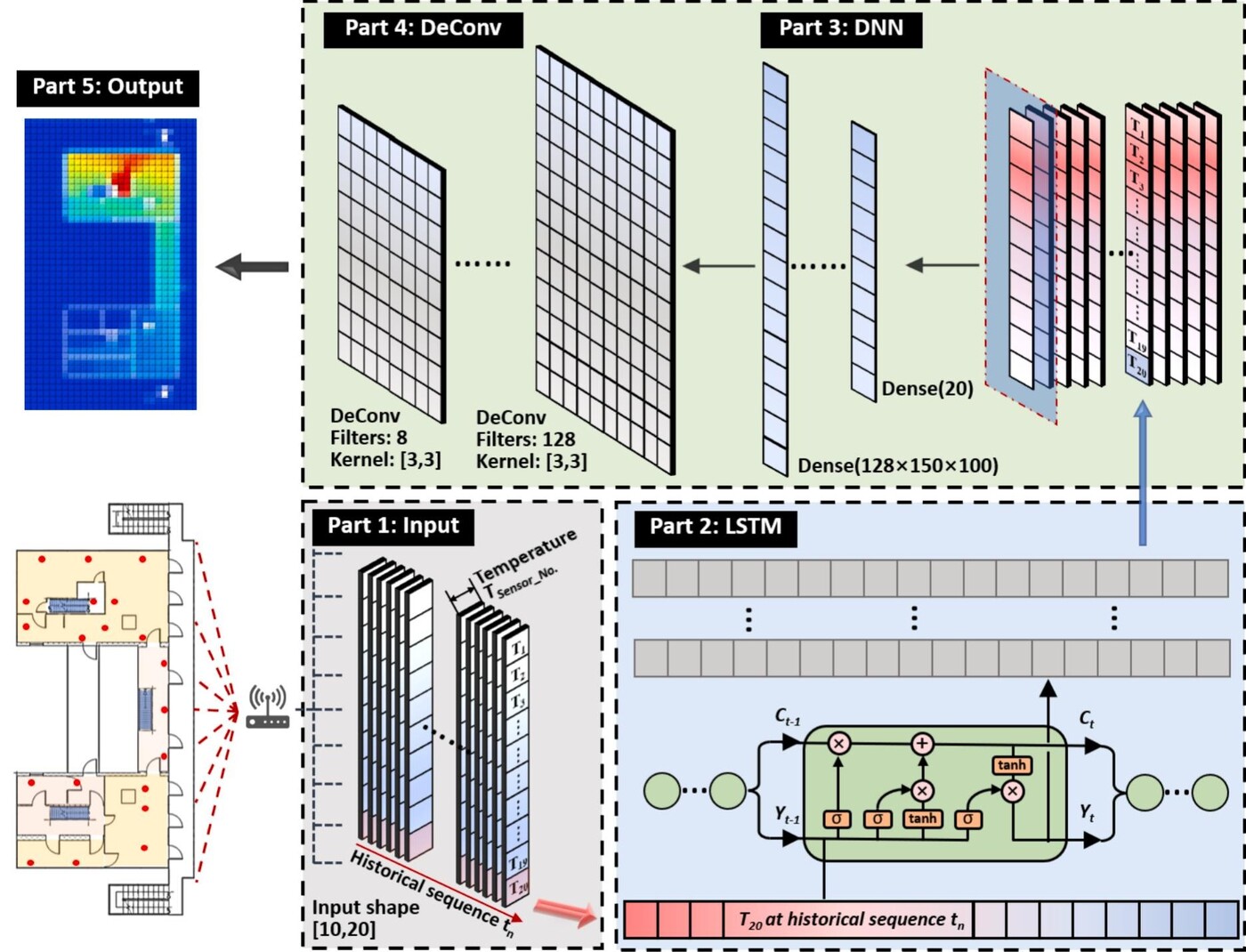
Figure 2. Architecture of the ADLSTM-Fire deep learning model
The ADLSTM-Fire model architecture comprises five key components (Figure 2). Part 1 receives time-series temperature data from multiple sensors as input. Part 2 employs LSTM networks to capture temporal correlations and forecast sensor readings one minute ahead. Part 3 uses a deep neural network (DNN) to expand and connect the forecasted values, preparing them for spatial mapping. Part 4 applies deconvolution (DeConv) techniques to upscale the data, reconstructing a two-dimensional temperature field. Finally, Part 5 outputs the predicted temperature distribution, enabling both real-time reconstruction and advance forecasting of fire dynamics within the building.
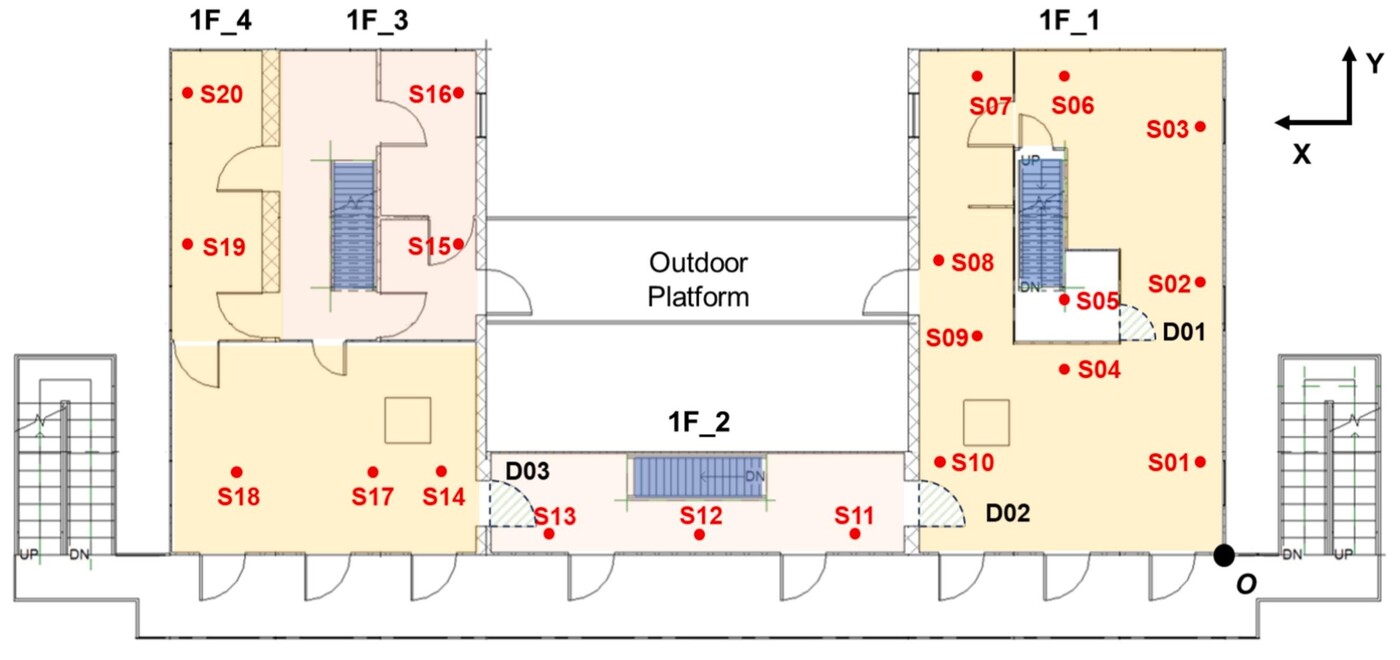
Figure 3. Wireless temperature measurement network on the first floor of FASA
Training the ADLSTM-Fire model involved both full-scale fire experiments and benchmark numerical simulations using the Fire Dynamics Simulator (FDS). The experimental setup at the Fire and Ambulance Services Academy (FASA) in Hong Kong featured a multi-floor training building equipped with strategically placed wireless sensors (Figure 3). Data from these experiments, along with thousands of simulated fire scenarios, provided a robust foundation for model development and validation.
Information interaction within the system is managed through a multi-layered architecture, encompassing physical sensing, virtual data processing and user application interfaces. Sensor data are transmitted to a local router and uploaded to a cloud server, where the ADLSTM-Fire model operates within a Digital Twin platform. This platform, integrated with Building Information Modelling, offers a user-friendly interface for visualising temperature distributions, identifying hazardous regions and issuing commands for physical interventions. The modular design ensures seamless communication between hardware, software and users, supporting both real-time monitoring and strategic decision-making.
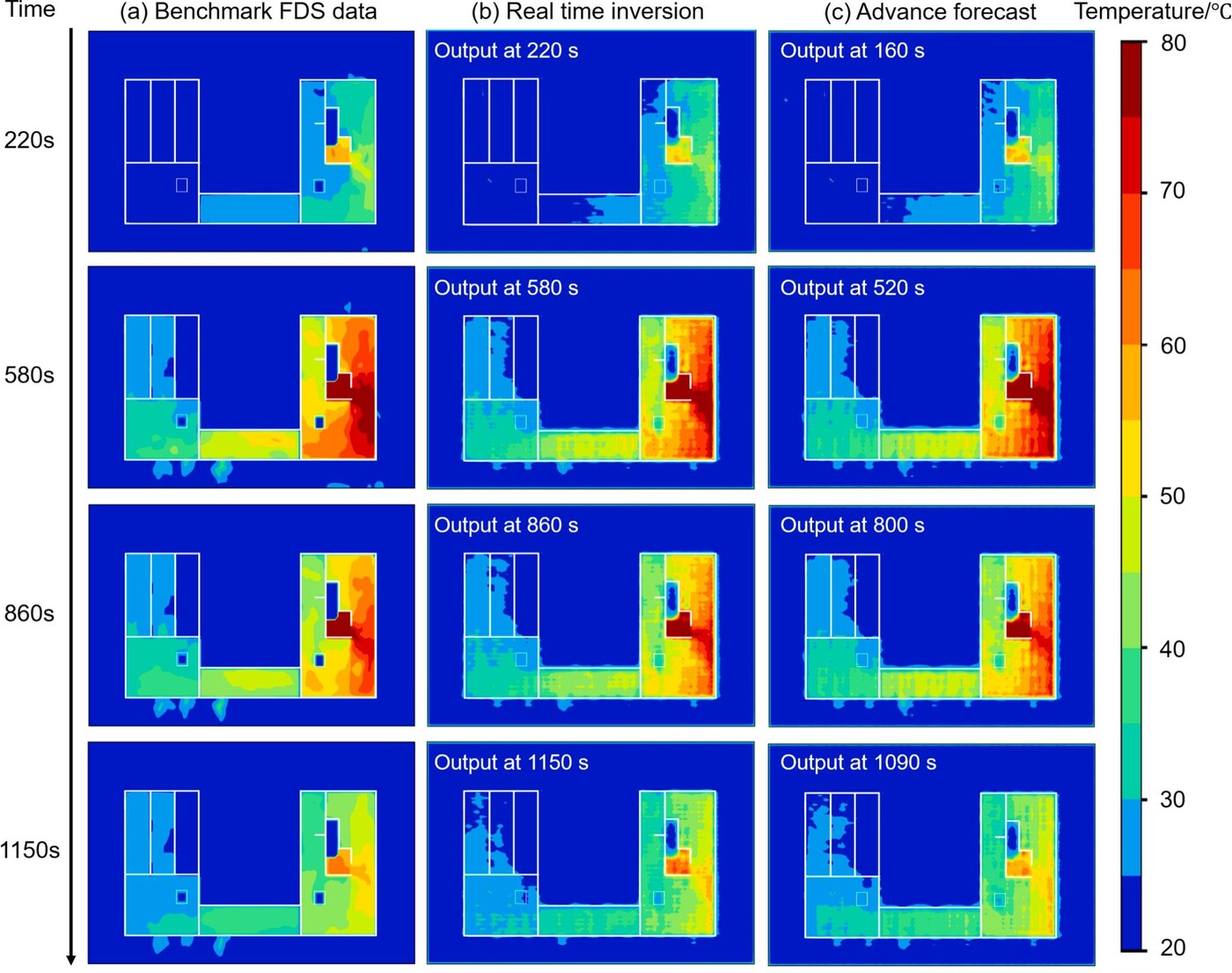
Figure 4. Visual comparisons of temperature field predicted by (a) benchmark FDS, (b) real-time reconstruction and (c) advance forecast 60 s in advance
Test results from numerical simulations and real-world experiments demonstrate the system's accuracy and robustness. The real-time reconstruction model achieved an accuracy of 93%, while the ADLSTM-Fire advance forecast model reached 92%. Both models predicted the spatial and temporal evolution of temperature fields with inference times under 0.5 seconds, delivering super real-time insights into fire dynamics. Visual comparisons of temperature field images at four critical moments, 220 seconds, 580 seconds, 800 seconds and 1,150 seconds after ignition, showed close alignment with benchmark FDS data (Figure 4), accurately capturing the movement of high-temperature gases, temperature gradients and cooling phases.
Further validation using full-scale building fire experiments, which were not part of the model training, confirmed the system’s generalisation capability. The deep learning models maintained high accuracy across different fire scenarios, with errors typically less than 5°C for most sensor locations. The real-time reconstruction model demonstrated resilience, adapting quickly to changes in input data and providing reliable predictions throughout the fire’s progression. The advance forecast model, while slightly less precise, offered valuable early warnings to inform evacuation and firefighting strategies.
In summary, the integration of AIoT and Digital Twin technology marks a significant advancement in fire safety for smart buildings. The demonstrated accuracy, speed and adaptability of the ADLSTM-Fire model highlight its potential to enhance urban resilience, reduce fire casualties and support the development of safer, smarter cities. As research continues to refine these models and expand their applicability, AIoT-driven fire safety systems are poised to become an essential component of future urban infrastructure.
Prof. Usmani was recognised by Stanford University as one of the top 2% most-cited scientists worldwide (career-long and single-year) in the field of engineering for six consecutive years, from 2020 to 2025. He has, for 30 years, primarily worked in the field of fire safety engineering and structural fire engineering. In the UK, his total external funding amounted to over £10 million, including £2.3 million funding for the FireGrid project, which aimed at providing real-time forecasting of the evolution of large fire events to help firefighters make better informed decisions. In 2020, his proposed project "SureFire: Smart Urban Resilience and Firefighting" was awarded HK$ 33.33 million from the Hong Kong Research Grants Council Theme-based Research Scheme. As an extension of FireGrid, SureFire is developed typically for large building compartments like the skyscrapers commonly seen in Hong Kong.
The SureFire project has led to the creation at PolyU of the largest Fire Safety Engineering research group in the world, currently comprising five faculty, one adjunct faculty, six research assistant professors, and over 40 post-doctoral research fellows and postgraduate research students. The AIoT-integrated Digital Twin system in this study is part of the SureFire system. The team's work was awarded the 2026 Philip Thomas Medal of Excellence for the best paper presented at IAFSS 2023, which was titled "Introducing an active opening strategy to mitigate large open-plan compartment fire development". This award is given to only one paper every three years by the International Association for Fire Safety Science (IAFSS) at its flagship conference, and will be presented at the 15th IAFSS symposium in June 2026, La Rochelle, France.
| Notes |
|---|
Artificial Intelligence of Things (AIoT) is the integration of AI and the Internet of Things (IoT). IoT is a network collecting data from sensors and transmitting the data through the internet. It is widely used in fire detection systems to collect real-time data such as smoke, heat and gas, and to optimise emergency response. With AI embedded into IoT, AIoT can analyse and learn the data for more accurate forecasting.
Digital Twin is a virtual representation (a virtual twin) of physical objects or systems. It uses real-time data to accurately reflect the real-world situation.
References |
|---|
[1] Xie, W., Zeng, Y., Zhang, X., Wong, H. Y., Zhang, T., Wang, Z., Wu, X., Shi, J., Huang, X., Xiao, F. & Usmani, A. (2025). AIoT-powered building digital twin for smart firefighting and super real-time fire forecast, Advanced Engineering Informatics, Volume 65, Part A, 2025, 103117, ISSN 1474-0346, https://doi.org/10.1016/j.aei.2025.103117.
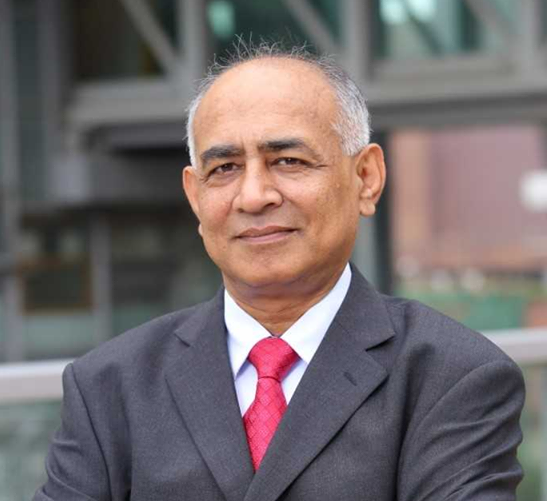 | Prof. Asif Sohail USMANI |