Insights of Micro-electro-quantum Systems
Other Articles

Bridging Quantum Science and Semiconductor Engineering for the Next Technological Revolution
Study conducted by Prof. Helen Hong CAI and her research team
(This original article was an invited paper in Light for a special issue commemorating the International Year of Quantum Science and Technology, 2025)
The "second quantum revolution" has reached a pivotal juncture, transitioning from fundamental physical exploration to systematic semiconductor engineering. As laboratory prototypes mature, the focus has shifted toward achieving industrial scalability and overcoming critical bottlenecks, such as the "wiring problem" of interconnecting thousands of individual qubits, while minimising the power consumption of bulky and discrete hardware.
A micro-electro-quantum system (MEQS) integrates microelectronics with quantum mechanics principles to create novel devices and systems. They often involve nanoscale components like quantum dots or photonic circuits to enable advanced functions in quantum sensing, computing and communication. By leveraging quantum phenomena such as superposition and entanglement within a miniaturised circuit, MEQS bridges classical photonics and quantum information processing. This integration provides the essential infrastructure for the large-scale integration of quantum components and qubits onto a single chip.
In this paper, Prof. Helen Hong CAI, Associate Professor of the Department of Electrical and Electronic Engineering at The Hong Kong Polytechnic University, together with her PhD student, Li Yu-Xiang, and their team, evaluates the milestones and systemic impacts of micro-electro-quantum system across four critical domains: quantum computing, communications, quantum artificial intelligence (AI) and metrology. The paper also offers insight into how future quantum microelectronics may change the traditional AI computing architecture, offering a new wave of innovation in the semiconductor industry.
Milestones of micro-electro-quantum device and circuit
The realisation of MEQS relies on diverse material platforms developed to meet specific functional requirements. These include silicon photonic (Si), silicon nitride (Si3N4), lithium niobate on insulator (LNOI), III-V semiconductors (e.g., GaAs, InP, AlN), silica and silicon oxynitride (SiOxNy). Silicon photonic currently stands as the most mature platform for large-scale, high-density integration. Si3N4 is essential for ultra-low loss quantum information device and circuit, while LNOI has emerged as a high-performance contender due to its strong electro-optic and second-order nonlinear coefficients to facilitate ultra-fast modulation and efficient spontaneous parametric down-conversion (SPDC).
The field of integrated quantum photonics has progressed through a series of landmarks since 2008. It began with the first demonstration of on-chip quantum interference and a controlled-NOT (CNOT) gate on a silica substrate [1]. Key advances followed: the first waveguide-integrated superconducting nanowire single-photon detector (SNSPD) on a GaAs substrate [2] in 2011, high-efficiency silicon waveguide SNSPDs in 2012 [3] and the first fully programmable two-qubit processor on a silica platform [4] in the same year. Integration complexity increased with silicon probabilistic spontaneous four-wave mixing circuits in 2013 [5] and deterministic InAs quantum dot (QD) sources on a GaAs substrate in 2014 [6]. A universal linear-optic circuit was established through a six-mode triangular Mach-Zehnder Interferometer (MZI) network on a silica substrate in 2015 [7]. Subsequent milestones in 2017 included the first InP-to-SiOxNy chip quantum key distribution (QKD) [8] and high-rate SPDC sources in AlN microring resonators (MRRs) achieving 20 MHz mW-1 via modal phase matching [9].
The transition to the very-large-scale integration era was marked in 2018 by 670-component silicon circuits for 15-dimensional entanglement [10], followed in 2019 by the generation of eight-photon [11] and the first CV-QKD demonstrations on silicon [12]. Modular networking matured in 2020 with chip-to-chip teleportation on silicon [13], while the 2023 report of "Boya" [14], a graph processor integrating 2,500 components, and the 2024 "HK-o1" 16-mode Gaussian Boson Sampling (GBS) microprocessor redefined scalability [15, 16]. This matured in 2025 with the first integrated electronic-photonic-quantum system-on-chip fabricated in a commercial 45-nm complementary metal–oxide–semiconductor (CMOS) foundry [17], which utilised built-in sensors and heaters to actively stabilise quantum light-generating MRRs against thermal fluctuations. Within an ultra-low-loss framework, on-chip squeezing of 4.9 dB of PPLN [18] and 5.2 dB MRRs in Si3N4 [19] has been achieved, providing essential resources for fault-tolerant quantum information processing.
Applications and impact
The maturation of MEQS has facilitated a transition from laboratory proofs-of-concept to systemic applications across four critical domains.
Quantum Computing
Quantum computing leverages qubits, often encoded in photonic degrees of freedom, to perform parallel computations. While gate-based quantum computing has progressed with universal linear-optic circuits, measurement-based quantum computing has emerged as a significantly more resource-efficient model for large-scale integration. For example, Xanadu’s Aurora system uses a modular architecture of 35 quantum photonic chips to synthesise a massive cluster state entangled across 86.4 billion modes [20]. This system achieves Wigner-negative Gottesman-Kitaev-Preskill states on-chip [19], demonstrating 3 × 3 lattice structures and 9.75 dB of symmetric effective squeezing. Additionally, GBS is a specific-purpose quantum computation model that demonstrates the quantum computational advantage of linear optical computing.
Quantum Communication
Quantum communication focuses on the secure transfer of information, primarily through QKD, providing a defence against the vulnerabilities of classical encryption. MEQS offers a unique platform for realising practical QKD systems with high stability and low loss. The first implementation of a fully integrated chip-to-chip system utilised DV-QKD transceivers based on InP transmitters and SiOxNy receivers, capable of state rates up to 1.76 GHz and supporting multiple protocols such as BB84, coherent-one-way and differential phase shift [8]. For CV QKD, CMOS-compatible silicon chips have integrated all essential components excluding the laser source, achieving secret key rates of 0.14 kbit/s over simulated 100-km distances [12].
Quantum AI
Quantum AI (QAI) seeks to enhance machine learning using quantum hardware. Programmable nanophotonic circuits, including those based on Mach-Zehnder Interferometers, enable fully optical neural networks, promising orders-of-magnitude improvements in speed and power efficiency for certain tasks [21]. The chip-based qPICs also provide the essential infrastructure for quantum machine learning, with recent successes in reinforcement learning [22], quantum-enhanced kernel methods [23], variational quantum algorithms [24-26], multi-photon supervised learning [27] and photonic nonlinearity [28]. These advancements further validate the feasibility of photonic QAI.
Quantum Metrology
Quantum metrology uses non-classical states of light, such as entangled states and squeezed states, to achieve measurement precision that surpasses the classical shot-noise limit (SNL) and approaches the Heisenberg limit (HL). By providing stable, integrated optical paths that minimise environmental disruption, MEQS platforms facilitate the miniaturisation of high-precision sensors. While DV N00N-state sensing remains largely probabilistic [29], CV-based metrology using squeezed states offers a practical path for on-chip integration. Recent advancements have integrated squeezed light sources into TFLN chips to create phase sensors with quantum-enhanced sensitivity [30]. Theoretical analysis further suggests that two-mode squeezed light generated via FWM in MRRs can improve existing sensor performance by up to a factor of 10 under realistic loss conditions [31].
Conclusions and Outlook
As the industry enters 2026, designated as the "Year of Quantum Security," the semiconductor roadmap points toward hybrid quantum-classical high-performance computing as a standard architecture. Quantum processors will act as high-bandwidth accelerators for classical supercomputers, and post-quantum cryptography will be integrated into standard chip designs, marking the evolution of quantum technology into a pillar of economic and national security.
MEQS represents an important industrial carrier for QIP, with qPICs as the microelectronic foundation. The achievement of monolithic integration is in commercial foundries. As manufacturing scales to 300-mm platforms [32] and global initiatives synchronise research goals, MEQS will drive a new era of semiconductor innovation, fundamentally augmenting the capabilities of global computing, communication and sensing.
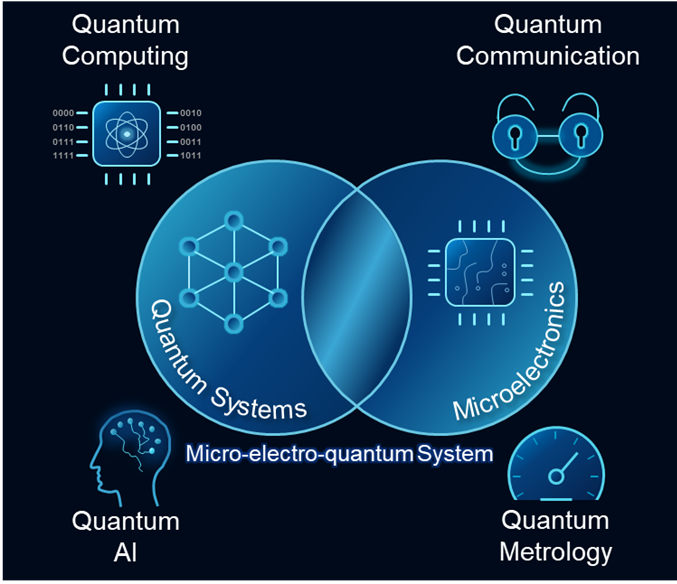
Figure 1. Architecture of the micro-electro-quantum system
Prof. Cai was recognised by Stanford University as one of the top 2% most-cited scientists worldwide (single-year) in the field of nanoscience and nanotechnology in 2022 and 2025. She specialises in integrated photonics and nano-optoelectronic technologies, including photonic integrated circuits, quantum computing and quantum communications. She has published over 260 papers in top-tier journals and international conferences. She was awarded the HICOOL Prize at the Global Entrepreneur Summit and Entrepreneurship Competition in 2024. Prof. Cai is a pioneer researcher in the field of single photo device and photonics quantum circuit and she works on cutting-edge research on micro-electro-quantum system.
| References |
|---|
[1] Politi, A. et al. Silica-on-silicon waveguide quantum circuits. Science 2008, 320 (5876), 646–649.
[2] Sprengers, J. et al. Waveguide superconducting single-photon detectors for integrated quantum photonic circuits. Applied Physics Letters 2011, 99 (18).
[3] Pernice, W. H. et al. High-speed and high-efficiency travelling wave single-photon detectors embedded in nanophotonic circuits. Naturecommunications 2012, 3 (1), 1325.
[4] Shadbolt, P. J. et al. Generating, manipulating and measuring entanglement and mixture with a reconfigurable photonic circuit. Nature Photonics 2012, 6 (1), 45–49.
[5] Silverstone, J. W. et al. On-chip quantum interference between silicon photon-pair sources. Nature Photonics 2014, 8 (2), 104–108.
[6] Arcari, M. et al. Near-unity coupling efficiency of a quantum emitter to a photonic crystal waveguide. Physical Review Letters 2014, 113 (9), 093603.
[7] Carolan, J. et al. Universal linear optics. Science 2015, 349 (6249), 711–716.
[8] Sibson, P. et al. Chip-based quantum key distribution. Nature communications 2017, 8 (1), 13984.
[9] Guo, X. et al. Parametric down-conversion photon-pair source on a nanophotonic chip. Light: Science & Applications 2017, 6 (5), e16249–e16249.
[10] Wang, J. et al. Multidimensional quantum entanglement with large-scale integrated optics. Science 2018, 360 (6386), 285–291.
[11] Paesani, S. et al. Generation and sampling of quantum states of light in a silicon chip. Nature Physics 2019, 15 (9), 925–929.
[12] Zhang, G. et al. An integrated silicon photonic chip platform for continuous-variable quantum key distribution. Nature Photonics 2019, 13 (12), 839–842.
[13] Llewellyn, D. et al. Chip-to-chip quantum teleportation and multi-photon entanglement in silicon. Nature Physics 2020, 16 (2), 148–153.
[14] Bao, J. et al. Very-large-scale integrated quantum graph photonics. Nature Photonics 2023, 17 (7), 573–581.
[15] Zhu, H. et al. A dynamically programmable quantum photonic microprocessor for graph computation. Laser & Photonics Reviews 2024, 18 (2), 2300304.
[16] Zhu, H. H. et al. Large-scale photonic network with squeezed vacuum states for molecular vibronic spectroscopy. Nature communications 2024, 15 (1), 6057.
[17] Kramnik, D. et al. Scalable feedback stabilization of quantum light sources on a CMOS chip. Nature Electronics 2025, 8 (7), 620–630.
[18] Nehra, R. et al. Few-cycle vacuum squeezing in nanophotonics. Science 2022, 377 (6612), 1333–1337.
[19] Larsen, M. et al. Integrated photonic source of Gottesman–Kitaev–Preskill qubits. Nature 2025, 1–5.
[20] Aghaee Rad, H. et al. Scaling and networking a modular photonic quantum computer. Nature 2025, 638 (8052), 912–919.
[21] Shen, Y. et al. Deep learning with coherent nanophotonic circuits. Nature Photonics 2017, 11 (7), 441–446.
[22] Saggio, V. et al. Experimental quantum speed-up in reinforcement learning agents. Nature 2021, 591 (7849), 229–233.
[23] Yin, Z. et al. Experimental quantum-enhanced kernel-based machine learning on a photonic processor. Nature Photonics 2025, 1–8.
[24] Zhang, H. et al. Resource-efficient high-dimensional subspace teleportation with a quantum autoencoder. Science Advances 2022, 8 (40), eabn9783.
[25] Carolan, J. et al. Variational quantum unsampling on a quantum photonic processor. Nature Physics 2020, 16 (3), 322–327.
[26] Hoch, F. et al. Quantum machine learning with Adaptive Boson Sampling via post-selection. Nature communications 2025, 16 (1), 902.
[27] Wang, Y. et al. A scalable advantage in multi-photon quantum machine learning. arXiv preprint arXiv:2511.21951 2025.
[28] Spagnolo, M. et al. Experimental photonic quantum memristor. Nature Photonics 2022, 16 (4), 318–323.
[29] Slussarenko, S. et al. Unconditional violation of the shot-noise limit in photonic quantum metrology. Nature Photonics 2017, 11 (11), 700–703.
[30] Stokowski, H. S. et al. Integrated quantum optical phase sensor in thin film lithium niobate. Nature communications 2023, 14 (1), 3355.
[31] Tritschler, P. et al. Optical interferometer using two-mode squeezed light for enhanced chip-integrated quantum metrology. Physical Review A 2024, 110 (1), 012621.
[32] PsiQuantum. A manufacturable platform for photonic quantum computing. Nature 2025, 641 (8064), 876–883.
 | Prof. Helen Hong CAI |