Hong Kong’s First Chip-Based Quantum Network
Other Articles

A compact quantum chip shows real-world stability and positions Hong Kong at the forefront of metropolitan quantum networking
Study conducted by Prof. Ai-Qun LIU and his research team
Modern digital security is built on the idea that certain mathematical problems are too hard for computers to solve. These ‘locks’ keep everything from online banking, cloud transactions and medical records to government messages safe as they move across the internet. However, a new kind of technology is on the horizon, large-scale quantum computers, which could eventually break many of these locks. That raises the big question as to whether today’s private data will stay secure in the decades to come.
Quantum key distribution (QKD) offers a different kind of security solution. Instead of relying only on mathematics, it uses the laws of physics to protect information. It allows two remote parties to create a secret key in a way that immediately reveals if someone tries to eavesdrop. QKD does not replace traditional encryption, but adds a powerful layer of security by making the key exchange physically tamper-proof. This makes QKD especially useful for banks, governments, data centres and hospitals that need information to stay confidential far into the future.
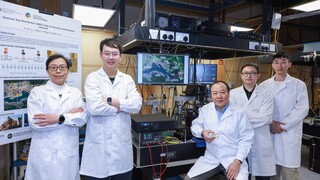
For years, QKD has worked mainly in controlled labs. Now, it is stepping into the real world. Making the technology compact and chip-based is key to bringing it into our city networks. Prof. Ai-Qun LIU, Chair Professor of Quantum Engineering and Science of the Department of Electrical and Electronic Engineering at The Hong Kong Polytechnic University and Hong Kong Global STEM Professor, and his research team have completed Hong Kong’s first urban quantum network test—a major milestone in the shift from lab research to commercialisation [1]. It is one of the earliest demonstrations of a chip-based QKD system operating reliably over actual city fibre lines, pointing the way to affordable, large-scale quantum-safe communication.
In the test, Prof. Liu and his team, Research Assistant Professor Yu Hao and their PhD students, used a quantum chip over a commercial 55-kilometre fibre loop in Hong Kong. The line was not perfect. It had older segments, connectors and splices, exactly the kind of conditions found in busy urban networks, where temperatures and disturbances can affect performance.
Despite these real-world challenges, the system generated secure encryption keys continuously for twelve hours without interruption, at speeds comparable to leading global field tests, all using a transmitter small enough to fit on a mass-manufacturable chip. The results, shared at the Optical Fibre Communication Conference and Exhibition (OFC) in the United States, marked the first time the world learned about Hong Kong’s successful chip-based quantum network demonstration over live city infrastructure [1].
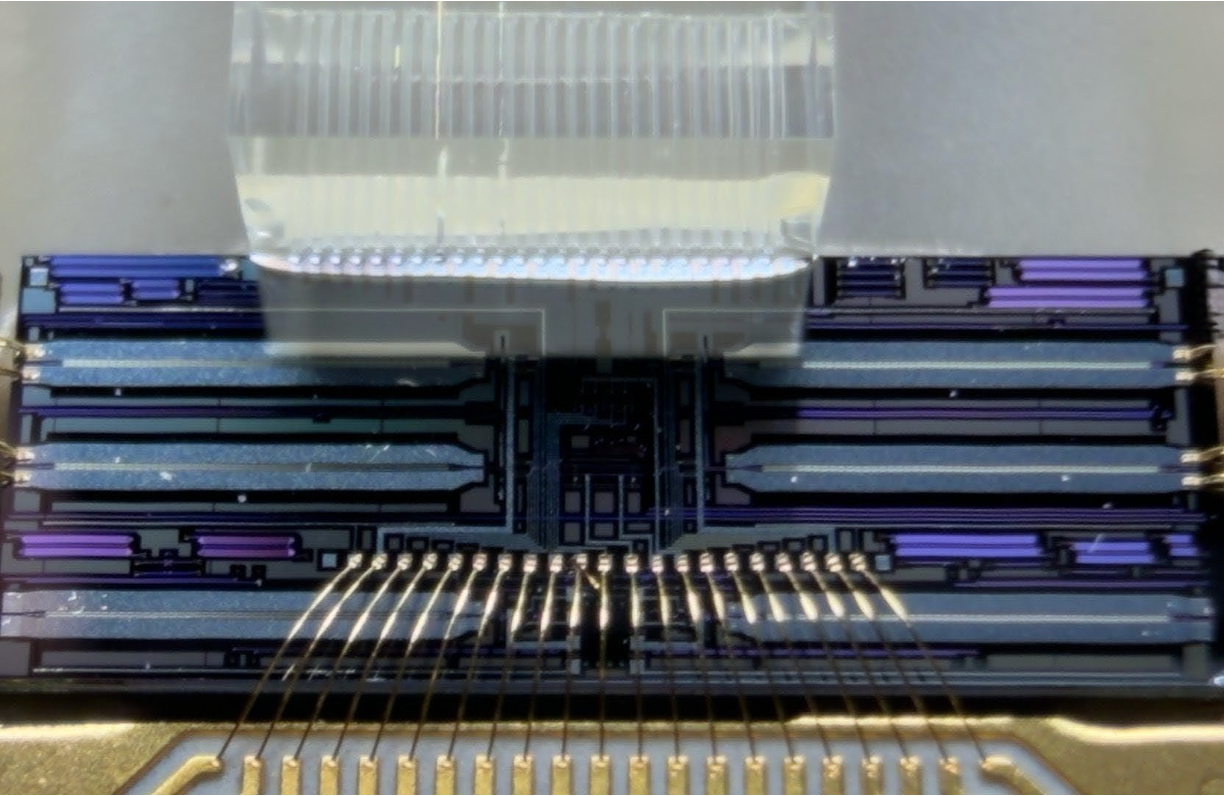
Figure 1. The quantum chip
Figure 2 shows the Hong Kong Quantum Network, a 55-kilometre fibre-optic loop with an end-to-end link loss of 27.7 dB that links key locations across the City. The network has four access points (red circles): The Hong Kong Polytechnic University (PolyU, Hung Hom), the City University of Hong Kong (CityU, Kowloon Tong) and two commercial data centres in Tseung Kwan O (TKO) and Chai Wan.
The loop can be conceived of as comprising three connected segments linking these sites: PolyU–TKO (27.12 km), TKO–Chai Wan (7.09 km), and Chai Wan–PolyU (21.20 km). In the field trial, a quantum signal was transmitted from the PolyU, travelled around the entire loop through the other nodes and returned to its starting point for measurement. This setup mimics how signals actually travel in a live urban telecom network.
A practical challenge in city fibre networks is that environmental changes, such as temperature swings or physical vibrations, can subtly scramble the signal as it travels, which would normally reduce performance. To address this issue, the experiment used a smart tracking and correction system whereby a very weak guide signal, travelling alongside the quantum signal, was used to monitor scrambling in real-time. Any detected shift was immediately measured and fed back to a correction component in the system which continuously realigned the signal. This automatic adjustment kept the connection stable throughout the test, despite the noisy conditions of a real city fibre network.
In the test, the system used a widely adopted quantum encryption method to create secure keys. It created random choices, like flipping a coin, at extremely fast speeds to decide how to encode each particle of light (photon). As a security measure, it also sent decoy particles alongside the real signal, which helps to show any attempt to intercept the communication. Figure 3 shows the two most important performance indicators during the operation: the error rate and the secure key generation rate. With the system’s automatic stabilisation active, the error rate remained low (below 5%), while the secure key rate averaged 45.73 kilobits per second over a two-hour period. These results confirm that the compact, chip-based quantum network operated reliably despite the variable conditions of a city fibre network. This stability is a key finding, demonstrating that the system is suitable for real-world, metropolitan quantum-secured communication.
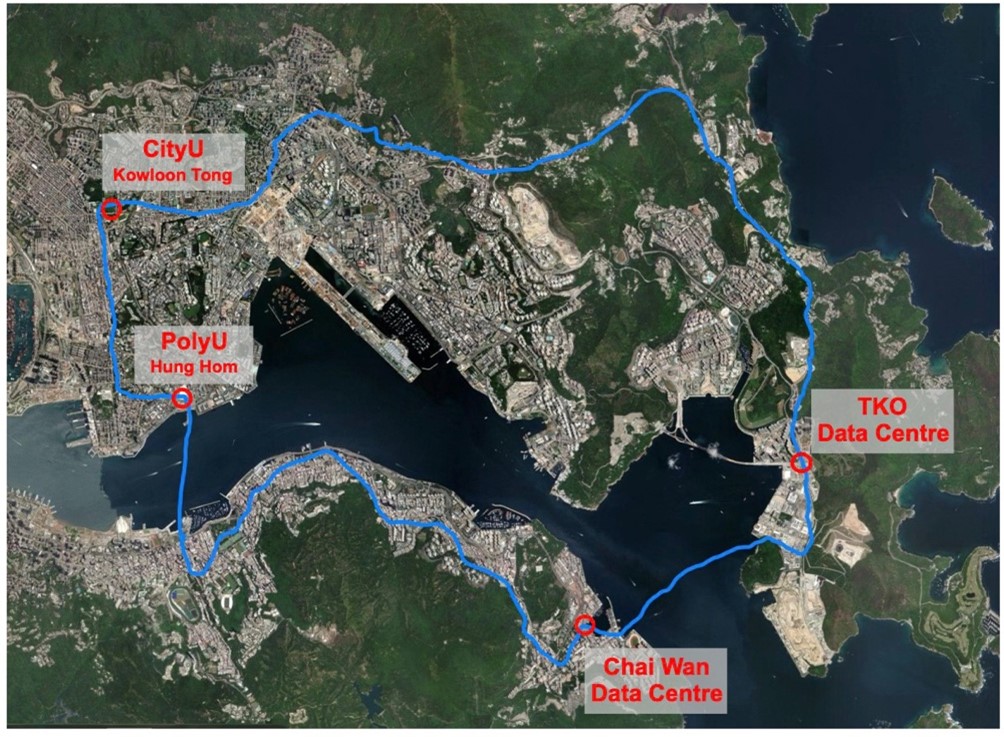
Figure 2. Map of the Hong Kong quantum network
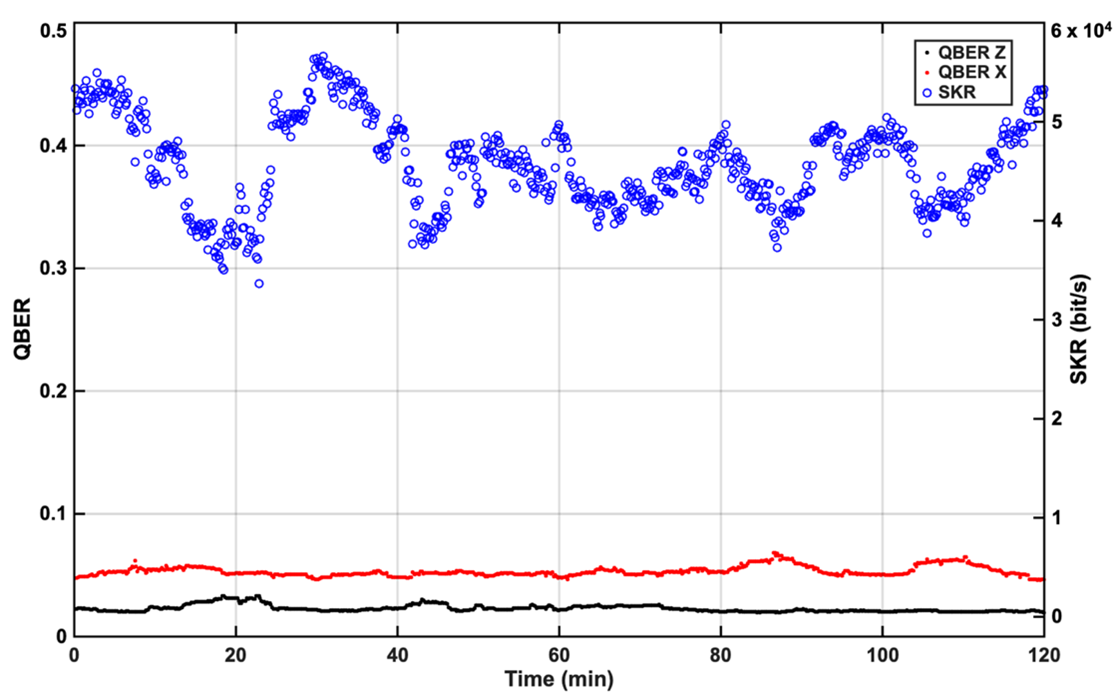
Figure 3. Measured quantum bit error rate (QBER) in Z-basis and X-basis, and secure key rate (SKR) over the two-hour quantum network testing
This achievement is important for Hong Kong’s digital future. As a global hub for finance and logistics, home to a high concentration of data centres and critical public infrastructure, the City has a major need for long-term data security. This successful field test shows that quantum-secured communication can be added to existing fibre optical networks without disruptive infrastructure replacement. This means organisations can use this technology to more effectively shield their most important digital exchanges, such as transactions between banks, links between data centres, government communication and sensitive medical data in healthcare.
A key advantage is that this chip-based quantum network can be added to existing security setups. It does not require starting from scratch. Institutions can start by using it to protect their most sensitive backbone network links, integrating quantum-generated keys into their existing systems. They can then expand its use over time, much like the way fibre-optic internet was gradually rolled out. This makes upgrading to quantum security a practical and strategic step for strengthening long-term digital defences.
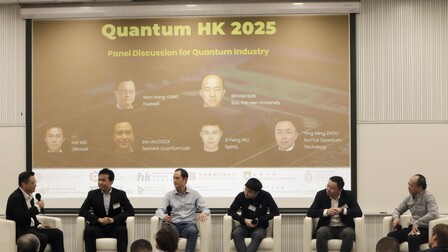
This operational quantum network also contributes to Hong Kong’s growing quantum technology ecosystem. It fosters collaboration between universities, telecom companies, data centre operators and cybersecurity firms, helping to build expertise and commercial applications. As the world moves toward quantum networking, Hong Kong’s early progress establishes it as a regional front-runner and a potential testing ground for the coming era of secure communication.
Hong Kong’s first chip-based quantum network is a major milestone in bringing quantum-safe communications to metropolitan areas. This real-world demonstration and the ability to correct for disruptions shows a clear path to making this technology scalable and cost-effective.
By validating its real-world stability and seamless integration with existing telecom infrastructure, this Hong Kong field trial moves the quantum chip from a lab innovation toward it being a viable, commercial-ready solution. It helps build a foundation for long-term security protection of critical communications, strengthens the resilience of Hong Kong’s digital network and accelerates the growth of a local quantum technology sector. With this milestone, Hong Kong positions itself as a leading metropolitan region, ready to pioneer smart quantum-secure networks.
Prof. Liu was recognised by Stanford University as one of the top 2% most-cited scientists worldwide (both career-long and single-year) in the field of nanoscience and nanotechnology for six consecutive years, from 2020 to 2025. He is an expert in the field of quantum technology. He is a fellow of the Academy of Engineering Singapore, a fellow of the Royal Society of Chemistry, a fellow of the International Society for Optics and Photonics and a fellow of the Optical Society of America. In 2024, he led the project “Quantum Chip-based Key Distribution System”, winning the second prize along with a cash award of one million yuan at the HICOOL 2024 Global Entrepreneur Summit and Entrepreneurship Competition. In 2025, he led the PolyU research team in developing a compact quantum chip and completing Hong Kong’s first chip-based quantum network and test. As the Director of the PolyU Research Institute of Quantum Technology, Prof. Liu’s ongoing leadership continues to propel the University to the forefront of quantum technology.
| References |
|---|
[1] X. P. Wang, H. Yu, X. J. Zhang, L. W. Lu, W. Wang, Y. X. Yan, K. P. Zhong, S. H. Sun, H. Cai, A. P. T. Lau, and A. Q. Liu. Hong Kong Quantum Network with Chip-based QKD System for Cybersecurity, Proc. Optical Fiber Communication Conf. and Exhibition (OFC), Mar 2026, USA.
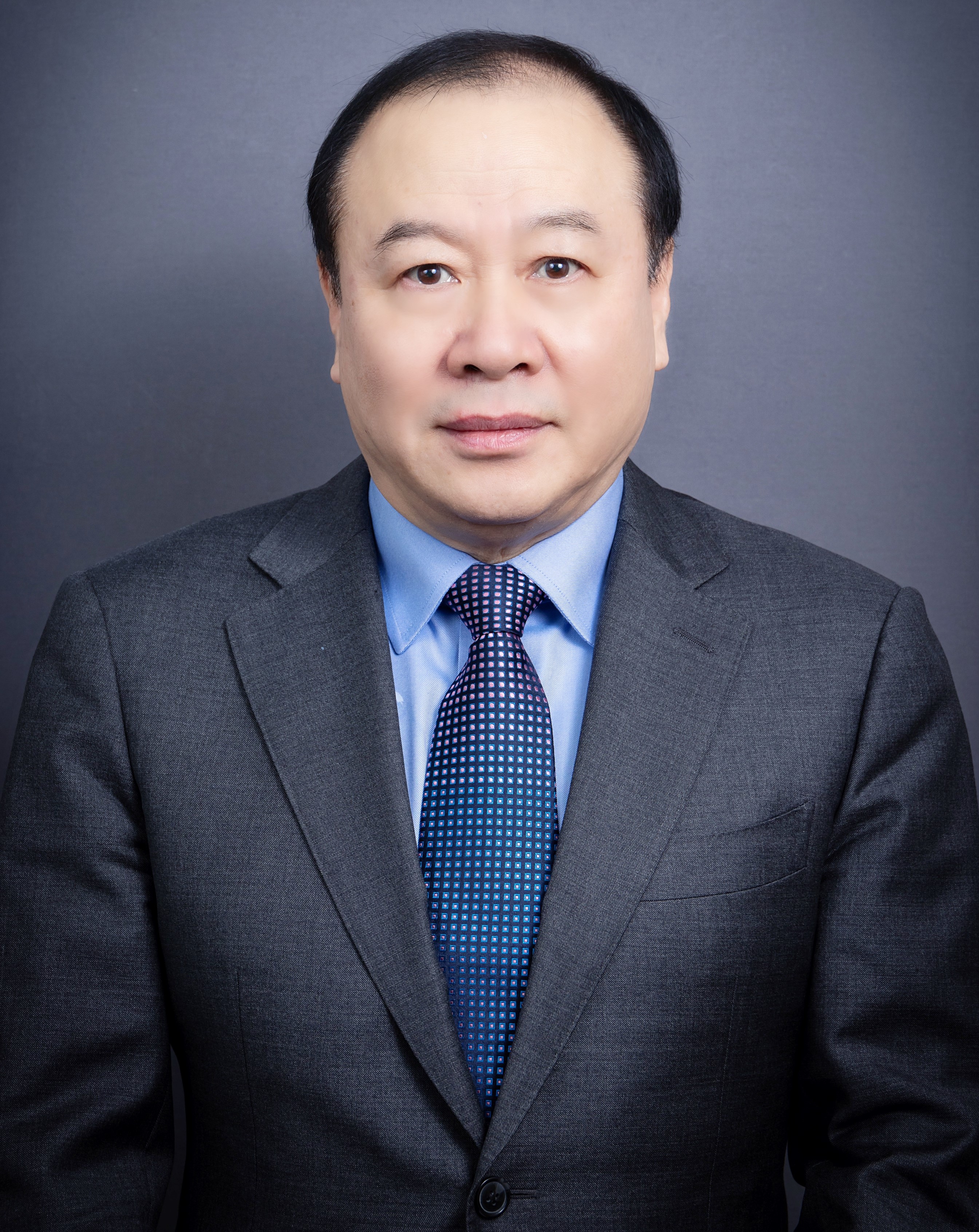 | Prof. Ai-Qun LIU |