A New Era for Ultrafast Photonics: Two-Dimensional Mercury-Acetylide Frameworks for Near-Infrared Nonlinear Optics
Other Articles

Engineered D-π-A-Structured 2D Materials Enable Next-Generation Quantum Devices
Study conducted by Prof. Yuen Hong TSANG  and his research team
In the increasingly digital world, the demand for faster, more efficient and miniaturised optical devices is ever-growing. From high-speed internet and secure quantum communications to advanced medical imaging and precision manufacturing, the backbone of these technologies is light, specifically how we can control and manipulate it at the nanoscale. Two-dimensional (2D) materials have emerged as a game-changer in this arena, offering unique properties that can be harnessed for ultrafast photonics and nonlinear optical applications.
However, the search for materials that combine stability, tunability and high performance in the near-infrared (NIR) region, a crucial window for telecommunications and sensing, remains a significant challenge. Prof. Yuen Hong TSANG, Associate Head and Professor of the Department of Applied Physics at The Hong Kong Polytechnic University, and his research team introduce a new class of 2D quantum materials, the mercury(II)-acetylide frameworks (Hg–H2TPP), which not only overcome many of the limitations of existing materials but also open up exciting possibilities for switchable nonlinear optics and ultrafast laser technologies.
This study, published in Carbon [1], aims to design, synthesise and characterise a novel D-π-A-structured 2D material, Hg–H2TPP, engineered for high-performance nonlinear optics and ultrafast photonics in the NIR region. By integrating heavy mercury(II) ions into a porphyrin-containing graphdiyne framework, the team has developed a material with remarkable optical properties, including strong and tuneable nonlinear absorption, rapid carrier dynamics and the ability to function as both a saturable absorber and an optical limiter. These features are critical for the development of advanced photonic devices such as Q-switched and mode-locked lasers, which are essential for telecommunications, high-precision measurements and quantum information processing.
The study demonstrates that the newly synthesised Hg–H2TPP nanosheets possess a combination of properties highly desirable for advanced photonic applications. Through careful synthesis and exfoliation, the team created ultrathin, uniform nanosheets with well-defined crystalline structure and homogeneous elemental distribution. The incorporation of heavy Hg(II) ions into the porphyrin-containing framework resulted in strong and extended near-infrared absorption, as well as enhanced photoluminescence, distinguishing Hg–H2TPP from its organic ligand counterpart.
Most notably, the material exhibits both saturable absorption and reverse saturable absorption behaviours, with nonlinear absorption coefficients that can be tuned across a wide range. This switchable nonlinear response is crucial for enabling the material to function as both a saturable absorber and an optical limiter, depending on the incident light intensity. Building on these properties, the team successfully fabricated Hg–H2TPP -based saturable absorbers, which enabled the generation of highly stable Q-switched and mode-locked lasers at 1560 nm, achieving pulse widths down to the femtosecond regime. These results collectively highlight the unique electronic structure and ultrafast carrier dynamics of Hg–H2TPP, establishing it as a promising candidate for next-generation near-infrared optoelectronic devices.
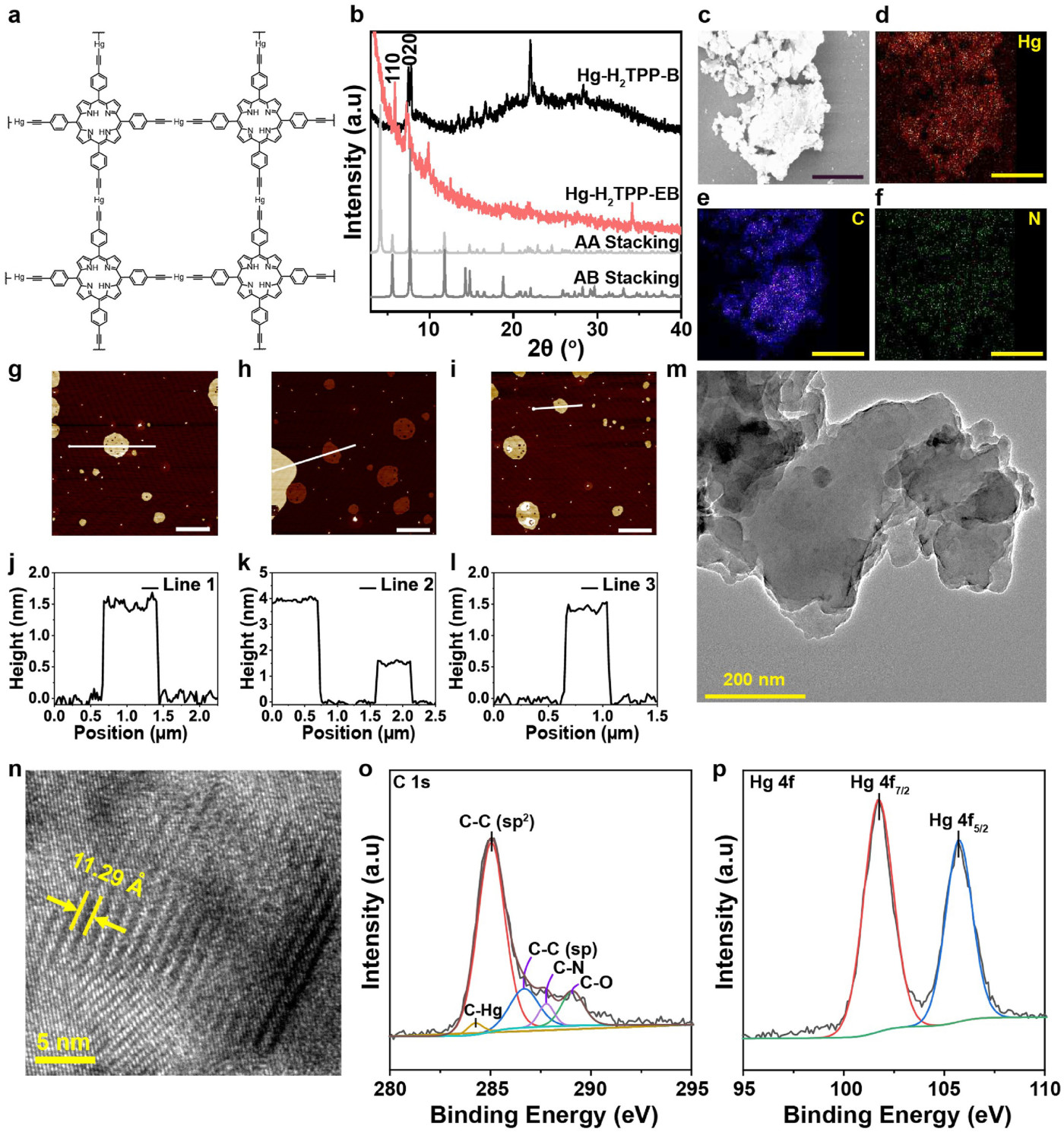
Figure 1.
(a) The chemical structure of Hg–H2TPP
(b) Powder X-ray diffraction patterns of experimental Hg–H2TPP-B and Hg–H2TPP-EB
(c-f) SEM images of an exfoliated sample with corresponding element mapping of Hg, C and N, respectively
(g-i) AFM images illustrating three distinctive lines over the exfoliated samples
(j-l) Height profiles of the corresponding lines shown in (g-l), respectively
(m-n) TEM and HR-TEM images of Hg–H2TPP-EB, respectively
(o-p) HR-XPS spectra of C 1s and Hg 4f in Hg–H2TPP-EB, respectively
Central to this study is the D-π-A-structured 2D mercury(II)-acetylide framework, Hg–H2TPP, synthesised by integrating Hg(II) ions into a porphyrin-containing graphdiyne backbone. The chemical structure shows the macrocyclic porphyrin core linked by –C≡C–Hg–C≡C– units (Figure 1a), confirming successful mercury incorporation. Powder X-ray diffraction demonstrates the crystallinity and phase purity of both bulk and exfoliated samples (Figure 1b), with distinct peaks for specific crystal facets. Elemental mapping reveals a uniform distribution of mercury, carbon and nitrogen (Figures 1d–f), while atomic force microscopy confirms the ultrathin, two-dimensional nature, with nanosheet thicknesses below 5 nm (Figures 1g–l).
Transmission electron microscopy further verifies the ordered crystalline structure (Figures 1m–n), while X-ray photoelectron spectroscopy validates the chemical environment and Hg(II) integration (Figures 1o–p). Together, these characterisation techniques establish that Hg–H2TPP forms homogeneous, ultrathin nanosheets with robust crystallinity and precise elemental composition. This engineered structure underpins the material’s advanced optical properties, including strong near-infrared absorption and nonlinear optical behaviour, making it a promising candidate for next-generation photonic and quantum devices.
To understand the ultrafast processes underpinning these optical properties, the team conducted femtosecond transient absorption spectroscopy. The results revealed rapid excitation and relaxation dynamics, with multiple relaxation pathways involving both singlet and triplet states. Notably, the material exhibits strong excited-state absorption in the 900–1,050 nm range, with relaxation times spanning from sub-picoseconds to hundreds of picoseconds. These dynamics are crucial for applications in ultrafast photonics, as they determine the material’s ability to support high-speed optical modulation and pulse generation.
A particularly important aspect of this study is the demonstration of switchable nonlinear optical responses, specifically the transition between saturable absorption (SA) and reverse saturable absorption (RSA) as a function of incident laser intensity. Using the Z-scan technique at 1560 nm, the team observed that at lower intensities, Hg–H2TPP acts as a saturable absorber, with negative nonlinear absorption coefficients (β) down to ‒10.5 cm GW-1. This means that the material becomes more transparent as the light intensity increases, a property essential for passive mode-locking in lasers. However, at higher intensities, the behaviour switches to RSA, with positive β values up to 10.9 cm GW-1. The material absorbs more light as the intensity rises, which is ideal for optical limiting and protection against high-power laser pulses.
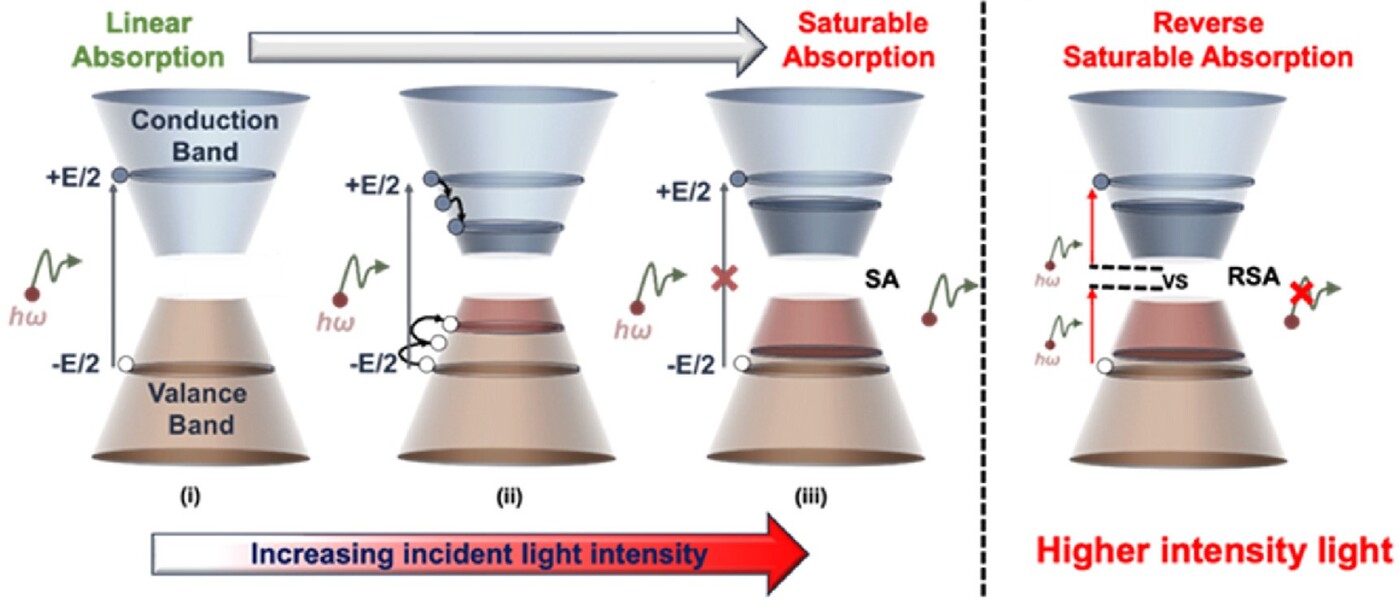
Figure 2. Schematic illustrations of (left) SA and (right) RSA
The underlying mechanism for this switchable behaviour is illustrated in Figure 2. In the SA regime, increasing light intensity saturates the available electronic states, leading to reduced absorption and increased transmittance. In contrast, in the RSA regime, excited-state absorption dominates: electrons already promoted to higher energy states can absorb additional photons, resulting in increased absorption at high intensities. The presence of heavy Hg(II) ions enhances these effects by facilitating intersystem crossing and enabling strong excited-state transitions, as confirmed by both experimental and theoretical analyses.
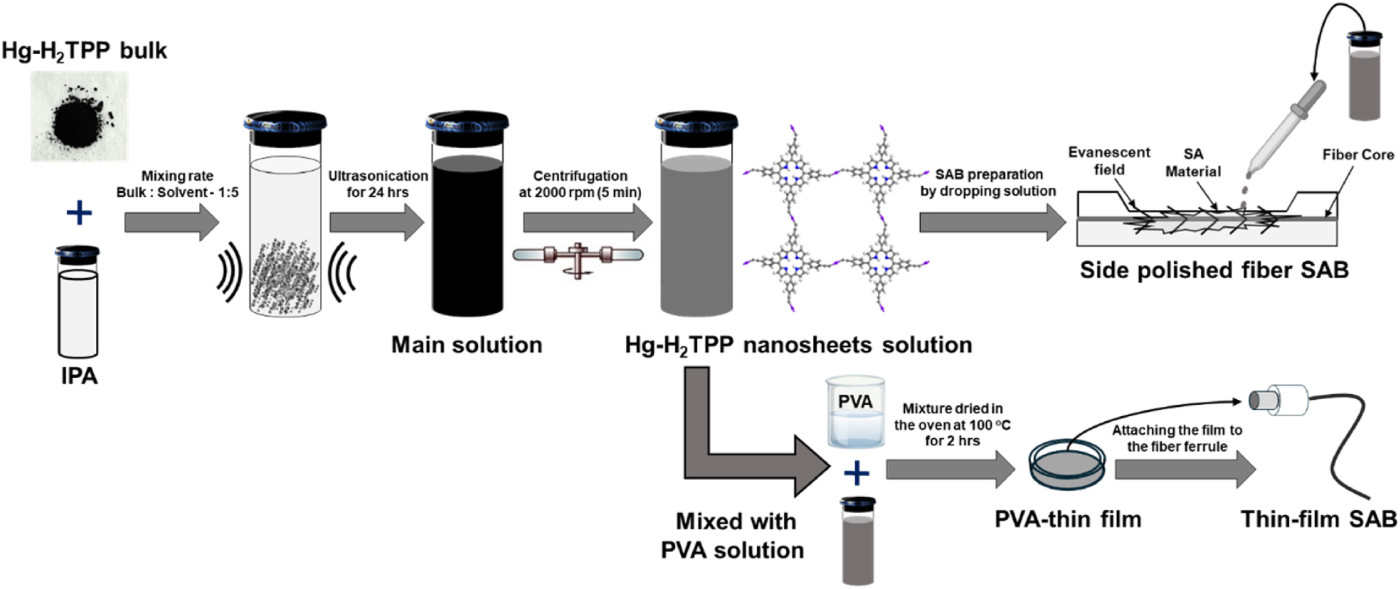
Figure 3. Schematic representation of the fabrication process of the Hg–H2TPP nanosheets solution and the development of the SAB
Building on these exceptional nonlinear optical properties, the team fabricated two types of saturable absorbers (SABs) using Hg–H2TPP nanosheets: one based on side-polished optical fibre (SPF) and another embedded in a polyvinyl alcohol (PVA) thin film (Figure 3). The SPF-based SAB exploits the evanescent field interaction between the guided optical mode and the nanosheets. It results in high modulation depth and low saturation intensity, which is ideal for stable mode-locking. In contrast, the PVA-based SAB relies on bulk absorption, which, while offering lower modulation depth, is well-suited for Q-switched laser operation.
When integrated into a ring fibre laser cavity, the Hg–H2TPP SABs demonstrated outstanding performance. The SPF-based SAB enabled the generation of mode-locked laser pulses at 1,560 nm, with pulse widths as short as 779 fs and repetition rates of 7.69 MHz. The output was highly stable, with a signal-to-noise ratio exceeding 44 dB and a linear relationship between input and output power, confirming the efficiency and reliability of the device. The presence of Kelly sidebands in the optical spectrum further validated the formation of soliton pulses—a hallmark of high-quality mode-locking.
On the other hand, the PVA-based SAB facilitated Q-switched laser operation, producing pulses with widths ranging from 10.37 to 3.56 μs and repetition rates up to 38.33 kHz. The output power and single pulse energy increased proportionally with pump power, and the system exhibited remarkable long-term stability, with a signal-to-noise ratio surpassing 54 dB. These results not only compare favourably with other state-of-the-art 2D SABs but also highlight the versatility of Hg–H2TPP in supporting both ultrafast and high-energy pulse generation.
This study marks a significant advance in the field of quantum materials and nonlinear optics. By engineering a D-π-A-structured 2D mercury(II)-acetylide framework, Prof. Tsang’s team has created a material that combines strong NIR absorption, tuneable nonlinear optical responses and ultrafast carrier dynamics, which are all essential ingredients for next-generation photonic devices. The ability to switch between saturable and reverse saturable absorption, coupled with the successful demonstration of both mode-locked and Q-switched lasers, underscores the potential of Hg–H2TPP for applications ranging from telecommunications and quantum information processing to biomedical imaging and laser-based manufacturing. The insights gained from this work not only advance our understanding of 2D quantum materials but also lay the groundwork for the development of practical, high-performance devices that will shape the future of quantum technology.
Prof. Tsang was recognised by Stanford University as one of the top 2% most-cited scientists worldwide (career-long) in the field of nanoscience and nanotechnology for two years, in 2020 and 2025, and one of the top 2% most-cited scientists worldwide (single-year) for four years, in 2020 and from 2023 to 2025. He received the Second-Class Award in Technology Invention in the Guangdong Province Science and Technology Awards 2022, the Nano Research Top Papers Award from Tsinghua University Press in 2022 and the Regional (Asia) Award in Wharton-QS STARS Reimagine Education 2016.
| References |
|---|
[1] Ahmed, S., Xu, L., Ivan, MNAS, Zhu, M., Qin, Y., Sun, M., Saha, S., Shafayet, Y., Huang, B., Wong, W.-Y. & Tsang, Y.-H. (2025). D-π-A-structured two-dimensional mercury(II)-acetylide frameworks for near-infrared switchable nonlinear optics and ultrafast photonics, Carbon, Volume 238, 2025, 120234, ISSN 0008-6223, https://doi.org/10.1016/j.carbon.2025.120234.
 | Prof. Yuen Hong TSANG |