
Deepening understanding of the Nation’s diplomacy through thematic seminar
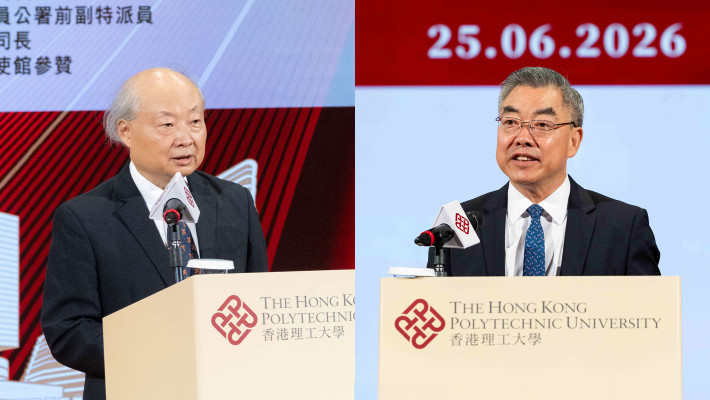
Serving as a major highlight of the PolyU Chinese Culture Festival, a high-profile seminar on China’s diplomacy in late June brought together two former People’s Republic of China (PRC) ambassadors to decode the shifting dynamics of global geopolitics and international relations.
Third seminar on China’s Diplomacy explores global landscape and diplomatic practice
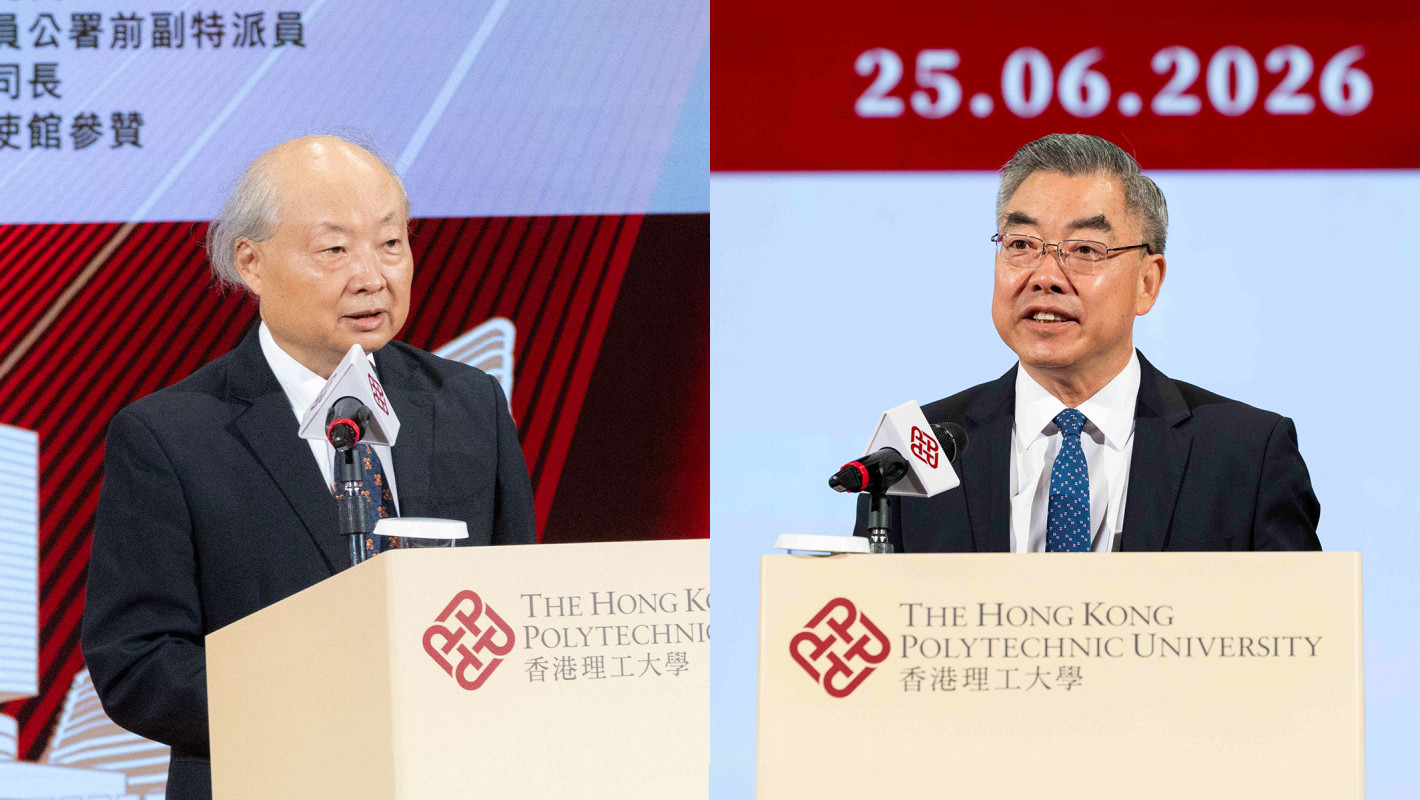
The seminar, themed “Navigating the Current Global Landscape: Insights into the Practice of China’s Diplomacy”, featured keynote speeches by Ambassador Zhan Yongxin and Ambassador Huang Ping. It was co-organised by the PolyU Research Centre for Chinese History and Culture, the Confucius Institute of Hong Kong and the Mainland Development Office, in collaboration with China Foreign Affairs University. Held at the PolyU Chiang Chen Studio Theatre, the event attracted PolyU staff, students, alumni and members of the public.
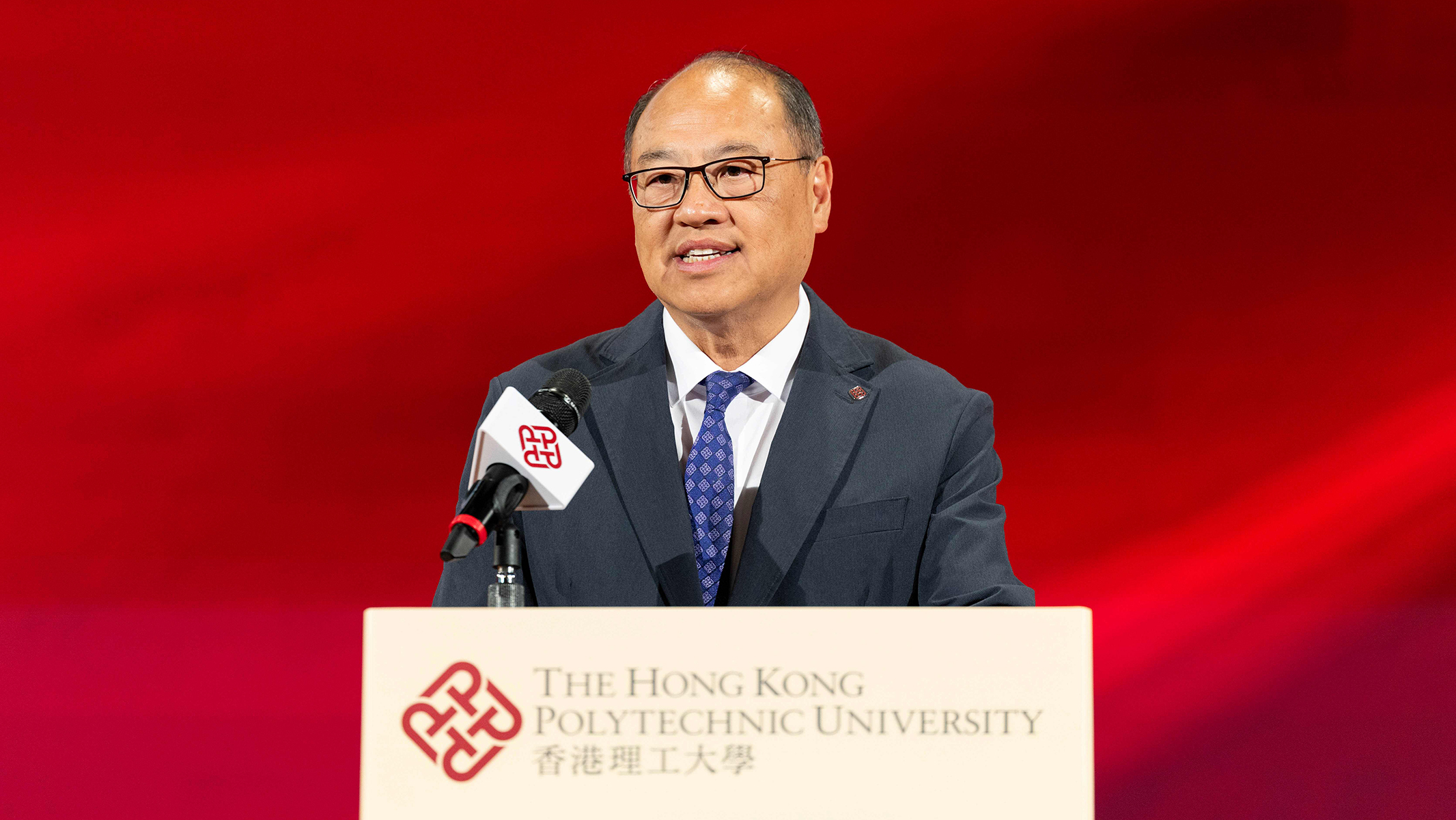
Dr Lam Tai-fai stated the PolyU’s Chinese Culture Festival and the ambassadors’ insights served to deepen students’ appreciation of Chinese culture, national diplomacy, and global trends.
PolyU Council Chairman Dr Lam Tai-fai noted that amidst escalating global conflicts, China’s peaceful diplomacy injects vital stability into the world. He emphasised PolyU’s commitment to national and cultural education, aiming to cultivate socially responsible graduates with both national pride and a global perspective.
Ambassador Zhan Yongxin noted that China has been an active advocate and steadfast practitioner of regional cooperation in Asia-Pacific Economic Cooperation (APEC), and that hosting this year’s meeting reflects its strong sense of responsibility as a major country. He added that Hong Kong can leverage the APEC Finance Ministers’ Meeting to drive industrial development, talent exchange and long-term economic growth.
The Ambassador’s distinguished diplomatic career includes serving as the Ambassador of the PRC to the State of Israel; Director-General of the Department of Hong Kong, Macao and Taiwan Affairs of the Ministry of Foreign Affairs; Deputy Commissioner of the Commissioner’s Office of China’s Foreign Ministry in the Hong Kong SAR; Deputy Director-General of the Policy Planning Department of the Ministry of Foreign Affairs; and Counsellor of the Embassy of the PRC in Canada.
Meanwhile, Ambassador Huang Ping emphasised that people-to-people diplomacy can “enhance mutual understanding and trust” between China and the US. Drawing on his experience, he highlighted the importance of expanding exchanges to steer bilateral relations towards steady and long-term progress.
His extensive diplomatic and administrative career includes serving as the Consul General of the PRC in New York (Ambassadorial Rank); Ambassador of the PRC to Zimbabwe; Director-General of the Department of Consular Affairs of the Ministry of Foreign Affairs; Consul General of the PRC in Chicago; Deputy Director-General of the Department of Consular Affairs of the Ministry of Foreign Affairs; Deputy Mayor of Shaoxing City in Zhejiang Province; Counsellor and Consul General of the Embassy of the PRC in Canada; and Third Secretary of the Embassy of the PRC in the United States (US).
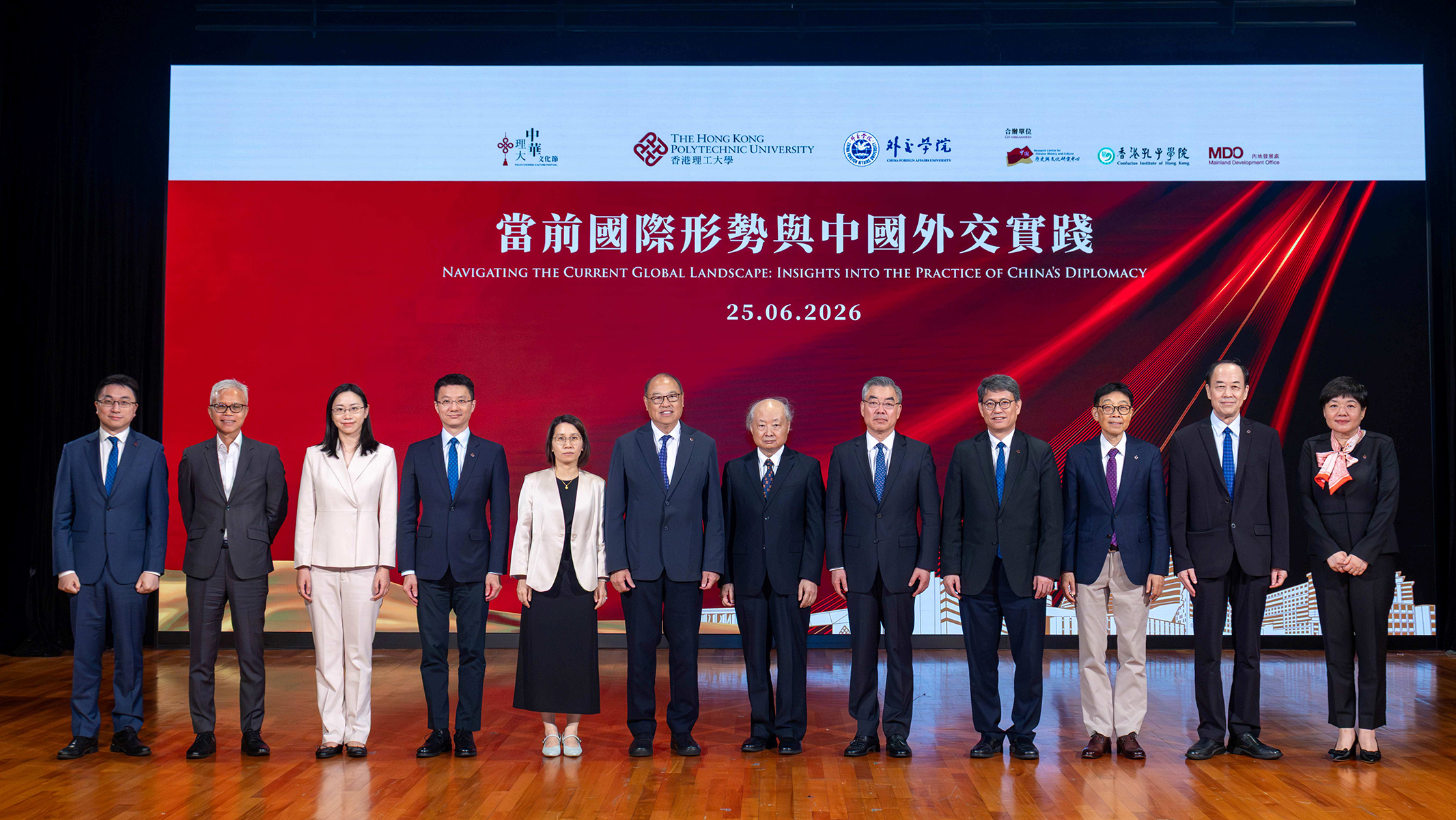
At PolyU’s third thematic seminar on China’s diplomacy, the two keynote speakers, Ambassador Zhan Yongxin (6th from right) and Ambassador Huang Ping (5th from right), were joined by distinguished guests (from left to right): Prof. Lu Haitian, Director of Mainland Development at PolyU; Dr Louis Ng, member of the Advisory Committee for RCCHC; Ms Li Lewei, Section Chief of the Exchange Division of the Foreign Affairs Office of the China Foreign Affairs University; Prof. Zheng Zijian, PolyU Vice President (Knowledge Transfer); Ms Lu Ke, Deputy Director of the Department of International Organisations and Conferences of the Commissioner’s Office of China’s Foreign Ministry in the HKSAR; PolyU Council Chairman Dr Lam Tai-fai; Ambassador Zhan Yongxin; Ambassador Huang Ping; Prof. Christopher Chao, PolyU Senior Vice President (Research and Innovation); Prof. Cao Jiannong, PolyU Vice President (Education); Prof. Hu Guangwei, Interim Dean of the Faculty of Humanities at PolyU and member of the Advisory Committee for RCCHC; and Dr Lu Qiaomei, Director of the Confucius Institute of Hong Kong.