
PolyU Education 4.0: AI empowers students to create engaging vision therapy treatment tools
A child sits through another round of vision therapy, repeating the same eye exercises—effective, yet monotonous. For many young patients, this lack of engagement becomes the biggest barrier to progress. At PolyU, students are tackling this challenge by transforming therapy into something more interactive and intuitive.
At the School of Optometry, students are encouraged to design tools to treat eye conditions that don't feel tedious—turning routine exercises into engaging experiences that sustain attention and improve compliance. The ideas are often imaginative. The difficulty has been execution.
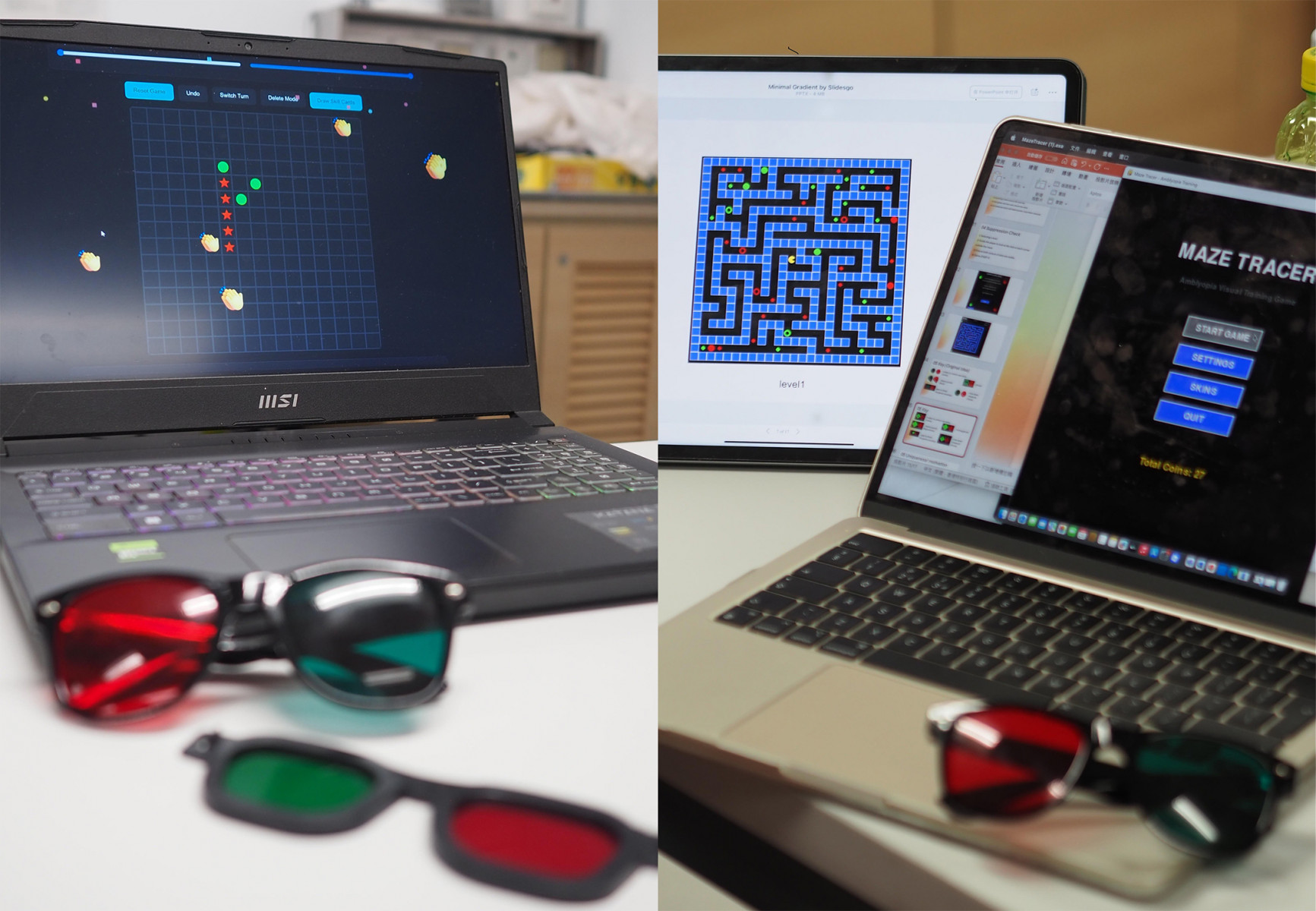
PolyU School of Optometry students learn to use AI to create engaging therapy treatment tools.
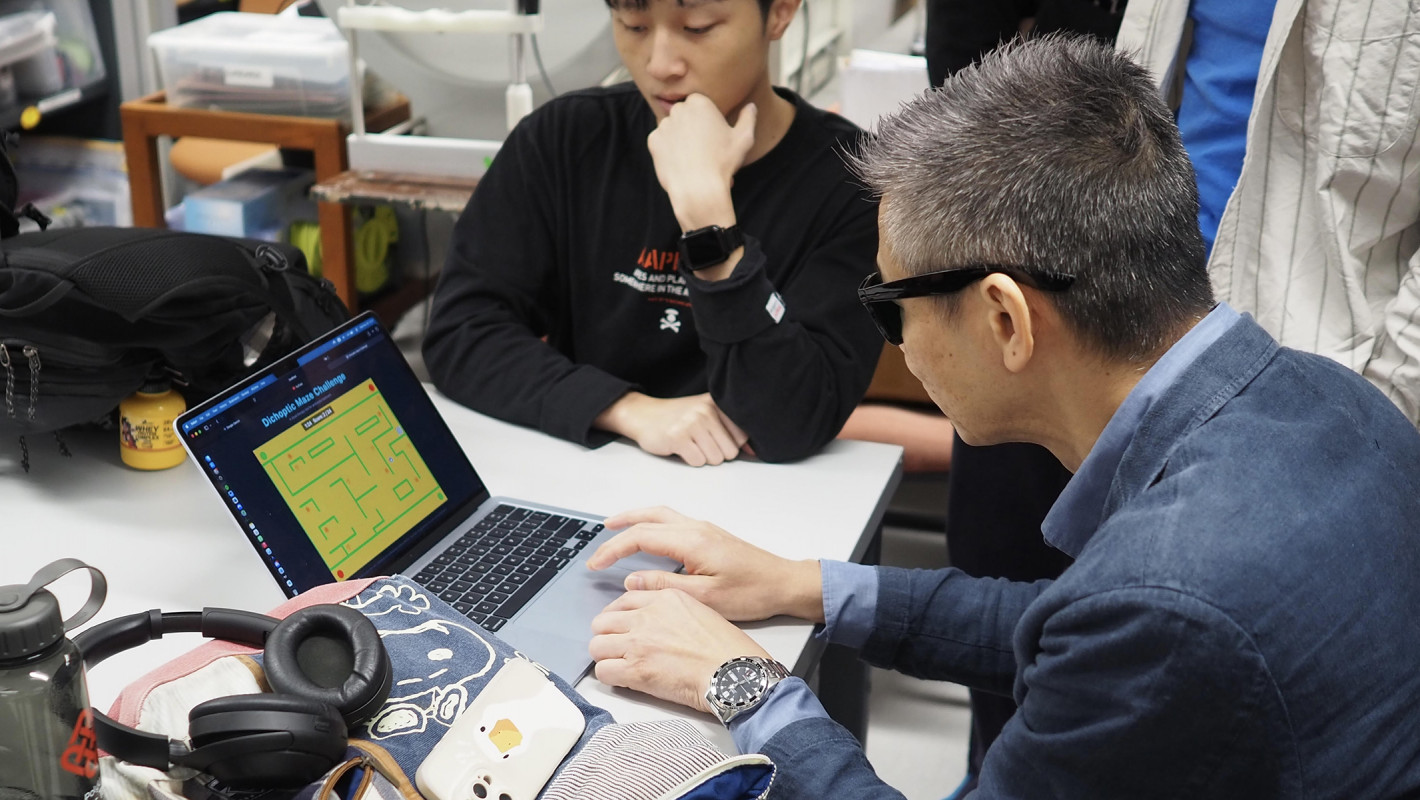
Professor Jeffrey Leung, Assistant Professor of the School of Optometry, noted that students would come up with creative concepts, but they often got stuck on the technical side. They spent a lot of time troubleshooting instead of refining how the therapy could better engage patients.
Earlier efforts at innovative therapy solutions reflected this constraint. Between 2021 and 2023, students developed 16 hardware-based prototypes in collaboration with the PolyU Industrial Centre, using technologies such as 3D printing. While the outcomes were notable—including a student team winning a design competition against engineering peers—the process was resource-intensive, with technical challenges limiting creative exploration.
Unlocking creativity without the coding burden
The introduction of artificial intelligence (AI) in 2024 marked a turning point. Acting as a "technical coach", AI enables students to convert ideas into functional tools without prior coding experience. Instead of navigating programming hurdles, they can focus on designing therapy experiences.
This shift has fundamentally changed how students learn. With technical barriers reduced, they can iterate more quickly, experiment more freely, and develop software-based solutions that were previously out of reach. Ideas move faster from concept to application, allowing students to focus on what makes a solution meaningful and effective for patients.
AI is also supporting clinical training. An AI-powered tutor system analyses students’ performance during vision examinations and provides immediate, targeted feedback. This enables more precise skill development and reinforces learning through timely insights rather than repetition alone.
Staff members continue to play a central role, guiding students in clinical reasoning and professional judgement, while AI supports execution and feedback. This complementary approach ensures that innovation remains grounded in expertise while benefiting from new technological capabilities.
Expanding the future of therapy design
Looking ahead, Professor Leung envisages exploring immersive technologies such as virtual and augmented reality to further enhance engagement in therapy design. The direction is clear: reduce the effort spent overcoming technical constraints, and expand the space for creativity. By shifting the focus from how to build to what to build, students harness AI to design more engaging, patient-centred solutions. In doing so, it is reshaping both the learning experience and the future of vision care.