
Launching Hong Kong’s first AI Agent and risk prediction model for precision diabetes management
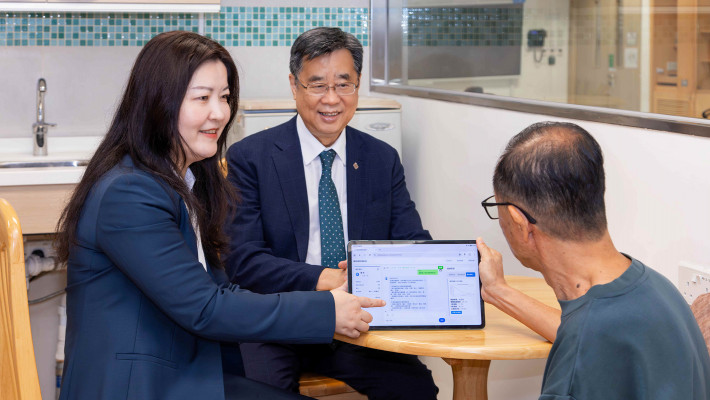
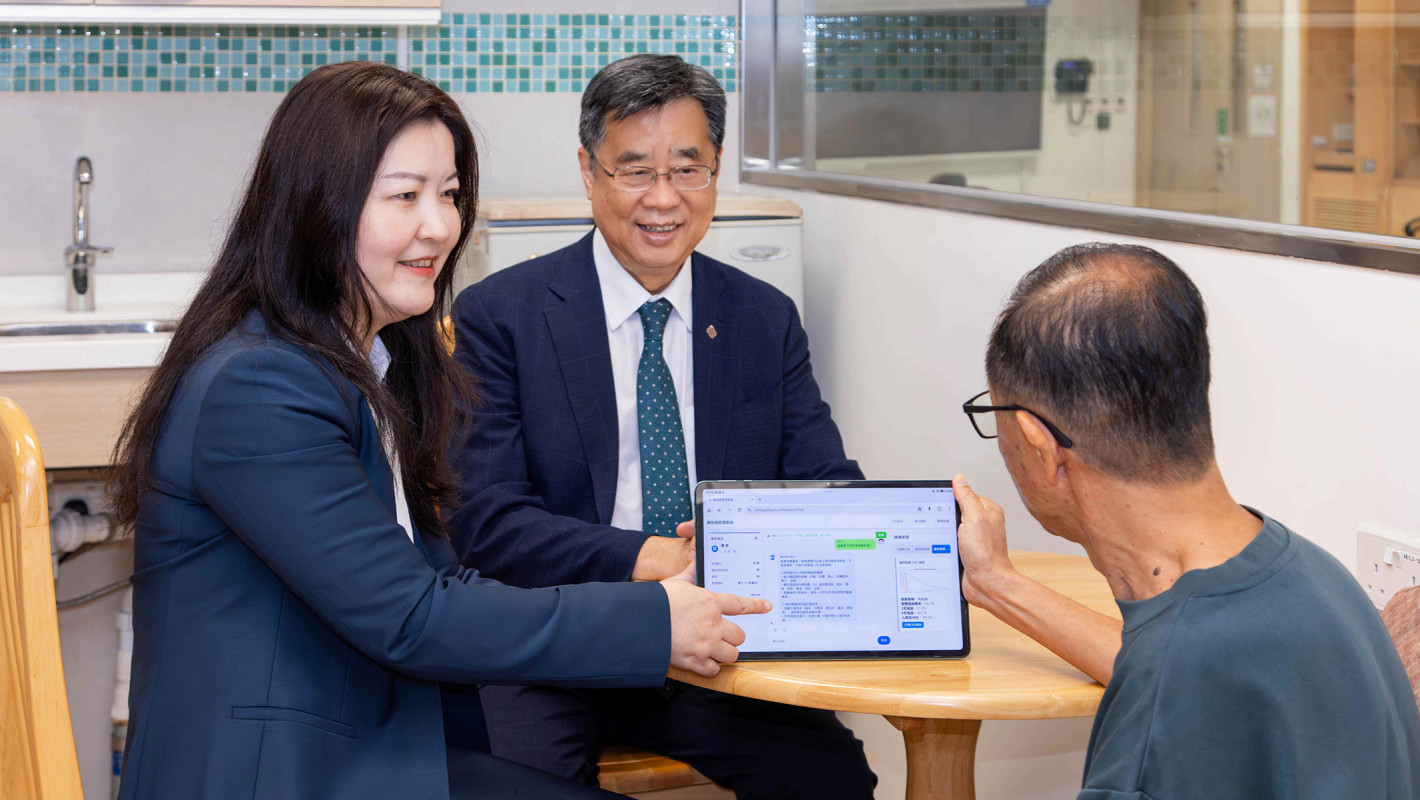
Innovation in early detection and community-based care for diabetes is essential to addressing the increasing challenges posed by chronic diseases in Hong Kong. Rising to this challenge, a research team at PolyU has developed Hong Kong’s first “AI-Agent for Precision Diabetes Management – PIPE-AI” (AI Agent), along with an advanced disease risk prediction model specifically to enable more proactive and personalised care.
Purposely designed for Asian populations, the AI Agent leverages artificial intelligence (AI) and large-scale local electronic health data to more accurately predict the risk of deterioration of complications such as chronic kidney disease in patients with type 2 diabetes over the next 10 years. By enabling healthcare professionals and patients to identify risks earlier, the system supports timely intervention and improved disease management. The research findings have been published in the leading international journal npj Digital Medicine.
Chronic kidney disease is a severe asymptomatic complication of type 2 diabetes often referred to as a “silent killer”. Without early detection, it can progress to uraemia, requiring long-term dialysis or a kidney transplant. In Hong Kong, the diabetes prevalence among individuals aged 65 to 84 is as high as 19%, placing a heavy burden on patients’ families and the public healthcare system.
Many chronic kidney disease risk prediction models are developed using Western population data and may not be fully applicable to Asian populations. To address this, a multidisciplinary team led by Professor Yang Lin, Professor of the School of Nursing at PolyU, developed an AI prediction model tailored for Asian populations. The model was built using 17 years of electronic health records from the Hospital Authority Data Collaboration Laboratory, covering more than 560,000 diabetes patients, and achieved an accuracy rate of 87.1%.
Beyond prediction, the AI Agent serves as a “clinical interface” that translates complex medical information into language easier for patients to understand. It can support four major scenarios:
Support family medicine and primary healthcare in preliminary screening and risk stratification;
Assist specialist outpatient clinics in making more precise referrals;
Support district health centres in providing 24-hour health consultation services;
Help patients manage diet control, exercise, medication adherence and health indicators.
A nurse oversight mechanism has also been incorporated, with registered nurses notified when abnormal risk levels or important alerts are detected.
To bring the technology into the community, the PolyU research team has partnered with the Department of Family Medicine and Primary Healthcare of the Hospital Authority’s New Territories West Cluster and the Yuen Long District Health Centre to recruit patients with prediabetes and type 2 diabetes in New Territories West since early July. Participants will join a clinical study of the AI Agent system and experience personalised risk assessment and health management recommendations first-hand. The study is funded by the Health and Medical Research Fund.
Looking ahead, the team will integrate imaging and wearable device data into electronic health records and district health platforms to improve predictive accuracy. The project will also expand to related chronic conditions, such as cardiovascular-kidney-metabolic syndrome, to benefit the wider public.
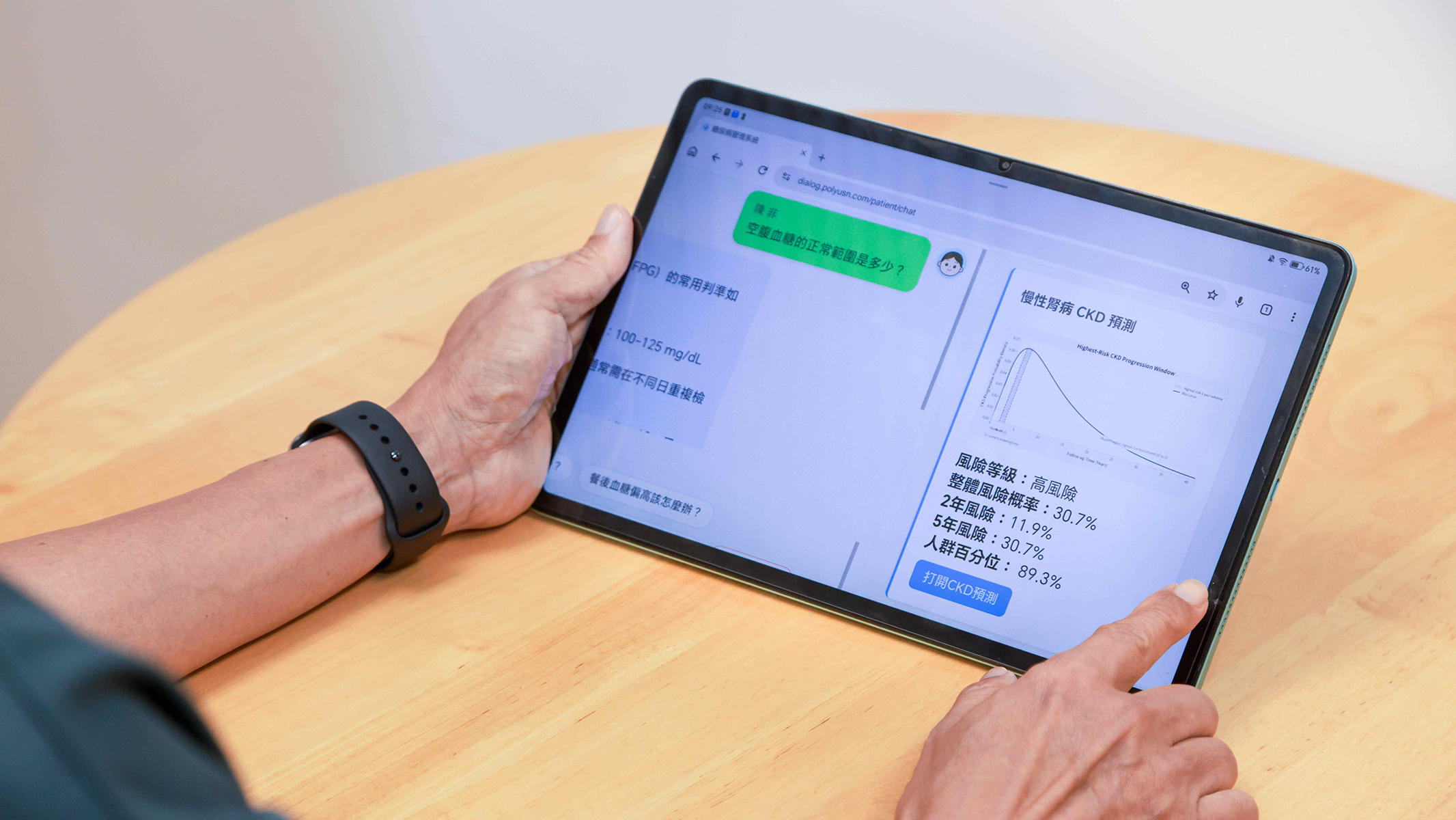
A PolyU research team has begun recruiting prediabetes and type 2 diabetes patients in New Territories West for a clinical study of its AI Agent system since early July. The study is a collaborative effort with the Yuen Long District Health Centre and the Department of Family Medicine and Primary Healthcare of the Hospital Authority’s New Territories West Cluster.