
Turning everyday ultrasound into a new tool for diabetes care
For millions of people living with diabetes, monitoring blood glucose levels is a daily necessity. Yet existing continuous glucose monitoring (CGM) systems often come with trade-offs: they can be costly, require regular replacement and depend on delicate biological enzymes that limit their lifespan. A research breakthrough led by PolyU could help change that.
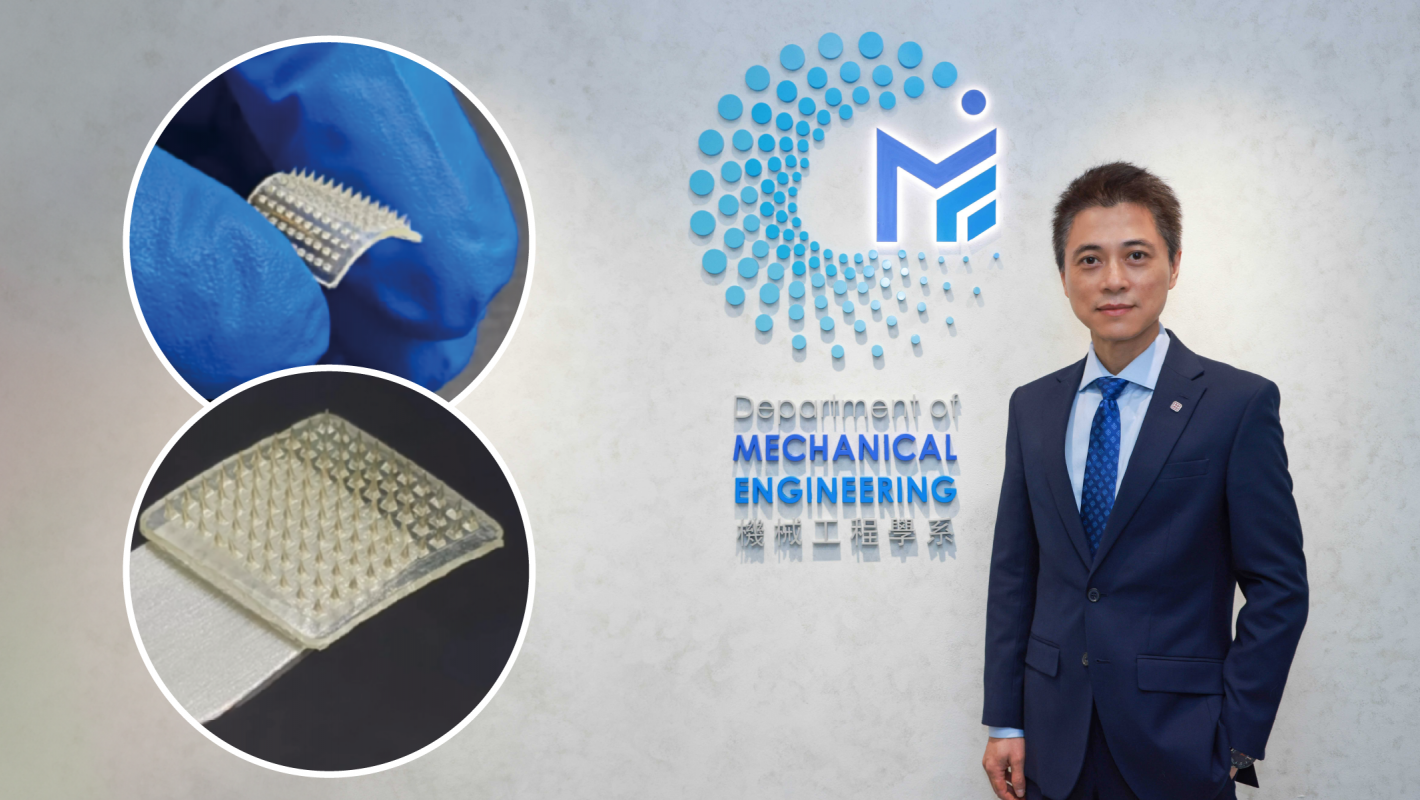
The study introduces the ARMPatch, an enzyme-free wearable microneedle patch that allows standard ultrasound devices to continuously monitor blood glucose levels. Developed under the leadership of Professor Su Zhongqing, Head of PolyU’s Department of Mechanical Engineering and Chair Professor of Intelligent Structures and Systems, the innovation opens a new direction for wearable biosensing and non-invasive health monitoring.
Collaboration behind the breakthrough
What makes the breakthrough especially significant is not only the invention itself, but also the collaboration behind it, which brought together complementary expertise across institutions and disciplines. Led by Professor Su, the project was conducted in partnership with Professor Meng Long of the Shenzhen Institutes of Advanced Technology of the Chinese Academy of Sciences and Professor Jae-Woong Jeong of the Korea Advanced Institute of Science and Technology. The collaboration combined strengths in intelligent systems, advanced materials and wearable sensing technologies, enabling the team to develop an innovative solution to a longstanding challenge in CGM.
The research was supported by the NSFC/RGC Joint Research Scheme, alongside funding from the Research Grants Council of Hong Kong, the National Natural Science Foundation of China and the National Research Foundation of Korea. PolyU’s University Research Facility in Materials Characterization and Device Fabrication and University Research Facility in Life Sciences also provided key support.
An ultrasound accessory with a difference
ARMPatch serves as a blood glucose monitoring accessory for conventional ultrasound probes. The patch is fabricated from a glucose-responsive hydrogel based on phenylboronic acid (PBA). When applied to the skin, its microneedles swell in response to fluctuations in blood glucose levels. The higher the glucose level, the greater the swelling. Ultrasound detects these changes to determine glucose levels, making the ARMPatch “acoustically readable”. According to the research team, this characteristic enables conventional ultrasound technology to be used for glucose monitoring without the need for enzymes or customised hardware.
A series of laboratory and animal studies demonstrated the technology’s promise. The ARMPatch showed a good linear response across a glucose concentration range of 0-40 mM and provided stable readings for up to 56 days in vitro. In animal studies, ultrasound measurements accurately reflected changes in blood glucose levels, while the patch successfully monitored glucose continuously for seven days in freely moving rats. The results suggest a minimally invasive, cost-effective and long-lasting approach to CGM.
Opening new possibilities
Beyond glucose sensing, the researchers believe the platform could have wider applications. By adjusting the hydrogel composition, the same principle could potentially be adapted to monitor other biomarkers, such as pH values, proteins and bacteria.
For PolyU, the achievement exemplifies how interdisciplinary and international collaboration can generate innovations with real-world healthcare potential. It also highlights the University’s strengths in translating fundamental research into technologies that address pressing health challenges while advancing the frontiers of wearable biosensing.
The findings were published in Science Advances, with PolyU PhD student Mr Zhang Wanglinhan from the Department of Mechanical Engineering taking the lead as first author.
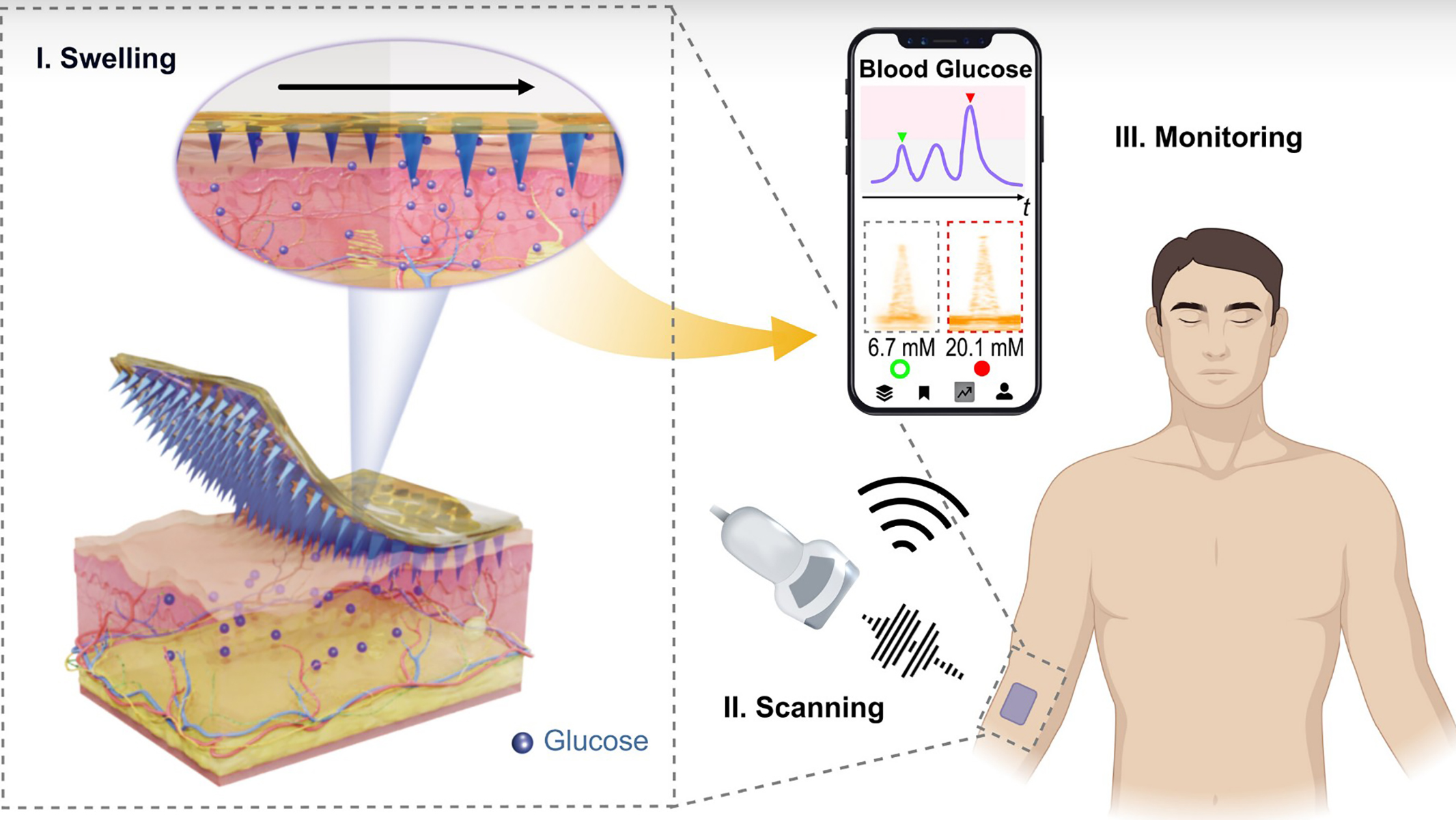
By enabling conventional ultrasound to continuously monitor blood glucose levels, this innovation opens new possibilities for wearable biosensing.