
From research to national impact: PolyU accelerates technology transfer and industrial synergy across Fujian and Hubei
Other Articles
In line with national strategies for high-level technological self-reliance and regional coordinated development, PolyU is proactively extending its research and innovation ecosystem across key Chinese Mainland industrial hubs, transforming academic excellence into impactful regional productivity.
Building a province-wide innovation network in Fujian
Marking a major milestone in Fujian–Hong Kong sci-tech collaboration, the PolyU Fuzhou Centre for Knowledge Transfer officially obtained its business licence on 20 July 2026, and is now qualified for independent market-oriented operations.
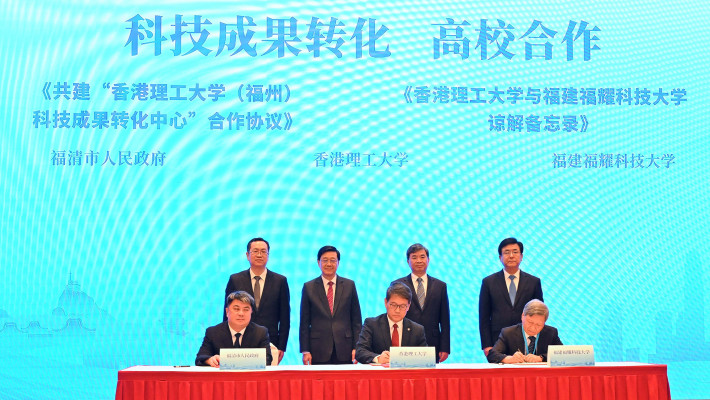
The Centre is a key outcome of PolyU’s role as a core innovation driver during the Fifth Plenary Session of Fujian–Hong Kong Cooperation Conference held in Fuzhou in June. Witnessed by HKSAR Chief Executive Mr John Lee and Fujian provincial leaders, PolyU signed two major agreements: one with the Fuqing Municipal Government to co-establish the Centre as a provincial-level R&D institution, and another with Fuyao University of Science and Technology (FYUST) to forge a strategic partnership.
Working alongside the PolyU-Jinjiang Technology and Innovation Research Institute, established in 2023 as the University’s first Mainland Translational Research Institute (MTRI), the new Centre helps create a province-wide innovation network connecting Hong Kong’s research strengths with Fujian’s industries. Together, the two platforms focus on strategic areas including semiconductors, optoelectronic chips, the low-altitude economy, microelectronics, textile innovation, wellness and care technologies, and cultural tourism innovation.
The expanding Fujian network reflects PolyU’s broader commitment to supporting technology transfer, industry collaboration and talent development while bridging Hong Kong’s cutting-edge research with Fujian’s industrial clusters.
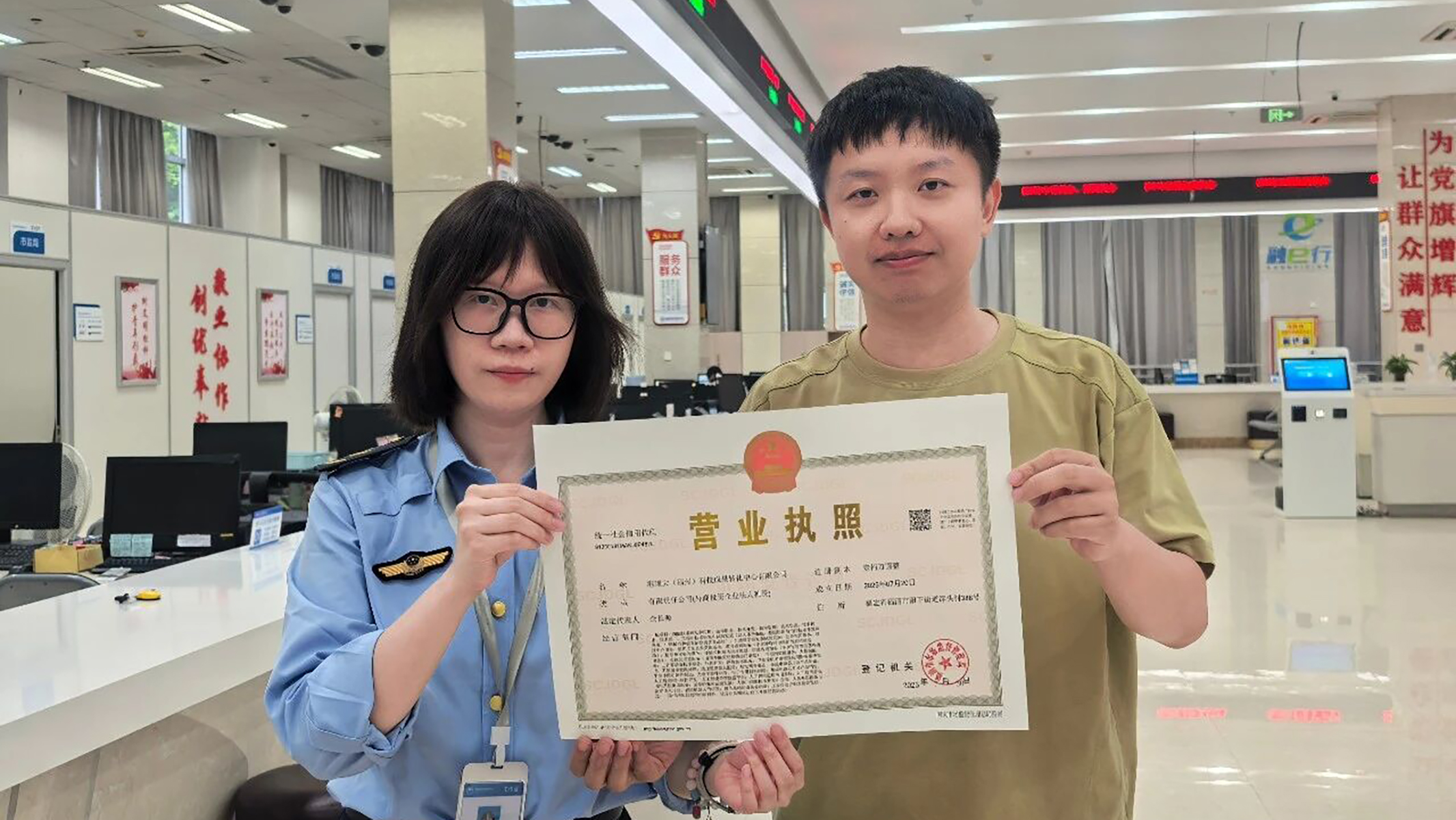
Dr Wang Xiang (right) receives the business licence for the PolyU Fuzhou Centre for Knowledge Transfer marking the start of its independent operations.
Advancing to scenario and project docking in Wuhan
While Fujian highlights the growth of PolyU’s innovation network, developments in Wuhan, Hubei Province, show how this growing network is being translated into impactful collaboration opportunities.
From 27 to 29 July, PolyU Council Chairman Dr Lam Tai-fai led a senior delegation to Wuhan to explore deeper cooperation with provincial and municipal leaders in technology innovation, higher education and talent development. Discussions centred on leveraging the PolyU-Wuhan Technology and Innovation Research Institute as a platform for collaborative research, technology transfer and industrial innovation.
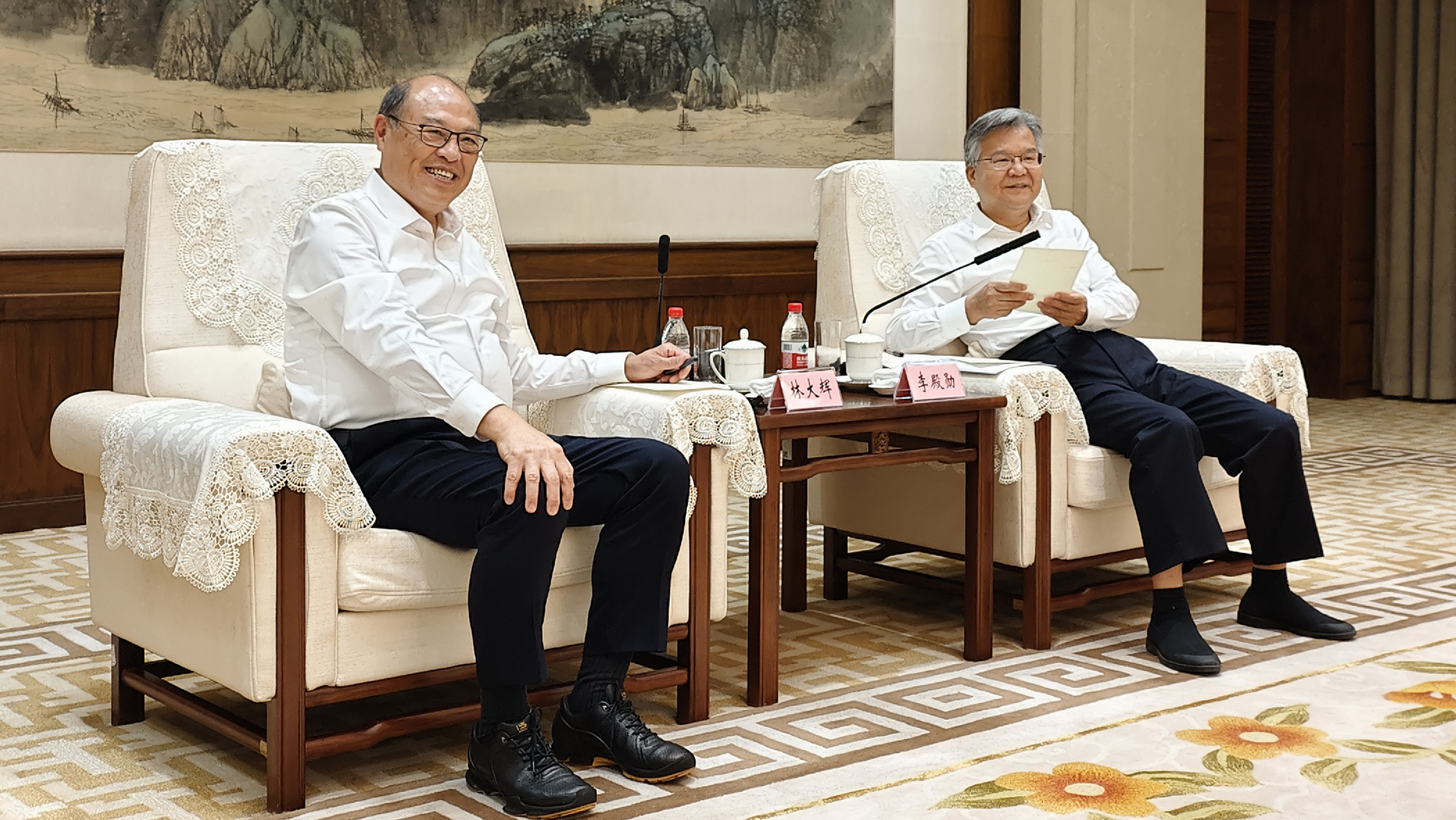
PolyU Council Chairman Dr Lam Tai-fai (left) meets with Mr Li Dianxun, Deputy Secretary of the CPC Hubei Provincial Committee and Governor of Hubei Province (right).
A central highlight was the Technology Transfer Matchmaking Session co-organised with the Chinese Academy of Sciences (CAS) Wuhan Branch on 28 July in Qiaokou District. The event marked the launch of the Wuhan–Hong Kong Collaborative Life and Health Industry Innovation Base, the unveiling of the Academician Tang Huashen Expert Workstation, and the signing of a strategic cooperation agreement between the Wuhan Institute of Industrial Innovation and Development (WHIIID), PolyU, and the PolyU-Wuhan Technology and Innovation Research Institute.
Serving as PolyU’s key platform in the region, the PolyU-Wuhan Institute anchors four core centres: ophthalmic optometry, optoelectronic health monitoring, smart ageing and rehabilitation, and smart nursing, while advancing artificial intelligence and advanced materials.
During the visit, leading local enterprises also presented specific technological needs, research teams conducted project roadshows, and the new WHIIID-PolyU Joint Research Institute for Visual Health and Intelligent Medicine was established. These developments signalled that collaboration has entered an active stage of scenario matching and project implementation.
Through its expanding MTRI network across Fujian and Hubei, PolyU continues to connect government, academia, research, and industry, translating lab discoveries into real-world applications that empower regional economies and national development.
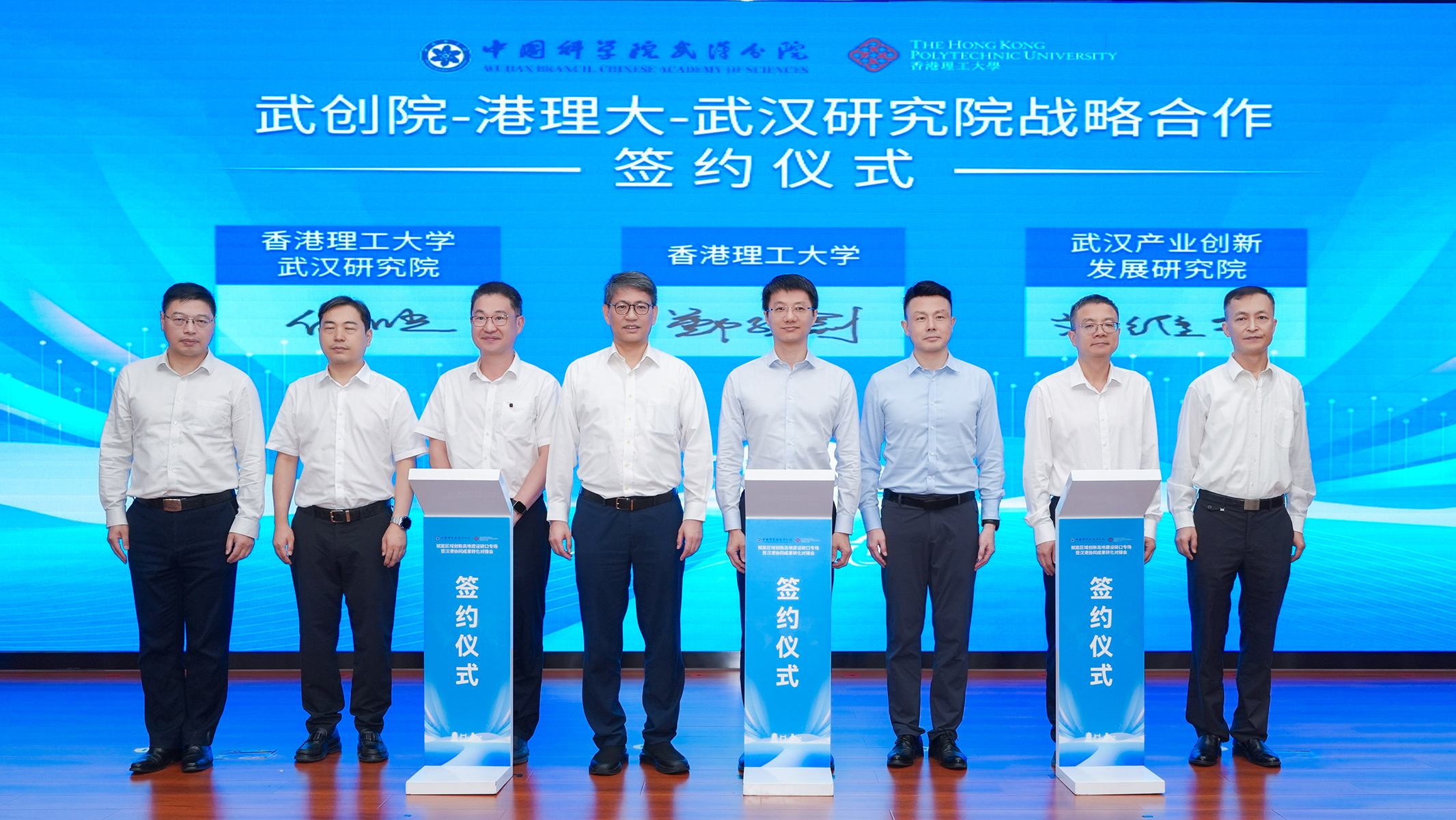
PolyU formalises a strategic partnership with WHIIID and the PolyU-Wuhan Technology and Innovation Research Institute to strengthen collaborative research and innovation.