
Breakthroughs in AI and biomimetic materials earn PolyU spot in Hong Kong’s top innovation and technology news 2025
As each year draws to a close, the media and organisations reflect on the breakthroughs that have defined our world. In the realm of innovation and technology, the annual “Hong Kong Top 10 Innovation and Technology News 2025”, organised by the Beijing-Hong Kong Academic Exchange Centre, has become a key indicator of the city’s scientific progress. The 2025 list once again highlights Hong Kong’s growing global impact in research and development – with PolyU recognised for two outstanding projects.
Now in its sixth year, the “Hong Kong Top 10 Innovation and Technology News 2025” attracted around 4,000 voters from academia, research, and education sectors. Artificial intelligence (AI) appeared as a notable theme among some of the nominated projects, shaping areas such as medicine, materials science, ecology, environmental studies, sports science, and engineering. Among this year’s highlights, biomimetic materials also captured significant attention. PolyU’s groundbreaking research in biomimetic materials and pioneering work in AI exemplify its strength across multiple frontiers of innovation.
Nature-inspired hydrogel boosts gastric healing
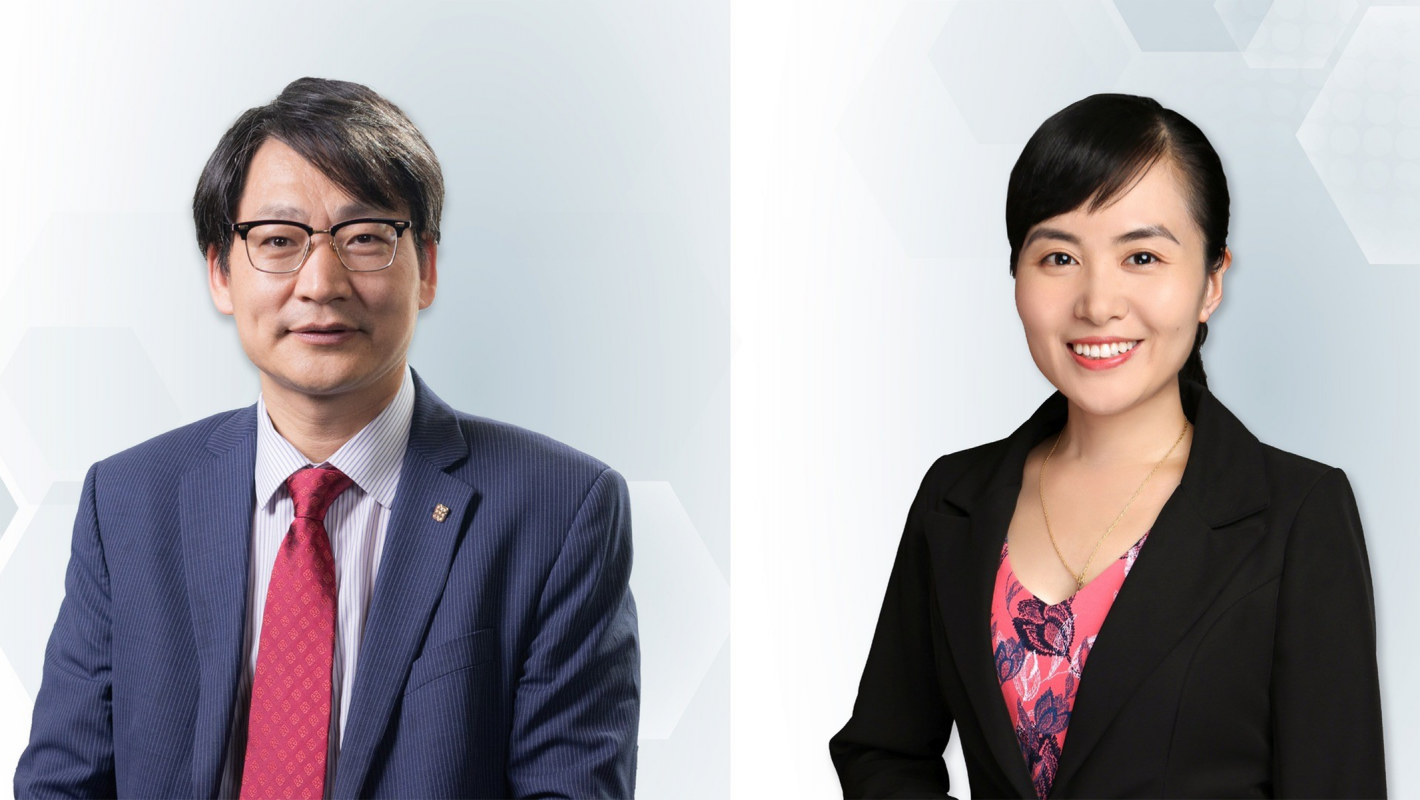
Professor Wang Zuankai, Associate Vice President (Research), Dean of the Graduate School, Kuok Group Professor in Nature-Inspired Engineering, Chair Professor of the Department of Mechanical Engineering, Director of Research Centre for Nature-Inspired Science and Engineering at PolyU, and his team developed an acid-resistant “ultra-stable mucus-inspired hydrogel” (UMIH) that marks a breakthrough in gastrointestinal medicine. Inspired by gastric mucus, UMIH adheres 15 times more strongly than conventional protectants and remains stable even in highly acidic environments. It promotes wound healing, reduces inflammation, and exhibits antibacterial properties without toxicity. The material’s multi-crosslinking molecular structure provides both durability and flexibility, making it suitable for minimally invasive therapies when combined with endoscopic drug delivery. Cost-effective and easy to mass-produce, UMIH holds strong potential for clinical use and commercialisation in advanced healthcare applications.
Decentralised AI breakthrough
Professor Yang Hongxia, Executive Director of the PolyU Academy for Artificial Intelligence (PAAI), Associate Dean (Global Engagement) of the Faculty of Computer and Mathematical Sciences, and Professor of the Department of Computing at PolyU, has led her team in pioneering a collaborative Generative AI (Co-GenAI) paradigm that enables decentralised model training. This innovative approach significantly reduces computational costs, protects data privacy, and removes resource barriers. The team has also developed ultra-low-resource FP8 training and model fusion techniques, cutting GPU usage from millions to just hundreds of hours while maintaining high performance. Their AI models excel in medical applications, particularly cancer diagnosis and personalised treatment. In collaboration with leading hospitals, the research advances the democratisation of AI and strengthens Hong Kong’s role as a global centre for AI innovation.