
AI driven “Better Ageing in Community” campaign empowers elders and inspires next generation of carers
On a Saturday morning, the senate room at PolyU was buzzing with energy. Groups of elderlies compared notes on their balance exercises. Students in matching T-shirts helped them to their seats, chatting and laughing as if they were old friends.
They were gathered for a sharing session for the first phase of “Better Ageing in Community” — a campaign that demonstrates how technology, compassion, and education can come together to improve lives. Its mission is simple yet profound: using innovation to help older people stay strong, independent, and connected.
Turning research into real-world impact
Professor Marco Pang, Head of the Department of Rehabilitation Sciences (RS) of PolyU, shared that the project’s goal was “to utilise our research findings to improve the quality of life of older people in the community, while providing holistic training to our students.”
That meant going beyond research papers. It meant stepping into communities, working with local partners, and creating practical, accessible tools for everyday use.
Since its launch in January last year, the campaign has screened nearly 900 elderly residents on Hong Kong Island for fall risk using PolyU-developed AI technology and a simple mobile app. Participants completed two short assessments: a walking speed test and a sit-to-stand test, guided and recorded through the app.
The results showed that 26% of participants were at high risk of falling. More than 100 of them subsequently joined a 12-week fall prevention programme designed by the PolyU team, focusing on lower limb strength, flexibility, balance, coordination, and overall fitness. Early results showed clear improvements, and data analysis continues as the health database expands.
Technology with a human touch
The sharing session brought together government officials, community leaders, researchers, students and elderly participants — highlighting that meaningful innovation is always about people first.
Distinguished guests included Mr Chris Sun, Secretary for Labour and Welfare of the Government of the Hong Kong Special Administrative Region (HKSAR) of the People’s Republic of China; The Hon. Tommy Cheung, Executive Council Member of the Government of the HKSAR; The Hon. Shiu Ka-fai, Member of the HKSAR Legislative Council; Dr Roy Chung, Honorary Chairman of the PolyU Court; Professor Christopher Chao, Senior Vice President (Research and Innovation) of PolyU; Professor Marco Pang; and Professor Amy Fu, Associate Head of the Department of RS.
Mr Chris Sun acknowledged how challenging daily outings can be for older adults whose physical abilities are declining, and praised the campaign’s focus on fall prevention through gerontechnology, noting that it aligns with the Government’s plan to pilot smart detection devices in high risk caregiver households to provide timely support in case of home accidents.
Professor Christopher Chao described the project as “an exemplar of research outcomes being put into practice” and reaffirmed PolyU’s commitment to AI, big data and smart healthcare as tools to improve quality of life and promote healthy ageing.
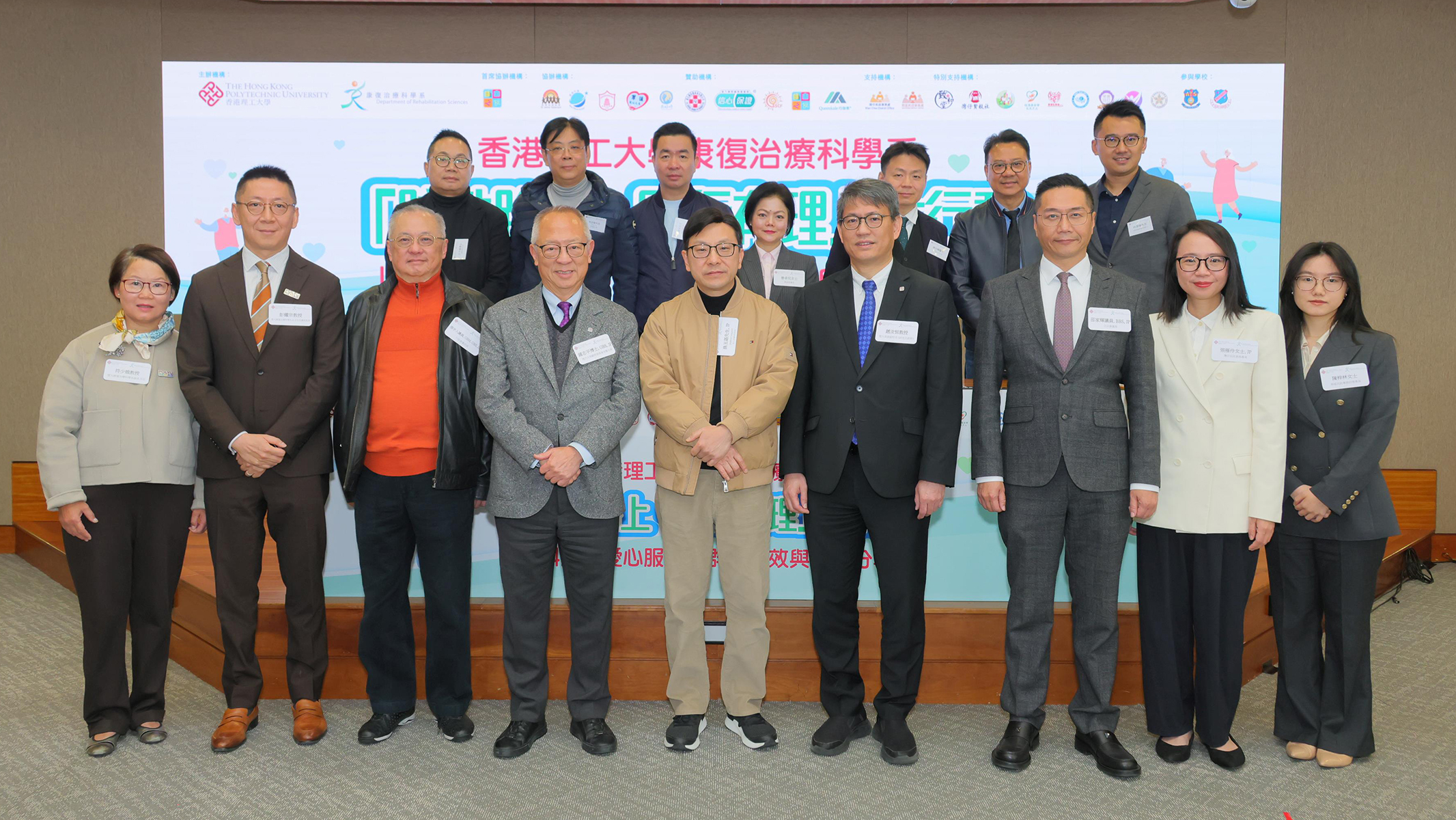
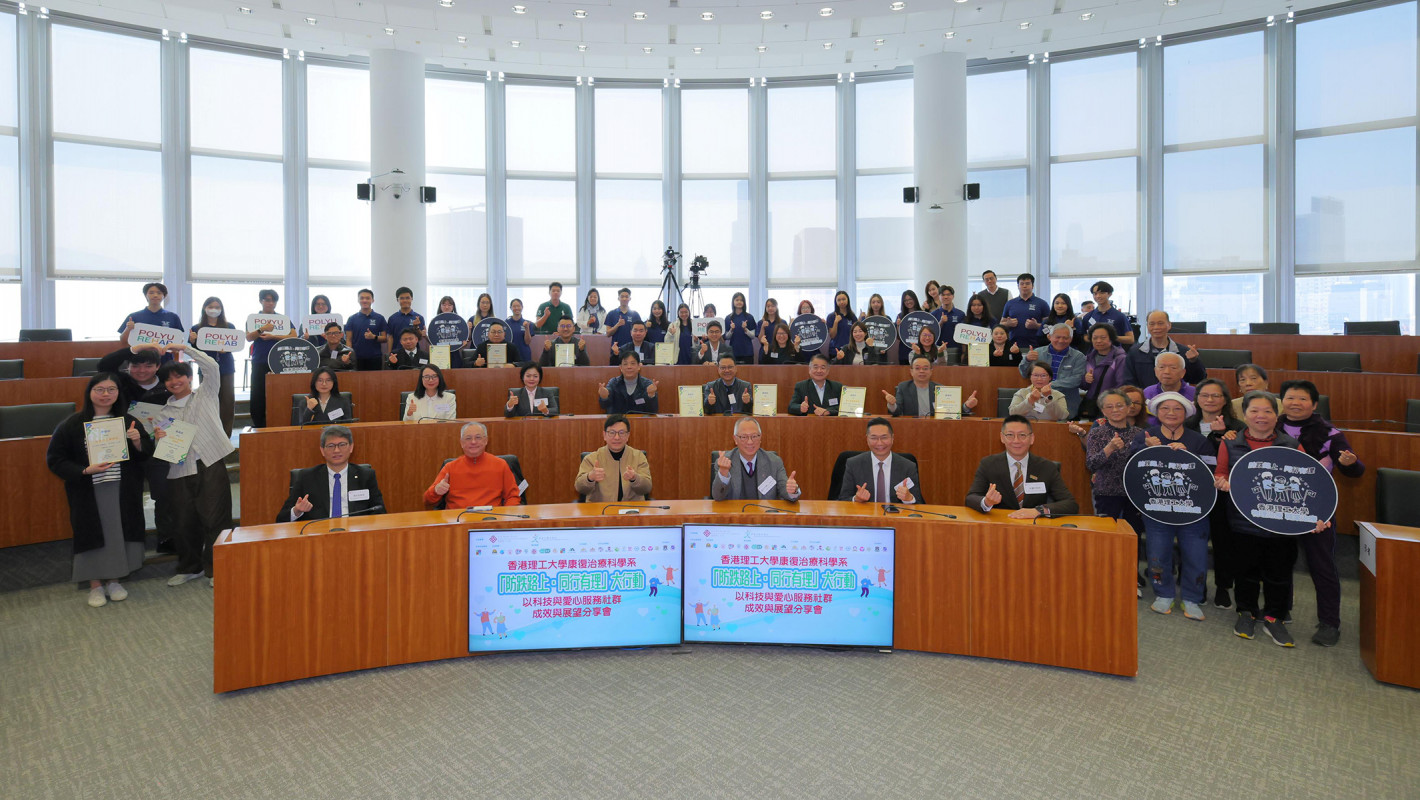
Attending the sharing session were Mr Chris Sun (middle, front row); The Hon. Tommy Cheung (3rd from left, front row); The Hon. Shiu Ka-fai (3rd from right, front row). They were joined by Dr Roy Chung (4th from left, front row); Prof. Christopher Chao (4th from right, front row); Prof. Marco Pang (2nd from left, front row); and Prof. Amy Fu (1st from left, front row).
Training students to serve – with skill and empathy
The project was also designed as a powerful learning platform for PolyU students. Guided by academic supervisors, the students engaged directly with older adults. The professors hoped to train students not only in clinical skills, but also in communication skills, understanding community needs, and a strong sense of social responsibility.
As Professor Pang described, the campaign created a living classroom in the community, where students could witness first hand the challenges faced by elders and learn how to respond with professionalism.
Cherry Chan, a year-3 RS student, reflected on her experience: “This outreach gave us a wonderful opportunity to apply what we’ve learned in class to real-life situations while gaining valuable clinical experience. During the sessions, I could observe that some participants might use incorrect postures when exercising. It also really improved my communication skills— using simple and direct words to describe movement instructions. These are real-world experiences you just can’t learn from textbooks.”
Through this process, the campaign goes beyond helping elderlies walk more safely. It nurtures a new generation of healthcare professionals who understand that innovation must always be grounded in human needs.
Looking ahead: a stronger community
Project leaders Professor Pang and Professor Fu shared that the next step is to expand the scheme to Kowloon and progressively build a territory-wide elderly health database.
With richer data, the AI models can become even more accurate, allowing for increasingly personalised fall prevention strategies. Continued collaboration with community partners will help to bring these tools to more neighbourhoods and more families.
For the students, the experience leaves a lasting impression. For the elderly participants, the change is deeply personal. One participant put it best: “The students are so warm and caring. They teach us how to do the exercises, and if I can’t manage, they gently support me and help me move. I’m truly grateful to them. Because of them, I feel young again — and I have the motivation to get out, go outside, and meet people.”
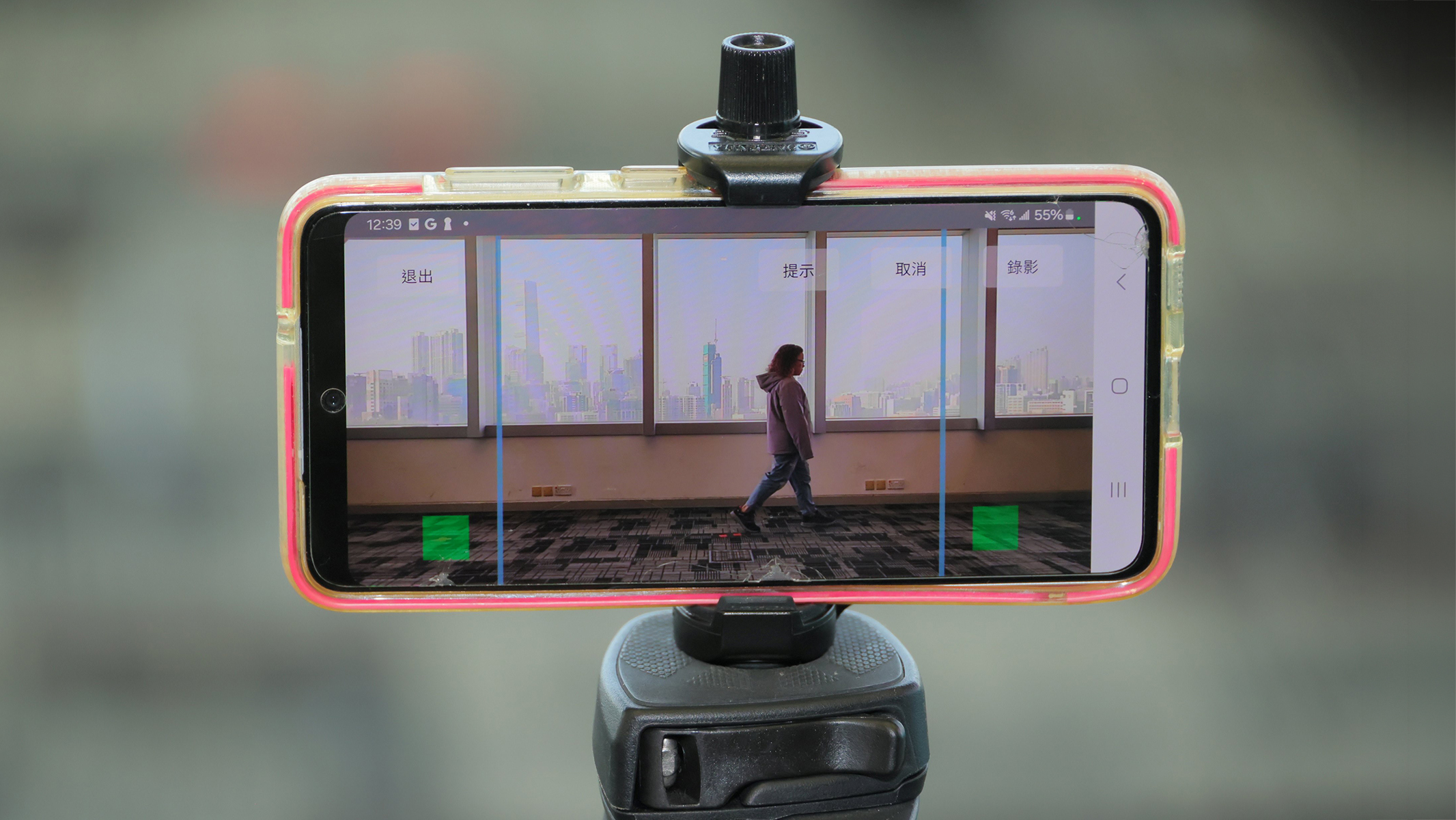
AI technology was used to assess fall risks among the elderly.
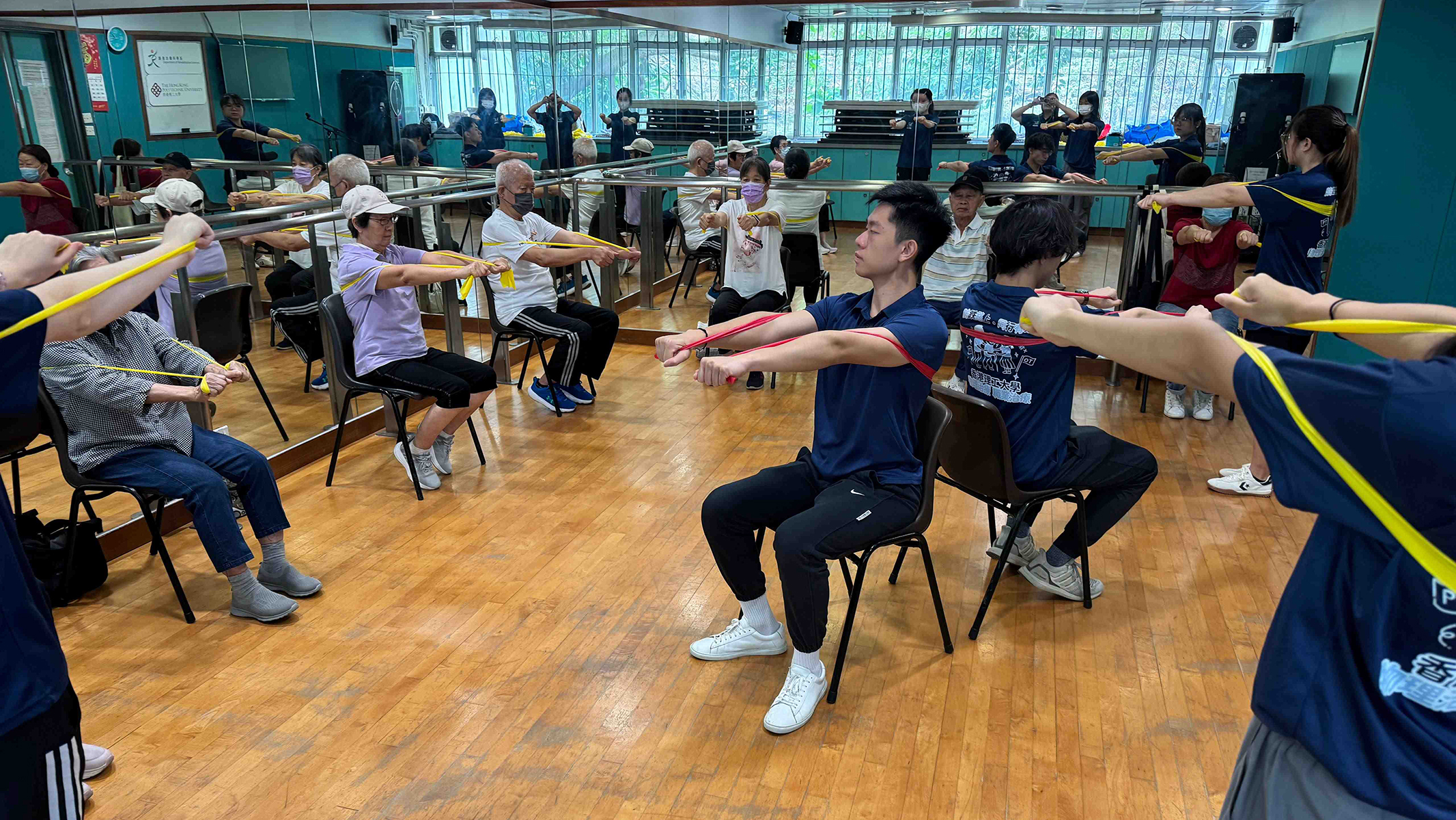
Elderly participants in the fall-prevention training led by PolyU’s Department of Rehabilitation Sciences showed great enthusiasm and agreed that regular exercise strengthens their muscles and improves their ability to manage daily activities.