
PolyU’s research and innovation inspire a new chapter in intergenerational harmony
When community co-creation merges with the interdisciplinary strengths of PolyU, scientific research transforms into a tangible force that improves everyday life. The results of such collaboration have recently been made visible at Jat Ming Chuen (JMC) in Sha Tin — with the official opening of the “JC Intergenerational Play Space @ JMC”.
Led by the PolyU Jockey Club Design Institute for Social Innovation (J.C.DISI), this project brings together PolyU’s expertise in nursing, rehabilitation sciences, food science and nutrition, design, and nano 3D concrete printing. It was developed in partnership with the Hong Kong Housing Society and The Hong Kong Jockey Club Charities Trust.
With co-creation design at its core, the team has combined research, design, and practical implementation to address Hong Kong’s dual-ageing challenge — that of both its population and its buildings — and to explore the possibilities of a city that fosters intergenerational inclusion. This play space is not only a concrete embodiment of intergenerational integration, but also a symbol of PolyU’s mission to pursue research and innovation for societal benefits, enhancing the quality of life for all.
Research in action: Starting with co-creation
Adopting a human-centric approach is what makes a design truly beneficial to a community. At the outset of the project, the J.C.DISI team sought to understand the social structure of JMC. Completed in 1981, it was one of the first public housing estates in Sha Tin. Over time, the community has aged: more than 40 per cent of the residents are aged 65 or above, but many young families and children still live there. This unique demographic mix made JMC an ideal testing ground for intergenerational design.
Since March 2023, J.C.DISI has partnered with a design consultant and various community organisations to conduct a series of co creation workshops and on site studies. Residents and stakeholders were invited to re imagine the possibilities of public space.
An elderly resident shared during one workshop, “It’s rare for three generations to come together in one space. My children and grandchildren are always busy with work and school. It would be a blessing if we could spend time together outdoors.” A younger participant added, “Most of our estate’s facilities are categorised by age. Each age group plays separately.”
These authentic voices became the starting point of the design concept. Ms Sam Lam, Interim Director of J.C.DISI, explained: “We believe the true power of social innovation design lies in co creation. This project isn’t just about designing a play space — it’s about reshaping community relationships. Residents are not passive users; they are designers and creators. Every interview, every encounter helps us understand how people connect with this space.”
Interdisciplinary collaboration: Designing an inclusive future
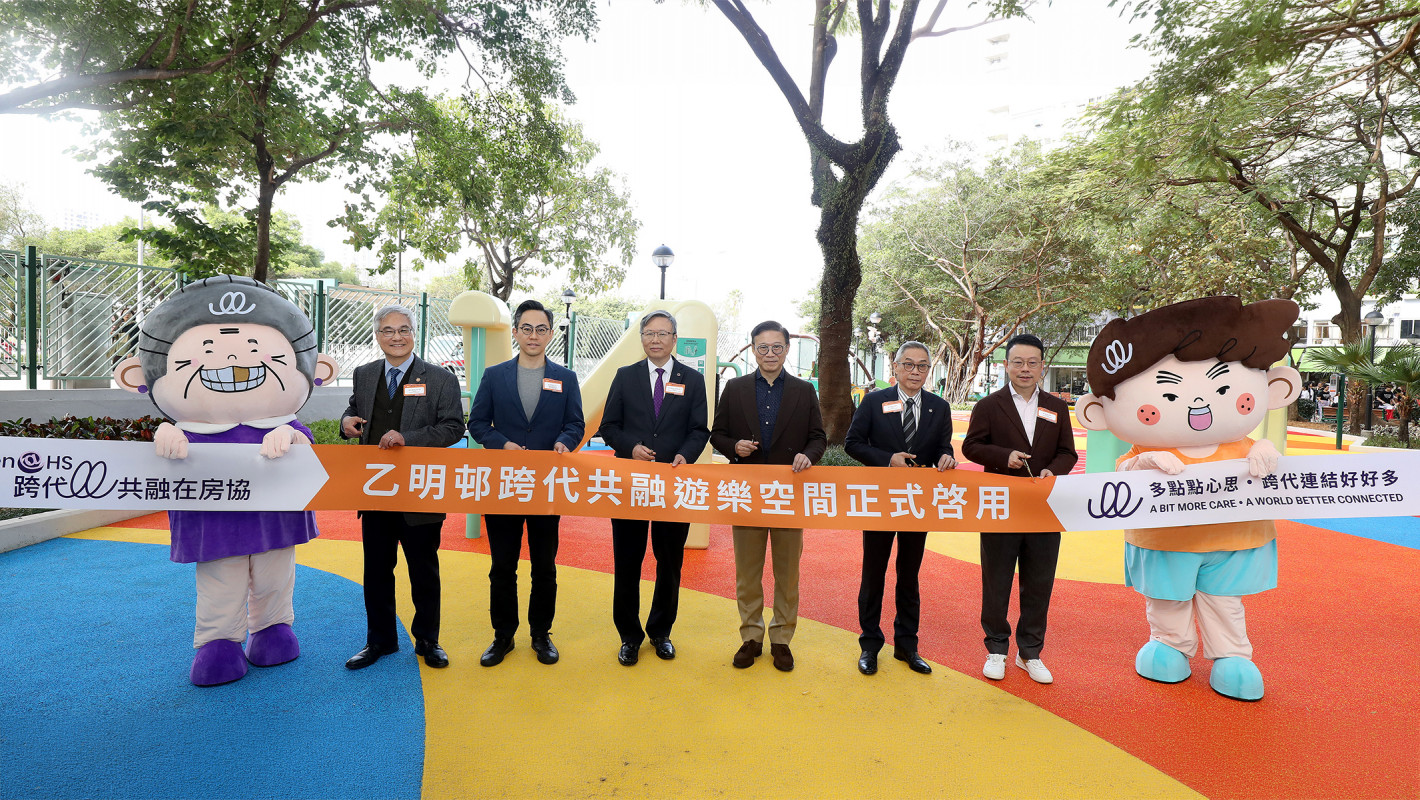
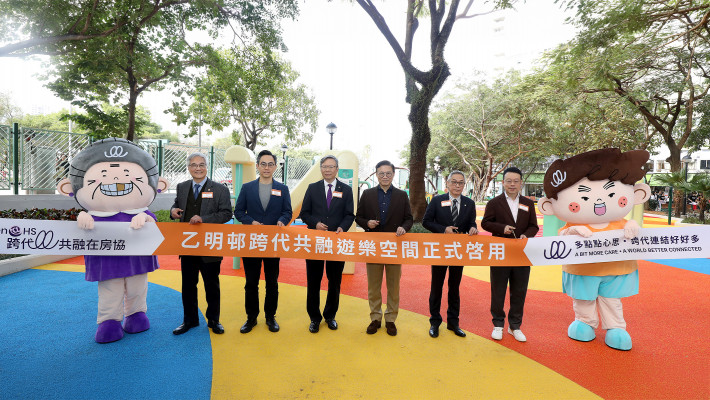
The “JC Intergenerational Play Space @ JMC” was officially inaugurated on 7 February 2026. PolyU President Professor Jin-Guang Teng remarked during the opening ceremony: “The IG Play Space exemplifies PolyU’s commitment to interdisciplinary collaboration and innovative solutions, successfully translating research outcomes into tangible facilities that truly benefit the community. This is a testament to PolyU’s mission of leveraging impactful research to serve society. PolyU will continue to promote interdisciplinary research and innovation, proactively addressing the challenges of an ageing population.”
The design is founded on five guiding principles: age inclusivity, design that empowers users to make their own choices, safety and comfort, user experience design, and hardware design based on software. The PolyU team drew on urban and sensory design theories to ensure that the Play Space serves people of different ages and abilities safely and comfortably.
“Our goal was never just to design a beautiful place,” added J.C.DISI Senior Manager Ms Karen Lee. “We wanted this to be a platform for interaction — a space where generations can communicate, collaborate, build trust, and create a sense of belonging. That is the true meaning of ‘inclusion.’”
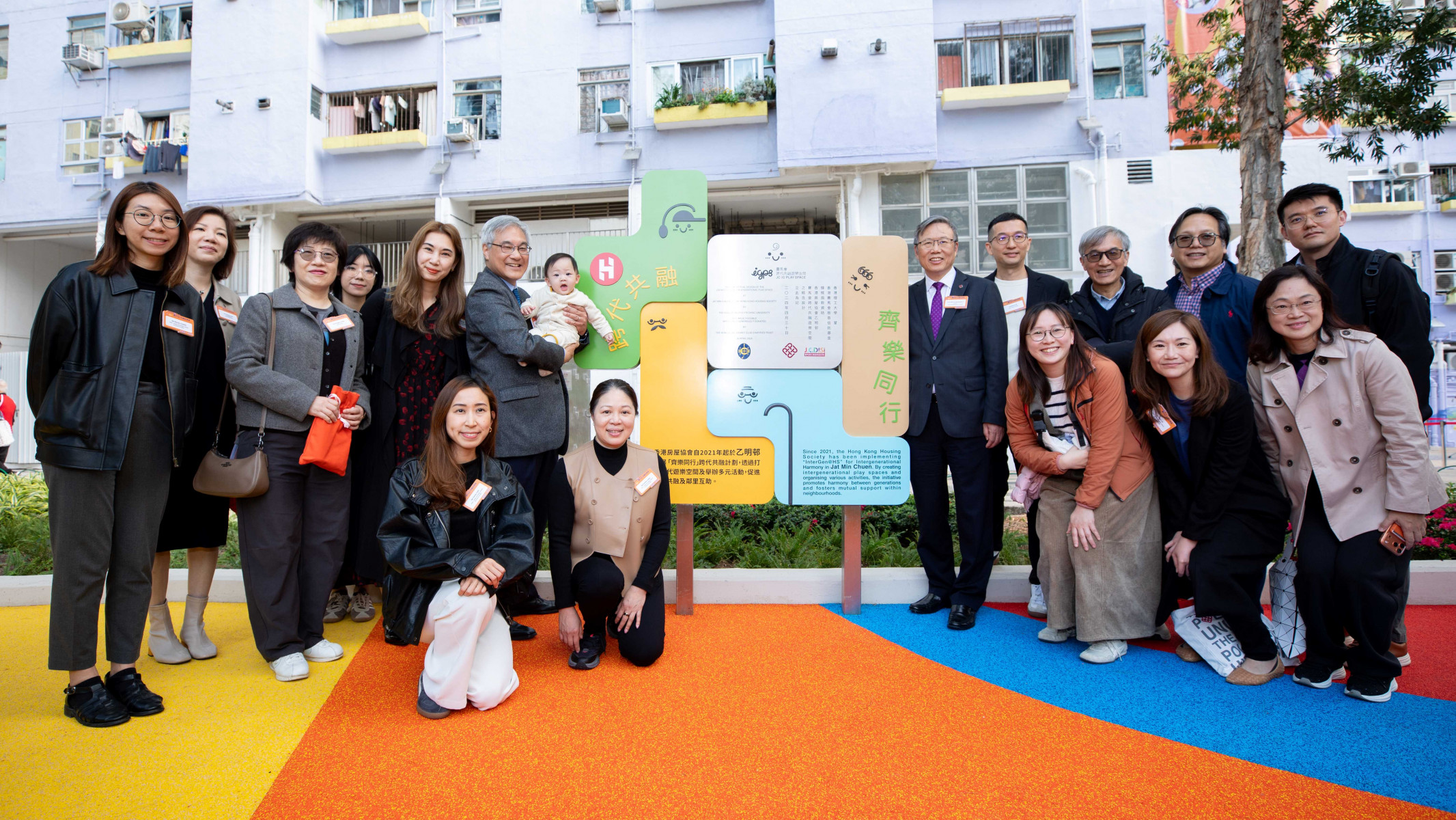
The PolyU team combined expertise from different disciplines and worked hand in hand with community stakeholders to co-create this play space suitable for people of all ages and abilities, allowing scientific research to benefit society.
Community at the core: Making happiness visible
The project stands as a testament to the power of community co-creation — from conception to completion, residents actively participated throughout, demonstrating the true value of participatory design.
Remarks from two elderly residents about their vision on this space became a guiding principle for the design team: “For us, the area outside JMC is the MTR station. We hope this space can be both beautiful and welcoming, so that passersby can also experience the charm of JMC.” Their thoughtfulness extended beyond personal needs, reflecting the residents’ vision for shared community spaces. The team infused this spirit of co-creation into every detail of the play facilities, turning the idea of happiness into a tangible presence within the community. The J.C.DISI team described the co-creation process in JMC as “a living laboratory”, where professional expertise, research, and daily experience continually merged and evolved through close interaction — ultimately leading to design outcomes that genuinely respond to residents’ needs and breathe new life into the community.
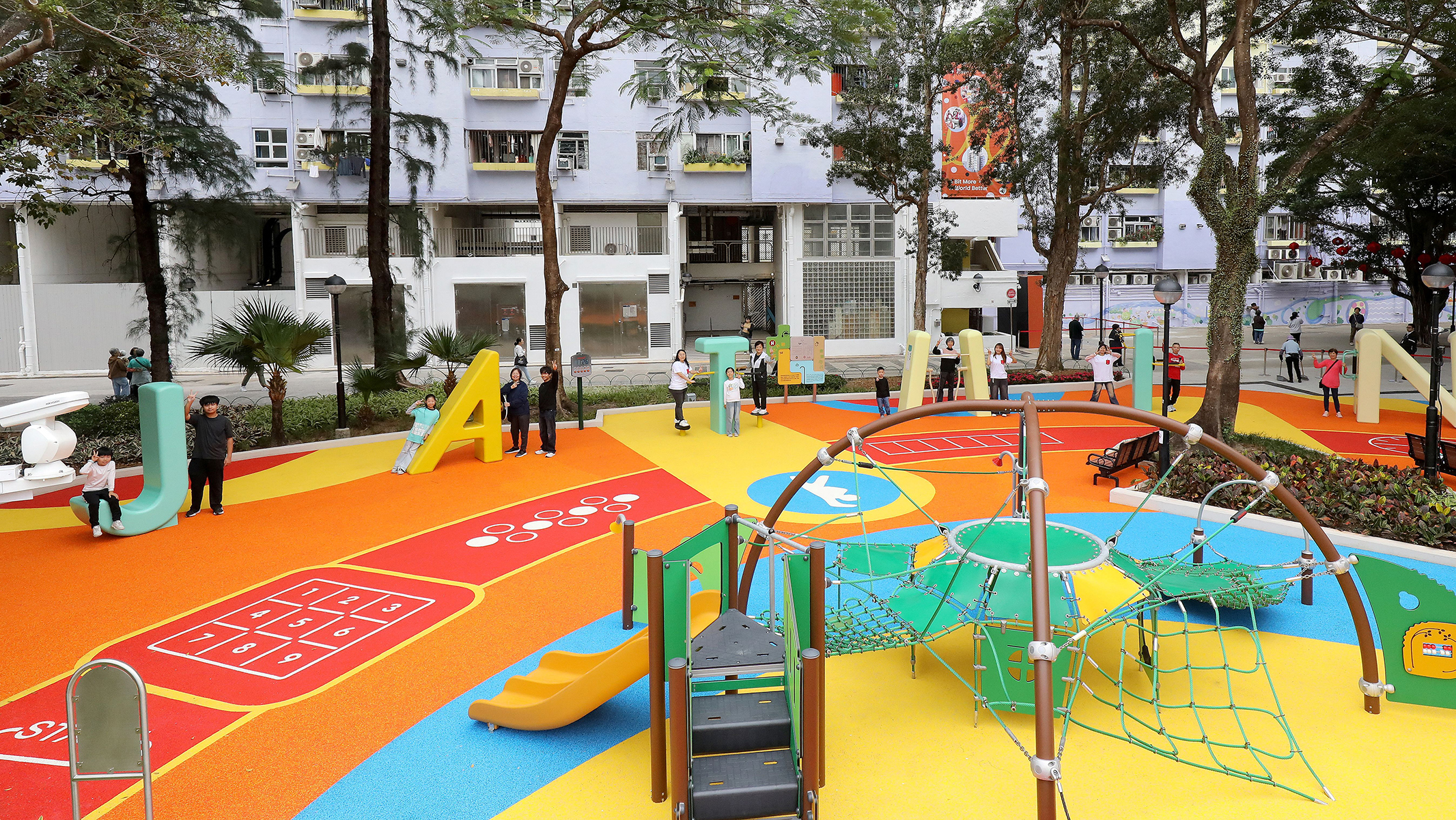
The play space features a variety of fitness facilities with their designs inspired by the estate’s English name “JAT MIN”.
Looking ahead: Turning research into a bridge for well being
Beyond JMC, the significance of this project continues to expand. J.C.DISI plans to compile its research into a practical design guide for intergenerational play spaces, promoting the model city wide to address current and future needs of an ageing population. This model has become a replicable example with the aim of extending the concept to many more communities across Hong Kong.
Today, under the sunlight in JMC, the laughter of residents of all ages playing together resonates across the neighbourhood — the most heartwarming echo of PolyU’s research in action. This laughter is, perhaps, the most meaningful harmony created through the collaboration among PolyU, HKHS, and the Jockey Club — a melody of warmth, community, and shared humanity in our city.
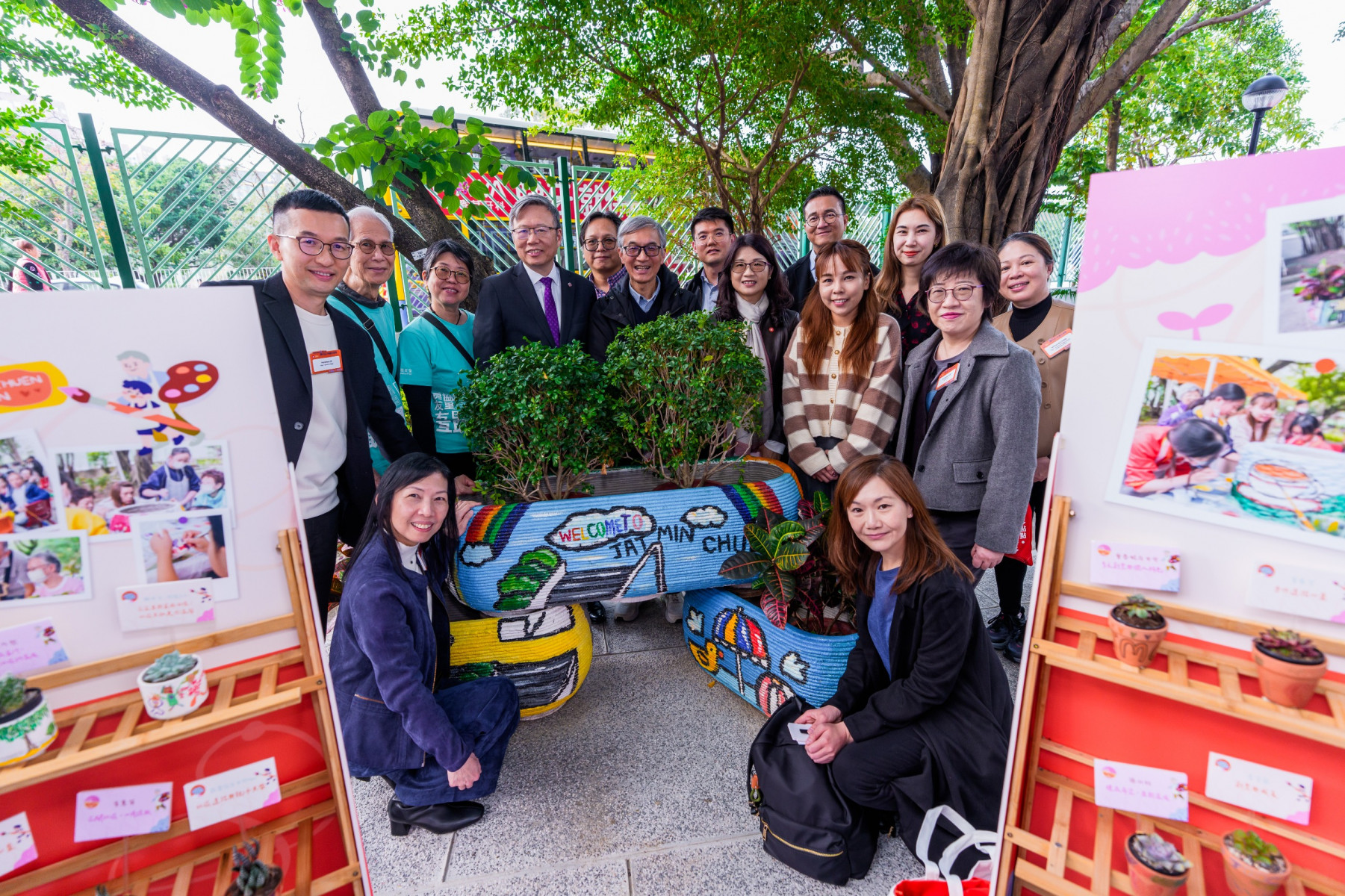
The PolyU team used 3D concrete printing technology to create flowerpots, with local residents contributing to the exterior design, adding more colour to the community.