

Sept 2027 Entry
1 year (Full-time)
2 years (Part-time)
31
Under normal circumstances, full-time and part-time students are able to complete the programme within 1 year and 2 years, respectively. Non-local students should register as full-time students. Students who wish to extend their studies beyond the normal duration can submit such requests to the Department for consideration.
Applicants are required to choose either the full-time or part-time mode on their application for admission to the programme. Students who study full-time are required to take a minimum of 9 credits per semester.
Notes to Applicants
Application to our postgraduate programmes can be done without any agency service. Applicants are required to apply online via the Study@PolyU website: https://www.polyu.edu.hk/study/pg.
Please note that all fields in the application forms should be filled. We will not consider applications that do not provide details of academic qualifications.
Early Round: 2026-10-20
Main Round: 2027-02-25
Early Round: 2026-10-20
Main Round: 2027-02-25
What's New
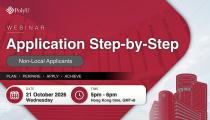
- Undergraduate
- Undergraduate
Programme Aims
-
Synergistic Foundation: The programme aims to cultivate a new paradigm where translation and interpreting competence and technological proficiency are developed as interconnected capabilities from the outset. Rather than teaching traditional skills and then adding technology, the curriculum integrates AI literacy and language technology throughout all the components of training. This approach develops future-ready professionals who naturally think and work with technology as part of the translation process.
-
AI Literacy as Foundational Competency: The programme establishes AI literacy as a core foundational competency for all students. Graduates will develop a critical understanding of AI systems relevant to translation and interpreting, including model architecture, training data, bias detection, evaluation metrics, and ethical implications. They will be equipped to interpret AI outputs responsibly, assess system limitations, and make informed decisions about the use of AI tools in professional practice. This foundational knowledge underpins all subsequent applied and collaborative capabilities developed in the programme.
-
Integrated Innovation Leadership as an Applied Capability: Building on this foundation, the programme develops graduates’ capacity to apply AI literacy strategically and creatively within professional contexts. Students will learn to design and manage hybrid human–AI workflows, implement quality assurance protocols for AI-generated content, and apply techniques such as prompt engineering and model optimisation in translation and localisation settings. This aim focuses on higher-order innovation skills, enabling graduates not only to use AI tools, but to lead their effective and responsible integration in practice.
-
Collaborative Technology Development as Interdisciplinary Engagement: At a more advanced level, this programme prepares graduates to engage actively in interdisciplinary collaboration and technology refinement. Students will be trained to provide structured linguistic feedback for system improvement, contribute to evaluation and benchmarking processes, support specialised model adaptation, and communicate effectively with engineers and developers. This aim emphasises collaborative contribution to AI development rather than individual tool use, distinguishing it clearly from both foundational literacy and applied innovation leadership.
-
Adaptive Synergy Mindset: The programme is designed to instil a mindset that views technology and human expertise as complementary forces that, when properly synchronised, create outcomes superior to either alone. By grounding students in both linguistic excellence and technological innovation as unified competencies, the programme fosters adaptable and resilient lifelong learners who continuously discover new synergies as both fields evolve.
Characteristics
This programme provides professionally oriented, practice-based training that integrates translation and interpreting expertise with cutting-edge language technologies. The programme combines core theoretical foundations with hands-on application, ensuring that theoretical concepts are directly relevant to improving professional performance in AI-enhanced translation and interpreting workflows.
The curriculum adopts a broad-based yet integrated structure, enabling students to build strong competencies in translation, interpreting, and language technology before pursuing focused professional specialisation in areas such as localisation, AI-assisted translation, or interpreting in digital environments. Graduates develop a distinctive hybrid skill set that bridges linguistic expertise and technological literacy, making them highly competitive and adaptable professionals in both the public and private sectors of the global language services industry.
This programme is designed to meet the evolving professional and regulatory requirements of the language services sector. Graduates are well-positioned for employment in translation, interpreting, localisation, language technology, and AI-enhanced communication roles across government bodies, multinational corporations, technology companies, and language service providers.
The programme’s strong emphasis on language proficiency, professional ethics, and applied language technology ensures that graduates possess qualifications and competencies that are widely recognised and valued by employers. In addition, the curriculum aligns with internationally recognised professional standards and certifications in translation and interpreting, enhancing graduates’ career mobility, employability, and long-term professional development prospects in an increasingly technology-driven language industry.
Programme Structure
All MATLT students have to complete 19 credits of compulsory and 12 credits of elective subjects.
To complete a specialism in localisation or interpreting, students will need to complete two elective subjects (6 credits) in the relevant specialism.
Medium of instruction:
The medium of instruction is English, supplemented with Chinese (Putonghua/Cantonese).
Core Areas of Study
Compulsory Subjects
- Translation in the AI Era: Text, Context, and Technology
- Interpreting in Digital Environments: Human Excellence and AI Augmentation
- AI Literacy for Language Professionals: Architecture, Applications, and Innovation
- Advanced Interpreting: Synergistic Human-AI Workflows
- Translation Studies: Convergence of Theory and Technology
- Integrated Language Technology: From Corpora to AI Systems
- Professional Ethics and Academic Integrity
Elective Subjects
Specialised Subjects in Localisation:
- Specialised Localisation Programme I: Introduction to Localisation Technology
- Specialised Localisation Programme II: Project-Based Practicum
Specialised Subjects in Interpreting:
- Specialised Interpreting Programme I: Conference Interpreting
- Specialised Interpreting Programme II: Legal and Business Interpreting
Others:
- AI-Driven Translation and Interpreting Project Management
- Digital Content Management
- MATLT Dissertation
- Media Translation: AI and Human Creativity in Multimodal Environments
- Machine Translation Systems & Post-editing
- Computer Programming in Language and Communication
- AI Applications in the Humanities
- AI-Driven Cross-Cultural Linguistic Exploration: Preserving, Translating, and Interpreting Chinese and Bilingual Heritage
- Generative AI for Innovative Communications
(The above subject list is subject to revision.)
31
Programme Leader
Prof. Xu Han
PhD
Deputy Programme Leader
Prof. Weng Yu
PhD
-
A Bachelor’s degree from a recognised institution.
-
If you are not a native speaker of English, and your Bachelor’s degree or equivalent qualification was awarded by an institution where the medium of instruction is not English, you are expected to fulfil the University’s minimum English language requirement for admission purposes. Given the high level of language proficiency required for translation, a demonstrated excellence in English is expected. Specifically, applicants should normally achieve an overall IELTS score of 6.0 or above, with no individual band score lower than 5.5, or a TOEFL iBT total score of 80 or above, with no section score below 18.
-
Non-native Chinese speakers are required to demonstrate advanced proficiency in Chinese. Preferred qualifications include Putonghua Shuiping Ceshi (PSC) Level 2A or above, or equivalent academic coursework evidencing advanced Chinese language competence. In addition, the admission interview may include a brief translation or interpreting task, where appropriate, to assess applicants’ practical language readiness.
Applicants may be required to attend interviews or tests to further demonstrate their language proficiency.
For further information on academic matters, please contact:
Programme Leader, Prof. Xu Han (tel: (852) 2766 7441; email: han12.xu@polyu.edu.hk).
For general information, please contact:
LST General Office (tel: (852) 2766 7454; email: lst.tpg@polyu.edu.hk).
Starting from 2024/25 cohort, students are required to complete the compulsory 1-credit subject “CBS5T01 Professional Ethics and Academic Integrity” to satisfy the Academic Integrity and Ethics (AIE) requirement for graduation. No credit fee will be charged for this subject.
HK$8,900* per credit
* Specialised Interpreting Programme I: Conference Interpreting & Specialised Interpreting Programme II: Legal and Business Interpreting are charged at a higher rate of HK$12,100 per credit.
(Note: No credit fee will be charged for the 1-credit subject “CBS5T01 Professional Ethics and Academic Integrity”.)
Required
Required
Required