
Faculty of Engineering
CODE
46012
SUBCODE
46012-EV-EVT
ENTRY

Sept 2027 Entry

STUDY MODE
Mixed Mode
DURATION

1.5 years (Full-time)
2.5 years (Part-time)

CREDIT REQUIRED

31

FUND TYPE
Self-Financed

Note to Applicants

The programme has a limited quota for admission.  Early application is strongly encouraged.

Application Deadline
Local - Mixed Mode
Sept 2027 Entry
Early Round: 2026-10-20
Main Round: 2027-02-25
Non-local - Mixed Mode
Sept 2027 Entry
Early Round: 2026-10-20
Main Round: 2027-02-25

What's New
More News

QS1
  • Taught Postgraduate
  • Undergraduate
QS World University Rankings 2027
POLYU JUPAS ADMISSIONS Q&A
  • Undergraduate
Plan Ahead with PolyU: Join our JUPAS Admissions Q&A, 9 May on campus and 11 – 13 May online
About Programme
How to Apply
Aims & Characteristics

Programme Aims

The Master of Science in Electric Vehicles (MSc in EV) programme aims to achieve the following: 


(1) Provide graduates with a comprehensive understanding of electric vehicles that encompasses both research and practical applications. Through a well-rounded curriculum, students will gain in-depth knowledge of the various aspects of electric vehicles, including design, technology, energy solutions, and management. 


(2) Address the increasing demand for highly skilled professionals in the field of electric vehicles in Hong Kong, China, and around the world. By equipping students with specialised expertise and practical skills, the programme aims to meet the industry’s growing need for qualified individuals who can contribute to the development and adoption of electric mobility solutions. 


(3) Prepare students for further study and research in the field of electric vehicles.


Characteristics

The MSc in EV is a comprehensive programme that focuses on research and practical applications, encompassing all aspects of electric vehicle design and management. In particular, the programme emphasises industrial design, development, and energy solutions within the electric vehicle sector. By enrolling in this programme, students will gain valuable knowledge and skills that can significantly enhance their career prospects in electric vehicle technology, system operation, and management. The programme also offers students a unique opportunity to explore the intricacies of electric vehicles and innovative solutions within the field.

Recognition & Prospects

Upon successful completion of the required content of the respective awards, students will graduate with a Master of Science Degree (MSc) in Electric Vehicles. Graduates of this programme have in-depth knowledge, skills, and experience needed to succeed in the rapidly evolving field of electric vehicles and contribute to the development of sustainable transportation solutions for the future.

Curriculum

Programme Structure

Students who enrol in the MSc in EV programme gain knowledge across a wide spectrum in the field of electric vehicles. In general, each subject is taught through one evening class per week over a 13-week semester. Full-time students normally take three to five subjects per semester. Part-time students normally take two subjects per semester. Each taught subject corresponds to three credits, and the dissertation corresponds to nine credits.


Students must complete:

  • 7 taught subjects, including at least 3 Core Subjects and 4 Elective Subjects, and a 9-credit Dissertation;        
    OR

  • 10 taught subjects, including at least 3 Core Subjects and 7 Elective Subjects.

Note

- Students are required to complete the Academic Integrity and Ethics (AIE) Requirement (a 1-credit subject pitched at level 5, normally within their first semester of study) as a graduation requirement.  No credit fee is required for this subject.


Core Areas of Study

  • The programme takes a comprehensive approach, covering various aspects of electric vehicle technology, design, and management. Students will gain a deep understanding of the entire lifecycle of an electric vehicle, from conceptualisation to operation and maintenance.

  • The programme focuses on industrial design principles and practices within the electric vehicle industry. Students will learn about the latest advancements and best practices in vehicle design, ensuring that they are equipped with the skills necessary to contribute to innovation in the field.

  • The MSc in EV programme recognises the critical role of energy solutions in the electric vehicle sector.


Information on the subjects offered can be obtained at https://www.polyu.edu.hk/eee/study/information-for-current-students/subject-syllabi/.

Credit Required for Graduation

31

Programme Leader(s)

Prof. CHAU Kwok-tong  
B.Sc. (Eng.), M.Phil., Ph.D. H.K.; CEng, FIEEE, FIET, FHKIE

Subject Area
Electric Vehicles
Entrance Requirements
  • A Bachelor’s degree in electrical engineering, electronics engineering, automation engineering, transportation engineering, engineering science, or a related discipline.  Applicants with a Bachelor’s degree in another discipline who have at least 3 years of significant and relevant work experience in the field of electric vehicles will also be considered.


Candidates without honours degrees who have other relevant qualifications and/or appropriate work experience may also be considered.


If you are not a native speaker of English, and your Bachelor's degree or equivalent qualification is awarded by institutions where the medium of instruction is not English, you are expected to fulfil the University’s minimum English language requirement for admission purposes.  Please refer to the "Admission Requirements" section for details.


Individual cases will be considered on their own merits. Applicants may be required to attend interviews or take tests to further demonstrate their language proficiency.

Enquiries

For further information on academic matters, please contact:  
Prof. CHAU Kwok-tong 
Tel: (852) 2766 6186  
Email: k.t.chau@polyu.edu.hk


For further information on application and admission matters related to the programme, please contact:   
EEE General Office
Tel: (852) 2766 6221   
Email: eee.tpg@polyu.edu.hk

Other Information
  • Suitable candidates may be invited to attend face-to-face/telephone/online interviews.

  • Classes are normally held on weekday evenings.

  • The Department reserves the right not to offer any one of the subjects. The offer of subjects is subject to review and change if deemed appropriate by the Department.

Programme Leaflet

Please click here to download. 

Tuition Fee

HK$10,200 per credit for local and non-local students
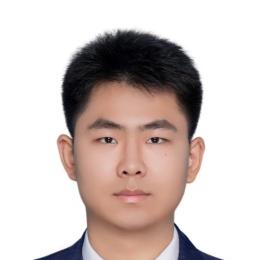
Student Message

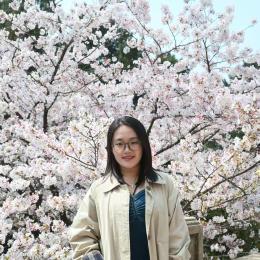
My two years of study at PolyU have greatly strengthened my capability to tackle future challenges in the electric vehicle (EV) industry. It has also equipped me with solid professional breadth and depth for my career development.


I am especially fortunate to have been granted a studentship under the supervision of Dr Tian Jinpeng. The studentship not only provided a monthly stipend of HK$6,000 to alleviate my financial burden but also allowed me to join the research laboratory. Throughout this journey, I have learned immensely from the entire research group and benefitted from the well-equipped facilities in the EEE Department, which supported every stage of my research work.


I would like to express my sincere gratitude to PolyU and the EEE Department. As I move forwards in my career, I will be joining Gotion High-Tech as a BMS Software Development Engineer, where I look forward to exploring broader possibilities in the battery and EV industry.

XIANG Huijian

Studying the MSc in Electrical Vehicles programme at The Hong Kong Polytechnic University has been a valuable and inspiring journey for me. The programme provided me with a solid foundation in electric vehicle (EV) technologies, especially in battery systems, power electronics, and vehicle electrification. Through coursework and dissertation research, I was able to connect theoretical knowledge with practical engineering challenges in the fast-growing EV industry.


I am especially grateful to my dissertation supervisor, Dr Tian Jinpeng, for his patient guidance and continuous support throughout my research. Under his supervision, my dissertation focused on battery health diagnosis and capacity prediction using real-world EV operation data. This experience helped me strengthen my skills in data analysis, machine learning, and battery management systems, while also deepening my understanding of how data-driven methods can enhance the safety and reliability of EV operation.


Life in the Department of Electrical and Electronic Engineering has also been very rewarding. The professors and staff are supportive, and the learning environment encourages independent thinking, teamwork, and academic exploration. Studying at PolyU has not only improved my professional knowledge but also made me more confident in facing future challenges.


After graduation, I hope to continue developing my career in the EV, battery, or intelligent energy sectors and applying what I have learned to real engineering and industry applications.

LIU Mengru

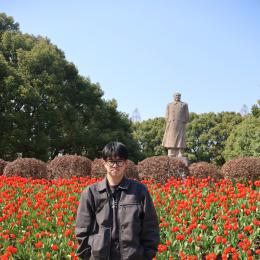
Pursuing the Master of Science in Electric Vehicles at the Hong Kong Polytechnic University was an unforgettable journey that seamlessly integrated academic rigour with industry-driven innovation. The programme’s interdisciplinary curriculum spanned power electronics, battery management systems, and sustainable mobility strategies, which provided a robust foundation in both theoretical principles and hands-on technical skills.


What sets PolyU’s programme apart is the industry-aligned approach. By inviting engineers from world-renowned electric vehicle manufacturers such as BYD, NIO and Xiaomi to deliver guest lectures on the PolyU campus, the programme addresses practical issues encountered in the production process and offers unique insights into the future development direction of electric vehicles. Through mini-projects on different topics, we deepened our understanding and application of the knowledge learned in class. For example, the power flow analysis of common electric vehicle energy storage systems has given us a deeper understanding of lithium-ion batteries, supercapacitors, and flywheel energy storage systems, and clarified the application scenarios of different energy storage systems.


This course not only deepened my professional knowledge of electric vehicle technology, but also strengthened my confidence in addressing the challenges facing sustainable development. Polytechnic University’s blend of cutting-edge research, industry collaboration and multicultural exchange has prepared me to drive innovation in the fast-growing field of electric vehicles.

HE Weichao

I am honoured to have been admitted to the Electric Vehicles MSc Programme at The Hong Kong Polytechnic University. My undergraduate background may not have been as distinguished as that of my classmates, but I have achieved a satisfying outcome. The programme offered a wide range of subjects and enabled us to explore cutting-edge electric vehicle technology. We had the flexibility to choose several directions such as autonomous driving, smart transportation and power systems.


Across this programme, we were introduced to cutting-edge and specialised knowledge. To gain the best experience, I studied the learning materials before the class, completed assignments on time and wrote essays carefully. During the class, I strove to keep up with the teachers, and for the final review, I studied all the examples provided by the teachers to ensure I understood the key concepts. By following this approach, I was able to attain good grades.


The MSc in Electric Vehicles Programme provides an invaluable platform. I will be joining SAIC to further my career in the automotive field, applying the knowledge gained at PolyU to contribute to the growth of China's automotive industry.

ZHANG Yipeng
Additional Documents Required
Transcript / Certificate

Required

Personal Statement

Optional

Employer's Recommendation

Optional

View Other Programmes