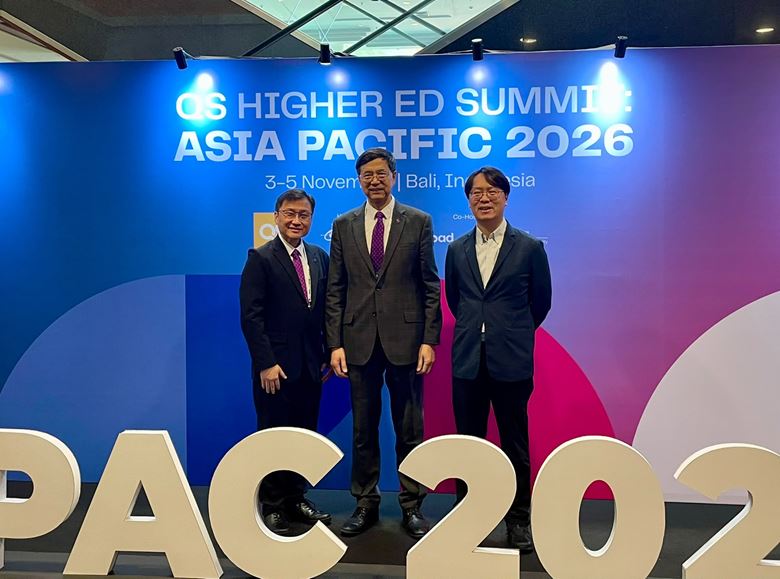
Moderated by Prof. Geoffrey Shen, PolyU hosted a panel titled “Cross-Border Collaboration as a Catalyst for Knowledge Exchange and Societal Impact”, with speakers from Adelaide University and Macquarie University in Australia. Prof. Shen highlighted the importance of strategic partnerships bridging academia, industry and government to support Hong Kong’s development as an international education hub. He also showcased PolyU’s 12 Mainland Translational Research Institutes across 12 cities as an example of translating university intellectual property into real-world impact through collaboration with local governments and regional innovation ecosystems.
Ir Dr Alfred Tan emphasised that trust, mutual respect and shared values are the foundations of sustainable partnerships. He advocated a “51/49” mindset, whereby partners prioritise mutual benefit over maximising their own gains and stressed that long-term collaboration should ultimately improve students’ lives and generate lasting societal impact.
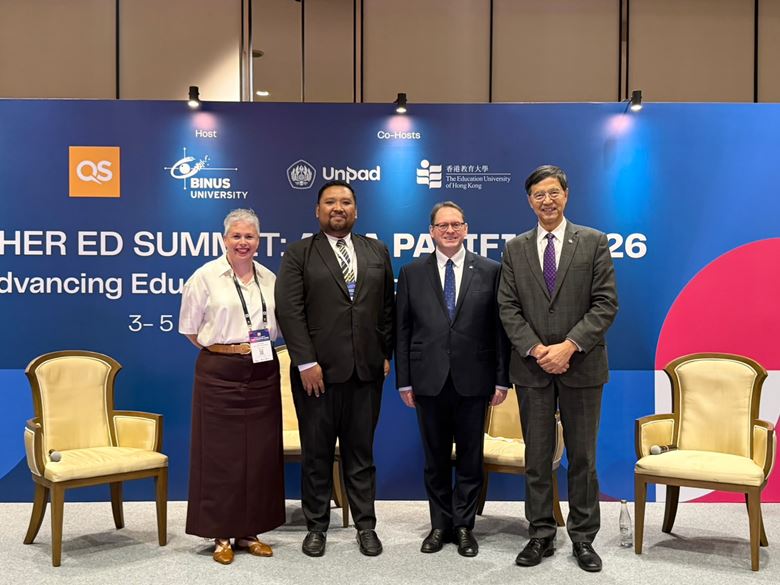
In another panel hosted by Adelaide University, titled “Beyond Recruitment: Building the New Global Higher Education Ecosystem”, Prof. Shen emphasised the need for a student-centric ecosystem that goes beyond recruitment, noting that students increasingly value both educational quality and career outcomes. He called for broader strategic partnerships with world-leading universities, employers, NGOs and leaders from the arts, music and sports to support students’ holistic development. Through flexible curricula, exchanges, internships, service learning and work-integrated education, these partnerships help foster global perspectives, social responsibility, industry understanding and workplace readiness.
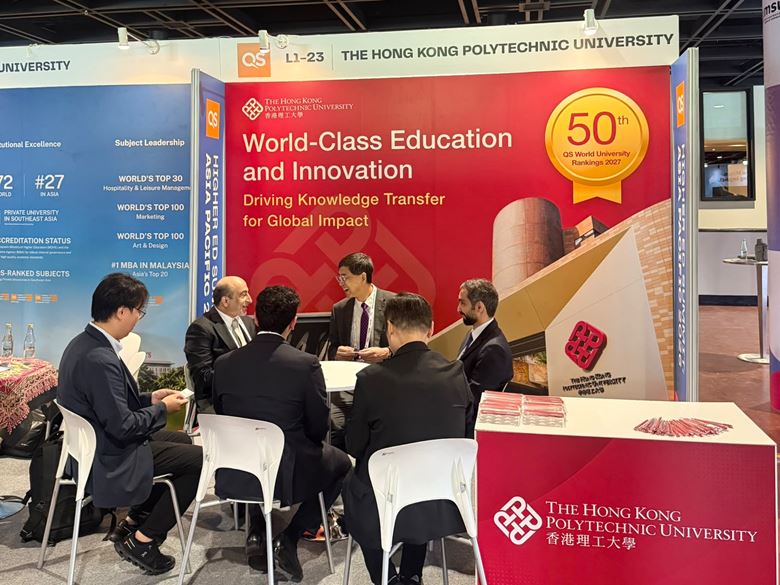
Alongside the panel discussions, PolyU engaged with prospective partners and education experts at the exhibition to explore opportunities for collaboration and knowledge exchange. Through its participation in the Summit, the University reaffirmed its commitment to strengthening international partnerships and advancing higher education across the Asia-Pacific region.