
First patriotic education study tour to Xi’an and Yan’an deepens national and cultural connection
PolyU’s inaugural patriotic education study tour to Xi’an and Yan’an offered far more than a week-long itinerary. It became a transformative journey that connected history, identity and social responsibility in a vivid and memorable way.
Last month, nearly 50 students and teachers, led by Council Chairman Dr Lam Tai-fai and Vice President (Education) Professor Cao Jiannong, stepped beyond the classroom to experience the depth of Chinese Civilisation and the pulse of national development first-hand. Moving between ancient capitals and revolutionary landmarks, the group took part in a meaningful journey that linked the origins of Chinese culture with the aspiration of modern China.
In Xi’an, participants encountered the grandeur of 5,000 years of civilisation through visits to iconic sites such as the Mausoleum of the First Qin Emperor and the ancient City Wall. A particularly memorable moment came at the Mausoleum of the Yellow Emperor, where a solemn ancestral tribute ceremony prompted reflection on cultural roots and identity. For many students, this was not just a symbolic ritual, but a moment of personal connection, transforming abstract heritage into something deeply felt and understood.
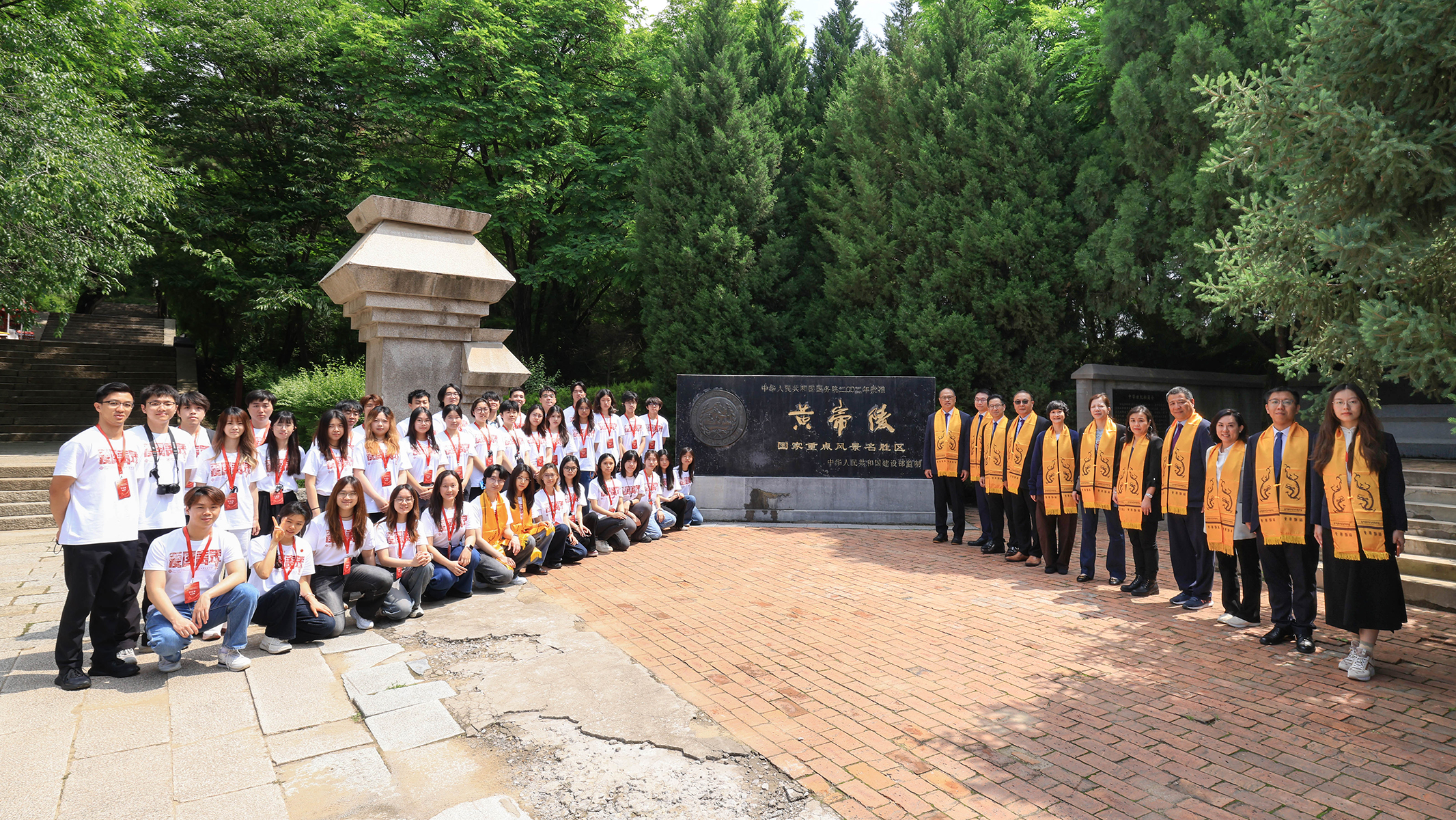
The group took part in a solemn ancestral tribute ceremony at the Mausoleum of the Yellow Emperor, reflecting on the roots of 5,000 years of Chinese civilisation.
The journey then continued to Yan’an, the cradle of China’s revolutionary spirit. Through visits to Yangjialing, Baota Mountain and the former Lu Xun College of Arts, as well as the immersive production “Back to Yan’an”, students gained a vivid appreciation of the values that shaped modern China: resilience, self-reliance and a steadfast commitment to serving the people. These experiences brought history to life, offering lessons that resonated with contemporary responsibilities.
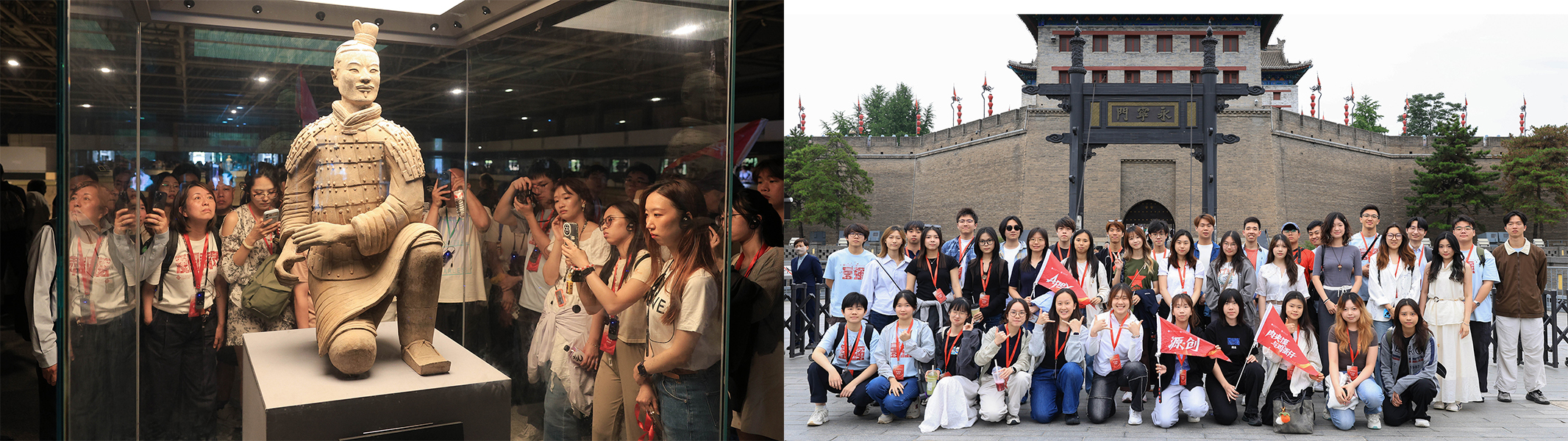
Students explored key historical and cultural landmarks, including the Mausoleum Site Museum of Emperor Qinshihuang and the Xi’an City Wall, gaining first-hand insight into the depth and richness of Chinese civilisation.
Equally striking was the tour’s focus on innovation and future development. At Xi’an Jiaotong University’s (XJTU) Innovation Harbour, the Westward Relocation Museum and Qinchuangyuan, participants explored China’s rapid technological advancement and the spirit of dedication that underpins it. The story of intellectuals who relocated westward in service of the Nation left a strong impression, encouraging students to consider how their own academic and professional paths might contribute to national progress.
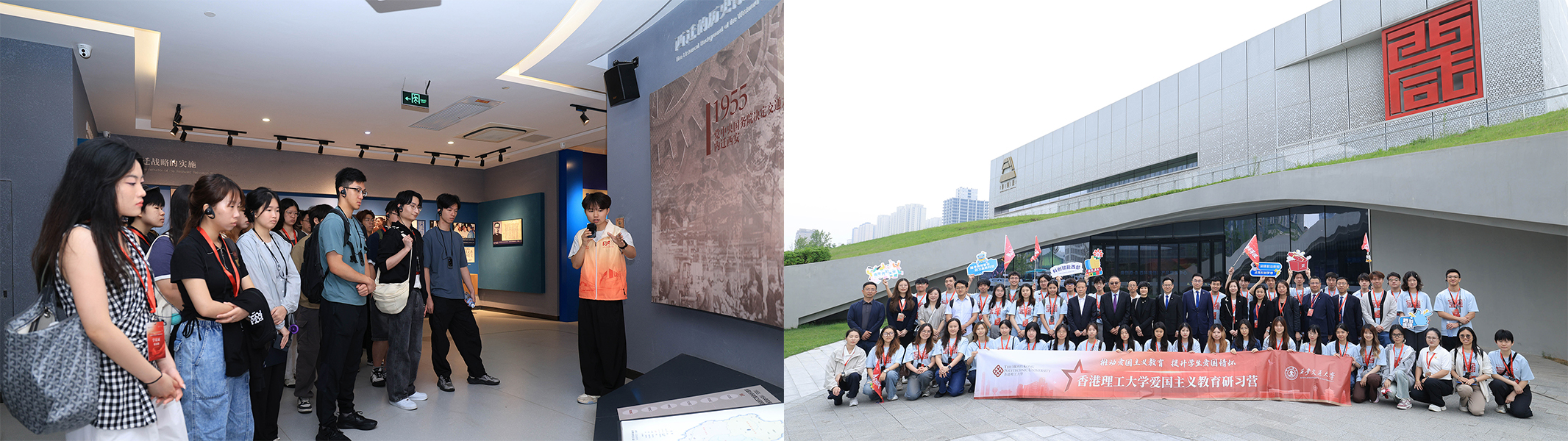
The study tour group visited the XJTU Museum of the Westward Relocation and Qinchuangyuan, where they gained deeper insights into the Nation’s achievements in technological innovation and the development of new quality productive forces, while also learning about the Westward Relocation spirit of selfless dedication and commitment to the greater good.
Throughout the tour, reflection and dialogue played a central role. Students described the experience as eye-opening and deeply enriching, noting how it bridged textbook knowledge with lived reality. Many expressed a strengthened sense of national identity and belonging, alongside a clearer understanding of the close relationship between their personal futures and the development of the Nation.
As the first flagship activity launched following the co-establishment of the patriotic education base by PolyU and XJTU, the tour marks an important step in the University’s effort to integrate cultural heritage, historical understanding and innovation into holistic education. More than a study trip, it represents a model for experiential learning that cultivates both national awareness and a global perspective.
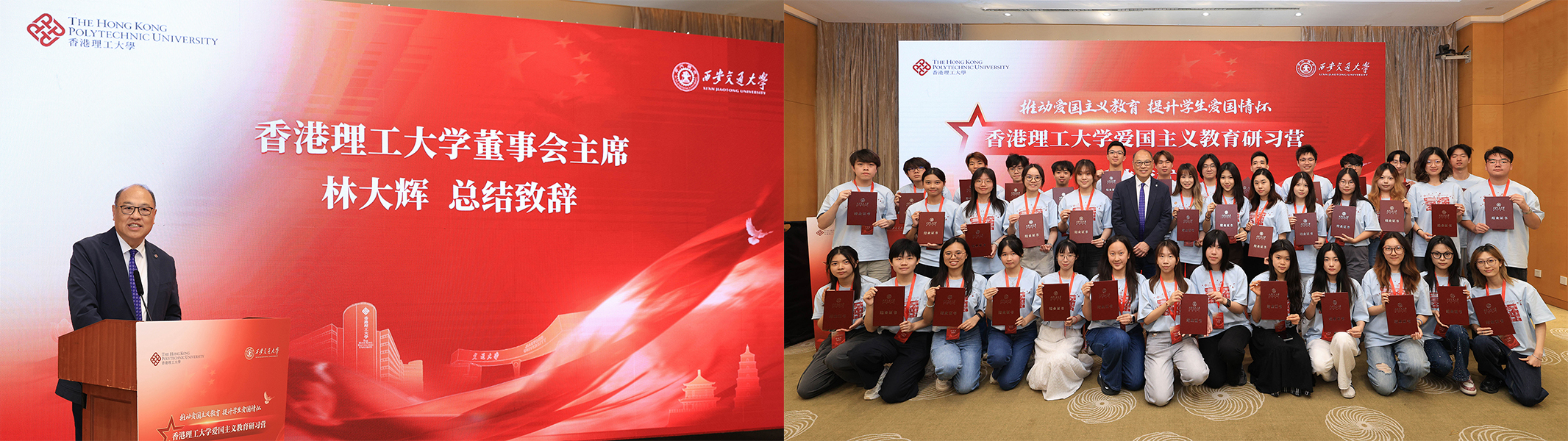
Dr Lam concluded the study trip by emphasising that the Nation prospers when its young people thrive, and that their futures are inseparable from that of the country. He encouraged students to strive to become responsible and valuable Chinese citizens.
At the closing ceremony, Dr Lam underscored a key message, stating, “Patriotism requires participation, action and commitment. It also calls for dedication, contribution and sacrifice.” His call for students to become active participants in national development echoed the broader purpose of the programme – to nurture young people who are not only knowledgeable, but also committed and forward-looking. He also encouraged students to share their experiences with family members, friends and fellow students upon returning to Hong Kong, and to tell vividly the stories of China, PolyU and XJTU.
Highlighting the tour’s educational significance, Professor Shan Zhiwei, Vice-President of XJTU noted that firsthand encounter gives students genuine insights and deep reflection, adding that visiting Chinese Mainland cities is the best way for Hong Kong youth to understand the country; meanwhile, Professor Cao emphasised that by integrating history, culture, and technological innovation, this meaningful educational journey carries far-reaching significance in nurturing patriotic young people inspired to serve society and contribute to the Nation.
Looking ahead, PolyU aims to expand such initiatives, continuing to inspire students to engage meaningfully with the country’s past, present and future, and to find their own place within it. In line with its mission to nurture socially responsible professionals and leaders with a strong sense of national pride and a global perspective, the University remains committed to cultivating graduates who can contribute thoughtfully to both the Nation and the wider world.
Click here to watch the feature video and delve deep into the study tour.
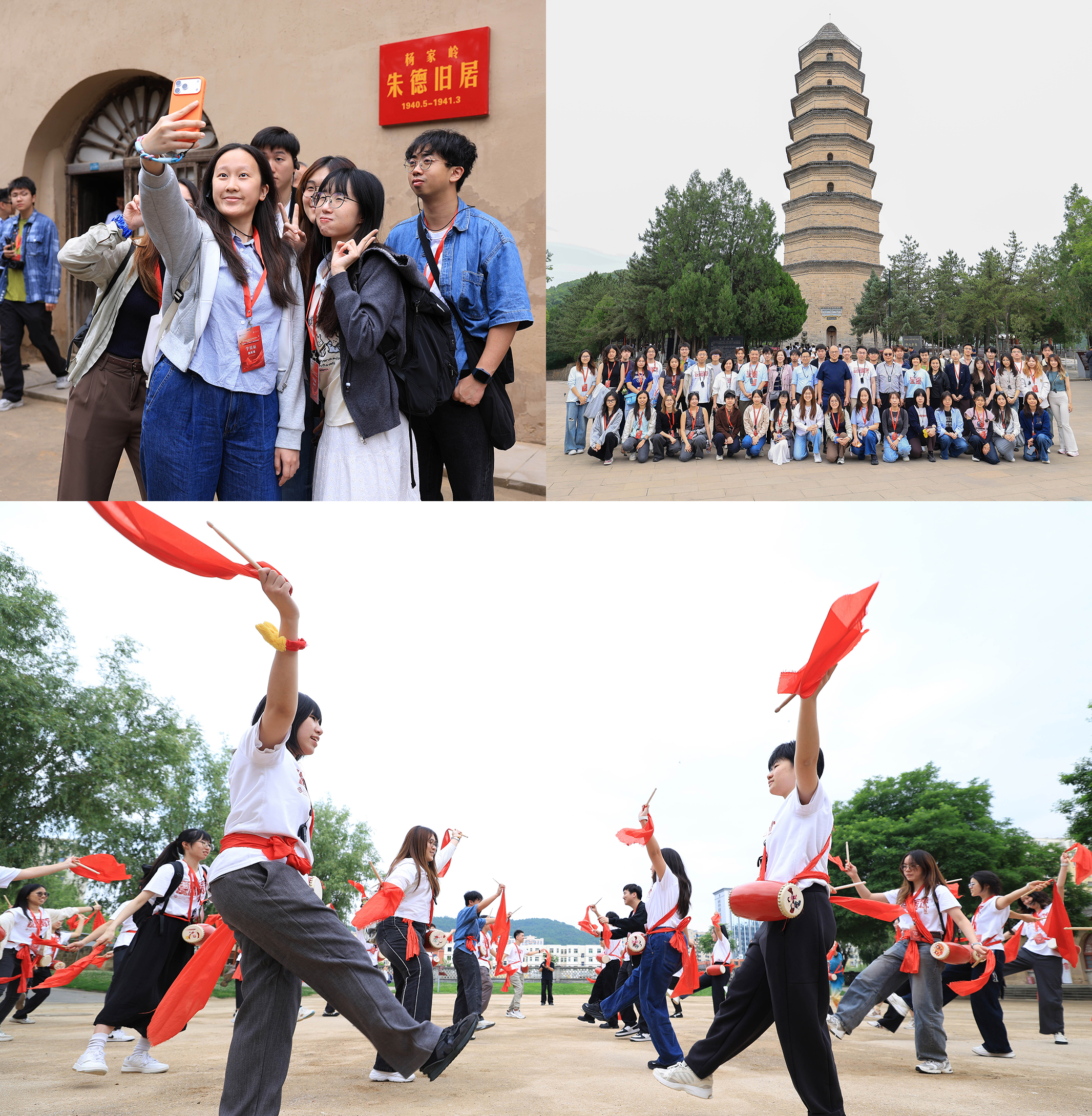
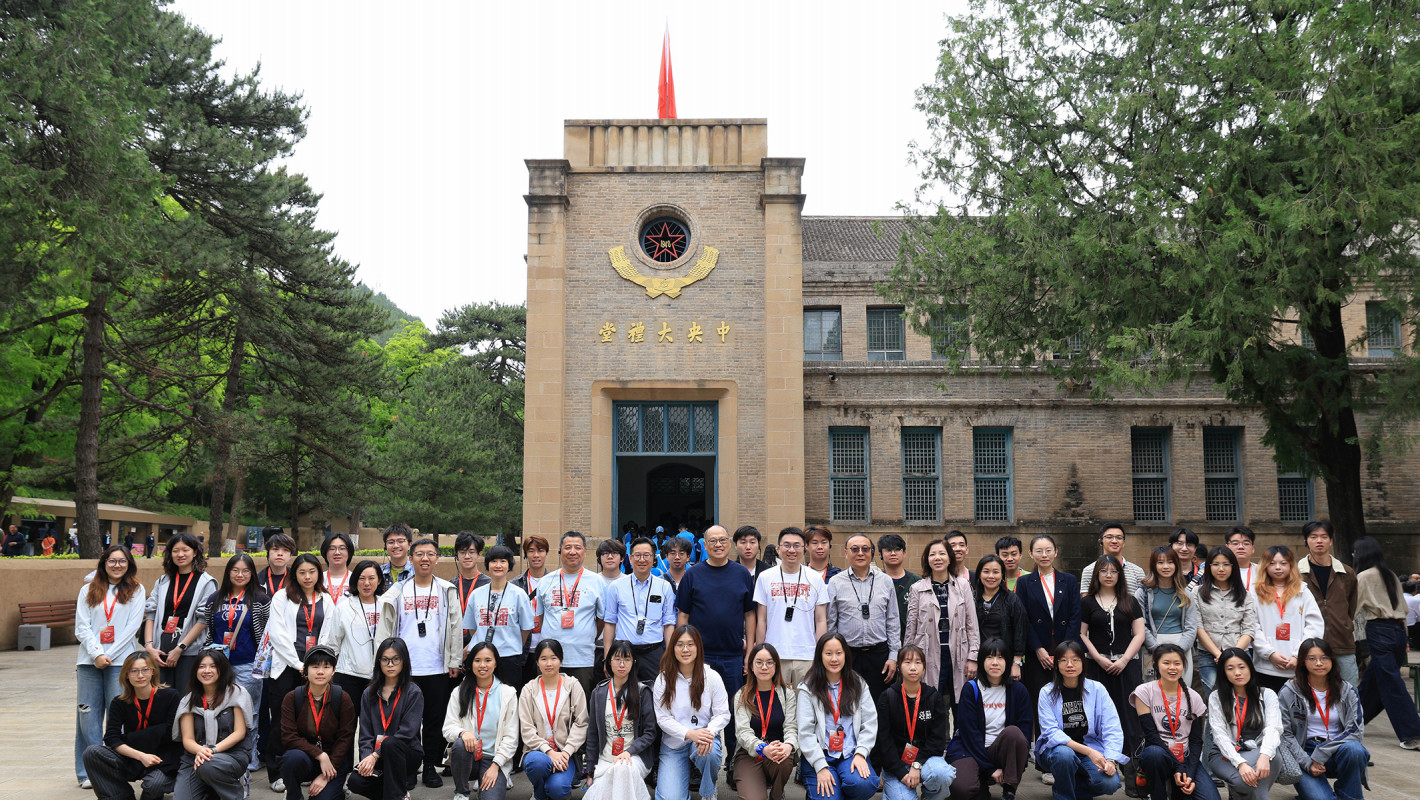
By exploring historic revolutionary landmarks such as the Yangjialing Revolutionary Site, Baota Mountain, and the former Lu Xun College of Art, the study tour group retraced a significant period of history and gained a profound understanding of the Yan’an Spirit's emphasis on self-reliance and resilience.