
From lab to life: PolyU and Qiangnao bring intelligent bionic limbs to Hong Kong amputees
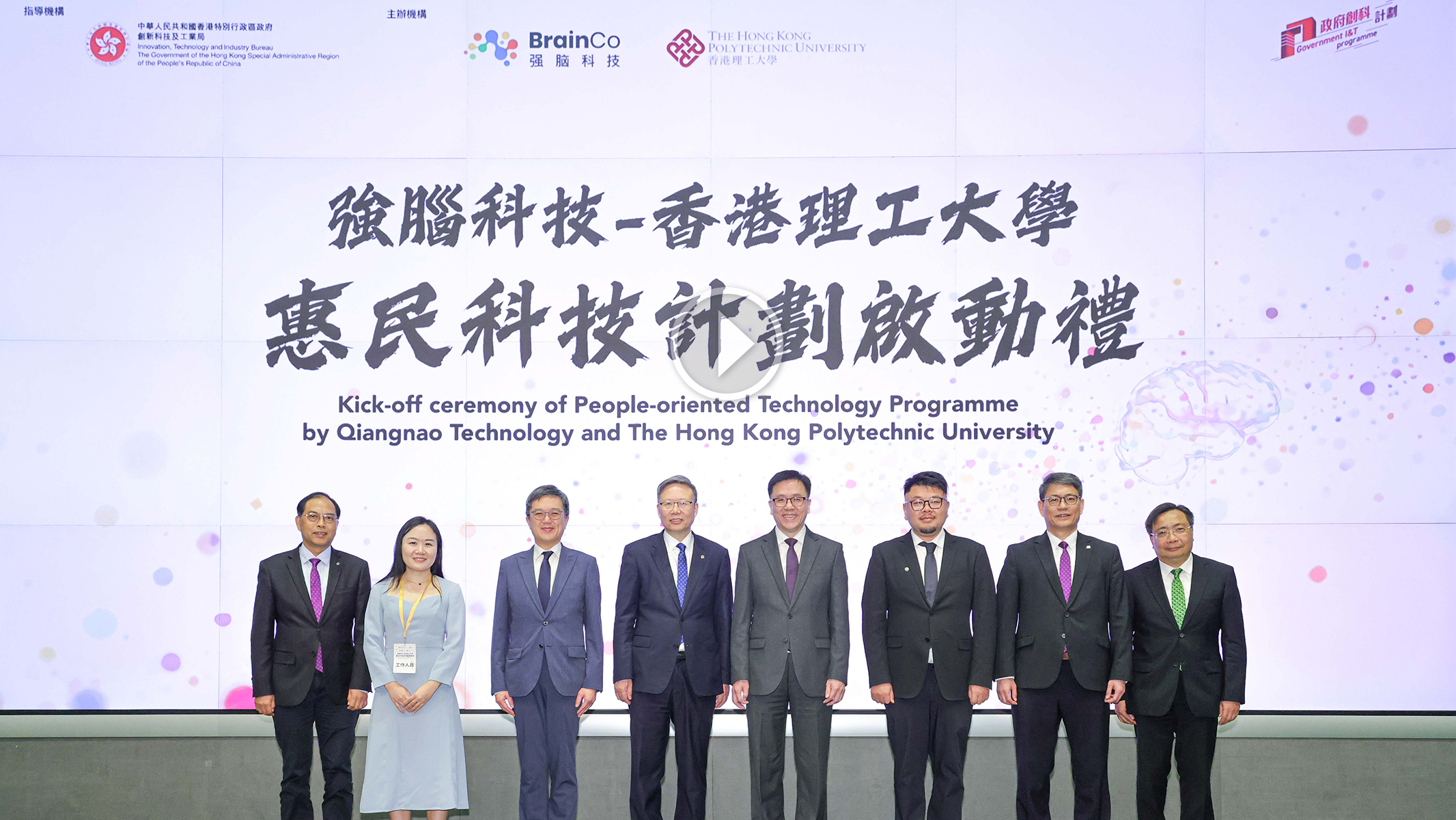
At the HKSAR Central Government Offices, Qiangnao Technology and PolyU officially kicked off their “People-Oriented Technology Programme”. The ceremony featured several high-profile officiating guests. Standing in order from left to right were Prof. Zheng Yongping, Henry G. Leong Professor in Biomedical Engineering and Chair Professor of Biomedical Engineering of PolyU; Ms Sienna Xu, representative of Qiangnao Technology; Mr. Kelvin Choi, Permanent Secretary for Innovation, Technology and Industry; Prof. Jin-Guang Teng; Prof. Sun Dong; Mr Bicheng Han, Founder and CEO of Qiangnao Technology; Prof. Christopher Chao, Senior Vice President (Research and Innovation) of PolyU, and Mr Ivan Lee, Commissioner for Innovation and Technology.
Advanced bionic limbs are moving from research into everyday life through a new programme launched by PolyU and Qiangnao Technology. The “People-Oriented Technology Programme” provides eligible amputees in Hong Kong with intelligent bionic hands and bionic knee joints free of charge, offering new possibilities for mobility, independence and confidence.
The Programme was officially launched at the Central Government Offices of the Hong Kong Special Administrative Region (HKSAR). It is jointly organised by PolyU and Qiangnao Technology, with the Innovation, Technology and Industry Bureau of the HKSAR Government serving as the advisory body, and is supported by the Innovation and Technology Fund. The initiative responds to the “Support People-Oriented Scientific Research” policy in the 2025 Policy Address, which encourages the use of innovation and technology to improve people’s lives.
At the ceremony, Professor Sun Dong, Secretary for Innovation, Technology and Industry of the HKSAR Government, said the Programme reflects the principle of using technology for good and being people-oriented. He noted that Hong Kong’s strengths in life and health technology, artificial intelligence and robotics provide a strong foundation for bringing advanced technologies into real-world use.
The first phase of the Programme will support 60 eligible amputees in Hong Kong. Under the management of PolyU’s team, participants will be fitted with Qiangnao Technology’s intelligent bionic hands or bionic knee joints, depending on their needs. The aim is not only to provide advanced prostheses, but also to help users regain practical abilities for work, daily living and social participation.
For upper-limb amputees, the intelligent bionic hand is designed to restore grip strength and fine-motor capabilities. It uses sensors to detect myoelectric and neural signals from the user’s upper-limb muscles without internal implantation. After training, users can control the hand’s movements and perform delicate tasks such as writing, holding everyday objects and even playing musical instruments.
For lower-limb amputees, the intelligent bionic knee joint supports more natural and confident movement. Equipped with multi-sensor and a smart hydraulic system, it can detect walking intentions in real time. It helps users walk on flat ground, climb stairs, switch between fast and slow walking speeds, and benefit from emergency-stop and fall-prevention protections.
During the kick-off ceremony, amputees who had already been fitted with the prostheses shared their experiences. Their stories showed how advanced technology can become part of daily life, helping people regain independence, rebuild confidence and take part more fully in the community.
Professor Jin-Guang Teng, President of PolyU, said scientific research must ultimately benefit society. He highlighted that the Programme reflects PolyU’s motto, “To learn and to apply, for the benefit of mankind,” by combining Qiangnao Technology’s advanced technology with PolyU’s strengths in local implementation, promotion and scientific research support. The team will evaluate the effectiveness of the technology based on clinical application scenarios, collect user feedback for timely adjustments and optimisations, and continuously improve the overall user experience.
Looking ahead, Qiangnao Technology and PolyU will deepen their cooperation by co-establishing a Joint Research Centre for Brain-Computer Interfaces. The centre will explore custom prosthetics, rehabilitation training systems and interdisciplinary interaction design, further supporting the connection between scientific research and clinical application.
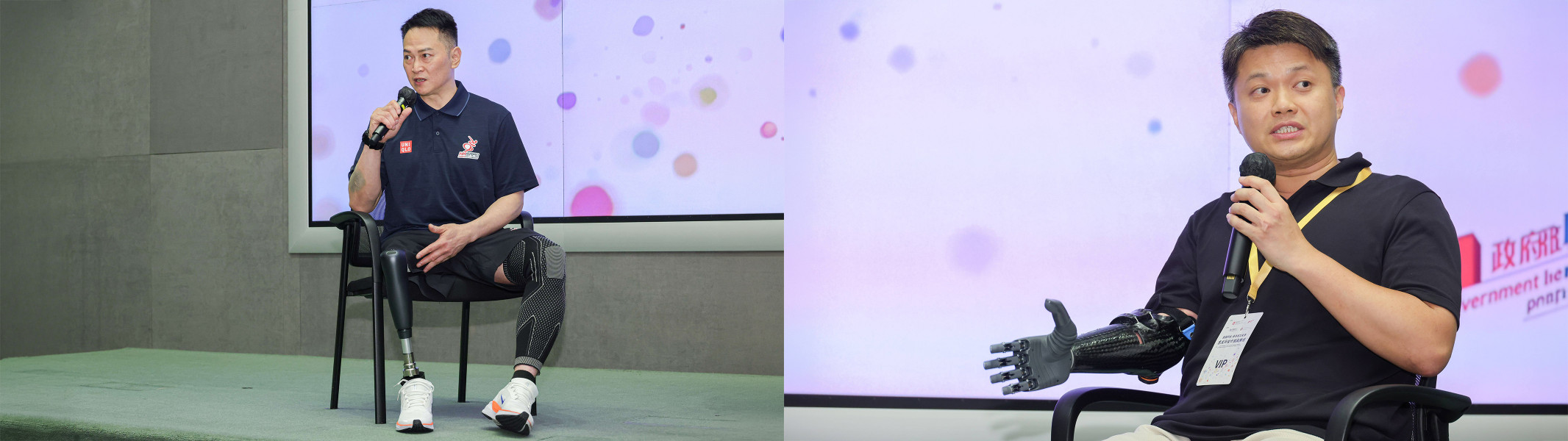
Programme beneficiaries shared their personal stories and experiences with intelligent prostheses during the launch ceremony.