
Shaping tomorrow’s space explorers through creativity and innovation
As a steadfast contributor to China’s deep space exploration missions, PolyU has once again demonstrated its commitment to nurturing the next generation of space pioneers through two meaningful competitions that bridge imagination and engineering. In collaboration with the Bank of China (Hong Kong) and the Education Bureau (EDB) of the Hong Kong Special Administrative Region (HKSAR) Government, PolyU launched the “Building the Future: Robotics for the International Lunar Research Station” Lunar Robot Design Competition, which challenged secondary students from 52 Greater Bay Area schools to design robotic systems for exploring the lunar south pole. In addition, PolyU joined forces with the Deep Space Exploration Laboratory (DSEL) to host the first National Deep Space Cultural and Creative Promotion Event. Held under the theme “Dreaming of Deep Space, Sharing the Future”, the event drew over 600 submissions, celebrating the fusion of aerospace science and cultural creativity. The two events built on a historic milestone for Hong Kong, which recently celebrated its first payload specialist for a space mission.
Uncovering creative solutions for the Moon
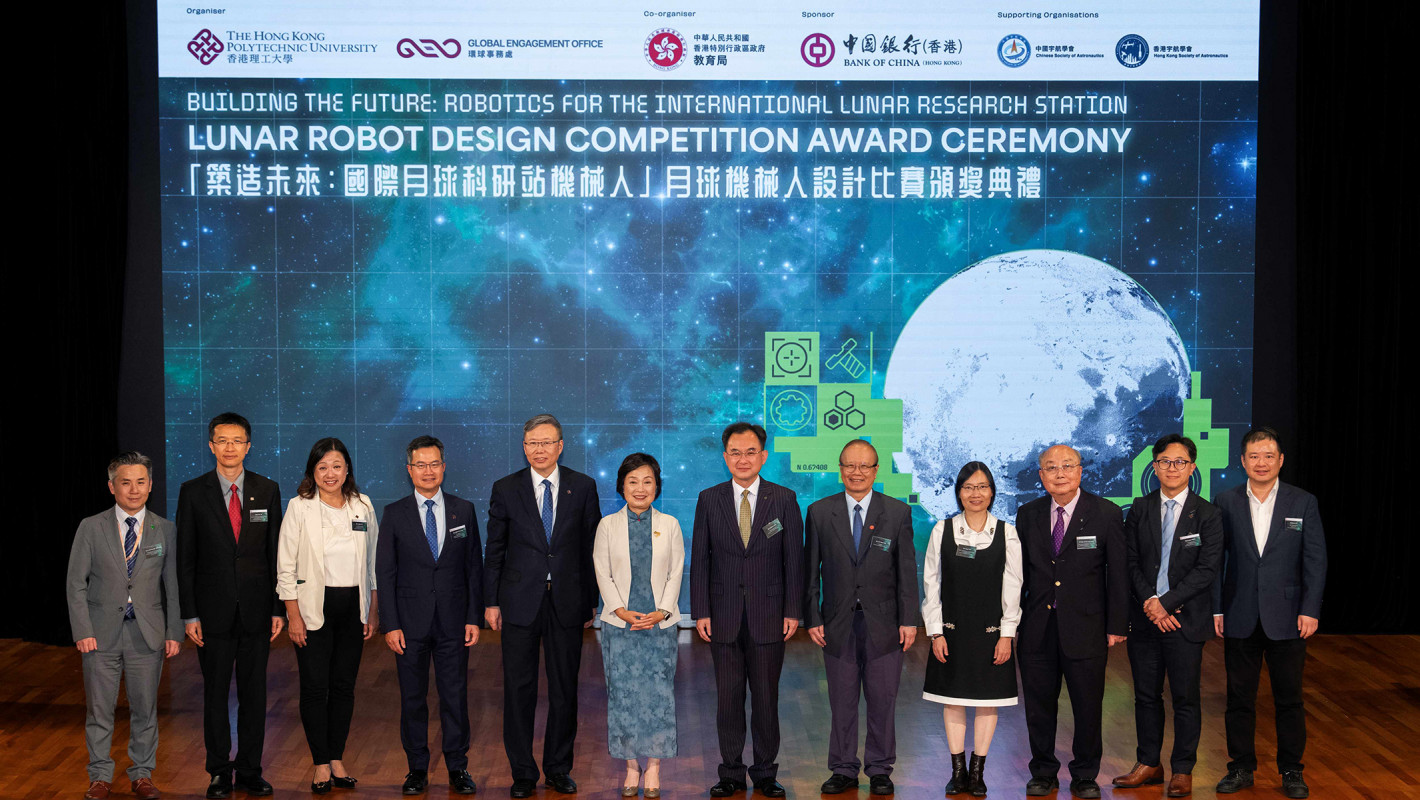
The Lunar Robot Design Competition concluded recently, reinforcing PolyU’s role in championing STEM education and nurturing future-ready talent. The competition drew 65 proposals from 52 secondary and international schools across the Greater Bay Area, challenging students to design robotic solutions across four themes: Exploration and Surveying Robots, Construction and Infrastructure Robots, Astronaut Support and Logistics Robots, and Multi-Robot Cooperative Systems. Nearly 200 guests attended the award ceremony at PolyU’s Chiang Chen Studio Theatre.
Dr Choi Yuk-lin, Secretary for Education, remarked, “We are deeply inspired by the successful launch of the manned Shenzhou-23 spacecraft, and that it is the first time for a payload expert from the HKSAR to participate in it. The EDB will seize the momentum to further promote aerospace education in schools and keep optimising science, mathematics, and technology education.”
Professor Jin-Guang Teng, President of PolyU, emphasised the University’s broader vision, “PolyU is dedicated to fostering innovation, research excellence and technological advancement,” noting that PolyU will launch the PolyU Aerospace Research Academy (PARA) later this year, further strengthening the University’s world-class excellence in deep space exploration and aviation.
The competition’s winning designs showcased impressive technical sophistication. The champion team from Pui Kiu College designed a bionic hexapod robot capable of autonomous excavation and 3D printing using lunar materials—providing robust support for lunar infrastructure projects. The first runner-up from Good Hope School featured a multi-robot cooperative system with specialised units for processing, transport, and scouting, demonstrating how distributed robotic systems can overcome the limitations of single robots. The second runner-up from Malvern College Hong Kong designed an exploration robot powered by radioisotope thermoelectric generators for long-term missions in permanently shadowed regions of the lunar south pole.
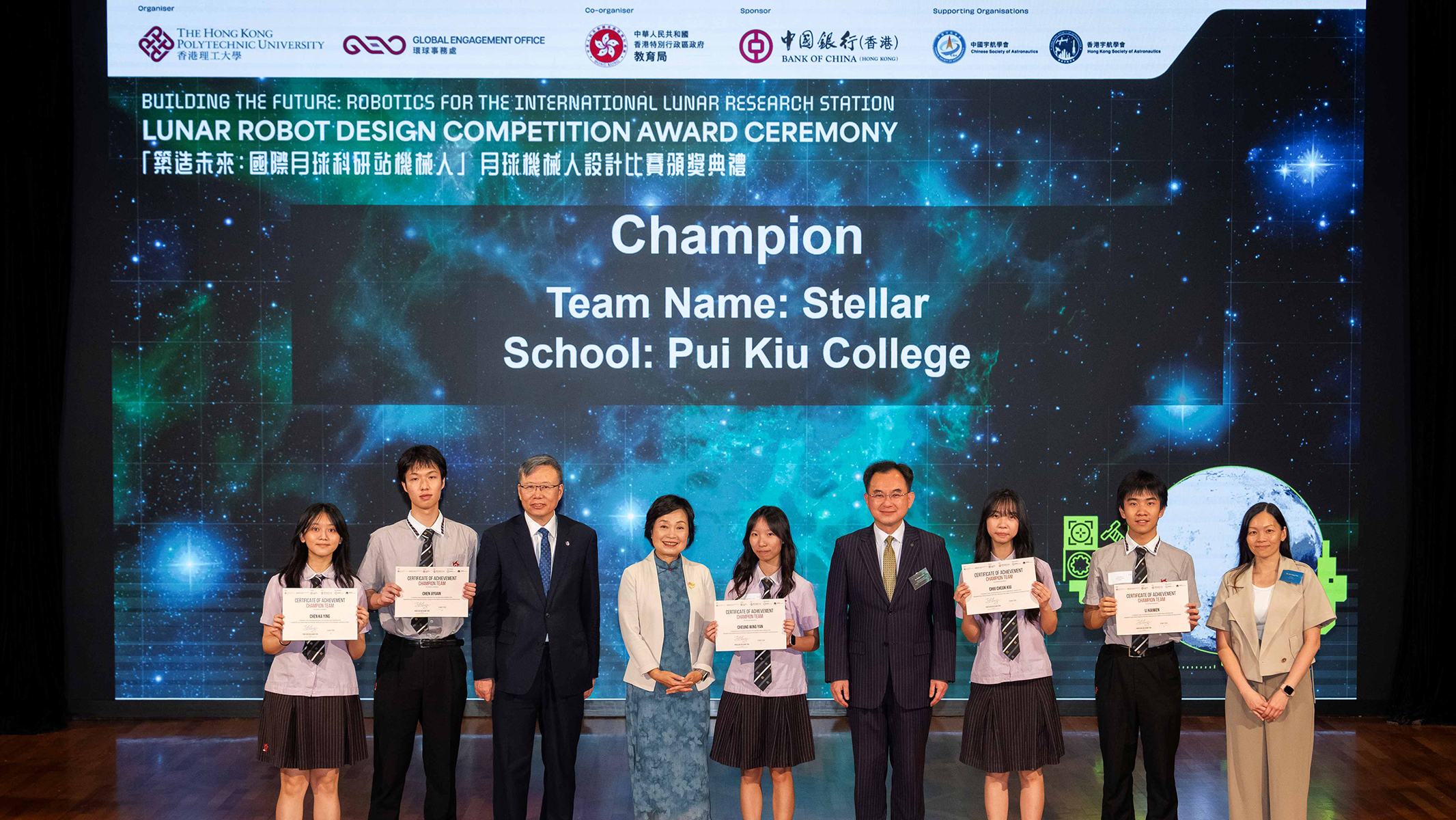
Dr Choi Yuk-lin (4th from left); Prof. Jin-Guang Teng (3rd from left); and Mr Stephen Chan, Deputy Chief Executive of Bank of China (Hong Kong) (4th from right) presented the award to the champion team from Pui Kiu College.

Prof. Cheung Leong, Vice President (Administration and Development) of PolyU (3rd from left) presented the award to the first runner-up team from Good Hope School.
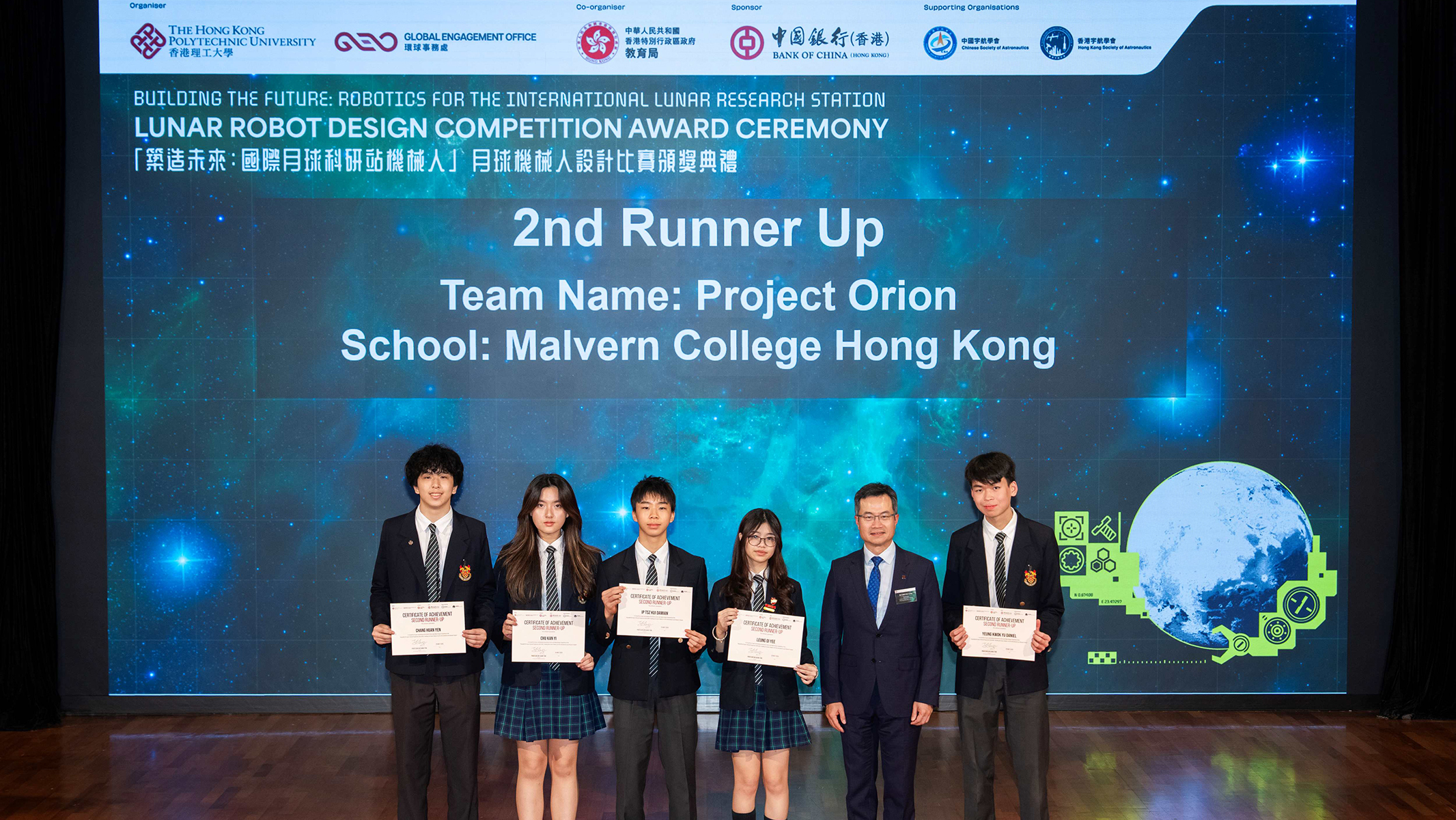
Prof. Cheung Leong (2nd from right) presented the award to the second runner-up team from Malvern College Hong Kong.
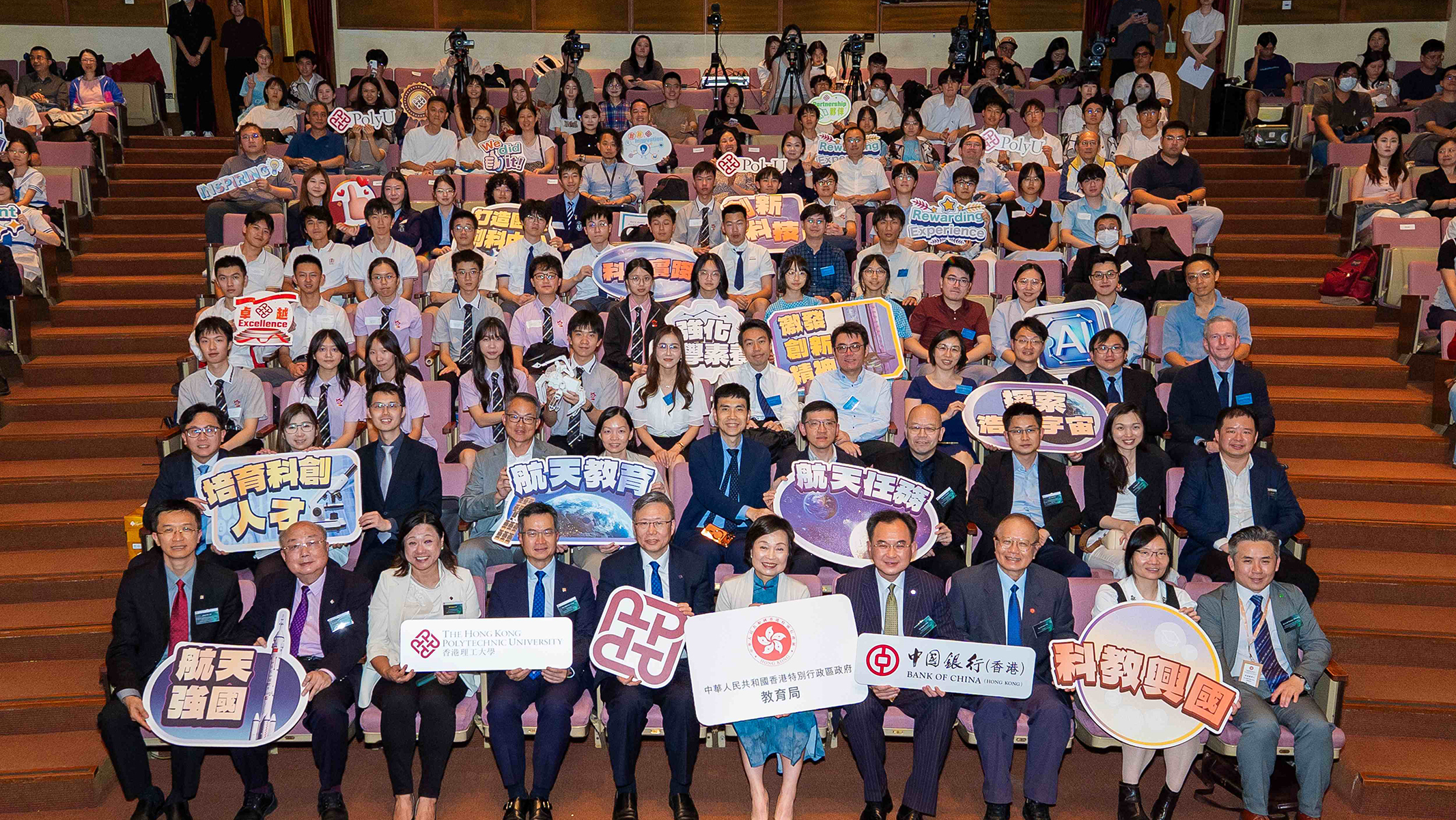
The award ceremony was held at the Chiang Chen Studio Theatre on the PolyU campus, attended by nearly 200 experts, students, teachers and parents.
Where art meets aerospace
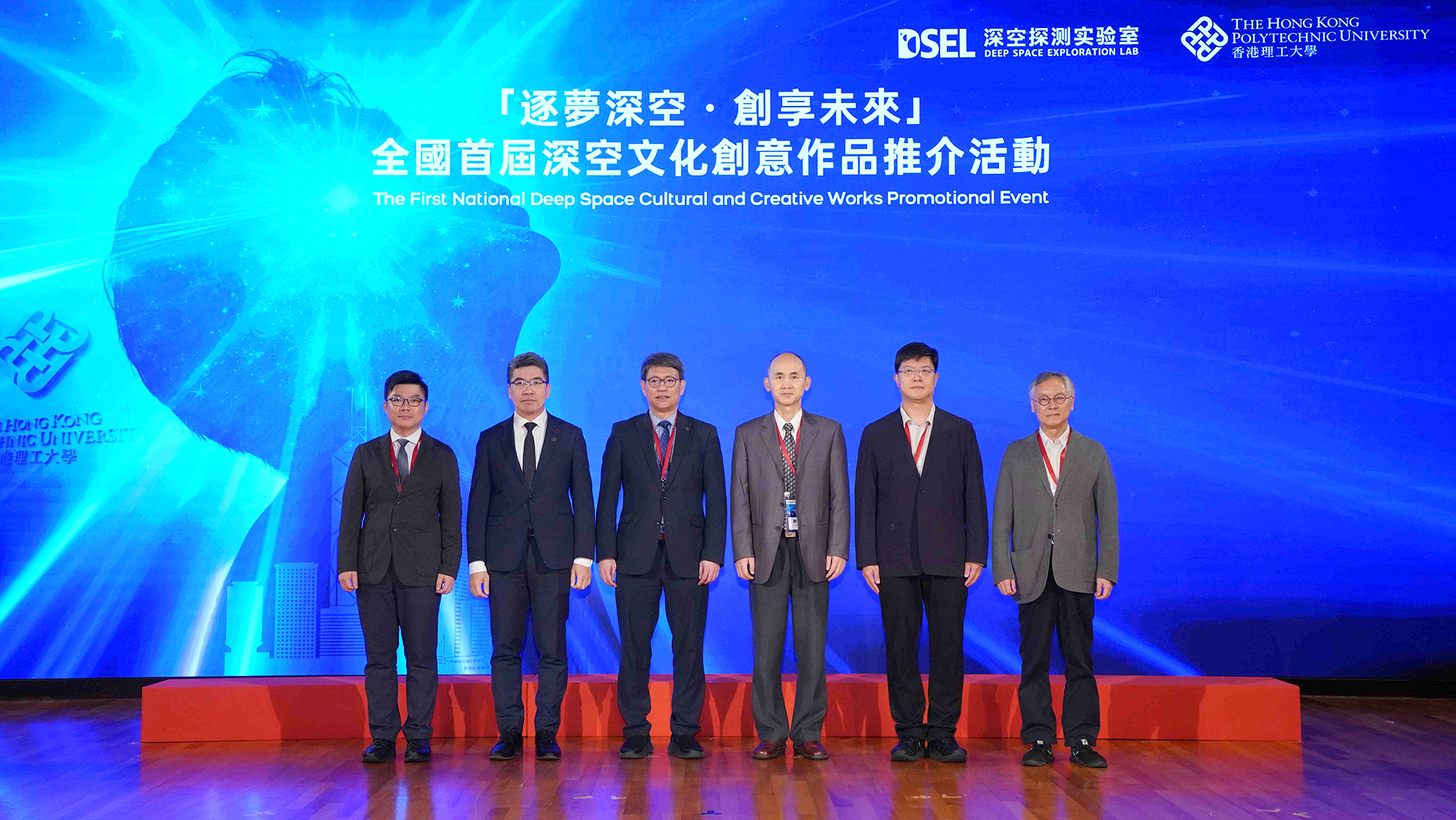
The event’s award presentation was attended by Mr Liu Maozhou, First-level Inspector of the Department of Educational, Scientific and Technological Affairs of the Liaison Office of the Central People’s Government in the HKSAR (3rd from right); Prof. Christopher Chao, PolyU Senior Vice President (Research and Innovation) (3rd from left); Mr Yu Jike, Deputy Director of DSEL (2nd from right); Mr Hsu Hoi Shan, President of the Beijing-Hong Kong Academic Exchange Centre (2nd from left); Prof. Lu Xiaobo, Director of the Tsinghua University Art Museum (1st from right); and Mr Lau Kai-ip, Museum Director of the Hong Kong Science Museum (1st from left), as well as other distinguished guests.
The final round of judging for the first National Deep Space Cultural and Creative Works Promotion Event was completed on 16 June, followed by an award presentation ceremony and expert talks held on the PolyU campus. The series of activities promoted the deep integration of science popularisation and technological innovation, injecting new interest into the Nation's future deep space exploration endeavours.
The event garnered over 600 submissions from across the country, with approximately 100 entries originating from Hong Kong and Macao. The overall Grand Prize went to a student team from Tsinghua University for their work “Pu Gong: A Vision for Future Interstellar Exploration”, which proposed an innovative concept for interstellar study tours featuring a multifunctional interstellar mothership.
In his welcoming remarks, Professor Christopher Chao, PolyU Senior Vice President (Research and Innovation) said, “This event has created a platform connecting technology, culture and future imagination through a range of activities, including a cultural and creative works promotion campaign, expert talks and a special exhibition. It advances the collaborative development of science popularisation and technological innovation, while further inspiring young people’s interest in exploring aerospace technology.” Mr Yu Jike, Deputy Director of DSEL, remarked that the event fostered a high-quality platform where technology blends with art, while enhancing exchanges between the Chinese Mainland and Hong Kong.
Expert lectures and panel discussions further enriched the programme, while a special exhibition titled “Dreaming of Deep Space” was also held on campus, showcasing the Nation’s journey from lunar orbiting missions to Mars roving missions through images, videos, and physical models, and attracting large numbers of students, staff, and members of the public.
The event was co-organised by the International Deep Space Exploration Association and supported by various institutions, including the China Soong Ching Ling Science and Culture Centre for Young People, China International Communications Group (CICG), the Tsinghua University Art and Science Research Center, the Beijing-Hong Kong Talent Exchange Centre, the Beijing-Hong Kong Academic Exchange Centre, the Hong Kong Science Popularization and Science Fiction Academy, the Macao Science Center, and AstroReach (Beijing) Technology Co., Ltd., further reinforcing PolyU’s commitment in deepening collaboration between the Chinese Mainland and Hong Kong in the fields of aerospace science popularisation and cultural communication, thus expanding the reach of China’s deep space exploration culture.
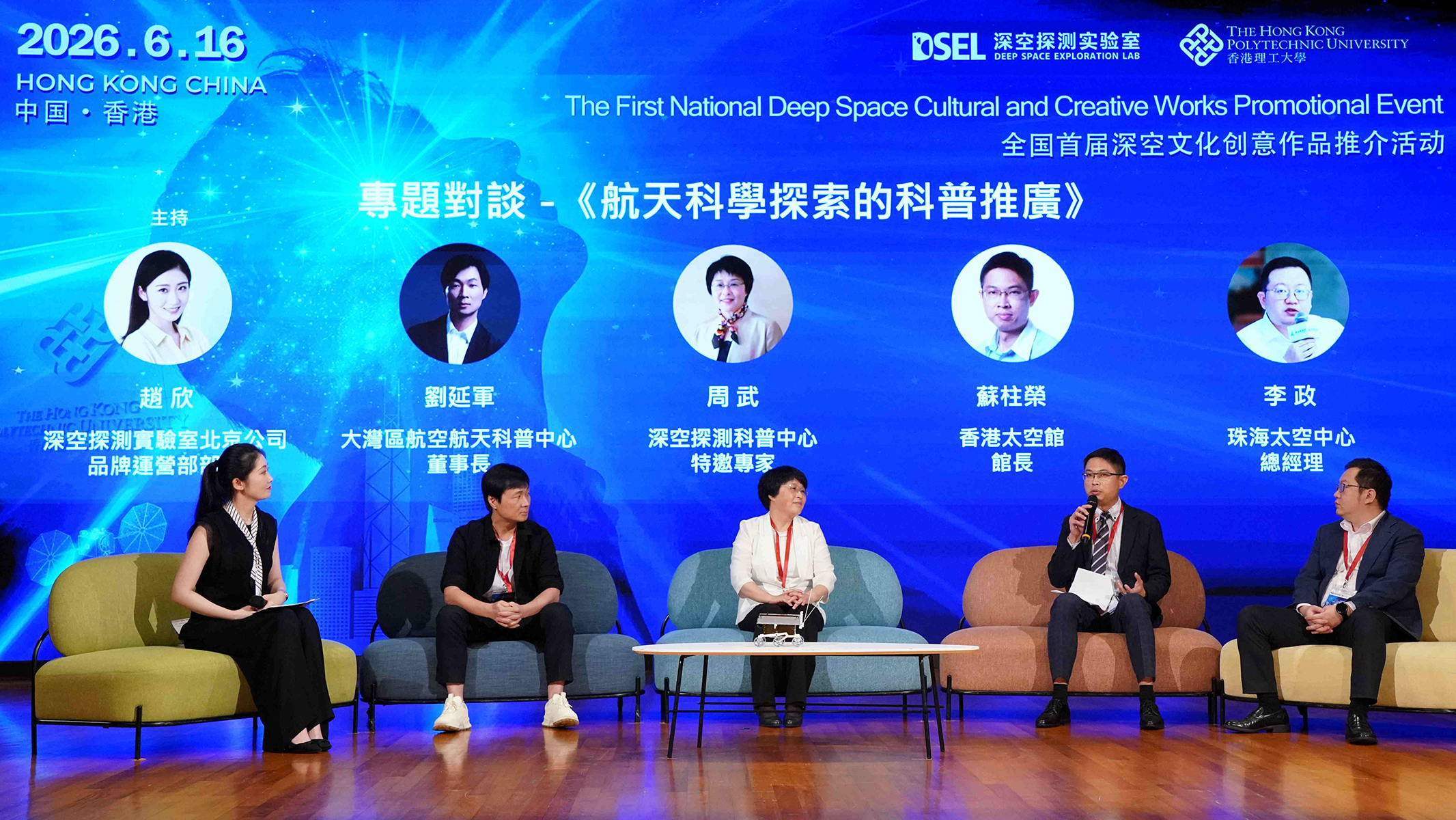
Themed “Popularising and Promoting Aerospace Science Exploration”, the panel discussion was moderated by Ms Zhao Xin, Head of Brand Operations at Deep Space Exploration Technology (Beijing) Co., Ltd. (1st from left), and featured Ms Zhou Wu, Invited Expert of the Deep Space Exploration Science Popularisation Centre (centre); Mr Liu Yanjun, Chairman of the Greater Bay Area Aerospace Science Popularisation Centre (2nd from left); Dr So Chu-wing, Curator (Space) of the Hong Kong Space Museum (2nd from right); and Mr Li Zheng, General Manager of Zhuhai Aerospace Land (1st from right).
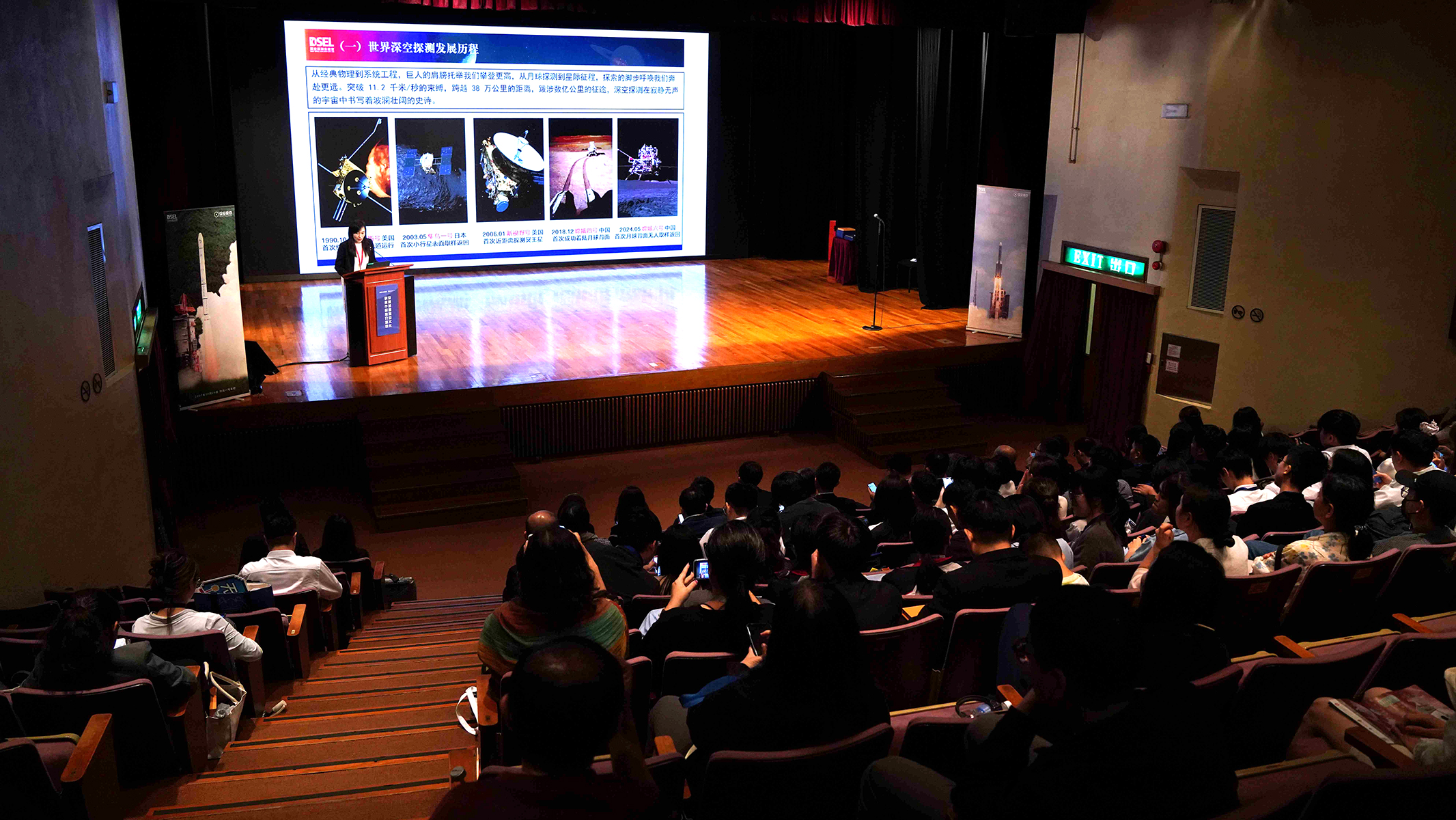
During the expert talks, Ms Lin Shan, Chief Expert of the Deep Space Exploration Science Popularisation Centre; Prof. Wu Bo, Associate Director of the PolyU Research Centre for Deep Space Exploration; and Ms Zhou Wu, Invited Expert of the Deep Space Exploration Science Popularisation Centre, each delivered keynote speeches.
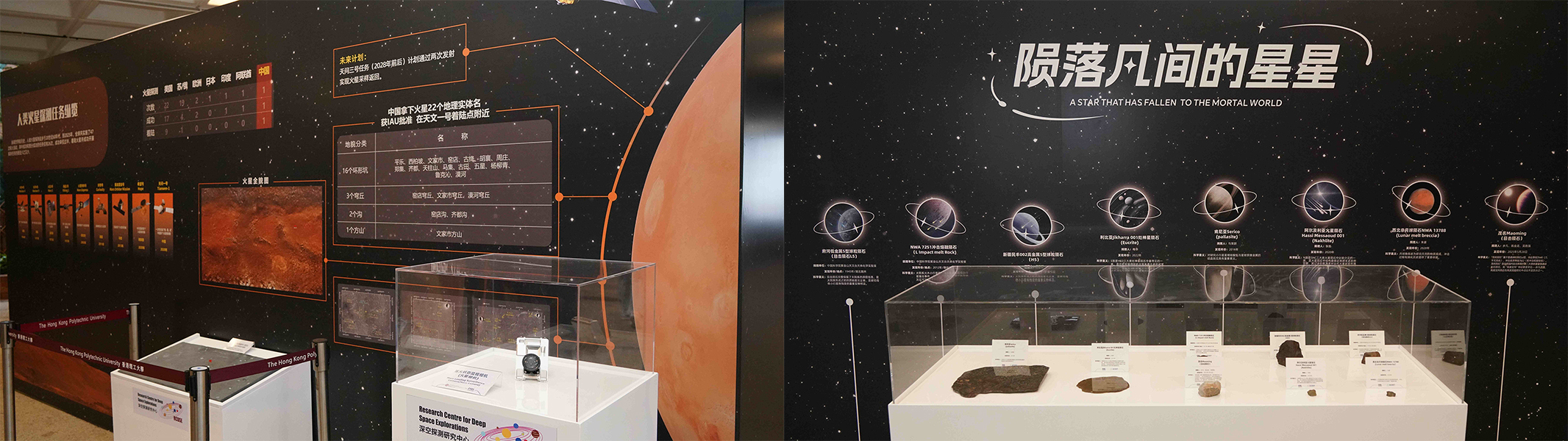
PolyU hosted a special exhibition titled “Deep Space Exploration in China” in parallel with the event, revisiting the Nation’s remarkable journey in deep space exploration from lunar orbit missions to Mars exploration through images, videos and physical prototypes.