
Celebrating the launch of the Third Chinese Culture Festival and unveiling a revitalised Lam Tai Fai Amphitheatre
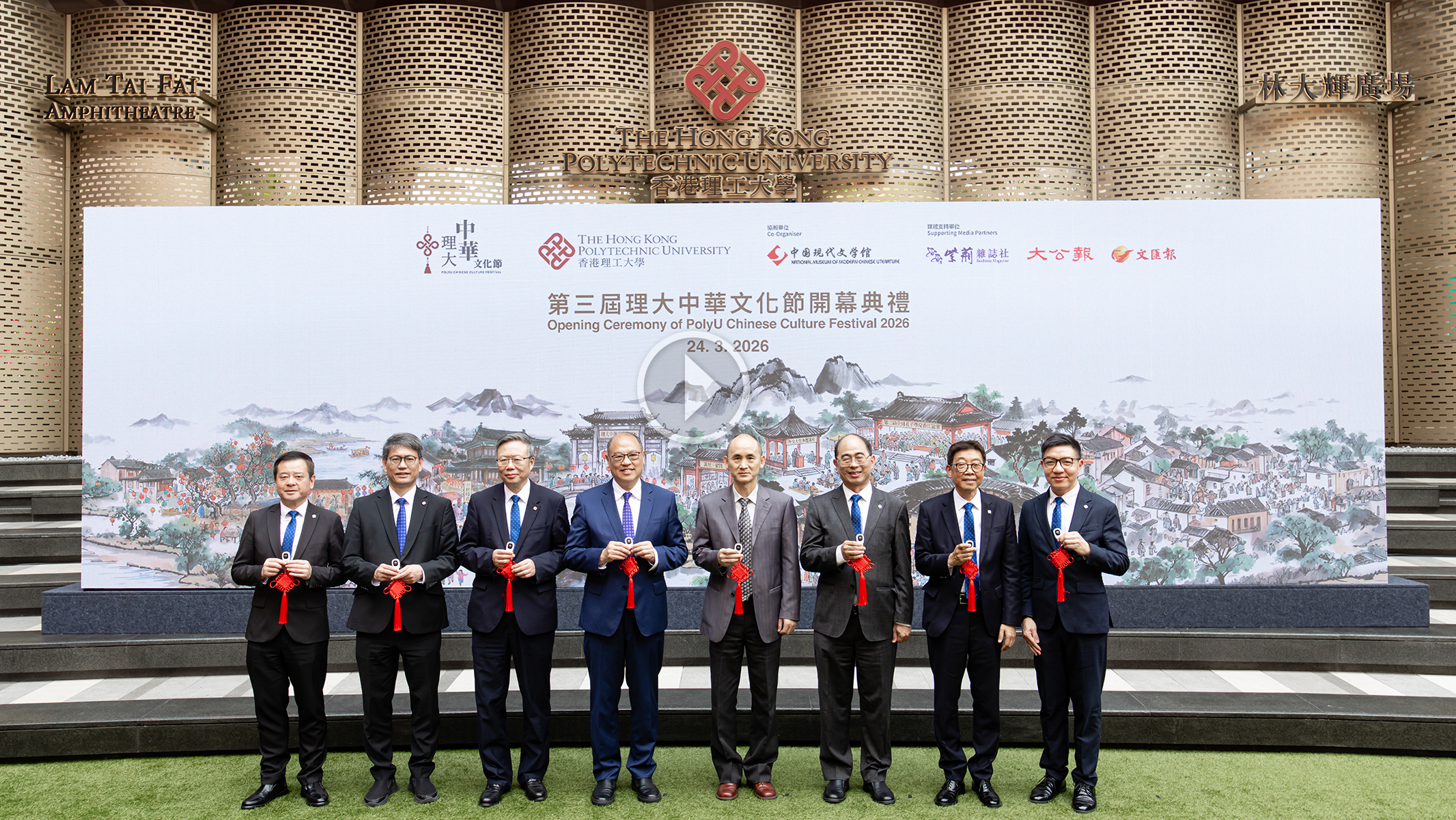
The Opening Ceremony of the Third PolyU Chinese Culture Festival was officiated by Mr Liu Maozhou, First-Level Inspector of the Department of Educational, Scientific and Technological Affairs of the Liaison Office of the Central People’s Government in the Hong Kong Special Administrative Region (4th from right), together with Dr Lam Tai-fai, PolyU Council Chairman (4th from left); Prof. Jin-Guang Teng, President (3rd from left); Prof. Wing-tak Wong, Deputy President and Provost (3rd from right); Prof. Christopher Chao, Senior Vice President (Research and Innovation) (2nd from left); Prof. Cao Jiannong, Vice President (Education) (2nd from right); Prof. Ben Young, Vice President (Student and Global Affairs) and Chairman of the PolyU Chinese Culture Festival (1st from left); and Dr Ben Lau, Interim Vice President (Campus and Facilities) (1st from right).
Chinese culture took centre stage at PolyU with the opening of the Third PolyU Chinese Culture Festival and the unveiling of the enhanced Lam Tai Fai Amphitheatre. As a flagship event promoting Chinese culture, the Festival underscored the University’s commitment to embedding Chinese heritage into campus life and education, with this year's expanded programme highlighting its depth, diversity and contemporary relevance while fostering community engagement.
That commitment was reflected in the Festival’s opening programme, “A Window onto Vast Vistas: Master Writers’ Hong Kong Traces”, on display at the Wong Man and Tang Kit Wah Global Student Hub. Rather than presenting literature as something distant or purely academic, the exhibition invited visitors into the worlds of six major modern Chinese writers – Lu Xun, Xiao Hong, Mao Dun, Ba Jin, Liang Yusheng and Jin Yong – through rare archival materials, immersive settings and public talks. Co-organised with the National Museum of Modern Chinese Literature, it created a meeting point between literary history and present-day campus life.
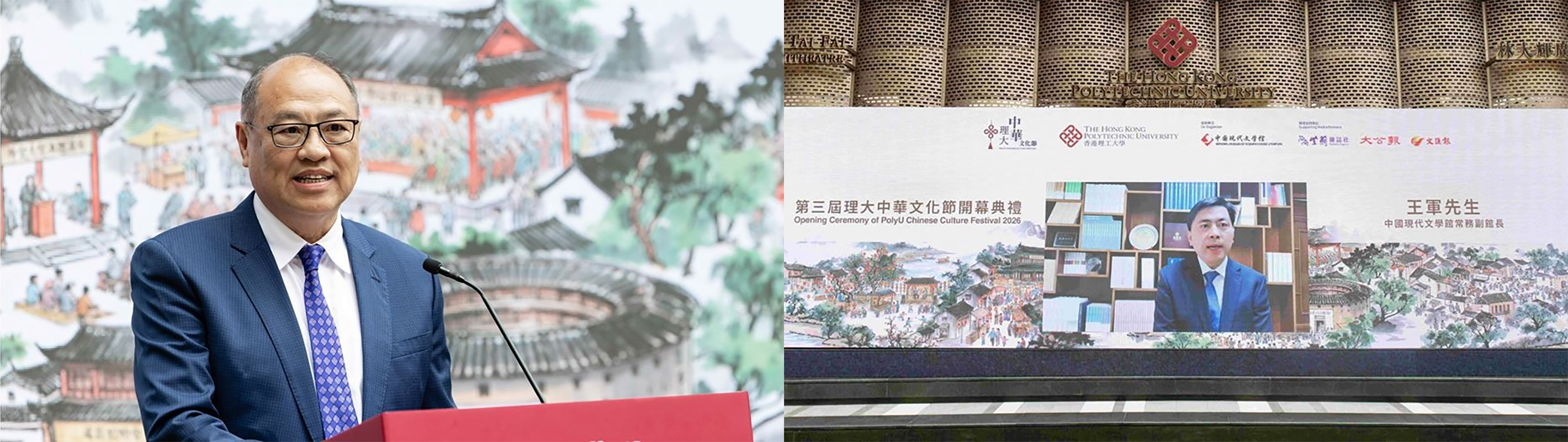
Dr Lam (left) described the Festival as a pivotal platform for preserving and promoting the Chinese culture while advancing students’ whole-person development, while Mr Wang Jun, Executive Deputy Director of the National Museum of Modern Chinese Literature (right), said in his online address that the exhibition aimed to build a bridge of communication through literature and foster cultural exchange.
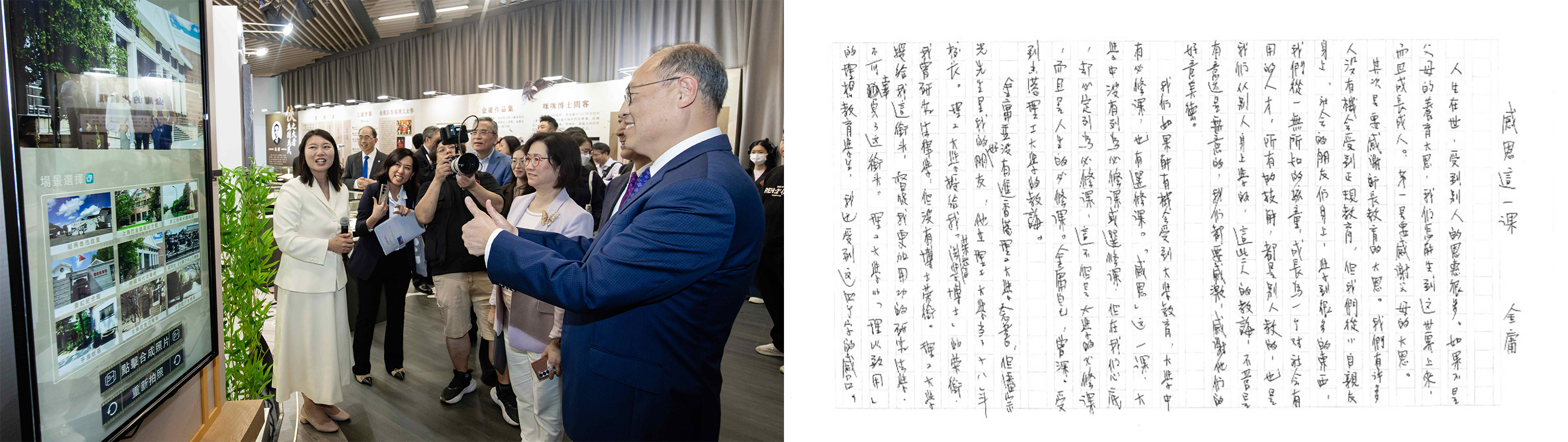
The exhibition “A Window onto Vast Vistas: Master Writers’ Hong Kong Traces” highlights six modern Chinese literary masters through rare manuscripts, correspondence and reconstructed study rooms, and includes a previously unexhibited manuscript by PolyU Honorary Doctor of Laws Jin Yong documenting his reflections on receiving the honorary degree.
Throughout the year, the Festival will present a wide range of programmes, including Ambassadors’ seminars, film screenings, a Mid-Autumn Festival Gala, thematic activities on Hakka and Fujian Minnan cultures, and the Global Confucius Institutes Hong Kong Forum. Through these activities, PolyU is not only celebrating tradition, but also creating opportunities for cultural participation, learning and exchange across the campus community and beyond.
PolyU Council Chairman Dr Lam Tai-fai spoke at the opening ceremony and emphasised that the flourishing of culture is inseparable from the strength and prosperity of a nation. His remarks captured the deeper purpose behind the Festival: to showcase Chinese culture while nurturing among younger generations a stronger sense of national identity, belonging and responsibility. The Festival also contributes to Hong Kong’s development as an East-meets-West Centre for International Cultural Exchange.
“The National 15th Five‑Year Plan calls for enhancing the country’s cultural soft power, promoting Chinese culture and advancing the building of a global community with a shared future. This is not only a National strategy, but also an important mission for both PolyU and Hong Kong,” he stated. “We are further expanding the scope of this year’s Festival and enriching its depth. To this end, we have strengthened collaboration with provincial and municipal governments and relevant organisations in Chinese Mainland.”
Unveiled on the same day, the revitalised Lam Tai Fai Amphitheatre outside the Jockey Club Auditorium has been reimagined as an open and welcoming hub for exhibitions, performances and community gatherings. Retaining its distinctive fan-shaped design, the 1,100 m2 amphitheatre now accommodates up to 200 spectators and is set to become a lively focal point for shared cultural experiences on campus.
In honouring Dr Lam’s longstanding support for education and for his alma mater, the Amphitheatre also symbolises generosity, continuity and commitment to the public good. As PolyU President Professor Jin-Guang Teng noted at the unveiling, it stands for gratitude, perseverance and a vision that embraces both the Nation and the world. “On behalf of the University, I extend my sincerest appreciation to Dr Lam for dedicating his time, energy, expertise and determination to the continued advancement of his alma mater. His dedication to Hong Kong, the Nation and the education sector continues to inspire us,” said Professor Teng.
The two occasions reflected the University’s view that culture should be both valued and lived. Through its programmes and campus spaces, PolyU aims to ensure that Chinese culture is not only preserved, but also actively experienced and shared within the community.
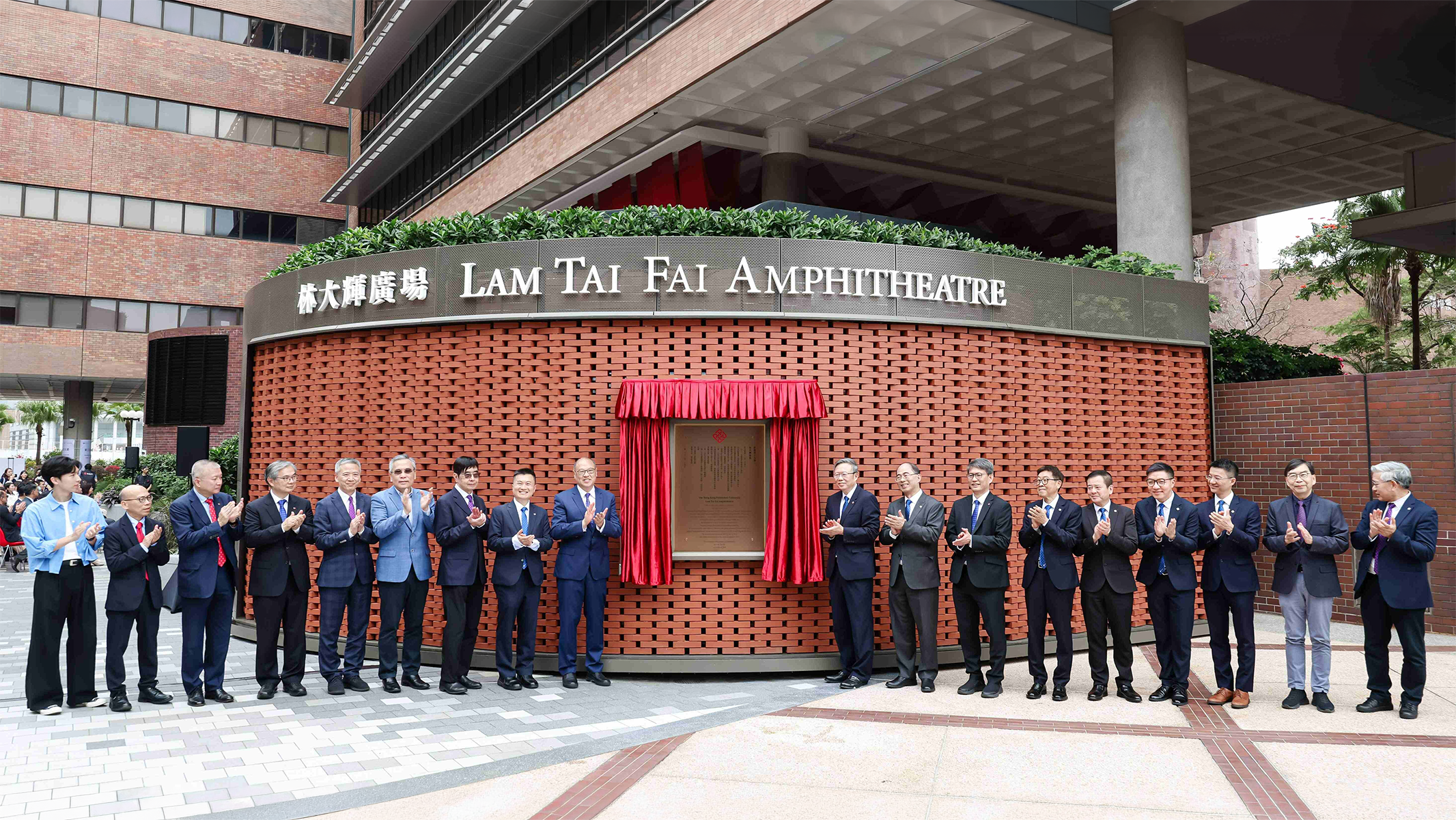
The unveiling ceremony of the Lam Tai Fai Amphitheatre was officiated by Dr Lam (left of the plaque) and Prof. Teng (right to the plaque), with members of the PolyU Council and central management team in attendance to mark the opening of this new campus cultural landmark.