
State Key Laboratory of Climate Resilience for Coastal Cities jointly launched by PolyU and HKUST to combat climate change
Other Articles
Climate change presents unprecedented challenges to urban environments, especially coastal cities that face increasing risks from rising sea levels and extreme weather events. In a landmark move to address these pressing issues, the State Key Laboratory of Climate Resilience for Coastal Cities (SKL-CRCC) was officially inaugurated in December. Approved by the Ministry of Science and Technology (MOST) of the People’s Republic of China, SKL-CRCC represents a joint initiative between PolyU and The Hong Kong University of Science and Technology (HKUST), reflecting a strong spirit of collaboration that brings together academic excellence, innovative research, and global expertise to advance climate resilience and sustainable urban development.
Dedicated to strengthening infrastructure resilience in Hong Kong, the Chinese Mainland, and coastal cities worldwide, SKL-CRCC focuses on enhancing climate-risk early-warning systems, bolstering emergency response capabilities, and advancing sustainable urban development. Complementing the inauguration, a two-day international symposium brought together leading global experts and scholars to exchange insights and strategies for building climate-resilient coastal cities of the future.
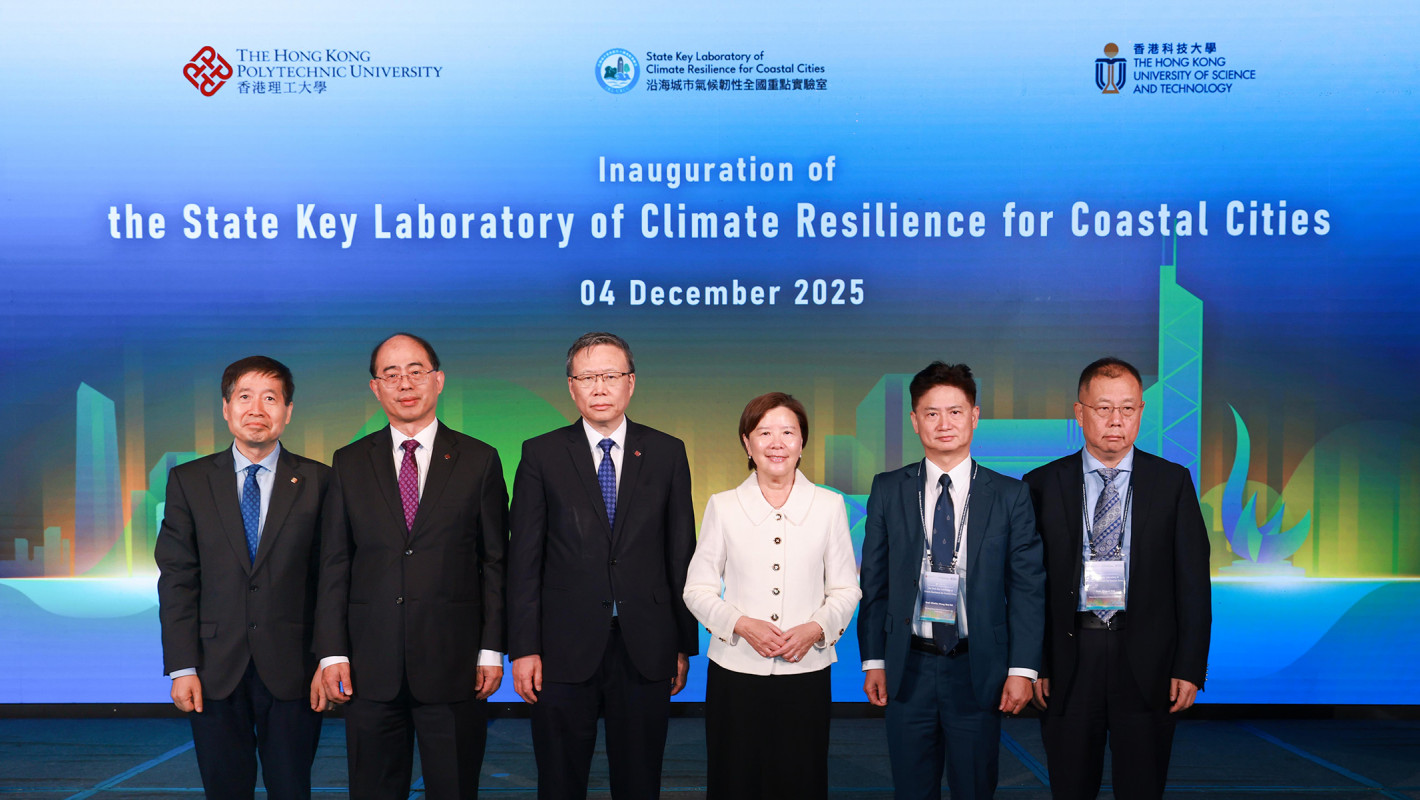
Taking place at Hotel ICON and hosted by PolyU, the inauguration ceremony welcomed distinguished officiating guests including Professor Jin-Guang Teng, PolyU President; Professor Nancy Ip, HKUST President; Professor Wing-tak Wong, PolyU Deputy President and Provost; Professor Li Xiangdong, Dean of the Faculty of Construction and Environment, Director of SKL-CRCC and Director of the Otto Poon Research Institute for Climate-Resilient Infrastructure (RICRI) of PolyU; Professor Charles Ng Wang-wai, Vice-President for Institutional Advancement of HKUST, Director of SKL-CRCC, and CLP Holdings Professor of Sustainability; and Professor Yue Qingrui, Chairman of the Academic Committee of SKL-CRCC.
In his remarks, Professor Teng emphasised that the establishment of SKL-CRCC not only closely aligns with the National Climate Change Adaptation Strategy 2035, but also supports the focus on climate-resilient urban development by the Government of Hong Kong Special Administrative Region (HKSAR) of the People’s Republic of China. Its significance is far-reaching: it reflects the Nation’s commitment to technological self-reliance, scientific excellence and sustainable development, and exemplifies the synergy of Hong Kong’s world-class universities. By leveraging complementary advantages, this strategic collaboration will drive national innovation and global scientific progress.
Professor Ip underscored that the founding of the SKL-CRCC demonstrates Hong Kong’s strong capacity to unite world-class research expertise from leading institutions in a strategic collaboration to address one of the generation’s most urgent challenges. By pioneering solutions for urban disaster mitigation and infrastructure resilience, this laboratory represents a strategic national initiative.
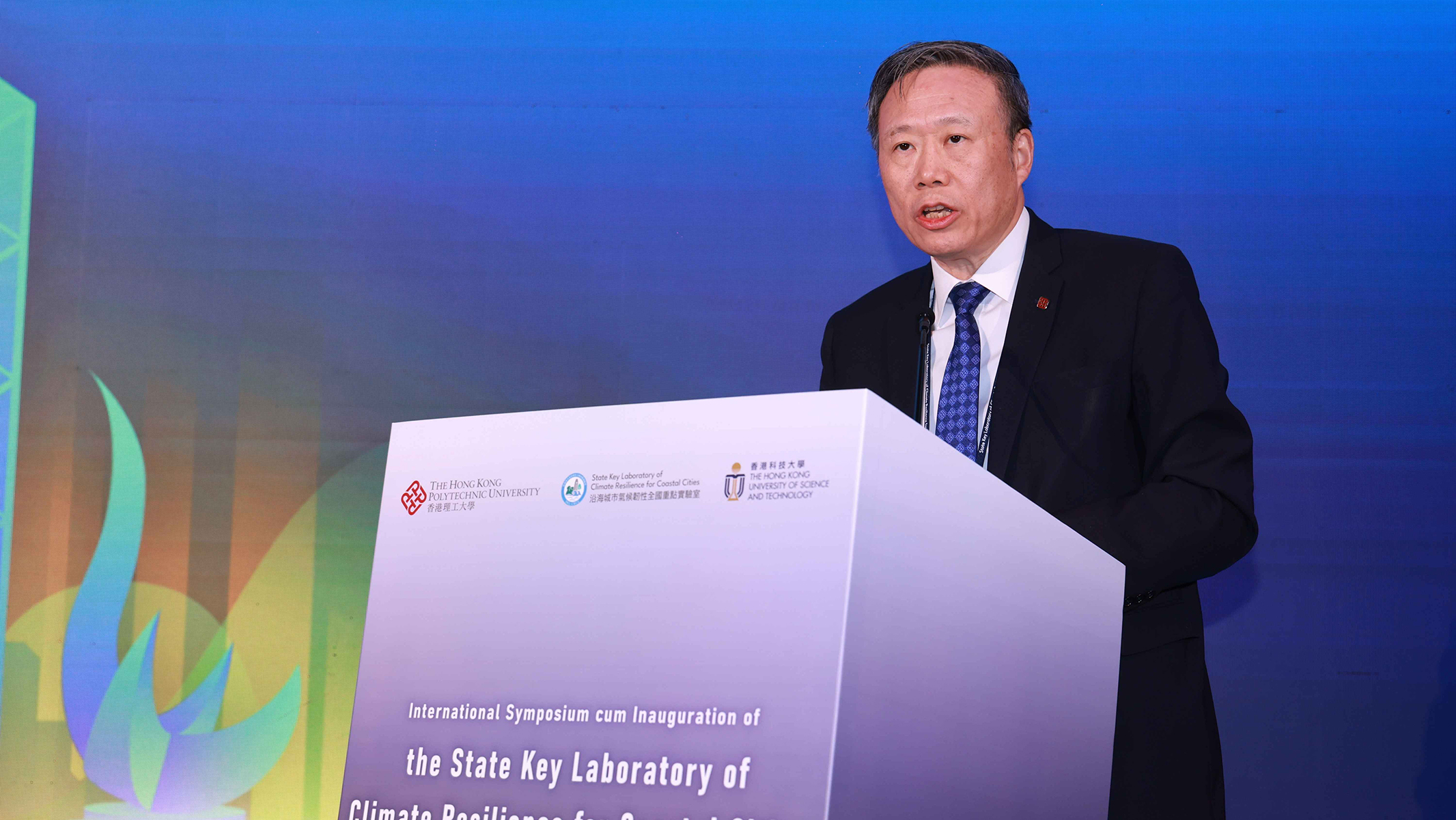
PolyU sincerely thanks the Central Government and the Government of the HKSAR for their foresight and support. We will continue translating research into impactful solutions and make the laboratory a ‘core engine’ for resilient urban development, strengthening public safety, urban resilience and sustainable development.
~ Professor Jin-Guang Teng,
PolyU President
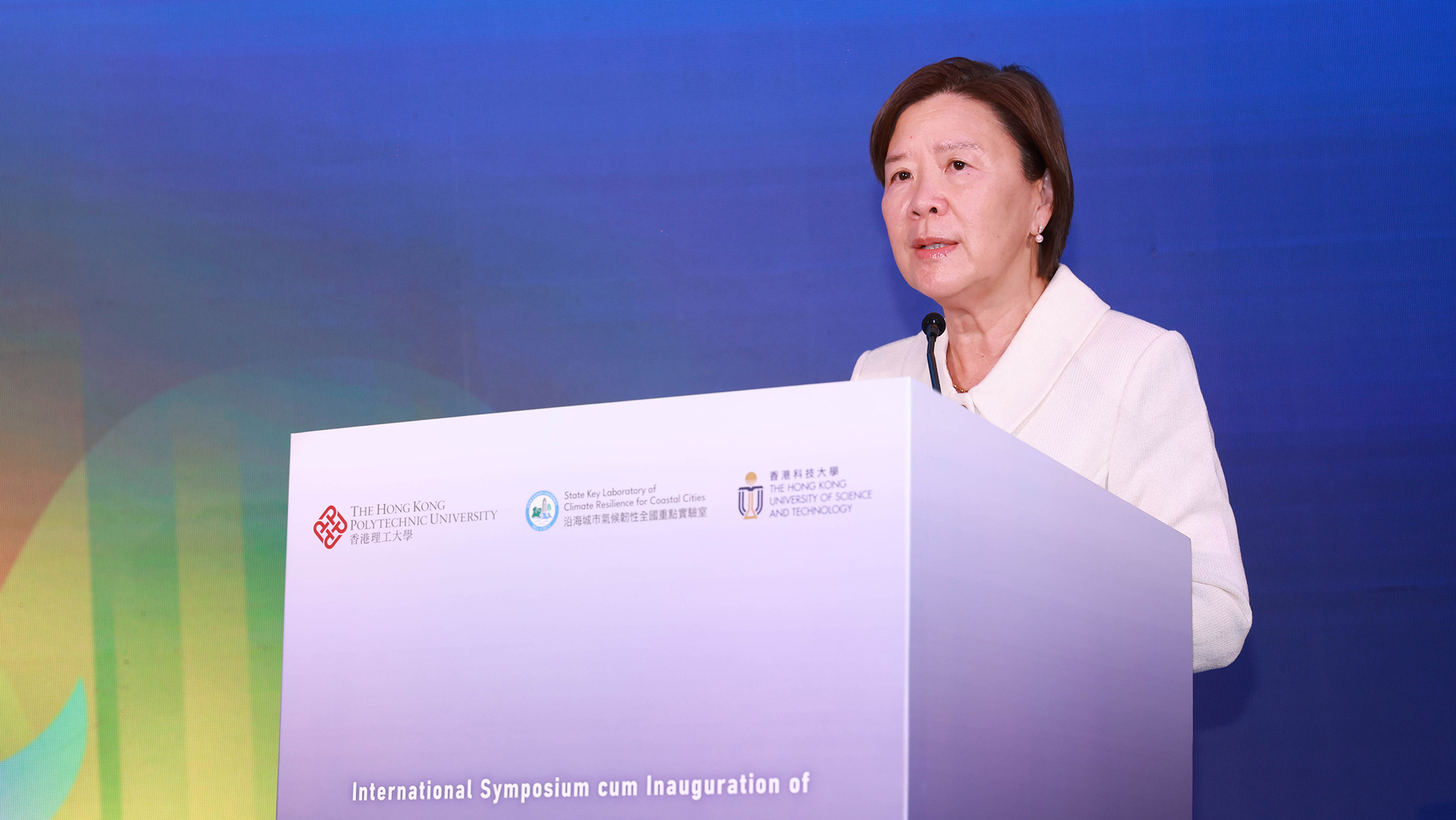
The SKL-CRCC will serve to enhance Hong Kong’s position as an international innovation and technology hub, contributing steady meaningful momentum to our Nation’s scientific advancement and long-term sustainable development.
~ Professor Nancy Ip,
HKUST President
Research teams from PolyU and HKUST will harness the advanced facilities and complementary strengths of both institutions to conduct cutting-edge studies. Insights and data generated from these collaborative efforts will play a vital role in enhancing forecasting accuracy and strengthening the response capabilities of coastal cities under extreme weather conditions. SKL-CRCC’s key research areas encompass:
Climate Change and Extreme Weather
Climate Change Risk Perception, Early Warning, and Response Policy Management
Coastal Engineering and Technology
Extreme Rainstorm Disasters and Nature-based Solutions
Urban Compound Disasters and Evolution
Urban Infrastructure and Resilience
In addition, the two-day international symposium brought together around 30 leading experts from prestigious universities from various countries to discuss topics such as marine heatwaves, earthquakes, urban water management, and artificial intelligence applications. Officially accredited as a State Key Laboratory by MOST in August 2025, SKL-CRCC advances national and global strategies to enhance coastal infrastructure resilience and mitigate climate-related risks.
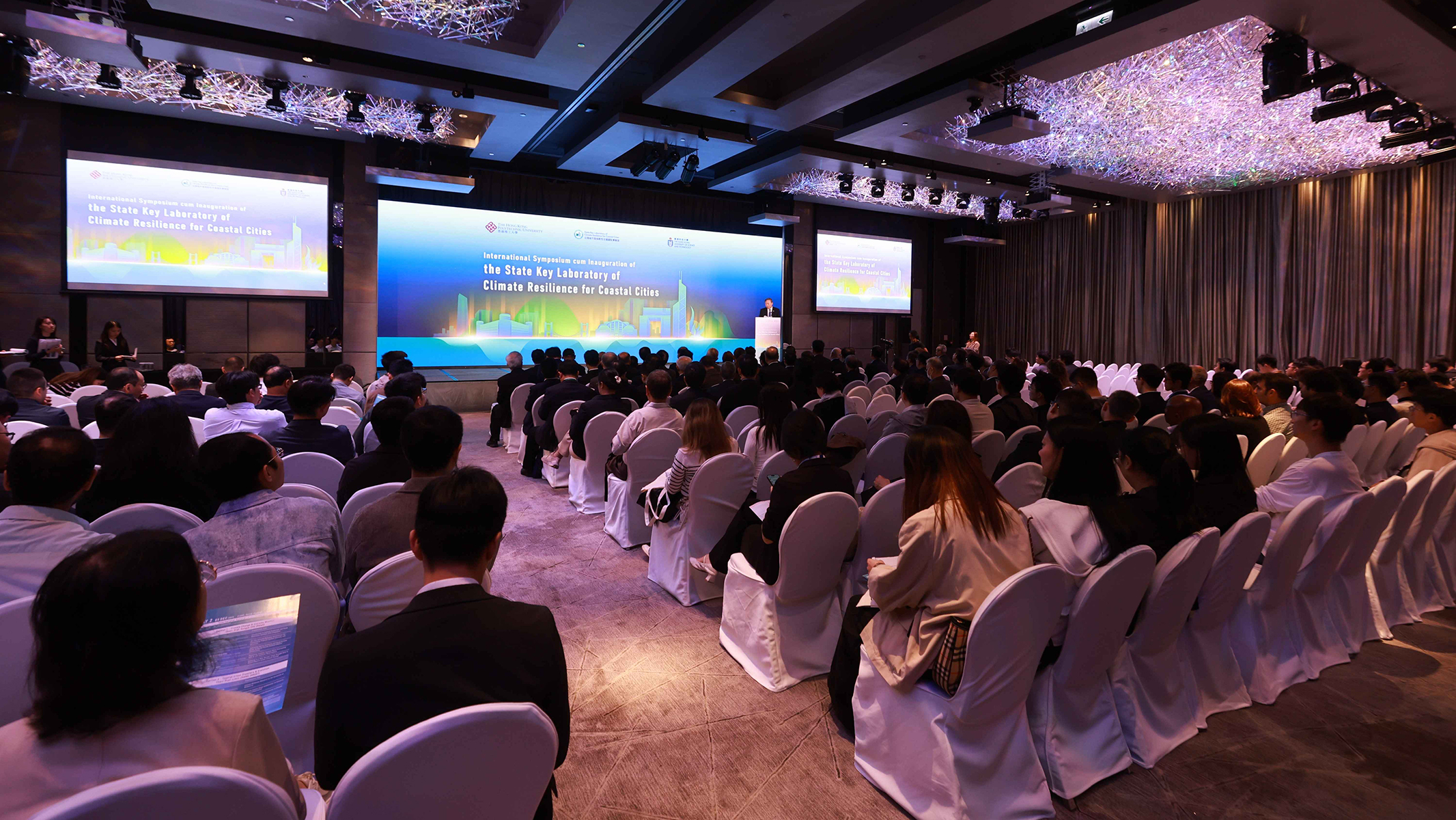
The Symposium gathered leading global experts and scholars to discuss strengthening climate resilience in coastal cities.