
Empowering jobseekers: AI interview coach addresses youth employment challenges
Securing graduate employment has become increasingly challenging in Hong Kong, where the unemployment rate among residents aged 20 to 24 reached 12.3% in late 2025. More broadly, recruitment industry reports point to intense competition and widespread interview anxiety, with approximately 242 applications per opening and 93% of candidates reporting anxiety about interviews. As employers increasingly value communication, adaptability and problem-solving abilities alongside technical qualifications, interview readiness has become a decisive factor in graduate success.
Bridging the preparation gap with AI
To address this critical societal challenge, PolyInterview was developed under the leadership of Dr Zhiyuan Wen, Research Assistant Professor in the Department of Computing and the Institute for Higher Education Research and Development (iHERD); Dr Kelly Chan, Associate Director of iHERD and Head of the Digital Transformation Division; and Professor Jiannong Cao, Vice President (Education) and Director of iHERD.
The groundbreaking platform addresses a persistent gap in higher education career preparation: while realistic, multi-round interview practice is vital to building confidence and reducing candidate anxiety, traditional expert mock coaching can cost USD 180 or more per session, making it difficult to scale personalised human coaching for thousands of students.
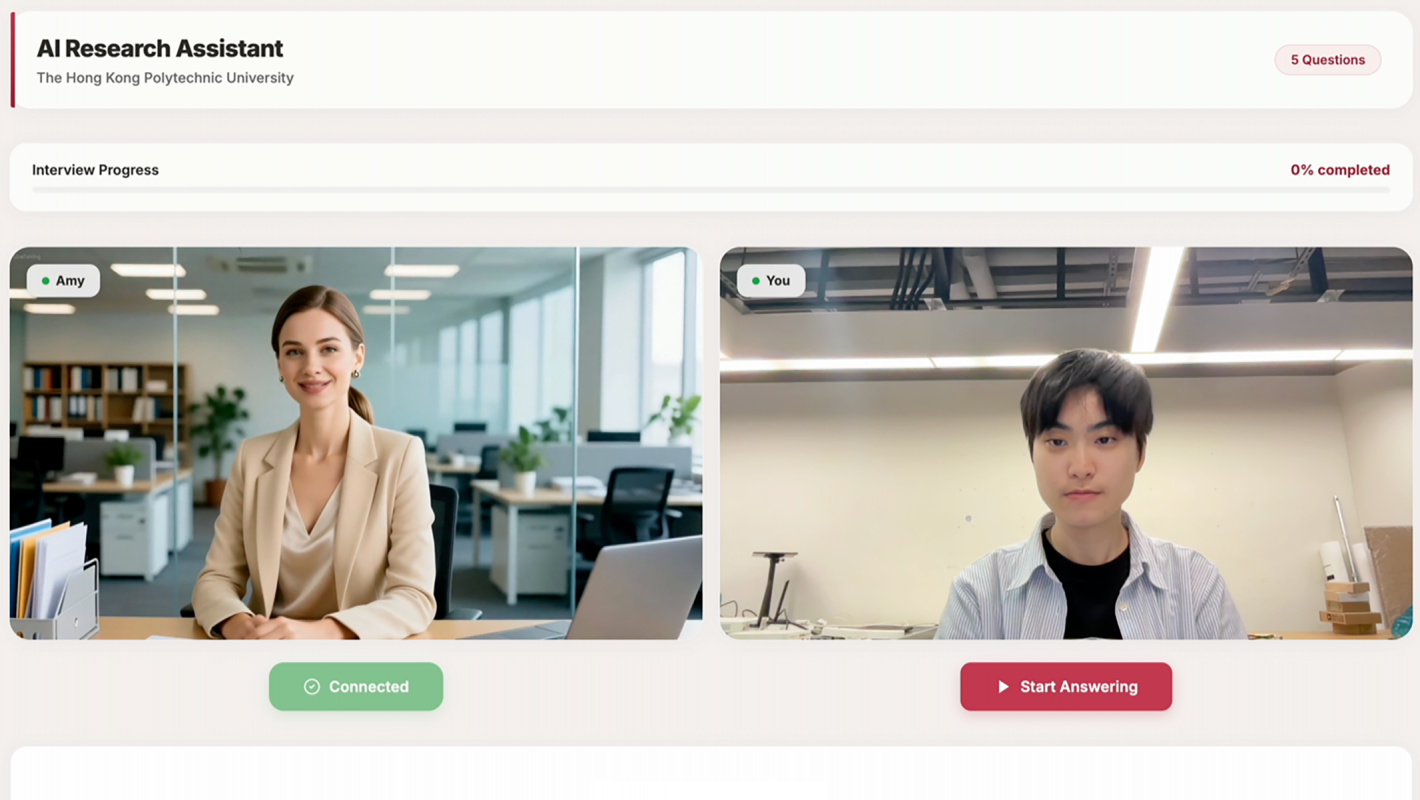
PolyInterview transforms traditional preparation by delivering true job-oriented personalisation. Built on the core principle that successful employment hinges on both matching job requirements and convincingly articulating that fit to employers, its multi-agent framework uses target job descriptions and candidates’ CVs to generate tailored question sets and answer-aware follow-up questions. A lexical-alignment comparison between matched and cross-role job descriptions found that, in 93.7% of analysed sessions, the generated question sets were more closely aligned with the target job description than with job descriptions from other roles. Rather than relying on simple text chatbots or static question banks, students interact in real time with a digital human interviewer—a rendered video avatar that simulates realistic conversational dynamics across distinct interviewer profiles at different difficulty levels.
Comprehensive, multimodal feedback for real-world impact
Beyond simulation, PolyInterview incorporates four parallel evaluators producing 13 behaviour-level features, aggregated into 10 assessment aspects and two competency tracks, assessing candidates' professional performance, non-verbal expressions, and oral delivery. Grounded in industry-validated standards such as the KSA (Knowledge-Skills-Abilities) framework and the STAR (Situation-Task-Action-Result) model, the platform provides actionable feedback on language, facial expressions, and body movements, detailed performance transcripts, and refined response suggestions immediately following each session. In evaluations by ten HR and communication professionals, the actionability of its feedback recommendations received an average rating of 4.70 out of 5.
“By combining personalised questions grounded in real job requirements with comprehensive multimodal feedback, we are helping students stand out in a tough market—ensuring they are fully prepared when opportunities arise,” Dr Wen noted.
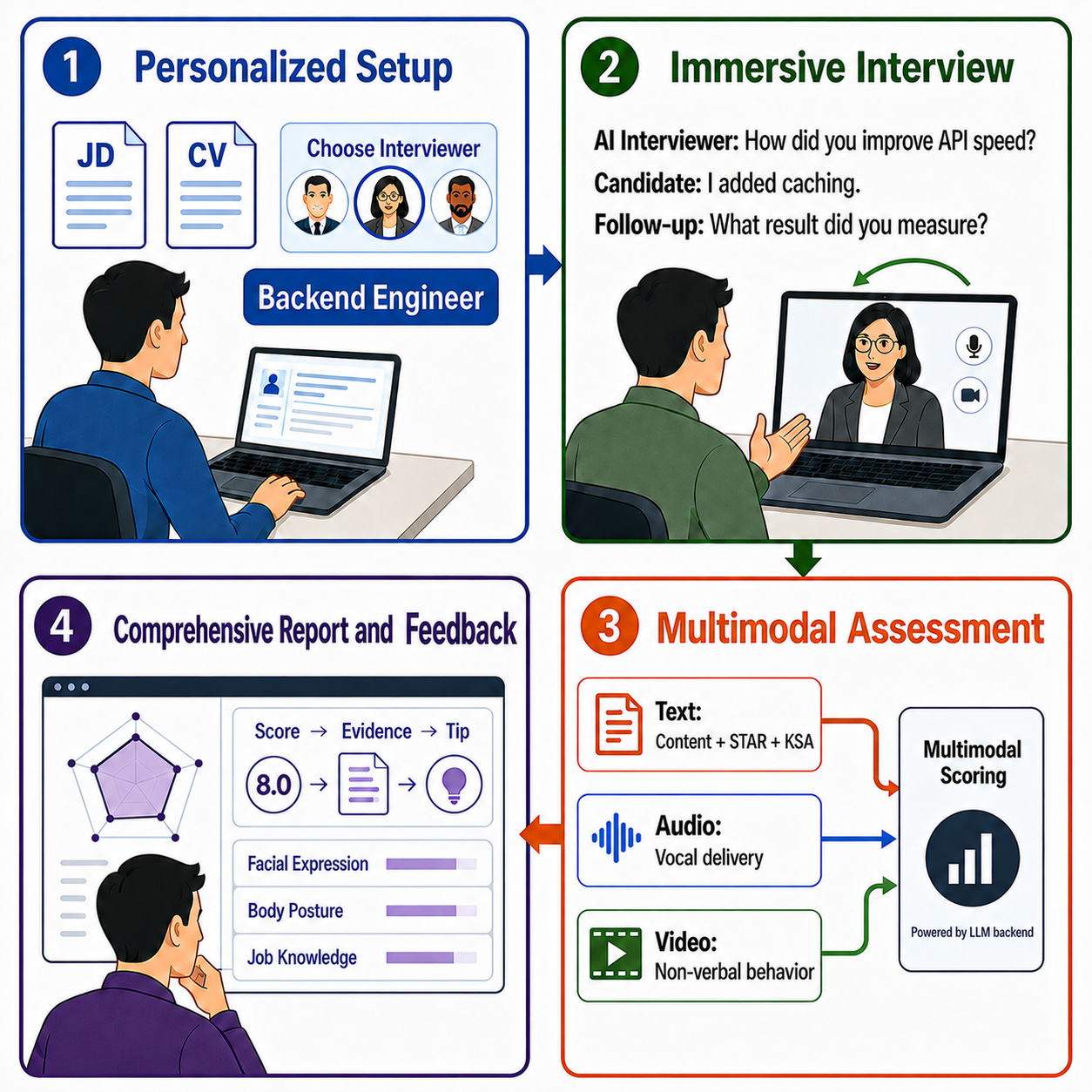
Workflow of PolyInterview, showing how personalised interview simulations, answer-aware follow-up questions and multimodal feedback are integrated into the learning experience.
Pilot tests involving 129 participants from six institutions and organisations, spanning more than eight academic disciplines have affirmed the platform’s real-world value, with students praising its immersive feel and practical insights. Building on this foundation, as of 3 September 2026, PolyInterview had supported 1,621 interview sessions involving 221 users. Designed in line with PolyU’s commitment to responsible technology and privacy, all raw data remains securely hosted on campus servers, supported by PostgreSQL transparent encryption and single-click data deletion controls.
As part of PolyU Education 4.0, PolyInterview exemplifies how the University leverages cutting-edge artificial intelligence not merely as a learning aid, but as a catalyst for societal mobility. By enhancing career readiness and widening access to high-quality interview preparation, the platform empowers young jobseekers to overcome career entry barriers and seize opportunities in an increasingly competitive employment landscape.
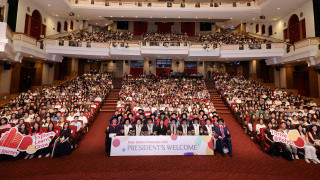
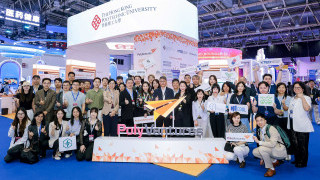
On 15 July 2026, “PolyInterview: A Multi-Agent Interview Practice Platform for Communication Education” was named Champion in the Stream 2 - Challenge category at the 2nd International Competition on AI in Education 2026, organised by the Artificial Intelligence Research and Education Alliance (AIREA) of The Education University of Hong Kong. The award is a recognition of the platform’s innovative use of AI to deliver personalised interview practice and evidence-based feedback.
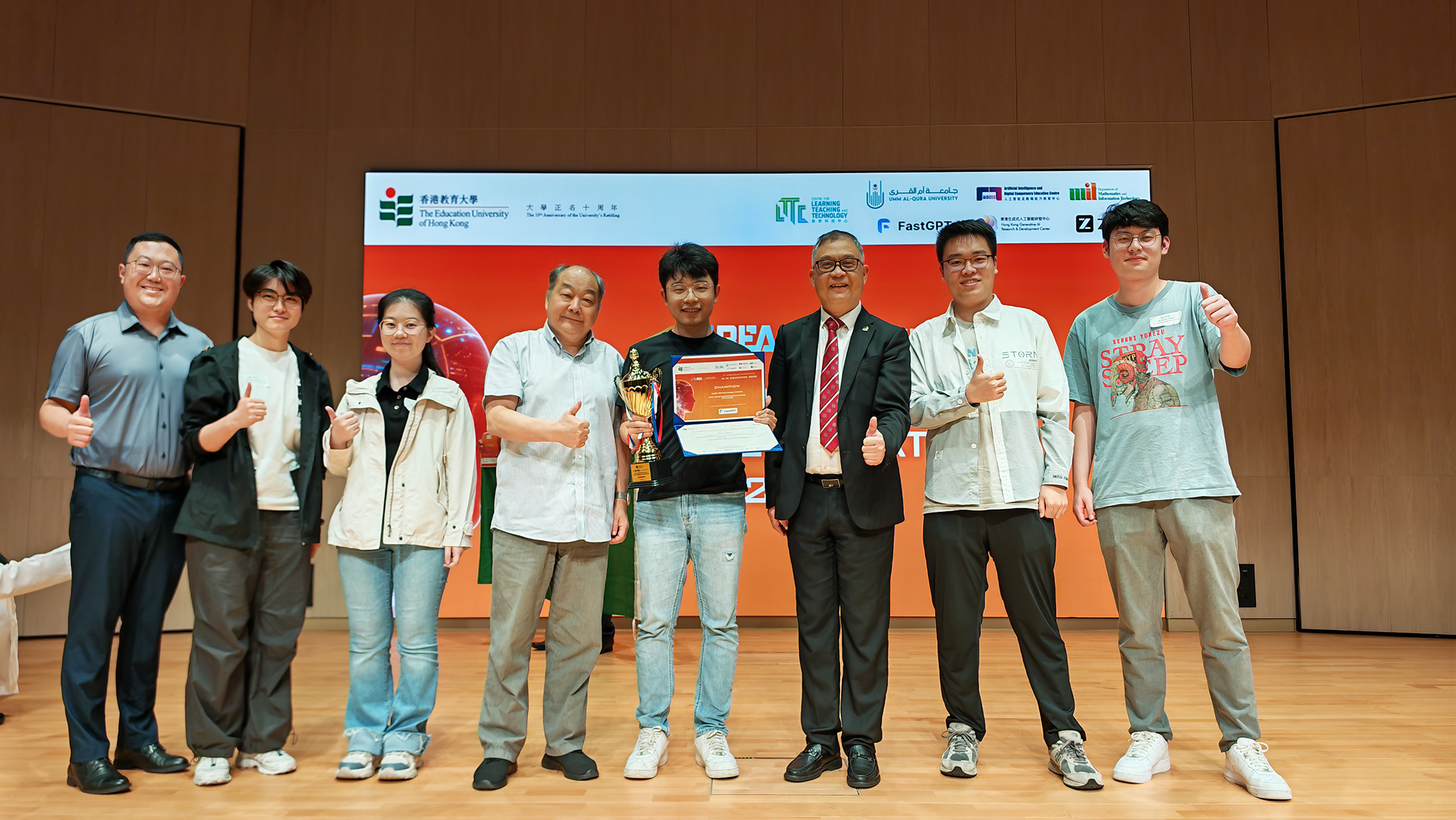
PolyInterview was named Champion in the Stream 2 - Challenge category at the 2nd International Competition on AI in Education 2026, recognising its innovative application of AI to enhance interview performance.